




Abstract
High-entropy alloys (HEAs) are a relatively new class of materials that have gained considerable attention from the metallurgical research community over recent years. They are characterised by their unconventional compositions, in that they are not based around a single major component, but rather comprise multiple principal alloying elements. Four core effects have been proposed in HEAs: (1) the entropic stabilisation of solid solutions, (2) the severe distortion of their lattices, (3) sluggish diffusion kinetics and (4) that properties are derived from a cocktail effect. By assessing these claims on the basis of existing experimental evidence in the literature, as well as classical metallurgical understanding, it is concluded that the significance of these effects may not be as great as initially believed. The effect of entropic stabilisation does not appear to be overarching, insufficient evidence exists to establish the strain in the lattices of HEAs, and rapid precipitation observed in some HEAs suggests their diffusion kinetics are not necessarily anomalously slow in comparison to conventional alloys. The meaning and influence of the cocktail effect is also a matter for debate. Nevertheless, it is clear that HEAs represent a stimulating opportunity for the metallurgical research community. The complex nature of their compositions means that the discovery of alloys with unusual and attractive properties is inevitable. It is suggested that future activity regarding these alloys seeks to establish the nature of their physical metallurgy, and develop them for practical applications. Their use as structural materials is one of the most promising and exciting opportunities. To realise this ambition, methods to rapidly predict phase equilibria and select suitable HEA compositions are needed, and this constitutes a significant challenge. However, while this obstacle might be considerable, the rewards associated with its conquest are even more substantial. Similarly, the challenges associated with comprehending the behaviour of alloys with complex compositions are great, but the potential to enhance our fundamental metallurgical understanding is more remarkable. Consequently, HEAs represent one of the most stimulating and promising research fields in materials science at present.
Introduction
High-entropy alloys (HEAs) are alloys that contain multiple principal alloying elements, often in near-equiatomic ratios. They are, therefore, compositionally very different from classical engineering alloys, in that they are not based on one majority component into which minority additions are made. First brought to the attention of the academic community in 2004 through the work of Yeh et al. 1 and Cantor et al., 2 their design is based around the concept that their high configurational entropies of mixing should stabilise solid-solution phases relative to the formation of potentially-embrittling intermetallic phases. As a result, HEAs should exhibit special microstructural stability, as well as a variety of other unique and unusual properties arising from their complex compositions.
The majority of the HEA research and discourse has been influenced notably by the original and subsequent publications of Yeh and co-workers.
1,3–8
From their work, four core effects have been proposed, which are as follows: The high configurational entropy of HEA solid solutions has a dominant effect on phase Gibb's energy, and stabilises solid solutions relative to intermetallic phases. The lattices of HEAs are severely strained, because of the size mismatch between alloying elements. This, in turn, has a range of different effects on the physical and mechanical properties of HEAs. HEAs exhibit sluggish diffusion kinetics since atomic diffusion is more difficult through solid solutions with high concentrations of many elements, principally due to fluctuations in the bonding environment through their lattices. The complexity of HEA compositions gives rise to a so-called ‘cocktail effect’ in which inter-element interactions give rise to unusual behaviours, as well as average composite properties (rule-of-mixtures).
The importance of these core effects has since been echoed by numerous HEA studies, and they have played a significant role in instigating and directing a great deal of HEA research.
Interest in HEAs is increasing dramatically at present, see Fig. 1, and a number of reviews of the HEA literature have been made over the past 5 years.
5,6,8,10–13
These have been in the form of comprehensive and detailed summaries, such as the review by Zhang et al.,
14
as well as shorter critical assessments, such as the recent work of Miracle.
15
However, none of these have critically assessed the evidence for the four core effects described above – this is one, and the most important, of the three key aims of this review, and is tackled to begin with. The second aim of this review is to examine the opportunities and challenges associated with developing HEAs for use as new structural materials. Particular focus will be given to the development of methods that can be used to rapidly predict HEA microstructures and select alloys for experimental evaluation. The final aim is to highlight the exciting opportunity that the study of HEAs represents in terms of progressing our fundamental understanding of the behaviours of alloys. It should be noted that this review does not seek to detail the particular microstructures, processing and properties of each HEA system that has been explored – this has been achieved to a significant extent through some of the previous reviews. The publication rate for HEA literature since 2004. Data gathered from Scopus
9
by searching for ‘HEAs’ in the keywords field and limiting the subject area to ‘Materials Science’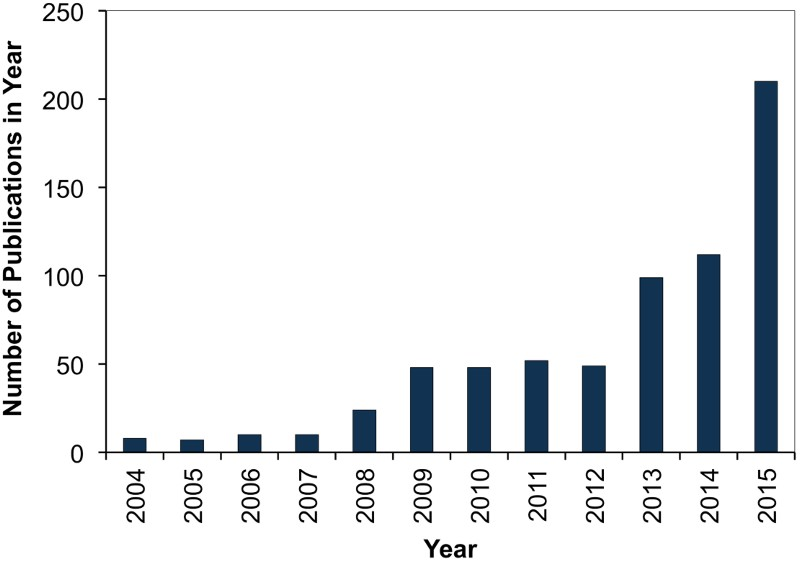
The original and most commonly reported compositional definition of HEAs is that they contain at least five alloying elements with concentrations in the range 5–35 at.-%.
1
These criteria were chosen as they were considered to define the compositional range in which the configurational entropies of alloys would be high enough to overcome the enthalpies of formation of intermetallic phases, resulting in stable solid solutions.
4
For a solution comprising n components, each with mole fractions 

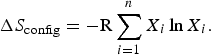

The entropic stabilisation of solid solutions in HEAs is fundamental to their design philosophy, and many reports have championed its effectiveness, particularly early HEA studies and reviews.
1,3,4
However, recently there have been a number of challenges to the notion that configurational entropy has such an overarching influence on phase stability in HEAs.
17–26
Importantly, these challenges have been supported by experimental experience – there appear to be very few HEAs that are stable as solid solutions at all temperatures up to melting. At present the only HEAs thought to be stable as a single solid-solution phase are the equiatomic refractory body-centred cubic (bcc) HEA VNbMoTaW,
27,28
and perhaps members of the TiV


A recent prominent example of phase instability reported in HEAs is that seen in the equiatomic HEA CrMnFeCoNi.
33–35
CrMnFeCoNi is widely considered to be the examplar HEA; first studied by Cantor et al.
2
in their pioneering work on equiatomic multicomponent alloys, it has been the focus of numerous investigations, with a particular focus on its mechanical properties and processing.
33,36–57
Reports have often upheld CrMnFeCoNi as being stable as a single solid-solution phase, a characteristic that has made its mechanical properties of great interest, and a number of studies with a focus on phase stability have confirmed this.
19,22,58–60
However, it has recently been shown that exposures below 800
A similar story has emerged for the HEA Al


One of the most persuasive studies demonstrating the limited influence of configurational entropy on the phase stability of HEAs was that of Otto et al.
19
In this work, elements were substituted into CrMnFeCoNi that had the same crystal structure and a comparable size and electronegativity as the atoms they replaced, in an attempt to maximise the chance of solubility through the Hume-Rothery rules.
144,145
Critically, this study found that in every case of substitution, the resulting alloy was not stable as a single solid-solution phase. Other compelling results were presented by Senkov et al.
24,25
and Troparevsky et al.,
26
who have predicted, contrary to the HEA design philosophy, that the formation of intermetallic phases becomes more likely as the number of alloying elements increases, see Fig. 2. This conclusion is supported by the original work by Cantor et al.,
2
in which it was found that equiatomic alloys with 16 and 20 alloying elements were not stable as single phases (although these alloys were only assessed in the as-cast state). The fraction of alloys with N components predicted to exist as solid solutions (SS), as intermetallics (IM), and as mixtures of solid solutions and intermetallics (


It has been suggested that because HEAs typically appear to comprise far fewer phases than the Gibb's phase rule would allow, configurational entropy is providing a significant stabilising effect even in multiphase alloys. However, when assessing this statement, the following three points must be considered. First, it must be recognised that Gibb's phase rule states the maximum number of equilibrium phases that can be present at any one point in a phase diagram, not the number that can be expected in general. For example, for binary combinations of elements at ambient pressure, the maximum of phases that can co-exist at any temperature is three. However, only at invariant reaction points, such as eutectic or peritectic points, are the maximum number of phases observed. Furthermore, in systems which show complete miscibility in both the liquid and solid state, such as the Ag–Cu system, three phases do not co-exist at any point. Second, it is clear that enthalpic factors have overcome entropic effects in multiphase HEAs, and that there is no guarantee that any solid solutions remaining after decomposition contain significant fractions of many components (i.e. have high 
Experimentally proving the absolute thermodynamic stability of an alloy is, of course, an impossible task, but there are two salient features that studies assessing HEA stability should include. First, appropriate heat treatments must be selected to homogenise as-cast material, and then promote phase decomposition. Focus should be away from as-cast microstructures, which have received a great deal of attention in many HEA studies, 1–3,27,30,61–64,76,79,87–91,94,96,102,109,111,113,120,122,123,126,130,133–136,141,146–165 since although their examination is useful to assess elemental partitioning tendencies (microsegregation), their analysis is not appropriate for assessment of phase stability. The importance of heat-treating as-cast HEAs to produce nearer-equilibrium microstructures has been highlighted, see for instance [166] and [167]. Following homogenisation, precipitation and phase separation should be probed by using low homologous temperatures that might typically be expected to act as aging treatments, where the effect of entropy on Gibb's free energy is less pronounced. The high temperatures used to homogenise materials following casting are not suitable for this purpose. Many HEA studies have used aging heat treatments effectively to induce precipitation, see for instance. 34,35,65,66,69,93,101,103–105,110,168,169
Second, high-resolution techniques should be used to determine whether phase decomposition has occurred at the small scale. Straightforward low-resolution SEM analysis is not usually sufficient to achieve this, since nanoscale precipitation and phase separations have often been reported.
1,18,20,21,34,62,72,73,75,86,91,93,99,104,114,123,127,
131,133,160,170–174
Techniques such as atom-probe tomography (APT) or scanning transmission electron microscopy (STEM) are required, see, for example, Fig. 3. The use of X-ray diffraction (XRD) in HEA studies is commonplace. However, care must be taken as the presence of phases with low volume fractions may not be detected using this technique. For example, SEM analysis revealed the presence of σ precipitates in Al STEM energy-dispersive X-ray (EDX) elemental composition maps of dendritic material in the HEA Al XRD peak profile analysis for the HEA Al


In summary, there is limited evidence to suggest that entropic stabilisation has an overarching effect on the microstructural stability of HEAs. It can be proposed that in the rare cases that HEAs have been found to be stable as a single solid-solution phase, it is not the effect of high configurational entropy that leads to their stability per se, since so many HEAs are evidently unstable. Rather, it seems that the enthalpy term associated with solution separation or intermetallic formation has not been significant in these cases. The influence of enthalpy, not entropy, is predominant. Evidence has yet to be presented that demonstrates configurational entropy can play a significant role in the stabilisation of solid solutions in multiphase HEAs, and that it does so to a greater extent than for conventional alloys, including concentrated alloys like Ni-base superalloys and twinning-induced plasticity (TWIP) steels. Careful experimental characterisation of HEAs is necessary before statements can be made about their stabilities.
Given the conclusions reached above, it is debatable whether the name ‘HEAs’ remains appropriate, particularly given the inherent association with the concept of entropic stabilisation. Recently, there have been some discussions of alternative naming conventions, for instance in the critical assessment by Miracle. 15 ‘Compositionally complex alloys’ has found some support, but in our opinion this is not ideal as many existing materials, such as Ni-base superalloys, are arguably more compositionally complex than many HEAs. ‘Multi-principal element’ or ‘complex concentrated alloys’ are perhaps more suitable in this respect. However, the authors believe that since the ‘HEA’ terminology is so embedded in the discourse, that a change in the naming convention would only lead to confusion. What is important is that the underlying metallurgical characteristics of HEAs are addressed and clarified, and that these principles are associated appropriately with the HEA designation.
At this point, it is also worth discussing the convention, or lack thereof, for describing HEA compositions. For instance, the same alloy has been studied in references
33–35,37–39,51,57
and described in no fewer than eight different ways: FeCoNiCrMn,
33
FeCoCrNiMn,
38
FeCrNiCoMn,
39
FeNiCoCrMn,
57
CrMnFeCoNi,
35
CoCrFeMnNi,
34
CoCrFeNiMn,
51
and NiFeCrCoMn.
37
This makes searching for a particular alloy composition unnecessarily difficult, and also increases the likelihood of confusion and mistaken identification. Although alphabetical order represents a possible solution to this problem, the authors believe that ordering by atomic number is the most suitable option when expressing HEA compositions as atomic ratios. In addition, we believe that the order should not be influenced by the particular concentrations of the elements, for example, CrMnFeCoNi and Al
Severely distorted lattices
It is well known that the introduction of substitutional solute atoms into a solvent matrix causes the displacement of neighbouring atoms from their ideal lattice positions, generating a strain field, and that it also induces a change in bulk lattice parameter. The localised distortions around the solute atom will interact elastically with dislocations moving through the material, resulting in solid-solution strengthening. 175,176 Well-established models for solution strengthening have been produced for both dilute and concentrated alloys, 177–179 and their modification for HEAs is discussed in Section 8 of this article. A number of studies have suggested that severe lattice distortion contributes significantly to HEA properties, 3,65,75,84,85,97,165,180–186 most notably with respect to increasing alloy strength, see for instance 165,187 . Importantly, however, it is apparent that the strengthening effect of precipitates may have been overlooked in some cases.
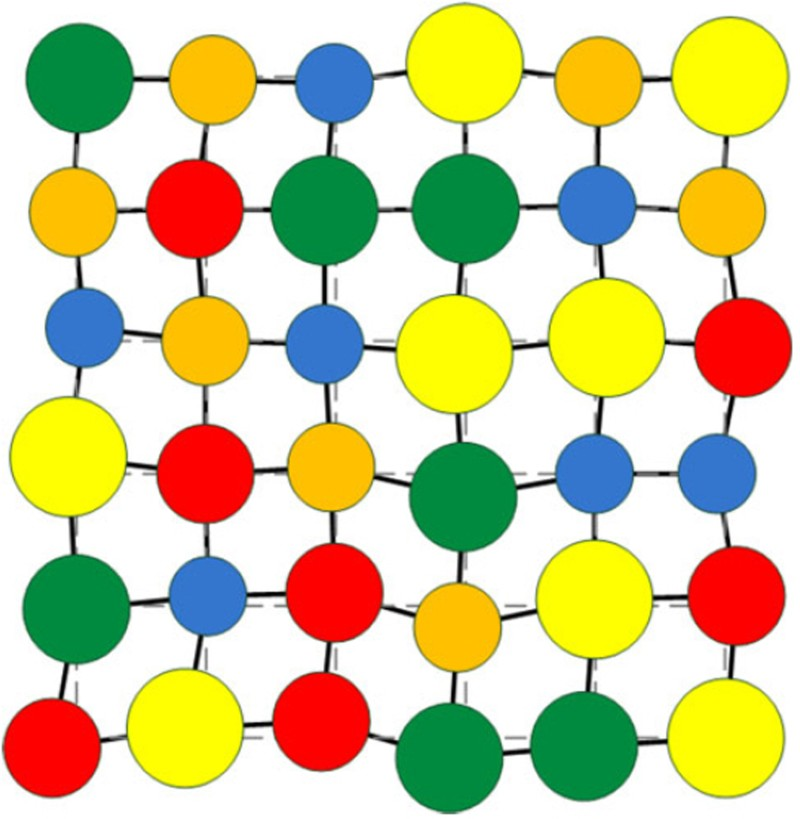
A schematic of the proposed localised lattice distortion effect in HEAs is reproduced in Fig. 5. It has been suggested that these distortions arise not only from atomic size misfit, but also differences in the crystal structure and bonding preferences of alloying elements present. 8 It has been proposed that decreased XRD peak intensity in HEAs is evidence of lattice straining of this type, 3,8,65,75,97,180 since it should result in increased diffuse scattering. It is true that diffraction peak intensity should decrease with increasing lattice strain around solute atoms, and that these localised static displacements have a similar effect on intensity as thermal vibrations. 188–193 Typical lattice strains from solute atoms are not thought to generate significant levels of peak broadening, 190,191 as is observed in alloys with high dislocation densities or small crystallite sizes. However, it should be noted that a number of effects can influence the peak intensity and diffuse scattering observed in a diffraction pattern, including crystallographic texture, thermal vibrations and fluorescence. Hence, attentive assessment of high-quality experimental data is needed before any comment can be made on the magnitude of lattice distortions. 189–194 In addition, the levels of strain considered historically have been small, allowing for particular estimations to be made, and the effects of severe lattice distortions may be different.
Attempts have been made to assess the lattice distortion effect in HEAs by using pair distribution function (PDF) analysis. A PDF study of Al Schematic representation of strained lattices in HEAs. Reprinted from
5
with permission from Springer

One might assume that evidence of severe lattice distortion could be found using high-resolution STEM – looking in cross section, atomic columns might look more blurred in a highly strained lattice than in an unstrained one, and atomic planes may also look distorted in the image plane. However, careful analysis accounting for phonon effects and other artefacts would be necessary before such conclusions were reached. Although it has been suggested that high-resolution TEM (HRTEM) images can show lattice distortion, 195 the gentle long-range distortions due to the presence of defects such as dislocations are not consistent with the localised strain proposed by Yeh et al. 3,8,65,75,97,180
Toda-Caraballo and Rivera-Diáz-del-Castillo
185
have recently predicted lattice strains in HEAs using both a density function theory (DFT) approach, and a spring model based on quadratic potentials. Their article provides details of useful models for the prediction of lattice parameters and lattice strain in HEAs. Critically, however, their study predicted localised strains in nearest-neighbour bonds in bcc HEA VNbMoTaW of no more than 
Besides assessment of experimental evidence and prediction results, qualitative arguments based on the phase energetics can be made to explain why severely distorted lattices are not likely to exist. As noted by Hume-Rothery, solid solutions tend to be unstable if the mismatch in size between solvent and solute atoms is large enough. 144,202 Studies that have assessed the effect of atomic size mismatch, for example by the inclusion of Al in alloys, have indeed found that a larger mismatch makes the formation of solid solutions in HEAs less likely, 152,203–208 as will be discussed in more detail in Section 7. It seems clear that even in HEAs, any strains would inherently increase the free energy of the lattice, at least partially offsetting any stabilisation to solid solutions delivered by increasing configurational entropy. One can argue that it is possible to have a severely strained lattice that is unstable, or have a stable solid solution that is not very strained, but it seems unlike that both stability and severe strain can be achieved simultaneously. There are, of course, many reasons besides strain that solid solutions decompose to mixtures of phases, but it is clear that strain would only decrease stability. In summary, there is no clear evidence to date that demonstrates that lattice distortions in HEAs are much greater than 5% of the lattice parameter, although there is some uncertainty as to how severe distortions would manifest themselves in diffraction data. This topic requires further investigation, and is likely to contribute significantly to our understanding of concentrated alloys.
Closely associated with the severely distorted lattice effect is the proposal that diffusion kinetics in HEAs are anomalously slow or sluggish.
4–6,8,209
This has been used to explain particular experimental observations in a number of studies.
1,52,53,55,65,69,75,100,124,166,181,205,210–214
Yeh et al.
5,6,8,209
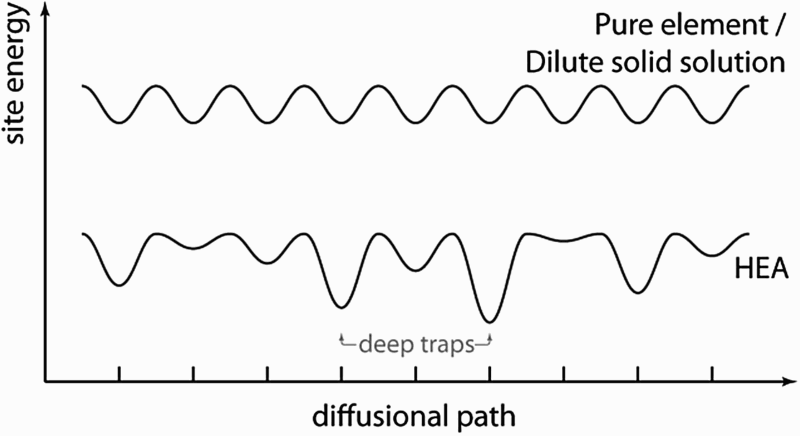
have suggested that anomalously slow diffusion in HEAs originates from fluctuations in the potential energies of lattice sites that are met by diffusing species, Fig. 6. In a pure element or dilute solid solution, the potential energy associated with each lattice site is approximately equal, whereas in an HEA there will be sites in which the bonding configuration will be more preferable for a diffusing species than others, and these act as temporary traps, slowing the rate of diffusion. Others have suggested that lattice distortions are also associated with slow diffusion in HEAs,
69,181
and it seems reasonable to expect fluctuations in the potential energies of sites in a distorted lattice. Schematic representation of the proposed difference in lattice potential energy profile along an atomic diffusion path in a pure element or dilute solid solution (top) and an HEA lattice (bottom). Note it is assumed that the distance between atomic sites is constant. A similar schematic for the HEA energy profile was given in reference 8
To date, only one study has published measured values for self-diffusion coefficients in HEAs, that by Tsai et al.
209
They examined the diffusion of each constituent element in the equiatomic HEA CrMnFeCoNi, and found that values for the scaled activation energy, Normalized activation energies of diffusion for Cr, Mn, Fe, Co and Ni in different matrices. Reprinted from
209
with permission from Elsevier





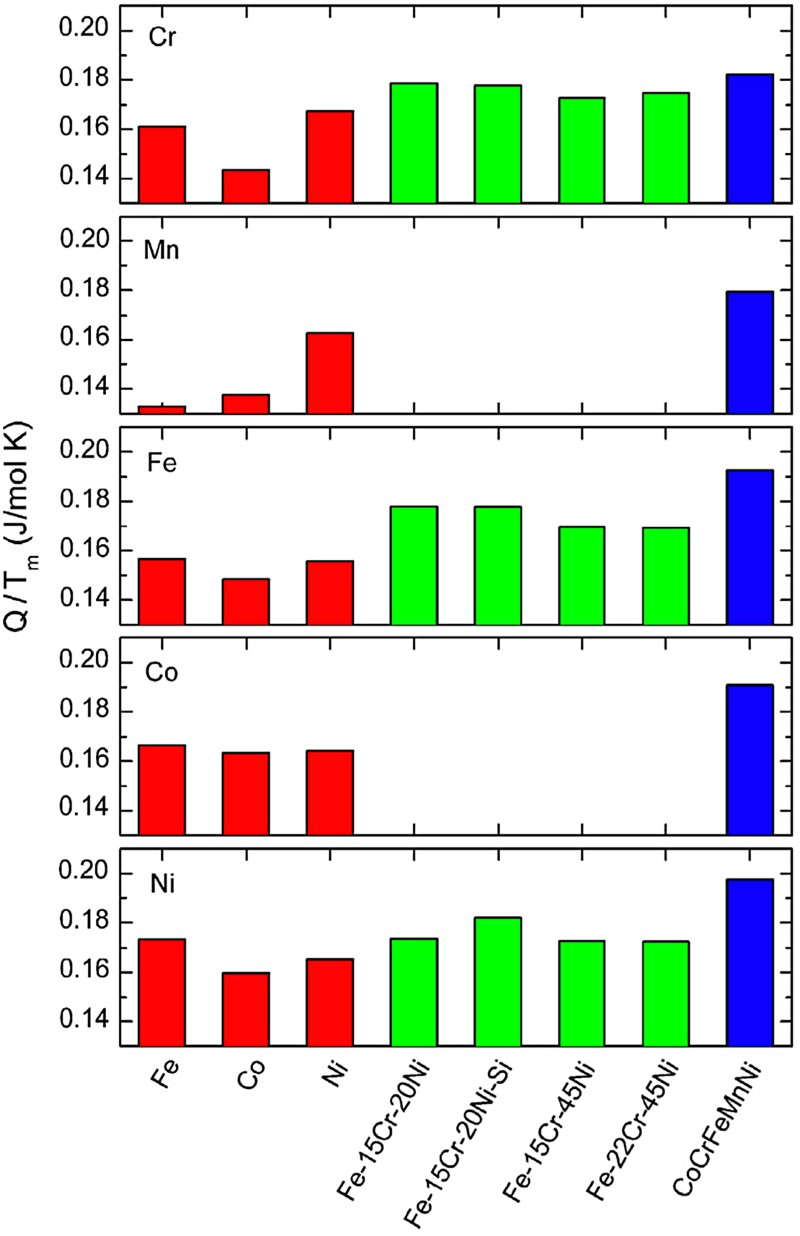
Aside from direct measurements of diffusivities, there is a great deal of experimental evidence that implies that atomic movement in HEAs is not unusually sluggish. Of particular prominence are observations of precipitation in many as-cast HEA samples,
1,21,62,70–72,75,91,99,100,114,121,123,127,147,172
including those subjected to very rapid cooling,
73,132,170,171
as well as in those quenched from high temperature heat treatments.
31,72,174
Indeed, it has recently been revealed that Ni–Al-based B2 precipitates are able to form on air cooling the HEA Al
It should be recognised that care must be taken when relating rates of precipitation to values for D, since atomic fluxes are not only influenced by D, but also by gradients in concentration and chemical potential. Nevertheless, it is atomic fluxes that are the principal concern for metallurgists in practice, and rapid precipitation suggests that these fluxes are high. If we consider the possibility that the D values are abnormally low in HEAs, then in cases of rapid precipitation it must be that gradients in chemical potential are remarkably severe. Such cases could then be seen as confirmation of the fluctuations in lattice potential energy proposed by Yeh et al. 5,6,8,209 – the changes in energy are simply so large that the ordering or clustering of species is unavoidable. Observations of rapid precipitation cannot be aligned with both the entropic stabilisation and sluggish diffusion effects simultaneously.
It has also been suggested that the recrystallisation resistance observed in some HEAs provides evidence for their sluggish diffusion kinetics. 52,53,55,65,212,214 It is true that slow atomic diffusion does inhibit recrystallisation, but rates will also depend on other variables such as dislocation concentrations and distributions, prior grain size, and the presence of second phases or other inhomogeneities. 216 Hence, careful investigation is needed before recrystallisation kinetics are related to diffusion kinetics. In summary, the evidence considered here suggests that atomic diffusion in HEAs is unlikely to beanomalously slow, and that it is certainly not so in a generalised sense across all HEAs.
The cocktail effect is perhaps the most abstract of the core HEA effects, and it is difficult to determine precisely what is meant by it and what makes it particularly special. It appears to have been derived from the piece by Ranganathan 217 entitled ‘Alloyed pleasures: Multimetallic cocktails’, which describes the mixing of elements in a ‘muti-metallic cocktail’ to produce HEAs. Recently, Lu et al. have described it as the ‘overall effect resulted from mutual interactions among composing elements, which would bring excess quantities to the average values simply predicted by the mixture rule’, while Yeh 8 has described it as ‘the overall effect from composition, structure, and microstructure’. The authors of this review assume that an example of a property derived from the rule of mixtures might be the lattice parameter (e.g. Vegard's law, 218 at least at low concentrations), while an ‘excess’ property might be increased wear resistance due to the development of a hard microstructure through precipitation.
It is not clear from the descriptions of the cocktail effect in what way it is unique to HEAs. Rules of mixtures apply to conventional alloys, and special properties can be obtained through elemental additions – this is fundamentally why so many elements are added into engineering alloys such as steels and Ni-base superalloys. The properties of all alloys, not just HEAs, depend critically on composition and microstructure. Perhaps it is best to use this term in relation to the surprising and exotic properties than can arise in HEAs due to their complex compositions. Otherwise, it could be argued that this effect should be dismissed.
A route for alloy development
To the authors' knowledge, HEAs have yet to be exploited commercially. However, a number of potential applications have been highlighted in the literature. These include their use as protective coatings owing to their good corrosion and wear resistance 1,80,84,115,170,171,219–231 (see review of laser-deposited HEA coatings by Zhang et al. 232 ), as alloys for bulk metallic glasses, 11,233–236 and even as materials for hydrogen storage 237 and diffusion barriers. 1,181,182 There has also been interest in their magnetic 1,10,97,238–243 and thermoelectric properties. 244 These properties and applications, and others, are discussed in more detail in the reviews by Zhang et al. 14 and Tsai et al. 6 The authors consider one of the most promising potential applications for HEAs is as structural materials, and this is addressed specifically in the following text.
It has been suggested that specific HEAs demonstrate some exceptional mechanical properties in comparison to conventional alloys, which might make them attractive in structural applications. Examples include the impressive fatigue resistance of Al


While low ductility is certainly not desirable for structural alloys, neither is the low yield strength observed in alloys comprising simple solid solutions, particularly when service conditions involve high temperatures. Almost all successful engineering alloys are based upon strengthening precipitates or interfaces that act as strong athermal obstacles to dislocation motion. This fact was highlighted by Miracle, 16 who proposed to switch the focus of HEA research away from achieving single-phase microstructures, to developing mixed solid-solution/intermetallic microstructures akin to those found in Ni-base superalloys. We would certainly advocate this approach. However, as Miracle highlighted, this represents a significant challenge, since careful control of the sizes and volume fractions of strengthening intermetallic phases is required to achieve the correct balance of properties. The idea of a balance in properties is a key one – it has been suggested that HEA studies have too often focussed on one property of interest, rather than the combination of properties required for most applications. 15,247 Typically, good corrosion resistance, toughness and microstructural stability will be required alongside strength. With respect to corrosion resistance in particular, it can be foreseen that HEAs could offer a potential advantage over conventional alloys – if their solid solutions are even marginally stabilised by entropic effects, then higher additions of protective elements like Al and Cr into solution may be possible, boosting the likelihood of forming protective oxide layers.
The scale of the challenge of developing HEAs for structural applications is realised when we account for the enormous range of possible HEA alloy compositions. The number of equiatomic compositions alone is vast, but when non-equatomic compositions are considered, 211,248 as well as the possibility of incorporating minor alloying additions, 128 then the potential compositional space becomes extraordinarily large. It must be recognised that the selection of promising alloy compositions is a formidable obstacle, which is at least partly responsible for the lack of compositional variety across many HEA studies.
Experimental exploration of the entire HEA compositonal space, whether it be in a random or ill-guided systematic fashion, is simply inconceivable. Decisions must be made about potential systems of interest, and they must be educated and well-informed. Too often, HEA studies have related the addition of an element directly to the resulting mechanical properties – an example might be the idea that the addition of Al improves strength. Without qualifying this statement using knowledge of how Al influences the microstructure of the material, little progress can be made. Some useful understanding of this type has already been developed through HEA studies – for instance, it is well known that the addition of increased levels of Al to Al

Phase prediction and alloy selection in HEAs
The prediction of the stability of solid solutions in HEAs has been a key area of interest to the HEA community, and is a topic of great importance with respect to the direction of future HEA studies. A common approach has been to utilise the empirical rules of Hume-Rothery 144,145 and/or accessible thermodynamic quantities to form parametric criteria for the stability of HEA solid solutions, which are fitted to experimental results. 152,159,163,173,203–205,207,252–267 These phase-selection rules for as-cast HEAs were recently reviewed by Wang et al. 258 and Guo, 208 and are discussed briefly here.
The most common thermodynamic quantities used have been A plot of 


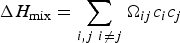
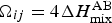


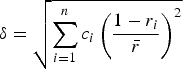


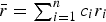

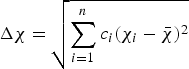

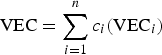







It has been argued that 


Despite the widespread use of parametric studies, there are some significant limitations that must be recognised. First, their particular forms do not necessarily have a sound physical basis – there is no fundamental explanation for why specific ranges of particular parameters have been chosen or plotted against each other, aside from their correlation with experimental results. Singh et al.
20
have suggested that the limits for the various parameters set in the literature are somewhat unsatisfactory for the understanding of the formation of solid solutions. Second, there is significant difficulty associated with accounting for the tendency of an HEA to form intermetallic phases. As has been highlighted by a number of authors, the estimation of the formation enthalpies of intermetallic compounds, 


Perhaps the most critical weakness of the parametric approaches, however, is that almost all are fitted to experimentally obtained data. This is an issue since, as highlighted in previous sections, a significant proportion of the data used for validation have been taken from as-cast microstructures. These non-equilibrium microstructures are not indicative of phase stability, not least because their constituents can change with cooling rate. Even the use of as-homogenised results, which were exclusively assessed by Wang et al. recently,
258
is not ideal, since they also do no adequately inform us of alloy stabilities, see Fig. 9. Essentially, the parametric criteria are only as good as the data that are used to generate them, and they continue to predict stable solid solutions in CrMnFeCoNi and other non-refractory HEAs, which are now known to be unstable. A plot of 

In theory, first-principle prediction techniques like DFT should be more robust than empirical or semi-empirical approaches, since they have a more solid grounding in physics and are less reliant on experimental inputs and empirical approximations. A number of studies have applied such techniques to the prediction of phase stability and ordering in HEAs,
23,250,275–283
as well as magnetic properties.
242
See the review by Troparevsky et al.
284
for further discussions of applying ab initio methods to predict HEA properties. Troparevsky et al.
26
themselves assessed HEA stability using 


The CALPHAD method 285 is a well-utilised approach to predict phase equilibria in alloys, which does not suffer from limitations associated with the size of the system being modelled like first-principle methods do (although they arguably suffer from system complexity). However, CALPHAD methods should be applied to HEAs with caution, since extrapolation from our knowledge of common binary and ternary systems cannot be realised with great confidence. Studies that have used CALPHAD for direct phase predictions have often met with rather limited success. 118,253,286–288 The challenges associated with using CALPHAD for HEAs have been discussed in Refs. [166] and [167]. They have used CALPHAD by examining binary databases for ‘matching elements’ that could then be combined to predict phases in HEAs. They were able to successfully predict the major phases in three HEAs, but it was acknowledged that CALPHAD cannot be used to predict the formation of new unknown phases in the high-order HEA systems. Their approach did not predict the formation of σ in CrMnFeCoNi at the temperatures at which it has been observed. The formation of σ in CrMnFeCoCu, VCrMnCoNi and VMnFeCoNi is also not well predicted by CALPHAD. 19,167,213 Indeed, the accurate prediction of intermetallic phases, the formation of which is of great importance to engineering alloys, appears to be problematic for CALPHAD methods in general.
Although CALPHAD methods are by no means ideal candidates for the phase prediction in HEAs at present, there is arguably a lot of merit in using them to rationalise the results obtained from experimental investigations. 19,213 There is even more potential in using it as a guide for alloy selection, 16,213 particularly when the parametric criteria discussed above are the only alternative option. Perhaps the most important work on the topic of HEA selection has been carried out by Miracle, Senkov and co-workers. 16,24,25 Their seminal work has evolved around the recognition that the compositional space of HEAs is essentially limitless, and hence there must be a focus on the rapid selection and evaluation of alloying elements and HEA compositions if progress is to be made. The methodology, detailed in their 2014 article, 16 begins with the selection of a ‘palette’ of potential alloying elements based on fundamental properties such as melting point, elastic modulus and density – the justification being that an alloy tends to take on the properties of their constituent elements (the cocktail effect). A three-stage process is then initiated: The first stage (‘Stage 0’) is a screening assessment using CALPHAD to eliminate alloys that do not meet specific criteria, and hence select promising equimolar alloys. For instance, alloys with solidus temperatures below the temperature of intended use should be eliminated, as will those predicted to exhibited a first-order phase transition that could result in property changes during service. Alternatively, alloys could be eliminated if their matrices do not include the required levels of Cr, Al or Si for oxidation resistance. As with all alloy design, the criteria imposed at this first screening stage will be dependent on the intended application. The second stage involves rapid experimental evaluation of microstructure and elementary mechanical and environmental properties, using samples containing gradients in composition such that chemistries around the equimolar one selected can be sampled – the importance of sampling such space has been stressed recently by Pradeep et al., 211 who have also examined rapid-through-put screening of HEAs. The production of compositionally gradiented samples can be achieved, for example, by the use of physical vapour deposition (see work of Ludwig et al. 289,290 ), and microstructural characterisation can be accomplished through the use of simultaneous EDX analysis and electron back-scatter diffraction (EBSD) in the SEM. The third stage involves rapid experimental evaluation of the mechanical properties of candidate alloys using samples containing gradients in microstructure (for instance, grain size).
However, it should be stressed that rapid-through-put screening methods for both microstructure and mechanical property selection are not without their limitations at present. The sample preparation and measurement techniques have yet to be fully developed. The heat treatment of samples can be difficult, and can result in the debonding of the films from their substrates, or film-substrate reactions. Measured mechanical properties can be influenced by substrate interactions and residual stresses. Furthermore, the complexities of the heat treatments and their influence on microstructure and mechanical properties means there is a danger that promising alloys could be too easily dismissed. The link between heat treatment, microstructure and properties can be very complex and is not readily predictable, particularly for unknown systems. One can envisage that rapid approaches might dismiss most steels (had they not yet been discovered), due to their polymorphism and tendency to form brittle martensite when cooled quickly. Given these issues, care must be taken to validate the results of rapid-through-put methods against those obtained from conventional ‘bulk’ samples.
One of the key features of Miracle et al.'s 16 approach is that experimental results are fed back into the CALPHAD stage to improve predictive capability. Critically, at no point does the design process eliminate alloys that are predicted to form intermetallic compounds alongside a solid-solution phase. Instead, a special effort has been made to try and identify such systems, in recognition that the microstructures of most successful engineering alloys comprise a hard obstacle phase. In a recent paper, 24 they reported that they had evaluated 130 000 alloy systems using the CALPHAD stage of their methodology, and have identified 51 new equimolar alloy systems comprising between three and six base elements as candidates for experimental assessment. The ultimate success of their scheme has yet to be proven, and there are various obstacles to overcome (not least the issues with rapid-through-put techniques described above), but it currently represents one of the most progressive and promising activities in the HEA field. It would be interesting to critically compare the results of the high-throughput methods produced using CALPHAD, Miedema's model, and DFT to high-quality experimental observations. As yet, practical issues such as cost, 128,248 as well as issues associated with the production of alloys, have not played a strong role in alloy selection. However, they will need to accounted for if HEAs are to be commercially successful.
It has been suggested that much of the experimental HEA research to date has focussed on too a narrow range of alloy compositions (typically using Al, Ti, Cr, Mn, Fe, Co, Ni and Cu), when in fact a major attraction of HEAs should be the scope for developing novel alloys with many different compositions. 1,2,5,15,16 Perhaps only the introduction of HEAs based on refractory metals, 29,118–120,156,158,163,164,281,287,291–301 instigated by Senkov, Miracle et al. 27,28,302 have provided a notable step change in this respect. The alloying screening methods discussed above are not limited in terms of potential alloying elements, and are hence to be viewed favourably in this respect. However, it can also be argued that the number of HEAs that have been assessed historically has in fact been too great, given the accuracy of characterisation that has been carried out. There have been too many alloys produced through too many processes leading to too many different conditions, such that we have not gained very much useful information, i.e. the sort of information that can be fed back into CALPHAD models. The challenge, then, is not just to predict alloy compositions with high potential, but also experimentally characterise candidate alloys to the extent that useful data are produced and promising alloys are not dismissed. The search for alloys should not be limited in terms of its scope, but it may be wise to restrict the number of candidate HEAs that are examined if the quality data gathered from large numbers of alloys is somewhat lacking. Quality should take some precedent over quantity.
It is undoubtable that the task of HEA selection will add immeasurably to our understanding of phase formation in exotic systems, and to our ability to predict complex microstructures in multicomponent systems. Outside of this pursuit, however, the study of HEA behaviours also has the potential to contribute significantly to our fundamental understanding of alloys. It has often been claimed that HEAs display unusual characteristics, and while in some cases these may have been observed in other systems of alloys, they have yet to be fully understood.
Perhaps the most prominent example of an HEA displaying rather unique behaviour is CrMnFeCoNi. It has already been discussed that CrMnFeCoNi is not thermodynamically stable as a single phase at all temperatures. However, it can be readily heat treated to exist as a single fcc solid solution, and when tested in this condition it demonstrates some remarkable properties. Its yield strength is a strong function of temperature, increasing markedly with decreasing temperature.
36,38,40,41,303
This in itself is not unexpected, since although such temperature dependence is rare in pure fcc metals, it is observed in a number of fcc alloy solid solutions.
179,304–309
What is unusual, however, is that this increase in yield stress at lower temperatures is accompanied by significant increases in ductility, toughness and ultimate-tensile strength (UTS). Indeed, at cryogenic temperatures, the ductility and toughness values attainable are quite exceptional: ε
f,eng > 0.7, K
JIc > 200 MPa m1/2 and σ
UTS > 1GPa,
36,40,41
see Fig. 10. Engineering stress vs. strain curves of the HEA CoCrFeMnNi at different temperatures in the (a) fine-grained (grain size 4.4 μm) and (b) coarse-grained (grain size 155 μm) condition. The inset in (a) shows a small load drop after yielding for a fine-grained sample tested at 473 K. Reprinted from
36
with permission from Elsevier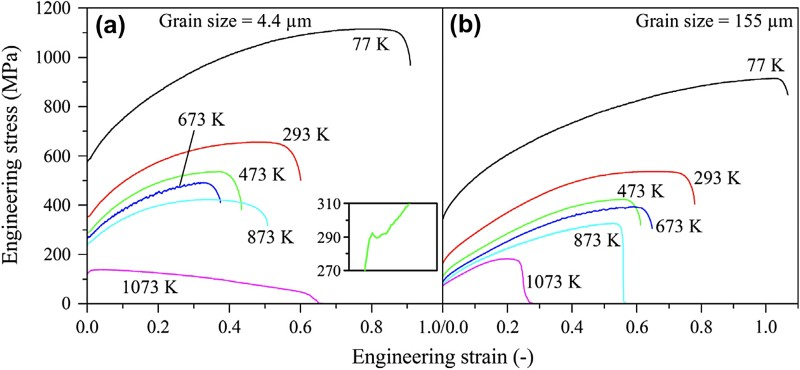
The impressive ductility and toughness is thought to be due to a high work-hardening rate, which is facilitated by high levels of deformation-induced nanotwinning at very low temperatures. 36,40,41,46 The prevalence of this twinning can be attributed to a particularly low stacking-fault energy. 37,43,47,310 However, while the ductility increase with decreasing temperature can be readily interpreted, the temperature dependence of yield stress in this compositionally complex alloy, and other HEAs is less well understood. This point was highlighted recently in the study by Wu et al., 42 which assessed the temperature dependence of yield stress in a number of equiatomic ternary and quaternary alloys based on CrMnFeCoNi. They highlighted that a key issue associated with modelling solute effects in HEAs is that there is no clear distinction between solute and solvent species. This is particularly pertinent for equiatomic HEAs like CrMnFeCoNi.
It has been recommended that instead of envisaging dislocations being impeded by discrete solute atoms in a matrix, they should be viewed as moving through an effective medium in which the resistance is created by an average effect. To this end, Wu et al. 42 used a modified Peierls-Nabarro lattice resistance to model the yield behaviour of CrMnFeCoNi, which accounted for thermal activation through the effect of temperature on dislocation width. 311–313 Recently, a more advanced Peierls-Nabarro model, which accounted for segregation to stacking faults among other complexities, was successfully applied to CrMnFeCoNi by Patriarca et al. 57
This Peierls-Nabarro approach is in contrast to that taken by Toda-Caraballo and Rivera-Diáz-del-Castillo, 314 who modified Labusch's model for solid-solution strengthening in concentrated alloys. 178,315 Labusch's treatment not only accounts for the effect of local strain fields around solute atoms, but also local changes in elastic modulus caused by their presence. This treatment was extended to HEAs, despite there being no clear distinction between solute or solvent, by estimating local changes in lattice spacing using the multicomponent model proposed by Moreen. 316 Good agreement was claimed between modelled and experimentally measured hardness values for many HEAs. However, the analysis used to reach this conclusion is questionable, since almost all the HEAs that were considered do not appear to have been measured in a single-phase solid-solution state. The difficulty is that alloys with larger atomic size misfits, which should in theory see increased solid-solution strengthening, tend to be unstable as single-phase solid solutions (Hume-Rothery) and instead appear hard due to the formation of extra phases. Hence, the lack of suitable case studies for solute strengthening in concentrated alloys is not surprising.
Even when suitable solid solutions can be made, the effects of short-range ordering (SRO) on mechanical behaviour could provide yet more complication. 309,317,318 SRO is also of particular interest to those modelling thermodynamic stability, since any ordering or clustering in a solid solution inherently reduces the configurational entropy of the system – equation 1 is only valid for an ideal solution, in which mixing is truly random. This point was highlighted recently by Bhadeshia. 247 Measuring SRO involves complex analyses of neutron or X-ray diffuse scattering data, as for the lattice strains discussed above. It is unlikely that SRO can be probed easily using atomic-probe tomography, 247 since the resolution of the technique is not sufficient.
Further interesting topics and questions have arisen from observations of other phenomena in HEA studies. For instance, a number of studies have observed serrations in the stress–strain curves of HEAs,
42,319,320
see Fig. 11. Classically, such serrations have been associated with dynamic strain aging (also known as the Portevin Le Chatilier effect
321,322
), and it is not clear where they are derived from in complex alloys like HEAs. It is possible that the diffusion of one set of solute atoms is causing this effect, but a more elaborate mechanism could also be at work. Stress v. displacement curves of the HEA Al


Based on the evidence that has been presented in the literature to date, it appears that the influence of the HEA core effects associated with entropic stabilisation, lattice distortion and sluggish diffusion may not be as significant as was first proposed. There are very few examples of HEAs that are believed to exist as entropically stablised solid solutions, and both experiment and theory suggest that the addition of more components to an alloy is likely to result in intermetallic formation or phase separation. Limited evidence exists as to the extent of lattice strain in the HEAs, and it can be argued that severe distortions would lead to rapid intermetallic formation (Hulme-Rothery). Normalised activation energies for diffusion in CrMnFeCoNi do appear to be higher than in conventional alloys, but the effect of variations in 
Nevertheless, HEAs offer a new and exciting approach to alloy design, with one of their most promising applications being structural materials. To this end, research focus should move away from trying to obtain single-phase HEAs, and instead develop alloys that posses the correct balance of mechanical properties. The possible number of candidate HEA compositions is huge, and educated sampling of compositional space is needed if research effort is to be expended efficiently. While parametric studies may be able to give some indication of the likelihood of solid-solution stability, and CALPHAD can give reasonable predictions of the majority phases in HEAs, both have limited success in predicting the formation of intermetallic compounds, which are of critical importance for the development of structural materials. However, they can be cleverly exploited as first-approximation guides in frameworks for alloy selection.
Rapid-throughput screening methods will likely be required to vet potential HEA compositions after predictive screening, but there are significant issues associated with their practical implementation. There is also a danger that promising alloys could be dismissed too early by these approaches, since they are less likely to explore the complex links between heat treatment, microstructure and properties. Indeed, careful experimental assessment of HEAs in general is necessary before conclusions are drawn about the characteristics and stabilities of their microstructures. Nanoscale precipitates and phase separations have often been observed, which necessitate the use of high-resolution techniques. Accurate and rapid microstructural measurement techniques are key if alloy selection initiatives are to be successful. The data they produced must be of sufficient quality to feed back into selection models.
Despite the conclusions drawn with respect to the founding principles of HEAs, we do not believe that changing the name of the research field would be helpful moving forwards. What is required is a change in the underlying science associated with the name. In our opinion a far more important matter is the adoption of a consistent alloy naming convention within the community. With that in mind, we suggest that when expressing HEA compositions as atomic ratios, the elements are listed by atomic number, and that the order is not influenced by the relative concentrations of each species.
In a recent review, 8 it was proposed that the traditional principles of physical metallurgy that have been developed over the past century need to be modified in light of HEA behaviour. We do not believe this is the case – although some HEAs do exhibit unusual behaviour, it is likely that this is derived from the same processes already acting in conventional alloys. Nonetheless, the study of HEAs does offer tremendous potential to improve our fundamental understanding of the mechanical and thermodynamic behaviour of alloys, as well as develop useful new materials.
HEAs have thrust us out of an age of limitation, where alloys were designed around one principal element, and into a new world of seemingly endless possibility. However, careful and educated alloying is required, such that we focus our attention on key features of the compositional landscape presented by HEAs, rather than wander somewhat aimlessly in its limitless expanse.
Footnotes
Acknowledgements
The authors would like to acknowledge L.R. Owen, Dr H.J. Stone, Dr K.A Christofidou and Prof. I. Todd for useful discussions and suggestions in reference to this work. The authors would also like to thank the reviewers of the original version of this manuscript for their exceptionally insightful and useful comments. One of the authors (NGJ) would like to acknowledge the EPSRC/Rolls-Royce Strategic Partnership for funding under EP/M005607/1.
