




Abstract
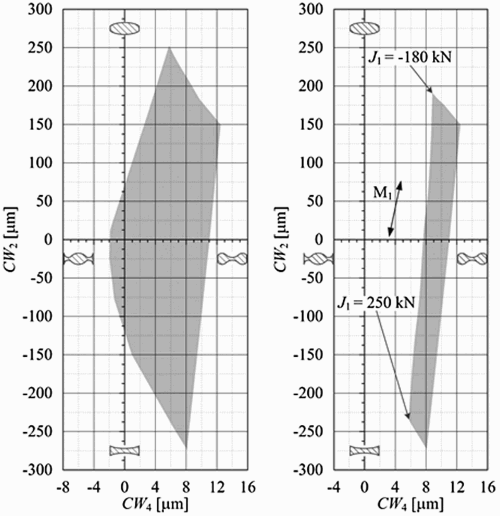
A new method is developed for quantifying the shape controllability of rolling mills for flat products. The method enables one to acquire a comprehensive and accurate assessment of shape control performance in such a way that both the adjusting range and the ability to bear undesirable rolling force fluctuations can be efficiently articulated, understood and studied. A concise discussion concluding the formulation of the evaluation system is offered regarding the general applicability of it. To demonstrate the feasibility of our approach, an example application is presented to the adjustment characteristics analysis of a six-high mill for its three fast acting actuators. Significant differences are found in the effects of work stability changes on the stand’s capability to counter quadratic and quartic terms of flatness deviations. The underlying factors which are likely to be responsible for such differences and an unfavourable condition that may arise in actual production are also discussed.
Get full access to this article
View all access options for this article.