Abstract
Introduction
There is little information about the effects of scoliotic curves on self image (SI) and mental health (MH) based on validated questionnaires. Aim was to analyze the effect of scoliosis on MH and SI in a non-disabled adult idiopathic scoliosis (AdIS) population having curves under surgical indication threshold (Main Thoracic (MT) Cobb (≤ 55°), and Thoracolumbar/Lumbar (TL) curve (≤ 45°).
Material and Methods
A retrospective analysis of a multicenter, prospective, consecutive patient series. Inclusion criteria were: non operated AdIS, ≥ 18 years of age, MT Cobb 20–55°, TL Cobb 20–45°, ODI <20, SRS 22 Pain score > 4. ODI and SRS22 pain score were used to distinguish patients that have pain and disability from the ones that do not. SRS- 22 and SF-36 normative data for different age groups were used for comparison. AP and lateral Cobb measurements, sagittal plane parameters and demographic data were analyzed in terms of correlations with SI and MH parameters.
Results
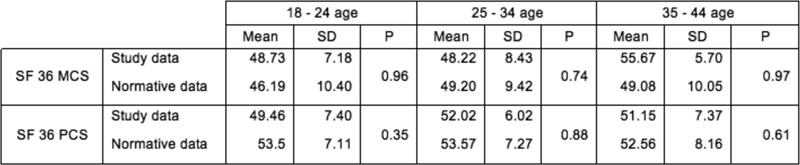
76 patients (64F, 12M) met the inclusion criteria. Mean age was 25.9 (18–44), mean MT Cobb was 38.5° (21–55) and TL Cobb was 34.6° (25–44). SRS-22 MH, SI and other domains were similar with SRS normative data (p > 0.05). SF-36 MCS and PCS domains for age groups 18–24, 25–34 and 35–44 were not significantly different than normative data (p > 0.05). None of the demographic and radiographic parameters were correlated with changes in SRS-22 function, SI, MH and SF 36 MCS, PCS parameters.
Conclusion
AdIS does not affect mental health and self-image in non-disabled patients with curve magnitudes below the surgical threshold.