



Abstract
Introduction
This large-scale study aimed to determine the effect of non-neurological complications in complex adult spine deformity surgery upon post-operative functional/disability profiles.
Methods
This is an international prospective multi-center study involving 15 sites from North America, Europe, and Asia. Adult patients with severe spinal deformity were assessed at 6 weeks and 6 months post-operatively. Non-neurological complications were recorded and grouped into intraoperative events, minor and major complications. Post-operative functional/disability outcomes were evaluated by Oswestry Disability Index (ODI) and SRS-22 pre-operatively and at each follow-up (Fig. 1).
Results
269 subjects were included (68% women and 32% men; mean age: 57.8 years). There were no significant differences in pre-operative ODI and SRS-22 scores between patients with and without major complication. At 6 weeks and 6 months after surgery, patients with major complications had significantly worse ODI and SRS-22 scores compared with patients without major complications (p < 0.005). Both groups with and without major complications showed statistically significant functional improvement 6 months after surgery (p < 0.0001). Improvement in functional scores were similar in patients with and without intra-operative events and/or minor complications (p > 0.05).
Conclusion
Based on the largest, multi-center study addressing complex adult spine deformity patients, worse post-operative functional/disability profiles were noted up until 6 months follow-up in patients who experienced major complications than those that did not. Similar functional/disability profiles were noted in patients who experienced intra-operative or minor complications. This study further broadens the understanding of postoperative surgical outcomes, risk profiles, and clinical/patient expectations following such deformity surgeries.
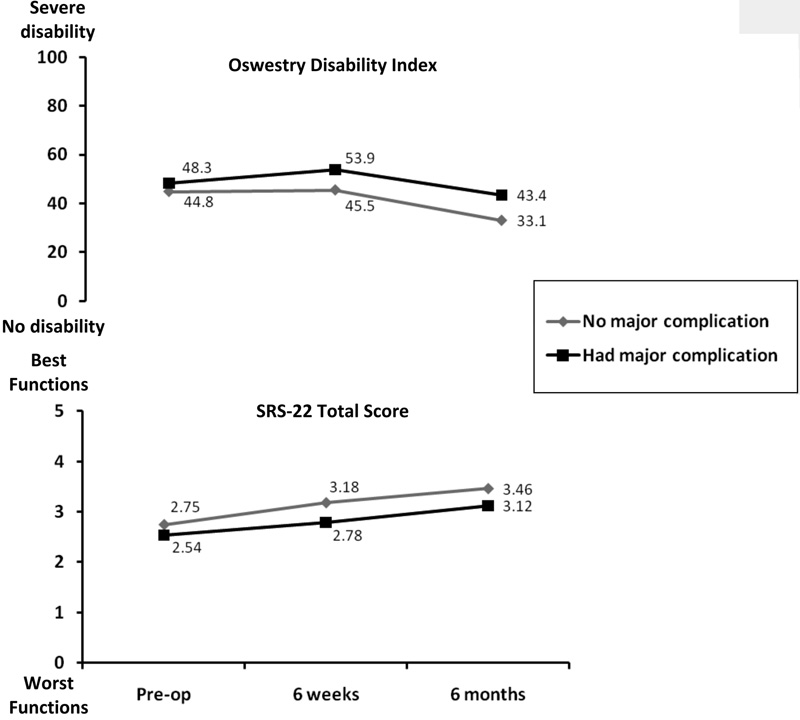
Mean ODI and SRS-22 total score at pre-operation, 6 weeks and 6 months follow up.