



Abstract
Introduction
Back pain affects a large portion of the population across all ages, and intervertebral disc (IVD) degeneration is its most common cause. Presently, there are no established treatments to prevent, stop, or even retard disc degeneration, and surgery is often the offered option. Previous studies have shown that Link-N can act as a growth factor and stimulate the synthesis of proteoglycans and collagens in articular cartilage, in bovine IVD in vitro, and in intact human IVDs ex vivo, as well as increase disc height in a rabbit model of disc degeneration. However, the sequences in Link-N involved in modulating cellular activity and the stability of Link-N in the presence of IVD cells are not well understood.
Materials and Methods
Human lumbar spines were obtained through the Transplant Quebec's organ donation program. Six spinal segments were retrieved (mean age 30 years) and IVD cells were isolated from the nucleus pulposus (NP) and inner annulus fibrosus (iAF) regions by sequential enzymatic digestion. IVD cells were cultured in monolayer in the presence of Link-N to assess its stability in culture. Media was collected at designated time points from the cultures and was analyzed by MALDI-TOF and MS-MS mass spectrophotometry to evaluate the stability of Link-N peptide. IVD cells embedded in 1.2% alginate were exposed to the identified Link-N fragments and to the native scrambled or reversed Link-N peptides in the absence and presence of IL-1β to assess the biological activity of the peptides. SO4 incorporation was used to assess proteoglycan synthesis in response to the peptides. All peptides were used at equimolar concentrations.
Results
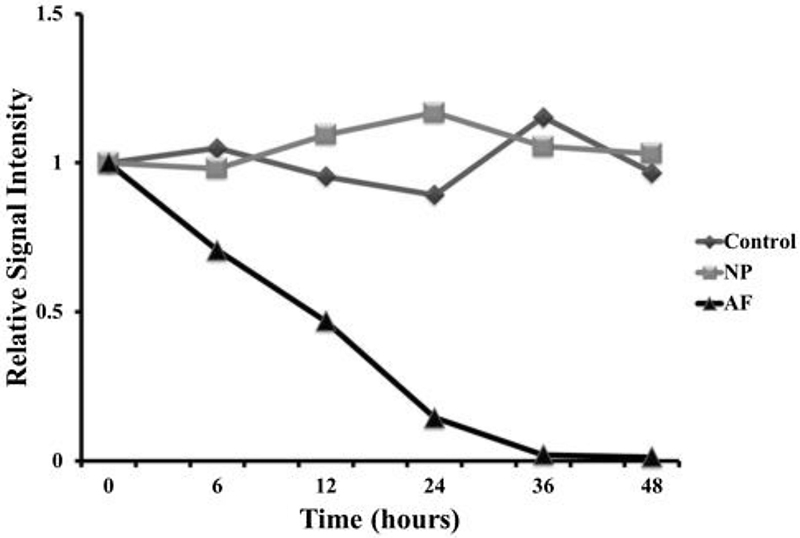
Mass spectrometric analysis revealed that a peptide spanning residues 1 to 8 was generated in the presence of human AF, while the original 16 amino acids peptide remained intact in the presence of NP cells. Link-N 1-8 significantly induced proteoglycan production in the absence and presence of IL-1β in both human NP and AF cells, confirming that the biological effect is maintained within the first 8 amino acids of the peptide. A reversed or scrambled Link-N peptide, as well as residues 9-16 of Link-N, had no biological effect.
Conclusion
In conclusion, Link-N 1-8 peptide is a promising therapeutic alternative for treating early disc degeneration before major collagen degradation has occurred. One advantage in using this shorter 8 amino acid peptide rather than the original 16 amino acid Link-N in therapy is the production cost. More important, this small size should be amenable to medicinal chemists allowing them to optimize the structure for maximal biological activity and stability. Thus Link-N 1-8 could be a promising candidate for biologically induced disc repair, and the identification of such a stable specific peptide may facilitate the design of compounds to promote disc repair and provide alternatives to surgical intervention for early stage disc degeneration.
None declared