



Abstract
Introduction
Expressions of miR-146a in chondrocytes were shown controversial effect according to different studies. This study is designed to demonstrate for the first time that MiRNA-146a is involved in intervertebral disc homeostasis, and its role in anti-inflammatory effect via both in vitro and ex vivo tests.
Materials and Methods
NP cells isolated from bovine tails in monolayer were transfected with synthetic miR-146a, and IL-1 was administered in parallel to provoke a catabolic response, using PCR and WB to confirm its effects. Then, histologic analysis using an ex vivo organ culture model of miR-146a KO mouse was used.
Results
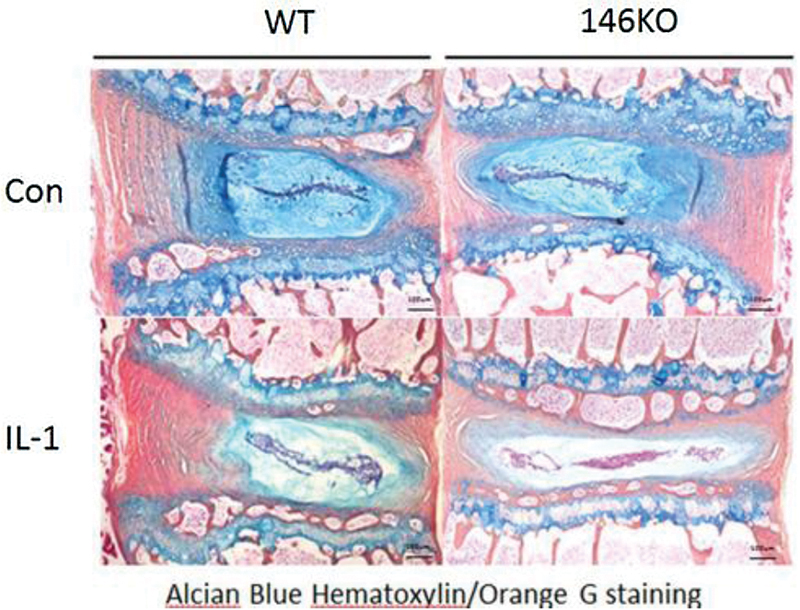
In bovine disc NP cells in vitro experiment, PCR results showed the presence of IL-1 significantly increase the expression of all the cytokines when compared with the control group. Transfection of miR-146a antagonized IL-1 mediated increase of degrading enzymes and the inflammatory related cytokines. WB results also confirmed the miR-146a effects. Ex vivo mice whole disc organ culture model showed when challenged by IL-1, the 146KO NPs showed more serious decrease of GAG and degeneration, compared with WT NPs. And the numbers of MMP-13 and Adamts5 positive cells were significantly increased in the NPs of 146-a KO mouse than the WT.
Conclusion
The overexpression of miR-146a of bovine NP cells showed strong anti-inflammatory effects, and we thought that miR-146a might also be involved in the process of IVD degeneration, which is closely related with inflammatory factors. The relative importance of miR-146a as compared with other miRNA or proinflammatory factors in the process of IVD degeneration, however, needs further investigations.
None declared