




Abstract
Introduction
Schmorl nodes of the thoracolumbar region have been associated with the presence and severity of disc degeneration in adults. The etiology of Schmorl nodes remains precarious; however, a unique multilevel phenotype of “kissing” nodes seems to suggest a developmental origin. The neurocentral synchondrosis (NCS) are cartilaginous growth plates near the neural arch ossification centers in a growing vertebrae that may play a direct role in the development of endplate abnormalities, such as Schmorl nodes. This study assessed the NCS in pediatric spines to raise discussion of a developmental component of Schmorl nodes.
Materials and Methods
A retrospective imaging study of pediatric patients at a single institute assessed over a 5-year period (age range: 0-10 years) was performed. Patients with spinal disorders (e.g., scoliosis) were excluded. A total of 102 patients (57 males and 45 females) and a total of 113 sets of MRI images were reviewed. The thoracolumbar regions (T12-S1) were evaluated. Sagittal T1- and T2-weighted images were assessed for the presence or absence of the NCS, defined as a hypointense vertical line located between the vertebral body anteriorly and the posterior arch. The presence of Schmorl nodes was also noted.
Results
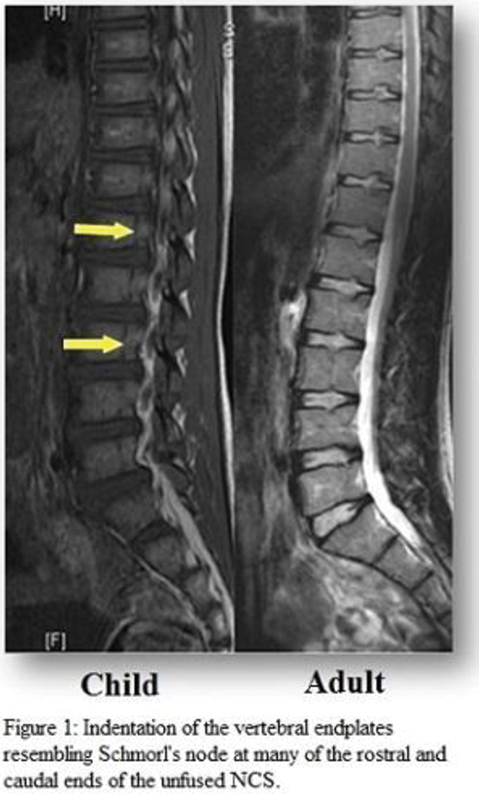
NCS was noted in 46% of the MRIs. No statistically significant difference in the disappearance of the NCS between different age groups (p = 0.063) or gender (p = 0.706) was found. The NCS was noted to be completely fused at the midpoint of the vertebrae. Indentation of the vertebral endplates resembling Schmorl node at many of the rostral and caudal ends of the unfused NCS were observed (Fig. 1).
Conclusion
The significance of further characterizing the nature of NCS closure may lie in potential associations with failure of complete closure with endplate abnormalities, such as Schmorl nodes. Our MRI study provides a foundation that a development etiology of Schmorl nodes exists.
None declared