




Abstract
Introduction
Back pain is one the most frequent complaints and has an impact on the quality of life. Intervertebral disk (IVD) degeneration is the single most common implicated cause of back pain. Presently, there is no medical treatment or therapeutic agent to address this problem and surgery is the only offered option. Intervertech 1 (IVT 1), currently being patented by Intervertech Inc., represents a novel peptide produced in mammals. It has the ability to heal injured tissues and increase cell resistance to hypoxic episodes. The purpose of the present study is to determine the effect of IVT 1 on human disk cell survival and extracellular matrix synthesis.
Materials and Methods
Results
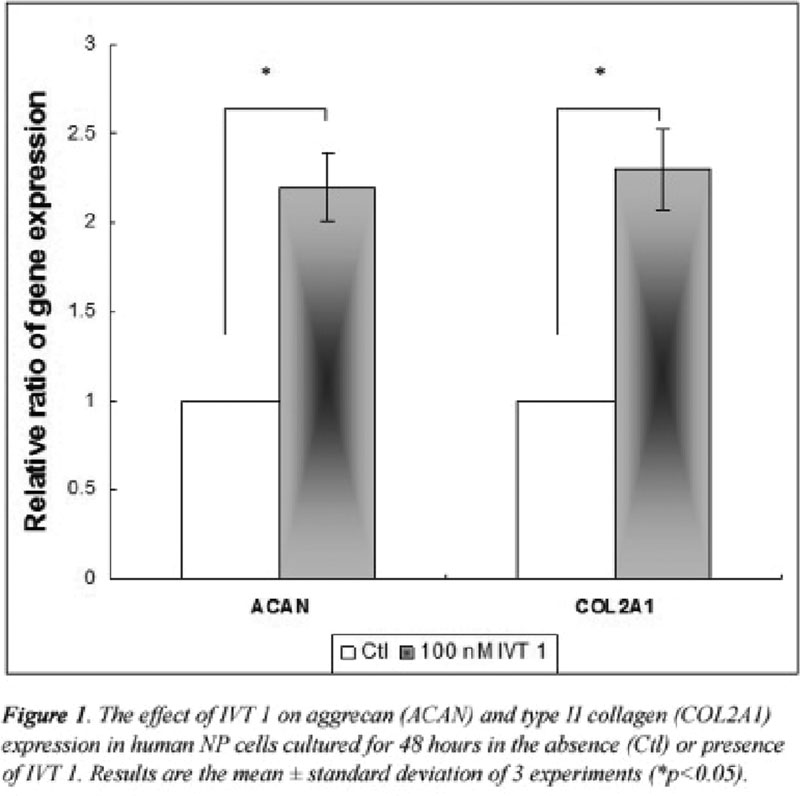
The response of cells from the IVD to varying IVT 1 levels from 50 nM to 150 nM was examined when cultured in monolayer. Human IVD cells express the IVT 1R and are sensitive to its ligand. In both cells from the NP and AF, the receptor increased with 100 nM and 150 nM IVT 1 but not at 50 nM after 3 hours stimulation when compared to the control, then tended to decrease at 24 hours, but increased after 24 hours at all concentrations. Finally, after 72 hours, the IVT 1R was only stimulated at 50 nM. When human NP cells were exposed to 100 nM IVT 1 for 48 hours, aggrecan (ACAN) and COL2A1 message increased significantly compared with control cells (Fig. 1).
Conclusion
The role of IVT 1 in disk metabolism is not understood. IVT 1 is a small peptide involved in a wide variety of physiological functions. The present data indicates that IVT 1 receptors are present in human disk cells. The existence of these receptors means that IVT 1 can affect disk cell metabolism through them. IVT 1 represents a novel growth factor for enhancing the expression of aggrecan and type II collagen in human IVD. It holds promise as a potential therapeutic agent for IVD repair. One major advantage of IVT 1 over recombinant growth factors for therapeutic use is the large saving in cost. IVT 1 therefore represents a potential economical growth factor with beneficial effects on disk repair.
Yes
None declared