






Abstract
Introduction
Offshore sailing yields injury risk. Unfortunately, many studies are restricted to a specific geographic location, regatta, or class of sailboat or to only professional sailors. Therefore, the primary aim of this study was to gather a large database of sailing-related injuries with demographic, injury, and voyage characteristics.
Methods
An observational study of self-reported offshore sailing-related injuries was performed using an internet-based, multiple-choice survey distributed on social media. Data were analyzed statistically with the use of the Shapiro-Wilk test, Mann-Whitney U test, and χ2 test.
Results
Five hundred sixty-eight people completed the survey, 217 women and 351 men, with a mean age of 36.26 y (SD=13.69 y). Among reported 793 cruises, 141 resulted in injury (18%). The most frequent injury types were contusion (40%) and skin lesions and lacerations (20%); the most frequent locations were hand (28%) and foot and ankle (18%), and the most frequent mechanisms were tripping/falling (33%), being hit by an object (19%), and using ropes (19%). Sex, age, and sailing experience were not injury risk factors, while higher number of offshore days was (P=0.0004). None of the analyzed voyage characteristics (purpose, ship’s class, position on the ship, ship’s length overall, type of rigging, and harness wearing) were injury risk factors. Sailors perceived the following as risk factors: inattention/distraction (34%), difficult weather conditions (22%), and fatigue/lack of sleep (14%).
Conclusions
Approximately 1 in 5 cruises resulted in an injury, occurring regardless of demographic, injury, and voyage characteristics. The multifactorial nature of injuries poses a challenge in implementing safety measures. The authors hope that this study may aid in that cause.
Introduction
Sailing is an ancient means of transportation and has been a recreational and competitive endeavor for hundreds of years. However, relatively little is known about the injuries associated with this sport. 1 -3 Most studies regarding the nature and cause of sailing injuries have been limited by small datasets and restricted to a specific geographic location, regatta, or class of sailboat. 1 -3 Offshore sailing, defined as sailing on seas and oceans, is no longer the realm of experienced, professional, and predominantly male participants but is increasingly accessible to amateur enthusiasts with various levels of experience. It encompasses a wide spectrum of activities from recreational sailing to around-the-world ocean racing. Sailboats range in size and type of rigging from single-handed small yachts to 150-m–long square-rigged tall ships. Depending on various factors, such as the type of ship, crew position, and environmental conditions encountered, the physical demands of offshore sailing can vary widely.4,5
Offshore sailors are prone to injuries 6 that may occur during recreational as well as professional voyages and during regattas. Professional sailors are sailors with a financial interest in the sport or who are being paid to sail, and sailors who sail as a pastime are considered amateurs. 7 Furthermore, amateur or recreational offshore sailing has very different specifications and crew demands from those of ocean yacht racing, limiting the applicability of the injury epidemiology already published in the literature. 3 Sailors are at risk of acute injuries from direct impact, which can result in lacerations, contusions, and fractures, as well as chronic injuries from repetitive activities, such as hiking, handling lines, and steering. 6 Injury prevention aboard a vessel is particularly important due to the fact that definitive medical care is often hours or days away and medical supplies are limited. 1 Moreover, on smaller vessels, usually none of the crew members has previous medical training, further hindering possibilities of medical help. 8 A better understanding of the most common types of sailing-related injuries, risk factors, and mechanisms by which they occur can facilitate the development of evidence-based injury prevention strategies.
The primary aim of this study was to determine the prevalence of sailing-related injuries with demographic, injury, and voyage characteristics among Polish sailors. The secondary aim was to determine risk factors for sailing-related injuries. Analysis of these data may help to identify recurrent patterns of injury, which may be useful in developing evidence-based injury prevention strategies.
Methods
Survey Design
An observational, retrospective study of self-reported sailing-related injuries was performed accordingly to Strengthening the Reporting of Observational Studies in Epidemiology recommendations,
9
using an internet-based multiple-choice survey developed on Google Forms. As the survey was in the Polish language, the link to the English translation of the survey is
Within the demographic section, data concerning age, gender, and country of residence were collected. Within the sailing experience section, data concerning self-assessed sailing experience, sailing certificates, and estimated number of days on seas/oceans in 2019 were collected. Within sections concerning voyages, description of the cruise including data about type and length of the cruise; ship’s class, overall length, and rig type; position on the ship; and the rules regarding wearing a safety harness were collected. Questions about injury concerned type of injury, anatomic location, mechanism, location onboard where the injury was sustained, activity during which the injury occurred, severity of injury, as well as the respondent’s opinion about the factors that could have contributed to the injury. More than 1 answer could be selected as factors contributing to injury and its severity. Contributing factors listed in the survey were difficult weather conditions, fatigue/lack of sleep, alcohol intoxication, ship’s equipment/component failure, insufficient training/experience of the crew or communication problems, racing/regattas, seasickness, inattention/distraction of the subject, and others. Severity of injury was classified according to postinjury medical measures, such as first aid on the ship, doctor’s appointment during the voyage (including doctor on the sailboat, doctor on land, or telehealth visit), stay in the emergency department/hospitalization, treatment after the voyage, and evacuation from the ship. All of the questions were marked as obligatory with the exception of open questions about the exact diagnosis if made by a medical professional. Surveys with not fully completed obligatory questions were excluded from the final analysis. All of the questions had the option of marking “other” as an answer, and respondents could write their own response, which was later analyzed and reviewed by study investigators. As the surveys were distributed on various offshore sailing-related websites and Facebook groups, it was impossible to assess response rate.
Approval of the ethics committee was not required because according to the National Act of December 5, 1996, the professions of doctor and dentist, this study did not meet criteria of a medical experiment. Similarly, according to the National Act of May 11, 1999, detailed regulations on bioethics committees, consent for this kind of study is not required.
Statistics
Descriptive statistics were used to describe the sample characteristics, and frequency tables were used to characterize the injuries that occurred during evaluated voyages. Numerical data are presented as mean with standard deviation (SD). Categorical data are presented as counts and percentages. The normality of the distribution for continuous variables was evaluated using the Shapiro-Wilk test, and due to data distribution, that was not normal (P<0.05); the Mann-Whitney U test was performed accordingly. The χ2 test was used to compare the categorical variables. Each comparison of continuous variables was performed by means of the Mann-Whitney U test, while each comparison of nominal variables was performed by means of the χ2 test. Results with P values of <0.05 were considered statistically significant. All of the statistical analyses were performed with the Statistica 13 (StatSoft, Poland) program.
Results
Demographics and Sample Characteristics
A total of 568 people completed the survey, among whom 217 were women (38%) and 351 were men (62%). The study population was a diverse group of amateur sailors, trainees, and professional sailors, 25% of whom were sailing on vessels more than 21 m in length. The mean age was 36.3 y (SD=13.7 y). Two hundred twenty-two (39%) sailors had perceived advanced sailing experience. The same number of sailors had perceived intermediate level of experience. Seventy-three (13%) had perceived professional sailing experience. Only 51 (9%) sailors reported themselves as beginners. The average number of days at sea in 2019 was 34.1 d (SD=44.4 d). The majority of cruises 455 (58%) had a recreational purpose. Among 793 sailings reported by 568 people, 141 resulted in injury (18%) and 652 did not.
Sustained Injury Characteristics
Type and Anatomical Localization of Injury
As shown in Table 1, the most frequent type of injury among the 141 sailings reported was contusion (40%), followed by skin lesions and lacerations (20%) and joint sprain (10%). The injuries most often concerned the hand (28%) and foot and ankle (18%) (Figure 1).
Characteristics of sustained injury
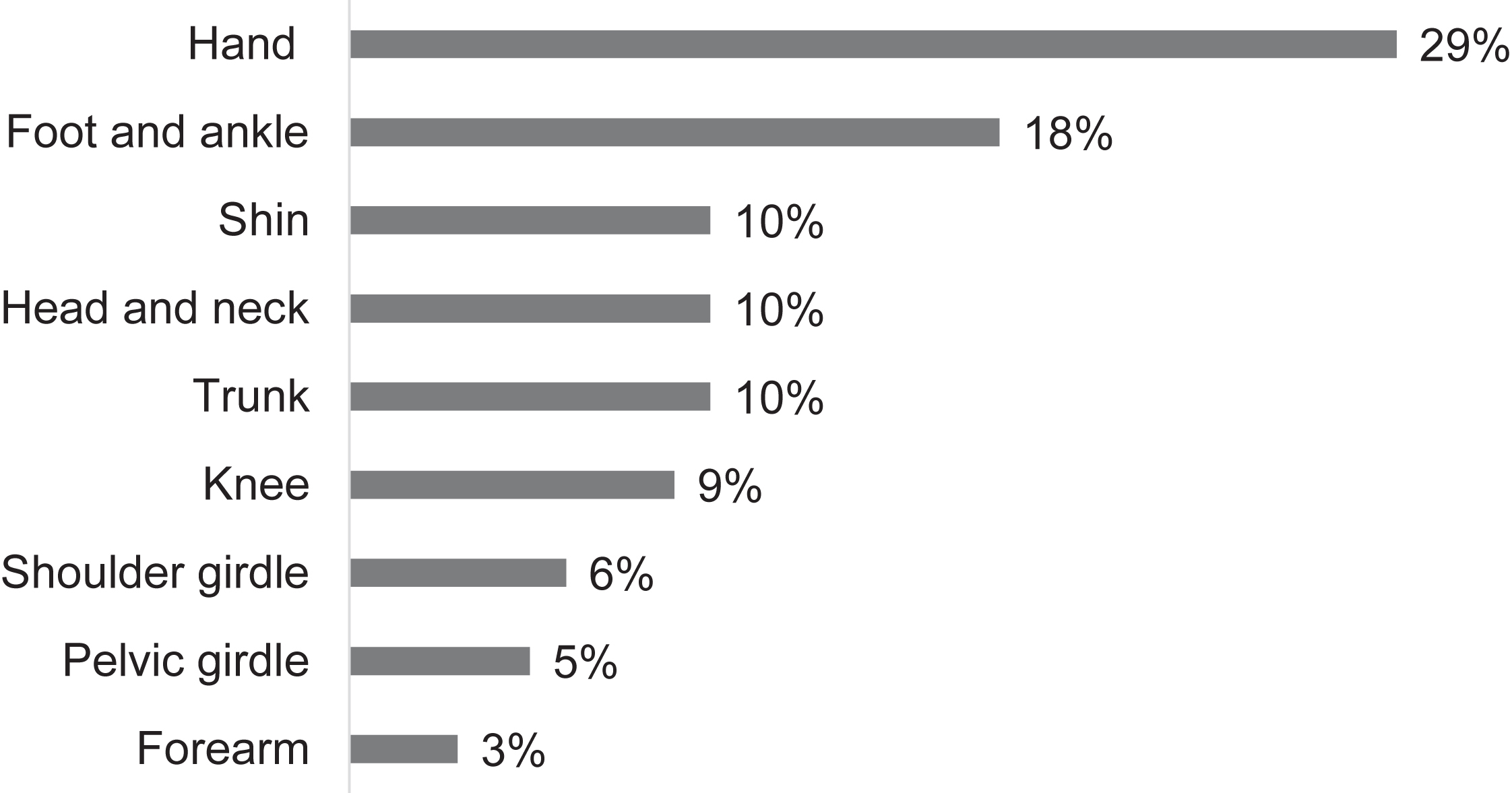
Anatomical location of injury.
Mechanism of Injury, Location on the Ship, and Activity during the Injury
The top 3 mechanisms of injury among the 141 sailings reported were tripping/falling (33%), being hit by an object (19%), and injury while using ropes (19%). The injuries most often occurred on the midship (32%), in the cockpit (15%), and below the deck (14%). Sailors reported that the injuries were most frequently sustained during everyday activities on board, such as walking or cooking (36%), working with ropes such as pulling or easing (17%), and harbor maneuvers or anchoring (16%) (Table 1).
Severity of Injury
The majority of injuries among the 141 sailings reported required either no medical intervention or only first aid on the ship (36% and 31%, respectively). Fifteen percent of the injuries required treatment by a doctor after the voyage, 10% required treatment during the voyage, and 5% required a stay in the emergency department or hospitalization in the ward. Only 2% of the injuries resulted in a need for medical evacuation from the ship (Figure 2).
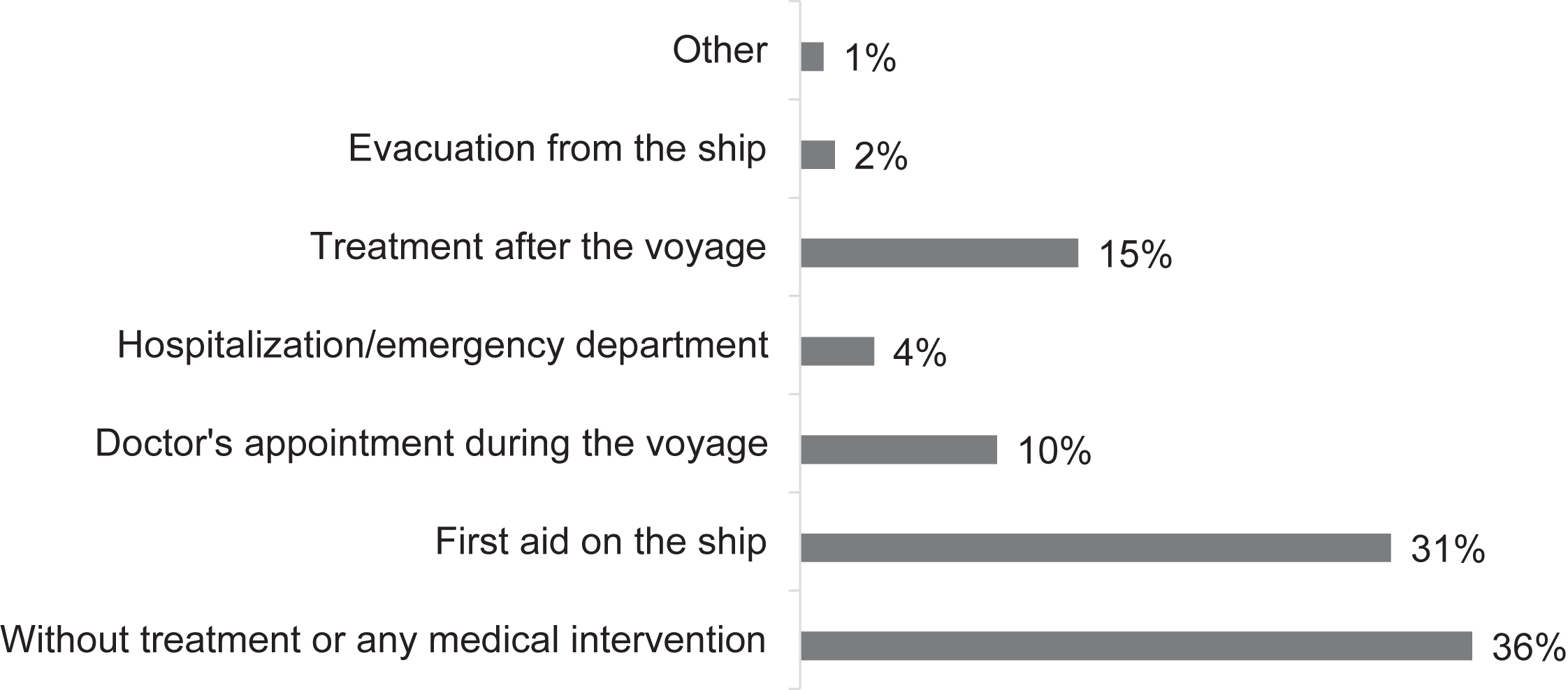
Severity of injury.
The cases that required an evacuation were brain concussion and subarachnoid hemorrhage after being hit in the head during harbor maneuvers, open fracture of the distal phalanx of the hand, and brain concussion after falling and hitting the head.
Risk Factors for Injuries
Demographics, Sailing Experience, and Number of Offshore Days as Risk Factors
Sex, age, and sailing experience were not statistically significantly associated with the risk of sustaining an injury. However, the average number of days at sea in 2019 was 40.3 (SD=44.4) for those who were injured and 32.4 (SD=44.4) for those who were not (P=0.0004). All data concerning injury prevalence accordingly to demographics, sailing experience, and offshore days are summarized in Table 2.
Injury prevalence accordingly to demographics, sailing experience, and offshore days
SD, standard deviation.
Percentage of sailors with injury within the sailing experience category among all sailors with injury. Percentage of sailors without injury within the sailing experience category among all sailors without injury.
Voyage Risk Factors
Among analyzed potential voyage risk factors, purpose of the voyage, ship’s class, position on the ship, and ship’s length overall, there was no statistically significant association of injury rate prevalence with any of the potential voyage risk factors (Table 3). The type of rigging and harness-wearing rules were not associated with injury risk as well. As to the type of rigging, among the 141 cruises that resulted in injuries, an injury was sustained on 42% of all the cruises on board a schooner with a square sail, 32% of cruises on a full rigged ship, 23% of cruises on a ketch, 22% of cruises on a brig, 18% of cruises on a barquentine, 17% of cruises on a sloop, 15% of cruises on a yawl, and 13% of cruises on a schooner without any square sail. There was no injury reported on cruises on board cutter, brigantine, barque, and ket (P=0.34189). As to harness wearing rules, a total of 293 sailors reported that they were required to wear a harness during severe weather conditions during the day and at night regardless of weather conditions. This, however, had no statistical significance with regard to the injuries suffered (P=0.99966).
Injury prevalence accordingly to voyage risk factors
Class A—all square-rigged vessels (barque, barquentine, brig, brigantine, or ship rigged) with a length of hull (LOA) of more than 24 m and all other vessels with an LOA of more than 40 m, regardless of rig. Class B—traditionally rigged vessels (ie, gaff rigged sloops, ketches, yawls, and schooners) with an LOA of less than 40 m and with a waterline length (LWL) of at least 9.14 m. Class C—modern rigged vessels (ie, Bermudan rigged sloops, ketches, yawls, and schooners) with an LOA of less than 40 m and an LWL of at least 9.14 m not carrying spinnaker-like sails. Class D—modern rigged vessels (ie, Bermudan rigged sloops, ketches, yawls, and schooners) with an LOA of less than 40 m and an LWL of at least 9.14 m carrying spinnaker-like sails.
Factors Contributing to the Risk of an Injury—Perception of Sailors
The most common factors perceived by sailors as contributing to the increased risk of an injury among the 141 sailings reported were inattention/distraction (34%), difficult weather conditions (22%), and fatigue/lack of sleep (14%). The rest of the reported factors perceived as contributing to the increased risk of an injury are described in Figure 3.
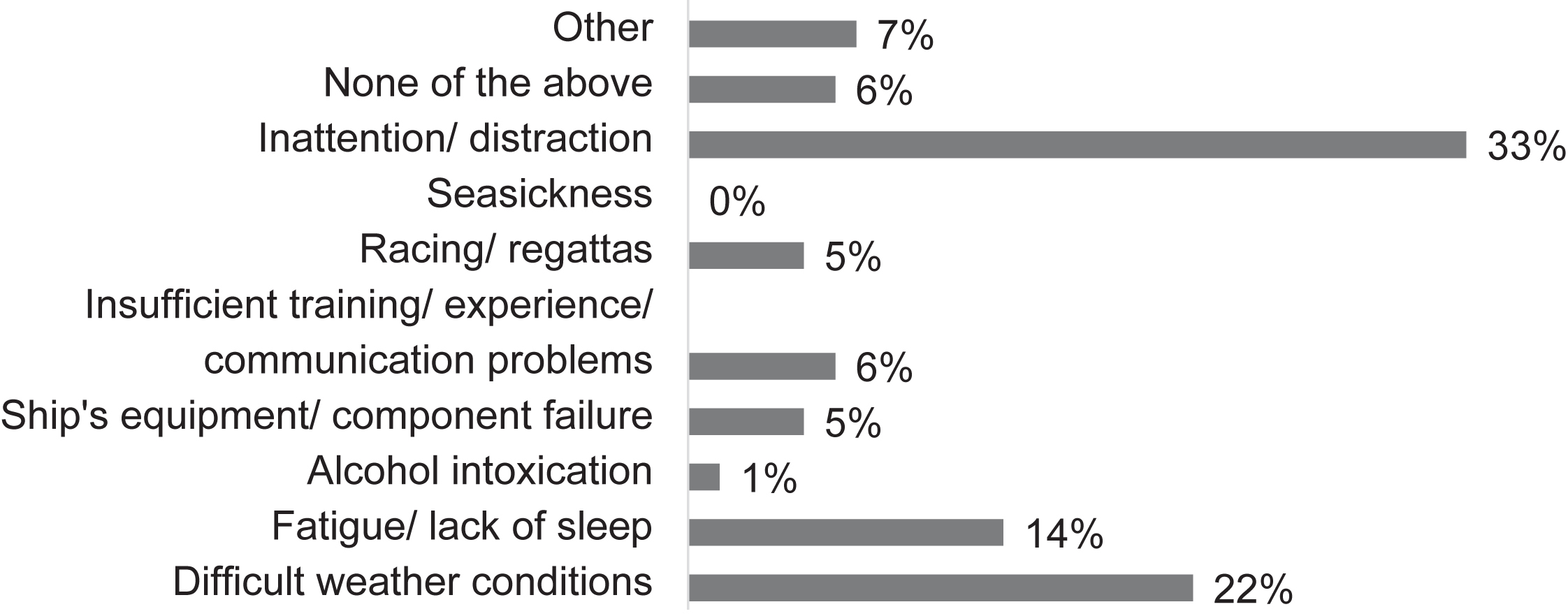
Factors contributing to the risk of an injury—perception of sailors.
Discussion
Main Findings of the Study
The primary aim of this study was fulfilled by gathering a large database of sailing-related injuries with demographic, injury, and voyage characteristics. The secondary aim was fulfilled as well by statistically assessing which of the gathered characteristics increased the risk of sustaining an injury. Therefore, comparison with literature was performed by comparing demographic, injury, and voyage characteristics with those in studies reporting both amateur and professional sailing in various specific geographic locations, regattas, or classes of sailboat. 1 -3,6,8,10-18
Comparison with the Literature
Type and Anatomical Localization of Injury
As to type and anatomical localization of injury, the results of this study remain in partial agreement with those reported in the literature. In the study by Nathanson et al 1 regarding keelboat and dinghy sailing, leg contusions, hand lacerations, and arm contusions were the most often reported injuries. In another paper by Nathanson et al 10 about the Newport to Bermuda race, 47% of injuries affected the hand. Such descriptions are comparable with results of this study, with the most frequent location of injury being hands and foot and ankle and the most frequent type of injury being contusions as well as skin lesions and lacerations.
Mechanism of Injury, Location on the Ship, and Activity during the Injury
Concerning mechanism of injury, location on the ship, and activity during the injury, in this study, the majority of injuries resulted from tripping, slipping or falling, being hit by an object, or using ropes, similar to the mechanisms reported in the study conducted by Nathanson et al. 1 In another aforementioned paper by Nathanson et al, 10 in the Newport to Bermuda race, most injuries were caused by operating winches and handling lines under high tension. As to location on the ship and activity during injury, in this study, the injuries were most often sustained on the midship, in the cockpit, and below deck during everyday activities, which is in contrast to the research published by Neville et al. 2 The authors stated that in ocean yacht racing, a large proportion of injuries (33%) occur below the deck because of the greater volume of time spent below deck and the violent and sudden movements of the yachts, whereas in their study concerning America’s Cup yacht racing, most injuries during sailing resulted from impact with boat hardware on or above the deck. The authors of this study agree with the suggestion by Neville et al 2 that characteristics of injury with regard to location on the ship and activity during injury may be dependent on the type of voyage.
Severity of the Injury
As to the severity of injuries, more than one-third of the injuries reported by respondents in the current study did not require any treatment or medical intervention, which is in agreement with the results of other studies.1,11 Therefore, it was suggested that the majority of injuries aboard sailing vessels can be dealt with onboard provided the crew members have appropriate basic medical training. 11 Price et al, 3 in their research, showed a need for further research to establish optimal medical requirements for offshore sailing. The authors of this study hope that the large database of sailing-related injuries with demographic, injury, and voyage characteristics reported in this study may aid in establishing referenced optimal medical requirements for offshore sailing.
Demographics, Sailing Experience, and Number of Offshore Days as Risk Factors
Taking sex into consideration, the results were not statistically significant, and males and females had a similar risk of injury as in the descriptive study concerning Australian Olympic class and State Sailing Pathway Program athletes. 12 Unlike the results reported in a paper by Neville and Folland, 6 in which the most injured were the intermediate sailors, our results concerning sailing experience showed that the most injured group contained the experienced ones (41% of all injured sailors). The age and number of offshore days were incomparable with the literature because of the lack of similar data in the studies.
Voyage Risk Factors
As for the ship’s class, ship’s length overall, type of rigging, purpose of voyage, harness wearing policy, and position on the ship, there are no studies in the literature that can serve as a comparison to our data. To the authors’ knowledge, this is the first study concerning injuries sustained during amateur offshore and tall ship sailing. Many studies focus on Olympic and professional sailing, 13 whereas we included a wider range of both amateur and professional sailors. Purposes of voyage included recreational, training, regatta/races, and professional sailing, and there was no similarity between them and the others described in the literature.
Factors Contributing to the Risk of an Injury—Perception of Sailors
It is not easy to establish all the factors that influence sailors’ injuries because of the complexity of various interactions. 6 In our study, the most important factor that increased the risk of an injury reported by sailors was inattention/distraction (34%). This finding is in agreement with the study conducted by Ryan et al, 4 in which inattention/lack of lookout was a leading cause of accidents resulting in both nonfatal and fatal injuries. However, according to the National Association of State Boating Law Administrators, operator inattention is estimated between 9 and 14% in all vessel fatalities annually. 14 We found out that heavy weather conditions have an impact on the incidence of injury. The results remain in agreement with the literature, which also indicates the big role of wind speed.13,15 Fatigue/lack of sleep is another factor that remains associated with injury. 13 The study by Jepsen et al 16 takes into consideration the severity of consequences caused by fatigue and shows the importance of proper tools, which should be implemented to avoid accidents in the future. Unlike the study by Nathanson, 15 none of our responders indicated seasickness as a contributing factor.
Safety Recommendations
A need for development of evidence-based injury prevention strategies for offshore sailing was highlighted in previous studies.1,3 Based on the results of this study, the authors attempted to formulate some potential safety recommendations. The most common injury was a skin lesion or laceration on the hand. Management of this type of injury requires basic knowledge in surgical suturing and dressing the wound. Although first aid courses, such as the one for Standards of Training Certification and Watchkeeping, focus on cardiopulmonary resuscitation, care should be taken also to teach the sailors how to manage and stitch smaller wounds. This is of particular importance onboard smaller vessels, where there is no requirement of having Standards of Training Certification and Watchkeeping certification. The presence of staff who are appropriately trained in and equipped with first aid is important. 17
The most common cause of medical evacuation from the ship was concussion as a result of craniofacial injury caused by direct impact to the head. Usage of protective headgear, padding, and higher boom clearance may reduce impact injuries, especially severe craniofacial ones. 1
The most frequent mechanism of injury was tripping/falling, and as suggested by Nathanson et al, 1 falls and slips could be reduced by improved footwear, better antiskid desk surfaces, more economic deck layouts, and adherence to the sailing maxim, “one hand for you and one hand for the ship.”
Two of the most common contributing factors reported by sailors were inattention/distraction and fatigue/lack of sleep. Therefore, the authors believe that participants should be advised to limit distractions and focus on the task at hand as well as to have a sufficient amount of sleep and follow the rules of the Maritime Labor Convention when applicable. Sailors should also be warned during the safety briefing to be extra cautious while working with their hands as they are the parts of the body that are most frequently injured. It is of particular importance to perform workshops on rope handling with an emphasis on safety of the hand. Moreover, focused educational interventions should be staged during large gatherings of offshore sailors, such as the Tall Ships Races festivities or the International Sail Training and Tall Ships Conference. Such interventions could aim to reduce the incidence of injuries during offshore sailing and increase awareness about their epidemiology, etiology, and proposed prevention measures.
At least 1 member onboard should have medical training according to the Model course II, recommended by the World Health Organization.11,18 To help react quickly in case of injury or medical intervention, the World Health Organization released the International Medical Guide for Ships, which indicates how to diagnose, treat, and prevent health problems in seafarers. 19 Following these steps, some organizations decide to present the most important safety features, not only about physical injuries but also about mental health. 20
Limitations
The survey may contain falsely reported injuries resulting from a lack of medical education as well as from a subjective assessment of the situation. Moreover, on the basis of this research, it is impossible to determine the number of fatal cases. Finally, the survey is limited to a period of 1 y and by the number of respondents. The participants in our study group were members of social media sailing groups, and the survey was conducted in the Polish language, which may limit the generalizability of the study results. This is also connected with responder bias, as sailors were more likely to fill out the survey and report multiple cruises if they had been injured. Further prospective studies are needed, utilizing a methodology of assessment by qualified medical personnel based on medical records, not only on self-report of sailors.
Conclusions
Approximately 1 in 5 cruises resulted in an injury, occurring regardless of demographic, injury, and voyage characteristics. The multifactorial nature of sustained injuries poses a challenge in implementing effective safety measures. The authors of this study hope that the large database of sailing-related injuries with demographic, injury, and voyage characteristics reported in this study may aid in that cause.
Footnotes
Acknowledgements
Author Contributions: study concept and design (JF, JW, MM); data acquisition (JF, JW); data analysis (KK, MM); drafting and critical revision of the manuscript (JF, JW, JL, MM). All authors approved the final manuscript.
Financial/Material Support: None.
Disclosures: None.
Presented during the students’ scientific meeting Juvenes Pro Medicina 2021, 14-16 May 2021, Lodz, Poland "An analysis of self-reported injuries in Polish offshore sailors", and International Students’ Scientific Conference 2022, 27-28 May 2022, Gdansk, Poland "Epidemiology and aetiology of injuries in offshore sailing".