






Abstract

Prakash Adhikari (54), a hero of mountain rescue, passed away on October 23, 2020, in Kathmandu, Nepal, from COVID-19 pneumonia. He worked tirelessly as the executive director of the Himalayan Rescue Association (HRA), mostly behind the scenes, to ensure the safety of people in the mountains of Nepal, not only trekkers and climbers, but especially disadvantaged groups including porters and other trekking staff, pilgrims, and seasonal workers.
Prakash Adhikari in 2019.
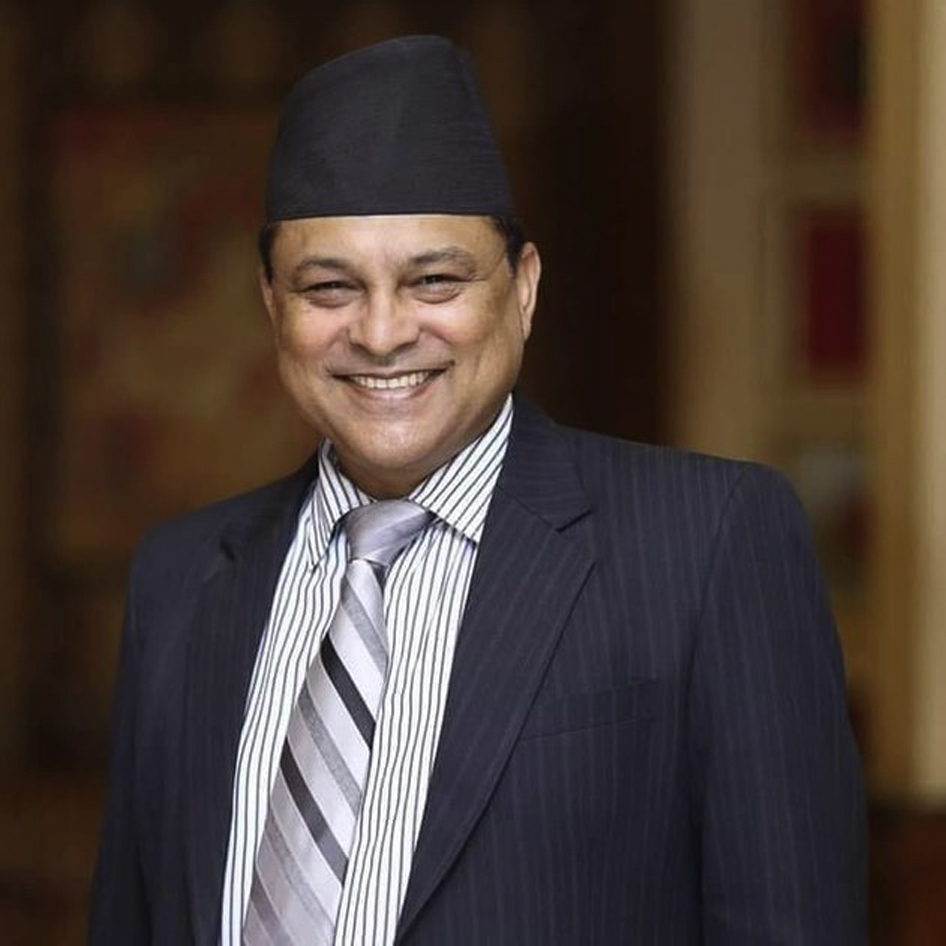
Prakash Adhikari in Pokhara, Nepal, in 2019.
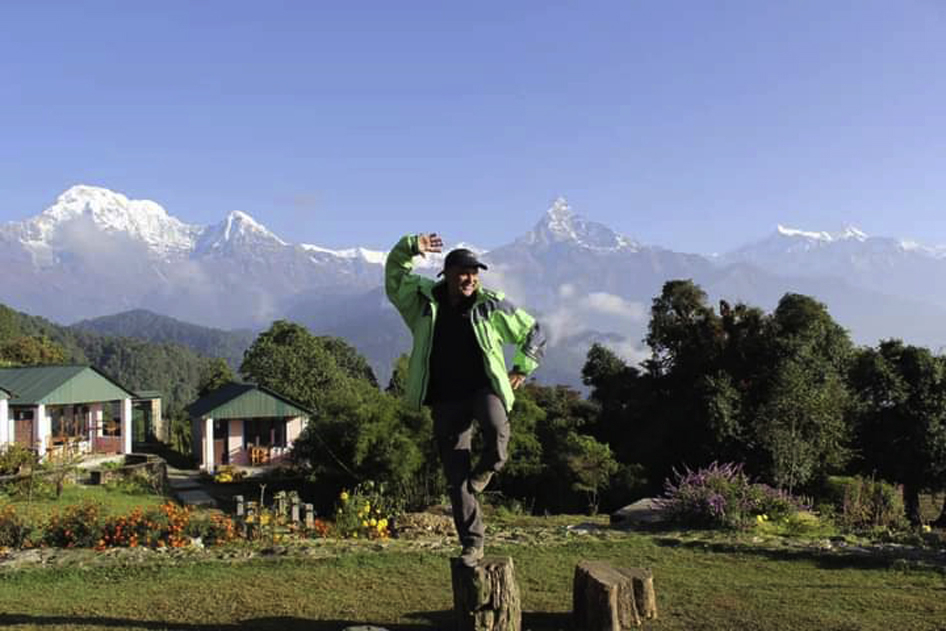
The HRA, a Nepali nongovernmental organization (NGO), runs 2 clinics during the spring and fall trekking seasons, 1 in Pheriche (4300 m) on the way to Mount Everest and the other in Manang (3519 m) on the world-famous Annapurna circuit. It operates a third clinic, Everest ER, during the spring climbing season at Everest Base Camp (EBC [5600 m]). Other activities include an annual health camp during monsoon season to care for thousands of pilgrims at Gosainkund Lake (4380 m), outreach with public lectures about mountain safety throughout the Kathmandu valley, and additional missions as necessary. Prakash ably organized and coordinated all these activities and more from the HRA office in Kathmandu. He also organized many rescues in the Himalayas, requested by foreign embassies, often on his own time. He was building a website, Himalayan Safety (
Prakash came from Ghayabari village in the Syangja District in western Nepal, near Pokhara. He went to Siddhartha High School in Phedikola, Syangja. After finishing high school, he went to Pokhara, where he graduated from the Pritvi Naryan campus of Tribhuvan University with a bachelor of commerce degree.
Prakash then moved to Kathmandu, where he trained as a trekking and tour guide. He soon became the manager of the distinguished trekking company Natraj Tours and Travels. A few years later he became a tour guide and trekking leader at Inter-Tours Nepal. As liaison officer for the 1992 Russian Everest Expedition, Prakash had to descend from EBC with high altitude cerebral edema. He was treated at the HRA clinic at Pheriche, although he had mostly recovered by the time he reached the clinic. From this experience, Prakash became a great advocate for descent in the treatment of high altitude illness.
Prakash joined the HRA as executive director in 1995. Although the HRA was already a highly regarded NGO, it became even more prominent in the following years. Prakash supervised the construction of the HRA building in Kathmandu, with financial support from the French embassy, and the extensive expansion and remodeling of the clinic in Manang, supported by the Australian embassy.
Prakash had a special connection with porters, pilgrims, and other Nepalis with limited resources, often arranging emergency evacuations by helicopter and meeting them in Kathmandu to take them to the hospital for treatment that he had also arranged. Prakash was a founding member and the first Nepali representative of the International Porter Protection Group, a Nepali NGO that built a porter shelter in Machermo and until recently ran clinics in Machermo and in Gokyo village in the Gokyo Valley, near Mount Everest.
When the Institute of Mountain Emergency Medicine in Bolzano, Italy, in conjunction with the International Commission for Mountain Emergency Medicine, organized rescue training for Nepali guides and doctors, Prakash helped to organize the courses and participated in them. In 2012, he was part of the group that traveled to South Tyrol, Italy, for rescue training, an experience that he clearly relished.
In recent years, foreign doctors working at the HRA clinics have been required to obtain approval from the Nepal Medical Council and the Department of Labour. Obtaining approval required countless hours of work for Prakash to meet with a succession of bureaucrats and convince them that the doctors were not coming to Nepal to make money. Quite the opposite—the volunteer doctors are not paid for their work and lose income during the time they are not practicing in their home countries. Prakash used his charm and ever-present smile to educate the bureaucrats about the benefits of having doctors at the HRA aid posts to help the local population as well as travelers in the Himalayas.
Prakash is survived by his parents; his brother; his sister; his wife, Sarita; and two sons, Binamra and Bibek. Binamra, inspired by his father and by the work of the HRA, is currently attending medical school. Prakash’s obituary appeared in the Nepali Times (
Prakash was a hard worker, but he never drew attention to himself. He was always helping others, always welcoming, and always smiling. In his unassuming way, he made a tremendous contribution to safety in the Himalayas of Nepal. Following his example, we have the honor and the duty to carry on his work as best we can.
We hope that the following personal reflections will serve as an inspiration to everyone who reads them to help our fellow human beings, especially the most vulnerable, with resolve and kindness, following Prakash’s example. He will live forever in our memories.
Ken Zafren, MD
Buddha Basnyat, MD
Personal reflections
Prakash Adhikari was a hero in saving countless lives of sick porters, climbers, and trekkers over the years. During his time at the HRA as executive director, he was not only involved in saving the lives of many people in the mountains, he was also a key player in developing mountain rescue in Nepal, making the public aware of altitude illness, and making the mountains safer for travel and work.
I had the wonderful opportunity to share the last few years with him. He was my very good friend, mentor, and kind teacher. Prakash was very efficient in confronting difficult situations and creating solutions to help others, despite countless obstacles. His ability to establish and maintain professional, diplomatic, and interpersonal relationships with the local and national authorities and other people, both within and outside Nepal, helped the HRA and Nepal to make the Himalayas a safer place to work and travel. Prakash was a tactical master in identifying and managing all manner of problems.
I still remember the time we spent together when we were hosting the International Society of Mountain Medicine (ISMM) XII World Congress on Mountain Medicine in 2018 in Kathmandu. The Mountain Medicine Society of Nepal was cohosting the event with the HRA and the ISMM. I was assigned the role of local organizing chairperson, but the event would not have been possible without Prakash’s constant support and help. He was one of the key people personally involved in convincing the Nepal Tourism Board to invest in our program. He was constantly in touch with me and guided me through the bureaucratic obstacles, despite being unable to participate in the Congress because of an unavoidable family commitment.
For an amateur like me, he was a fantastic teacher and guide. Prakash was a true gentleman, with a perpetual smile on his face. He will be sorely missed. No words can describe this loss. May his soul rest in peace.
Santosh Baniya, MBBS, MDGP
Kathmandu, Nepal
We, the employees of the HRA, were very fortunate to work under Prakash’s guidance. Prakash, who helped countless porters, guides, and trekkers across the Himalaya, was also a good guardian to us at HRA. We have lost a star of mountain tourism in Nepal. We will miss him dearly forever.
Let me share with you one of many experiences with Prakash. When the devastating earthquake of 2015 struck Nepal, I was working at Pheriche. My family was living in Kathmandu and had run out of the money that I had left them for the season. Prakash was the one who lent my family some money. He actually went to my home with the money and made sure my wife, young son (6 y old at that time), and 6-mo-old daughter were okay. It was very reassuring for me to hear from Prakash that my family was fine. That spirit encouraged me to stay at Pheriche longer after the earthquake and help more needy people without worry.
I worked with Prakash for 25 years at the HRA. We always had fun, even during hectic times. We traveled to Italy with 20 Nepalese mountain rescuers and Nepali doctors for mountain rescue training. Prakash was the one who entertained us all the time. I do not think there was anyone in the group who did not like Prakash. He had a great sense of humor. One day, as part of the training, we asked him to go down with safety measures into an icy crevasse that was probably 3 m deep. He jumped off into the crevasse without thinking how deep it was. It was very difficult to pull him out because we all were in our early training days. For someone like Prakash, with a big muscular body, it took a longer time than we all thought it would. Finally, we rescued him from the crevasse. He came out with a big smile and greeted us by saying, “Thank you for saving me.” I will never forget his smiling face.
Prakash helped me after I was badly injured with ACL, MCL, and meniscus tears while evacuating a cardiac patient in 2008. On my arrival in Kathmandu, Prakash had arranged for me to meet an orthopedic surgeon in the hospital. He was present with me during almost every consultation with the doctor. He helped me to make the right decisions, and I was very reassured to have him next to me. He was at the hospital all day on the day of my surgery. My family was also very reassured when he was there with them. We have lost a great hero.
Gobi Bashyal
Kathmandu, Nepal
Prakash Adhikari was one of the most altruistic persons I have met in my life. I am not sure, but I suppose that without Prakash, a functioning rescue organization in the Nepal Himalayas would hardly exist as it does now. He always stayed on the sidelines, but he made the greatest effort to manage the HRA and went to great pains to keep the mountain rescue service running.
I recall a series of experiences. In May 2009, the International Commission for Mountain Emergency Medicine organized the first mountain emergency medicine course in Kathmandu. Prakash took over the logistics. In 2012, 20 Nepalese physicians and rescuers came to Bolzano, Italy, to complete a course in glacier techniques, safety management, and dispatching, financed by the South Tyrol government. Once again, in August 2015, a follow-up course in emergency medicine ran in Nepal, with the same group of rescuers. Prakash handled logistics and directly participated in the 2012 and 2015 courses.
Last, but not least, in August 2018, the first ISMM World Congress on Mountain Medicine took place in Kathmandu. It was one of the most beautiful events in mountain medicine we have ever seen. The Mountain Medicine Society of Nepal took the lead, but Prakash stood behind them, always ready to help.
Prakash has a special place in the history of mountain rescue. Whenever he showed up, he radiated joy and friendship and was an example of humanity and altruism. He combined a humane approach with a great respect for the superiority of nature. At 54 years, Prakash showed no sign of slowing down. His death was sudden and unexpected.
The mountaineering community and rescue world will miss you. Farewell, Prakash!
Hermann Brugger, MD
Bruneck, South Tyrol, Italy
Prakash worked tirelessly for the wellbeing of porters. Porters carry heavy loads for tourists and climbers on their quests for adventure and are usually uninsured. From attempting to ensure that their employers take good care of them, to helping arrange evacuations (most often for free), Prakash often aided porters in their times of need.
One of the many incidents in which Prakash showed his caring nature involved a high altitude porter who was carrying loads for setting up Camp 2 on Mount Everest. The porter was struck by a falling rock and suffered a nasty head injury. The doctors at the HRA clinic, Everest ER, were notified by radio about the incident. There was confusion about the climbing party to which the porter belonged. The few teams on the mountain all seemed to pass him off as being part of another team. The report suggested that he had a scalp laceration after a fall of 30 to 40 m and that he was unconscious. While this was happening, Prakash, who was in Kathmandu, managed to talk to a helicopter company to arrange evacuation from Camp 2 to EBC. When the porter arrived at EBC, the volunteer doctors at Everest ER assessed him. The helicopter then transported the porter to the hospital in Lukla. He needed further evacuation to Kathmandu for a computed tomography scan of the head. Once again, Prakash talked to the helicopter company and arranged the evacuation to Kathmandu, all the while putting in a firm word to the porter’s employers about bearing the cost for this unfortunate man. Prakash later visited the porter in the hospital in Kathmandu to check on his health. All of this, I am sure, was done with a smile.
It is unusual for helicopters to pick up sick or injured people without a guarantee of payment for the rescue, and to rescue someone from near Camp 2 was dangerous and expensive. For Prakash to take responsibility, even when the employers were reluctant, showed his passion for porters’ wellbeing and his commitment to selfless service. The motto on the web site of the HRA, “Saving lives since 1973,” has been made possible by people such as Prakash, who embody the values of the HRA.
Suvash Dawadi, MBBS, MDGP
Kathmandu, Nepal
Prakash Adhikari has a long list of accolades and accomplishments for his time on earth, but at the top of my list of his many qualities was his true, authentic heart. I met Prakash shortly after my very first trip to Nepal in 1999 when, bright-eyed and already in love with Nepal, I applied to work at the HRA in a future year. He was patient and kind, when I was sure that he must tire of the steady parade of starry-eyed potential volunteers who seldom follow through.
I got my posting in spring of 2002, and he answered the phone when I called, panicked, en route to a war-torn Nepal. My co-volunteer turned back in fear of the violence when we met in Singapore halfway to Kathmandu. I would be facing the entire season as the only doctor at the Pheriche aid post. He calmed my anxieties, let me know that he would be my support from afar, and sent me to the Khumbu for the adventure of a lifetime.
When I returned to Kathmandu at the end of the season with a wild idea to start an HRA tent hospital at EBC the following year, he jumped on board with the idea, excited at the challenge, and told me he believed it was the right thing to do. He corralled the HRA board and helped me orchestrate a dinner at which I unveiled the proposal that was ultimately approved. In 2003, there were many hiccups—financial, logistical, political, and more—but he shepherded me through the confusing cultural issues and helped us set up the first Everest ER.
Through the years, he quietly put me in places where we could influence the players who could help us make the operation successful and sustaining. When a board chair voiced opposition to the continued operations of Everest ER, he helped make the case to continue—again, quietly and behind the scenes. On my 30-some trips to Nepal, whether I was on HRA business or not, I always stopped to see Prakash to see his smile, have a hug, and feel the warm team HRA spirit he engendered. Prakash, my friend, you will be sorely missed.
Luanne Freer, MD
Anacortes, Washington
I knew Prakash for over 20 years, first meeting him in September 1998 when I arrived as a physician volunteer for the Pheriche HRA clinic, along with my wife, Michelle. I remember this year well because it was 2 years after the 1996 “Into Thin Air” Everest tragedy and featured a Nepal worldwide tourism campaign titled “Visit Nepal ‘98.” All this brought more than a million additional tourists to Nepal, and the Pheriche clinic was busy. Our team’s oxygen and all medications “disappeared” on the trek up, and we had many nights when 3 Gamow bags were going at once. This was also my first time for an intubation in this setting. Prakash was our contact with Kathmandu. He worked tirelessly to assist us, and he became a good friend.
In the following years, with additional HRA interactions through Everest ER and the Wilderness Medical Society, I watched my friend prove to be a well-respected director of the HRA, juggling relationships among the many worldwide volunteer physicians and the organizational politics of Nepal. He touched so many people around the world and in Nepal, especially his long-time staff and numerous foreign volunteers.
The last time I saw Prakash was October 2019. We laughed and reminisced over the many stories we shared, and he talked proudly of his children headed off to higher education and of his upcoming retirement.
Descriptive words for Prakash—caring, compassionate, honest, hard-working, well-respected, quiet leader, and others—will not be lost with his unfortunate and untimely passing during the pandemic.
For those who did not have the pleasure of meeting Prakash, the world has lost a good person, and for those of us who were fortunate to know this man, he will be missed.
Thoughts and prayers for my friend and his wonderful family.
Eric Johnson, MD
Driggs, Idaho
It was March 2017 when I first had the pleasure of meeting Prakash Adhikari. My partner, Katie, and I had just arrived into the chaos of Kathmandu to start preparing for our first season as volunteers with the HRA at the Pheriche aid post. Ever the professional, it was evident that Prakash, with his decades of experience at the HRA, had drilled down the orientation of new volunteers into a fine art, shepherding us through our first weeks in Nepal. Prakash provided gentle encouragement over cups of tea and sweet biscuits, educating his new volunteer docs on the ways of Nepal and some of the cultural eccentricities that we were to encounter. Ever the master of politics, he had invited the volunteer docs to a banquet dinner with various Nepali government dignitaries and guests from the South Tyrolean government, the Australian and British embassies, and, amazingly, Reinhold Messner, the first to climb all 14 of the 8000-m peaks. What an introduction to the HRA!
Over the course of the season, Prakash was always available for advice and assistance. It was during our first weeks at Pheriche that, on one memorable occasion, Prakash’s passion for the wellbeing and care of porters truly became evident. A young porter, age 14, presented with signs and symptoms consistent with appendicitis. He was abandoned at the clinic by his head guide, who continued with his clients and the other porters on their way to EBC. Prakash was able to work his magic and ensure that the young chap was expeditiously evacuated to Kathmandu. Prakash met him at the airport and took him to the hospital for the necessary treatment. We were delighted when, several weeks later, the same porter dropped by the clinic to express his thanks. This was just the sort of man that Prakash was; he quietly got on and did the necessary.
Prakash and I remained in touch, and I returned the following year for a season at Everest ER. Following a crackdown on foreign doctors working in Nepal that resulted in a number of arrests, new government requirements necessitated that HRA volunteers have medical registration with the Nepal Medical Council (NMC) and have a work permit through the Ministry of Labour. Prakash had spent the preceding weeks traveling from the HRA office out to the NMC and the Ministry of Labour to ensure that everything would be in place for the arrival of the volunteer docs. After his hard work and multiple meetings with the correct government officials, the season was able to get underway. He would later tell me that his red jacket would turn black every 3 days due to the dust and smoke while riding his motorcycle through the roads of Kathmandu from one ministry to another. Prakash wrote to me after the season to explain that in his almost 25 years at the HRA, his hardest time was in getting permissions and NMC registrations for volunteer doctors in spring 2018. This had been more challenging, he wrote, than during the insurgency and times of financial difficulty. Yet to us volunteer doctors on the ground, he had appeared unflappable, with everything in hand. Due to Prakash’s dedication and hard work, this process had appeared relatively straightforward.
At the farewell dinner after completion of the 2018 spring season, the idea of creating an alumni organization for former HRA volunteers was hatched over a few whiskeys. Prakash enthusiastically welcomed the idea and, ever astute, provided some recommendations as to how this should occur. Prakash subsequently guided the establishment of the HRA alumni association through the HRA board. The alumni organization has been active since, providing alumni updates before and after each season and raising much-needed funds for our Nepali staff. As a result of the alumni association, my friendship with Prakash grew stronger, as we would regularly send each other emails discussing the HRA and checking on each other’s families.
I was delighted when, in August 2019, Prakash emailed me to proudly announce that his youngest son, Binamra, had been accepted into medical school. Prakash wrote that “Observing my everyday activities helping needy porters, locals, trekkers, mountaineers and other Nepali people, my younger son has been inspired to [study] medicine. He is particularly interested in mountain medicine.” He went on to say that he was “glad that Binamra wants to carry on our deep-rooted passion in helping save the lives of the people in the mountains.” Having selflessly devoted his life to saving the lives of people in the Nepal Himalayas, Prakash had only ever earned a meager wage and was concerned about how to afford his son’s university fees. Along with several other HRA alumni members, we have worked together to set up a fund to assist Binamra with his studies. I last heard from Prakash only a week or two before his hospitalization. As was his way, he was more concerned with the health and welfare of the HRA staff than with his own.
I last saw Prakash in December 2019 while visiting Nepal to undertake the Diploma of Mountain Medicine. He was in the prime of his life. He picked me up from my hotel and whisked me through the backstreets of Nepal on his motorbike to meet his family at their home. I was delighted to spend the evening at his home and meet his wife, Sarita, and their sons. I was spoiled with a traditional Nepali dish. It was truly evident how proud Prakash was of his family’s achievements and how cherished he was by them. I feel truly privileged to have known Prakash and to have considered him a friend, mentor, and confidant.
Brenton Systermans, MBBS
Geelong, Victoria, Australia
Prakash was a great communicator. In his HRA talks regarding the prevention of altitude illness, his performance was often a tour de force. He knew exactly how to pitch these talks as his audience ranged from Western embassy staff in Nepal to porters, pilgrims, and trekkers. He had the knack of mesmerizing the audience in the initial stage of his delivery, then launching into the crux of his talk, and finally, in a most entertaining manner, emphasizing the main “take-home” messages. His gestures and mannerisms during the talk added humor and enhanced the overall delivery so that you hung on to every word he said. I am glad I was not together with him in school because I shudder to think how easily he would have decimated my arguments and handily beaten me in any official school debate competition.
His communication forte was certainly not limited to delivering speeches. Many a time when I accompanied him to the immigration or tourism ministry in Nepal to deal with obtaining some permission or visas for volunteer doctors, Prakash made succinct and very clear-cut arguments, which the officials generally went along with. I realized they held him in great respect because of his decades of untiring service to safety in the Himalayas. The amazing thing is that he never boasted about his accomplishments.
He was also adept at effortlessly playing the role of a suave diplomat. Even though the working environment at the HRA may have been very challenging at times, I never saw Prakash lose his temper. He clearly believed in understanding others first and then being understood. I think this latter instinct came naturally to him and may have been one of the key ingredients in his success.
What clearly helped in his exceptional communication skills was his kind and friendly disposition. One could not talk to Prakash without being impressed by his disarming smile and his genuine desire to help. He was not boisterous by any means, but he made people feel at ease and helped them proceed easily with the topic at hand.
Looking back now, one important thing stands out for me regarding Prakash’s communication skills: his ability to communicate compassion. The synonym for compassion in Nepali or Sanskrit is “karuna.” I do not know anyone who expressed karuna as well as Prakash. He sometimes called me, as the medical director of the HRA, to accompany him to the hospital to talk to grieving relatives of trekkers or porters who had died in the mountains. I would observe him talking to them. I hardly needed to say anything because he conveyed a depth of kindness that was beyond my ability to match by whatever else I could say. Clearly, we will miss him forever, but his inspiration will remain in our hearts and provide enduring strength to carry on his work at the HRA.
Buddha Basnyat, MD
Kathmandu, Nepal
In April 2015, there was a large earthquake in Nepal that killed more than 8000 people and devastated many parts of the country. When I returned to Kathmandu from the mountains about a week later, Prakash had already arranged with the Ministry of Health and Population and the World Health Organization for the HRA to send a team to the Sindhupalchok District, one of the hardest hit areas, to perform a health needs assessment. Thanks in large part to Prakash’s arrangements, our team was well supported and well supplied, although nothing could have prepared us for the devastation and suffering we saw.
We had a course in mountain emergency medicine for Nepali doctors and guides planned for that summer. Prakash was one of the main organizers and a participant in the course. The final field exercise was to have been a trek to Gosainkund Lake to run the annual HRA health camp for pilgrims. Prakash had been organizing the health camps for about 20 years. Unfortunately, because of the uncertainties after the earthquake, the organizers of the course canceled the field exercise. Also unfortunately, our HRA health assistants, Gobi and Bhuwan, were in the class. They had led the health camps for years. Now, they had to stay in Kathmandu. It looked like the health camp might have to be canceled, but Prakash would not hear of it. The local people in Gosainkunda and the pilgrims depended on the HRA. With the support of the HRA board, Prakash organized the annual health camp. This went off very smoothly, with great support and gratitude from the local people. It would not have happened at all without Prakash’s insistence that we send a team.
Ken Zafren, MD
Anchorage, Alaska