






Abstract
The Wilderness Medical Society convened an expert panel in 2018 to develop a set of evidence-based guidelines for the treatment of type 1 and 2 diabetes, as well as the recognition, prevention, and treatment of complications of diabetes in wilderness athletes. We present a review of the classifications, pathophysiology, and evidence-based guidelines for planning and preventive measures, as well as best practice recommendations for both routine and urgent therapeutic management of diabetes and glycemic complications. These recommendations are graded based on the quality of supporting evidence and balance between the benefits and risks or burdens for each recommendation.
Keywords
Introduction
In 2015, the Centers for Disease Control & Prevention estimated that 30 million individuals in the United States (9% of the population) have diabetes. 1 Athletes with diabetes are undertaking ever-expanding wilderness challenges. People self-identified as having diabetes represented 7% of 3000 surveyed ultramarathon runners, 2 and 19 individuals with type 1 diabetes have entered or completed the high altitude Leadville 161 km (100 mi) ultramarathon trail and mountain bike race. 3 To date, at least 3 individuals with diabetes have successfully summited Mount Everest. 4
Hypoglycemia and hyperglycemia can be catastrophic in resource-limited environments, and glycemic control is more challenging in extreme conditions, requiring additional monitoring, treatment adjustments, and careful pre-trip planning.
4
Athletes with diabetes have been shown to have a lower maximum oxygen consumption 
The Wilderness Medical Society convened an expert panel to develop a set of evidence-based clinical guidelines for the recognition, prevention, and treatment of diabetes and its complications in the wilderness athlete. These clinical practice guidelines define a “wilderness athlete with diabetes” as an individual with type 1 or type 2 diabetes who participates in mild- to vigorous-intensity exercise in a wilderness environment with limited medical access, at altitudes greater than 2500 m (8250 ft), in climatic extremes, and/or with limited access to immediate medical care and supplies.
Methods
Specialists in emergency medicine, primary care, sports medicine, endocrinology, and nutrition convened in the spring of 2018. Relevant articles were identified through the PubMed database using the following keywords: diabetes, insulin, wilderness, expedition, mountaineering, and ultramarathon. The literature search was supplemented by a manual search of articles referenced by articles found in the initial PubMed search. Studies in these categories included randomized controlled trials, observational studies, retrospective studies, case series, and case studies. Abstract-only reports were not included. Conclusions from review articles and recommendations from related practice guidelines were cited to provide background information, but only primary sources were used in the formulation of recommendation grades. When no relevant studies were identified, the panel recommendation was based on perceptions of risk and benefit derived from clinical experience. The panel used a consensus approach to develop recommendations for the wilderness athlete with diabetes, with level of evidence assigned according to the methodology stipulated by the American College of Chest Physicians for grading of evidence and recommendations (see online Supplementary Table). These recommendations are graded on the basis of the quality of supporting evidence and balance between the benefits and risks or burdens for each modality or intervention.
Background
Diabetes mellitus is a metabolic disease characterized by elevated blood glucose resulting from a lack of insulin secretion, reduced insulin sensitivity, or both. Type 2 diabetes is the most common form (90% of individuals with diabetes have type 2 diabetes) 15 and is caused by a combination of reduced insulin sensitivity and impaired insulin secretion. Type 2 diabetes has classically been diagnosed in adults, although the rate of diagnosis in adolescents is increasing, and it is often accompanied by hypertension, hyperlipidemia, and obesity. Type 1 diabetes is typically diagnosed in children or young adults and is caused by autoimmune destruction of islet cells in the pancreas, resulting in insulin deficiency. People with type 1 diabetes require treatment with subcutaneous insulin, whereas those with type 2 diabetes may or may not require insulin treatment.
Strenuous exercise and wilderness environments can complicate glycemic control. In managing type 1 and type 2 diabetes, exercise and environmental stressors may also have a complex interaction with commonly used medications, glucose monitoring, and medication delivery. The effects of exercise alone on diabetes have been discussed in detail elsewhere,16,17 so this guide will briefly review physical activity and environmental considerations in the pathophysiology of diabetes.
Glycemic Pathophysiology in Physical Activity
Physical activity in wilderness environments often involves prolonged activity and a combination of aerobic, anaerobic, and high-intensity exercise, so it is important to understand how neurohormonal responses differ with each type of exercise. Different types of physical activity cause distinct metabolic responses in individuals without diabetes. Aerobic activity involves repetitive glucose uptake by large muscle groups. To balance exercise-induced increases in glucose uptake from muscle, insulin secretion decreases. At the same time, counterregulatory hormones, including glucagon, cortisol, growth hormone, and catecholamines, are released, promoting endogenous glucose production through glycogenolysis and gluconeogenesis. 17 -19 In athletes with diabetes, these counterregulatory hormones may lead to hyperglycemia if adjustments in carbohydrate consumption and insulin dose are not made.
In individuals without diabetes, insulin levels in anaerobic and high-intensity exercise (>80% of 
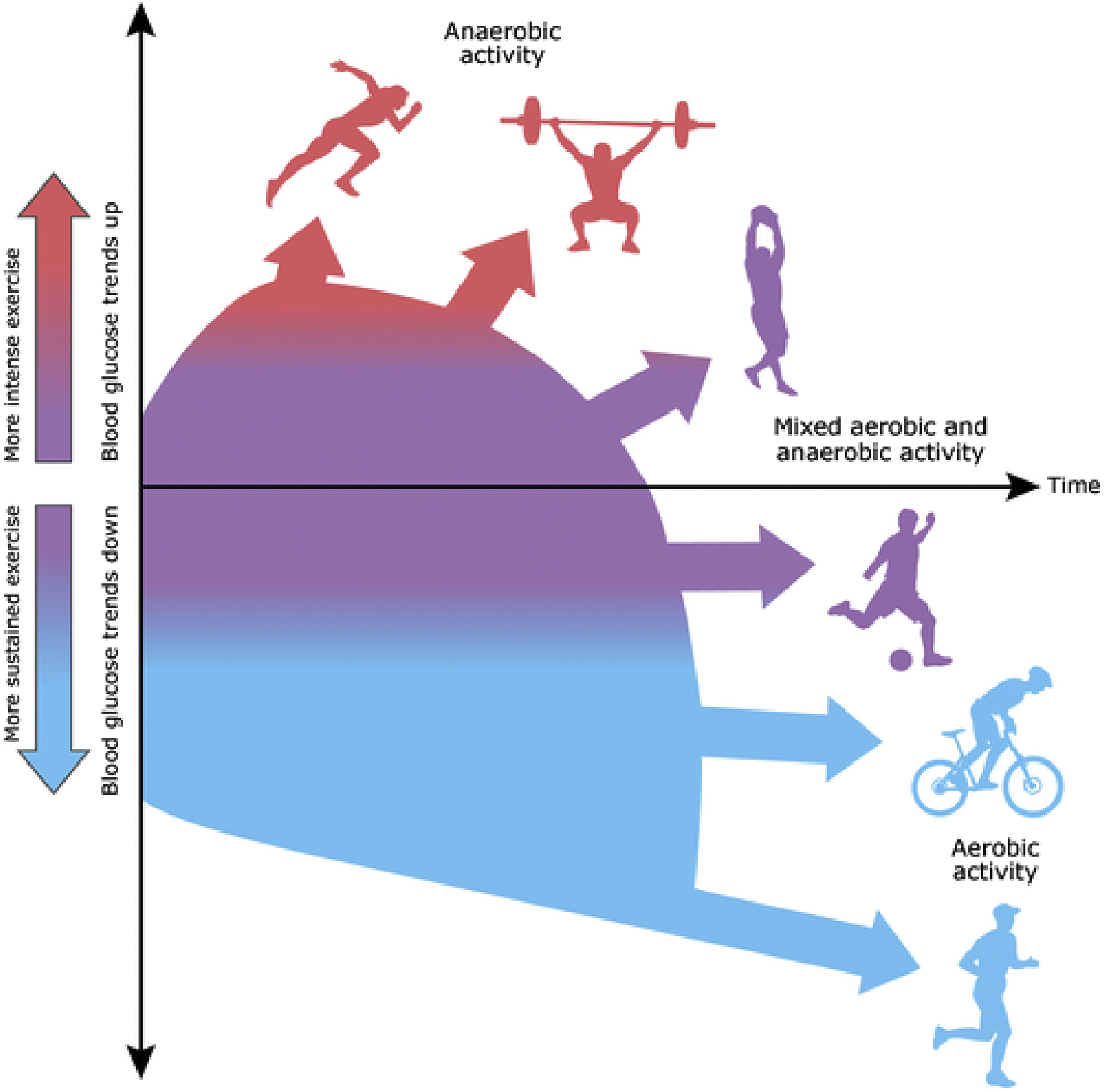
Illustration of different types of exercise including mutual differences in intensities and the way this affects glucose levels. Illustration by Anne Greene, Senior Medical Illustrator, reproduced with permission from UpToDate, Inc. Copyright © 2017 Duration and intensity. Reproduced with permission from: Riddell MC. Management of exercise for children and adolescents with type 1 diabetes mellitus. Copyright © 2018 UpToDate, Inc.
After exercise, glucose uptake remains elevated by both insulin-dependent and insulin-independent processes. If exercise is prolonged, insulin-dependent mechanisms can continue up to 48 h after exercise to replenish muscle glycogen stores. 16 Exercise lasting greater than 60 min has been shown to increase peripheral insulin sensitivity for up to 48 h postexercise. 22 -25 The basic management strategy for type 1 diabetes of decreasing basal insulin rate while increasing carbohydrate intake during exercise to match energy utilization is based on these principles.15,26,27 It is important to understand the increased risk of hypoglycemia that occurs after exercise, as frequent hypoglycemic events in individuals with diabetes have been linked with long-term morbidity and mortality. 28 The glycemic response to exercise changes with time of day, and risk for nocturnal hypoglycemia is highest when exercise is completed in the evening. 29
In summary, brief high-intensity exercise has been shown to cause hyperglycemia, 30 whereas long-duration aerobic exercise is more likely to cause hypoglycemia 31 (Figure 1). The glycemic response to exercise is complex and varies from individual to individual. 32 For example, muscle damage, such as in an abrupt increase in the level of exercise, may decrease insulin sensitivity. 33 Additionally, the effects of various environmental factors on glycemic control will be discussed in detail. Although we attempt to provide evidence-based guidance on insulin management in athletes with diabetes, the care of each individual must be managed thoughtfully.
Pretrip Planning
Preparation is an essential component of any expedition, and even more so for the wilderness athlete with diabetes. Pretrip preparations should generally include appropriate medical screening; attention to physical fitness; planning of insulin regimen, diet, and hydration; and education and discussion on the chosen activity and how it may alter or interfere with an individual’s typical diabetes care. Lastly, it is important to ensure packing of all essential diabetes-specific medical supplies and consideration of contingency and emergency planning.
PREPARTICIPATION MEDICAL EVALUATION AND COUNSELING
The American Diabetes Association does not recommend routine medical clearance for asymptomatic individuals with diabetes before low- to moderate-intensity physical activity. 16 However, given the nature of intense physical activity in resource-limited environments, it is prudent for wilderness athletes with diabetes to discuss their plans with their primary care provider and/or endocrinologist prior to travel. Attention to regular follow-up and annual screening tests including ophthalmologic examinations is recommended.
Recommendation
Diabetes-specific healthcare maintenance should be up to date prior to wilderness activity. Athletes with diabetes may need to undergo additional and more frequent specialty evaluations (
Athletes with diabetes should meet with their primary care provider and/or endocrinologist prior to wilderness travel (
Cardiovascular screening
Individuals with diabetes are at increased risk of ischemic heart disease, 34 and individuals with type 1 diabetes have higher rates of silent myocardial ischemia and coronary artery disease than the general population. 34 Extrapolation is limited because the majority of studies on those with type 1 diabetes in wilderness settings have excluded any patient with electrocardiogram (ECG) abnormalities.35,36 Some groups have recommended baseline ECG testing prior to wilderness activity, 37 and consensus guidelines from the Undersea and Hyperbaric Medical Society and Divers Alert Network have proposed routine preparticipation exercise ECG in adults with diabetes over the age of 40 y prior to scuba diving. 38
However, there are differing opinions regarding the utility of ECG or exercise stress testing in asymptomatic individuals to prevent sudden cardiac death during exercise. 39 -42 The American College of Sports Medicine recommends a visit with a medical provider for asymptomatic individuals with diabetes prior to vigorous activity. Neither the American Diabetes Association nor the American College of Sports Medicine recommends routine ECG or exercise stress test to screen for cardiovascular disease.41,43 The United States Preventive Services Task Force recommends assessment of 10 y cardiovascular disease risk to guide decisions on the utility of further testing for cardiovascular disease. 42 The American Heart Association recognizes possible value of exercise testing in people with diabetes before starting an exercise program, despite conflicting evidence regarding its efficacy for prevention of adverse cardiovascular outcomes.39,40 The need for additional cardiac testing should be based on individual risk factors.39,41,42 Tools such as the atherosclerotic cardiovascular disease Risk Estimator from the American College of Cardiology—which takes into account risk factors such as presence of diabetes, age, and sex—can be useful for cardiovascular risk assessment and shared decision making. 44
Recommendation
Individuals with diabetes should undergo comprehensive risk assessment for cardiovascular disease with their primary care provider and/or endocrinologist prior to wilderness travel (
Routine pre-participation ECG screening of wilderness athletes with diabetes is not recommended (
Routine exercise ECG to screen for coronary artery disease in asymptomatic wilderness athletes with diabetes is not recommended (
Diabetes-specific medical conditions
Special attention should be paid to those with diabetes and peripheral neuropathy, nephropathy, or retinopathy because these conditions pose additional risks in wilderness activities.37,45 Those with peripheral neuropathy should be aware of the increased risk of developing cold-induced injury and should be screened for wounds before a wilderness excursion. Foot care should be reviewed prior to activity. 37 People with diabetes living at high altitude may have higher rates of albuminuria, though there is no evidence to suggest that short-term altitude exposure is nephrotoxic. 37 Individuals with a history of nephropathy should be counseled regarding appropriate medication use—including the renal risk of nonsteroidal anti-inflammatory drug use46,47—and appropriate hydration. Wilderness sports carry a risk of ocular injuries. 48 Although corneal injuries and edema are most often reported in the wilderness athlete,49,50 high altitude retinal hemorrhages are also known to occur, 51 but there have been no studies on high altitude’s effect on diabetic retinopathy.48,52 Regardless, any retinal damage carries additional importance in individuals with diabetes, and it is recommended that individuals with diabetes have a dilated fundoscopic examination prior to ascent to high altitude. 48 To avoid further complications while in the backcountry, it is important to ensure optimal control of diabetes complications prior to high-risk wilderness activities.
Recommendation
Individuals with pre-existing diabetes complications (including nephropathy, peripheral neuropathy, and retinopathy) should be counseled on minimizing additional risks to these organ systems with wilderness activity (
All individuals with diabetes planning high altitude travel should be up to date on yearly dilated fundoscopy. If any degree of retinopathy is present, ophthalmologic risks of wilderness travel should be discussed (
SUPPLY PREPARATION
Appropriate supplies and medical equipment should be brought on any wilderness activity.15,53 Table 1 lists specific supplies that should be considered essential for wilderness athletes with diabetes.
Medical kit preparation
CGM, continuous glucose monitor.
Recommendation
Wilderness athletes should be counseled on a complete packing list of routine and emergency diabetes supplies (
Wilderness athletes should carry documentation of their medical history, basic diabetes management plan, and basic emergency action plan (
GLUCOMETERS
Glucometers can fail in the wilderness owing to extreme environmental conditions, water exposure, or physical damage from high-impact activity. Hypobaric hypoxia at high altitude may alter the reaction used to estimate blood glucose in glucometers that use a glucose oxidase reaction (GOX) or a glucose dehydrogenase reaction (GDH).54,55 GDH and GOX systems have been tested in hypobaric chambers up to 4500 m (14,850 ft), with some tending to overestimate blood glucose (0.8 to 15%) 56 and some tending to underestimate blood glucose. 57 At 2000 m (6560 ft), GDH systems overestimated blood glucose by 3.5 to 8%, whereas GOX systems showed no significant difference from reference values. 54 Although high altitude studies have found statistically significant inaccuracies in blood glucometers, the differences were small enough to be of questionable clinical significance. When tested at high (25°C) and low (8°C) temperatures, GOX and GDH systems performed similarly, with tendencies toward both overestimation and underestimation in some systems, with errors of 5 to 10% or less.56,58
Similar to high altitude, temperature appears to affect glucometer function in a clinically insignificant way, although the errors appear to be brand specific and are unpredictable. There are no studies to define the temperature at which a glucometer will fail despite warming, but caution should be taken and the manual for a device reviewed. In cold environments, glucometers should be kept inside a jacket pocket close to the body during the day and in a sleeping bag at night. Each product guide should be reviewed to determine the altitude level for which a glucometer is approved. Athletes should have at least 1 backup glucometer in case of glucometer failure or loss.
Recommendation
For glucometers and other monitoring equipment, the product guide should be reviewed carefully before an expedition. Individuals should carry a backup monitor and battery supply (
INSULIN
Insulin requires safe use and storage in wilderness environments. Each insulin package insert should be read carefully to ensure proper transportation and storage, and insulin should be discarded after an appropriate amount of time.59,60
Insulin is a protein that is denatured by freezing or extreme heat and thus should not be used if exposed to extreme temperatures. Insulin should not be exposed to extreme temperatures (<2 or >30°C). Likewise, light exposure can potentially reduce insulin’s efficacy. Excess agitation should be avoided because this can lead to clumping and decreased potency. 60 In extreme ambient temperatures, measures should be taken to keep insulin at a stable cool temperature. 59 This may be accomplished by storing insulin in a well-insulated container (cooler or thermos) with a hard case to prevent vials/pens from breaking. Likewise, using a gel or evaporative cooling pack in warm temperatures can help maintain potency. In hot environments, cooling systems may be used, and the insulin should be stored in the middle of the pack to minimize heat exposure. There are commercially available insulin storage products which use evaporation of cold water to keep vials and pens cold. In cold temperatures, insulin should not only be kept in an insulated container, but should also be carried close to the body during the day and kept inside a sleeping bag at night to prevent freezing. A backup supply of insulin should be kept in an insulated container in the middle of the backpack to prevent exposure to extreme temperatures. It is prudent for any wilderness athlete to have a backup supply of insulin on any expedition. The type of excursion will dictate the safest way to store insulin.
Recommendation
In the wilderness, insulin should be protected from environmental extremes, such as high or low temperatures, light exposure, and physical agitation. Any method of physical and/or temperature protection should be tested in a low-risk environment prior to use in the wilderness. A contingency supply of insulin should be kept in a separate location (
Environmental Considerations
One of the most challenging aspects of diabetes care in the wilderness athlete is to predict and respond to the effects of extreme environmental conditions. The basic effect of different environmental conditions on diabetes is summarized in Table 2.
Environmental effects on diabetes
HIGH ALTITUDE
Change in insulin requirements
High altitude, especially extreme altitude (>5000 m [16,400 ft]), adds greater complexity and difficulty to glucose control in type 1 diabetes. Studies of exercise at sea level showed improved glycemia in individuals with type 1 diabetes who were exposed to a hypoxic environment when compared to a normoxic environment. 61 Although there is conflicting evidence on glycemic control at altitudes between 1500 m (4,920 ft) and 4000 m (13,120 ft), 36 several studies have observed increased insulin requirements above 4000 m (13,120 ft) in those with type 1 diabetes.35,36 Relative hyperglycemia 62 and insulin resistance at extremely high altitudes in people without diabetes have been reported as well.36,63,64 It is unclear whether this observed insulin resistance is a result of acute mountain sickness or exposure to hypobaric hypoxia. Ketosis is an additional risk at high altitude; it is related to suboptimal carbohydrate intake, leading to less insulin administration and higher levels of counterregulatory hormones. 35
Recommendation
Those with insulin-dependent diabetes traveling to high altitude should be counseled on the potential for increased insulin requirements. Athletes should consider close monitoring on shorter trips to learn about their own glycemic trends prior to a major high altitude expedition (
High altitude illness
The spectrum of high altitude illnesses includes acute mountain sickness (AMS), high altitude pulmonary edema (HAPE), high altitude cerebral edema (HACE), and high altitude retinal hemorrhage. AMS is defined as a constellation of symptoms including headache, gastrointestinal disturbances, weakness, and dizziness in an individual who has ascended to >2500 m (8,200 ft) and has no other obvious explanation for these symptoms. 65 Increased risk of high altitude illness has not been reported in those with diabetes when compared to individuals without diabetes.35,36,66 Although type 1 diabetes itself may not increase the risk of AMS, metabolic decompensation may occur in persons with diabetes who develop AMS, and there have been a few case reports of diabetic ketoacidosis (DKA) in the setting of AMS. 67 The symptoms of AMS may confound or mimic symptoms of hypoglycemia or hyperglycemia and make appropriate diagnosis and treatment of type 1 diabetes and ketoacidosis more difficult.37,52 Therefore, if AMS occurs in an individual with diabetes, descent is often the safest option. Although there is limited data on the incidence of HAPE and HACE in those with type 1 diabetes, various case studies have showed no increased incidence for these conditions.35,36,52,68
Recommendation
Individuals with diabetes should be counseled on symptoms and management options for high altitude illness and dysglycemia. More frequent blood glucose and ketone checks are recommended if symptoms of high altitude illness occur (
Acetazolamide
Commonly used in the prophylaxis and treatment of AMS,69,70 acetazolamide is a carbonic anhydrase inhibitor that limits bicarbonate reabsorption in the renal tubules, producing a bicarbonate diuresis and metabolic acidosis. 71 Theoretically, this could trigger or worsen acidosis and dehydration and contribute to ketoacidosis.35,68 Although data on the incidence of DKA are inconsistent, there are reports of increased insulin requirements in individuals with type 1 diabetes on acetazolamide, with insulin requirements abruptly returning to normal once acetazolamide was discontinued. 67 Also important to consider, paresthesia is a common side effect of acetazolamide and may be confused with hypoglycemic symptoms.35,52
Recommendation
Acetazolamide should be used with caution in individuals with diabetes (
Dexamethasone
Dexamethasone is an oral corticosteroid commonly used in the treatment of AMS, HACE, and HAPE and occasionally is used for prophylaxis of these conditions. 69 Dexamethasone is known to cause hyperglycemia and increased insulin requirements.72,73 If considering use of dexamethasone, the risk and severity of high altitude illness needs to be balanced with the risk of and ability to manage resultant hyperglycemia. In particular, it should be noted that in the case of acutely life-threatening conditions such as HACE, the benefits of corticosteroids outweigh the risks of hyperglycemia.
Recommendation
In wilderness athletes with diabetes, oral corticosteroids should be used with caution in light of the risk of hyperglycemia (
COLD ENVIRONMENTS
Extremely cold air temperatures are common in high altitude and other wilderness pursuits and may complicate insulin use in wilderness athletes with diabetes. In individuals without diabetes, metabolic rate increases in response to cold exposure, although no change has been observed in plasma glucose or insulin response to an oral glucose tolerance test. 74 Cold acclimation for 10 d has been shown to improve insulin sensitivity in type 2 diabetes. 75 However, reduced skin temperatures have been shown to cause decreased insulin absorption within the first 90 min after insulin injection in both type 1 and type 2 diabetes. 76 Clinical data are insufficient to accurately predict how cold environments will affect insulin requirements in the field. As discussed, careful consideration needs to be taken with medication storage in cold environments.
Recommendation
There are insufficient data to describe the effect that cold exposure has on diabetes management (no recommendation).
Cold illness
Individuals with preexisting neuropathy or peripheral vascular disease may be at increased risk for cold-related skin and soft tissue injuries,37,45 and these individuals are at higher risk of frostbite. 77
Recommendation
Wilderness athletes with diabetic peripheral neuropathy and peripheral vascular disease are at increased risk of frostbite (
HOT ENVIRONMENTS
Extremely hot environments present unique challenges to wilderness athletes with diabetes. In subjects with and without diabetes, higher plasma blood glucose has been observed in response to an oral glucose load during exposure to a hot environment as compared to a neutral or cold environment. 78 -80 Extreme heat exposure can lead to increased insulin absorption. 81 In the setting of elevated surface temperatures, serum insulin levels were observed to be approximately double for the first 90 min after subcutaneous injection. 76 Clinical data are insufficient to accurately predict how hot environments will affect insulin requirements in the field. Insulin itself may denature if exposed to high temperatures (>30°C). As previously discussed, careful consideration needs to be taken with medication storage in hot environments. For expeditions that require repeated bouts of exercise, it is also important to recognize that glycogen resynthesis is impaired in hot environments. 82
Recommendation
There are insufficient data to describe the effect that heat exposure has on diabetes management (no recommendation).
Heat illness
During exercise, cutaneous vascular flow and sweating increase to release excess endogenous heat and maintain core body temperature. Individuals with type 1 diabetes may have impaired sweating during high-intensity exercise.7,83,84 Both type 1 and 2 diabetes may result in impaired exertional heat loss in hot environments.6,7,84 It is theorized that those with diabetes have a blunted sensitivity to elevated ambient temperatures and an inadequate cutaneous vascular perfusion or sweat production response. Age, long-term hyperglycemia, and neuropathy further impair blood flow to the skin, putting individuals with diabetes at higher risk of heat illness.85,86 The ADA recommends that older adults with diabetes avoid exercising outdoors on very hot and/or humid days. 16 For relatively young adults, close blood glucose monitoring for hyperglycemia is important during heat exposure to avoid exacerbating potential existing impairments in the body’s cooling mechanisms.
Recommendation
Wilderness athletes with diabetes are at increased risk for heat illness (
MONITORING AND TREATMENT
Glucose monitoring
Prior recommendations on athletic participation for individuals with diabetes have provided reasonable suggestions for blood glucose monitoring and involvement.16,53 Ideally, pre-exercise blood glucose monitoring should be performed 2 to 3 times at 30 min intervals to determine a blood glucose trend; during exercise, every 30 min; and after exercise, every 2 to 4 h owing to potential delayed hypoglycemia. 53 It has been suggested that the ideal blood glucose level for exercise is between 130 and 180 mg·dL-1,16,26,53 though it is preferable to have individualized targets based on an athlete’s personal history. Because such time-intensive glucose monitoring is difficult in the wilderness, it is prudent for an individual to establish trends in insulin and carbohydrate requirements during exercise and in similar environmental conditions prior to the expedition. Patients with well-established exercise insulin requirements may check blood glucose prior to exercise and every few hours during prolonged periods of exertion. Continuous glucose monitors (CGM), which will be discussed separately, may be a useful adjunctive tool for close monitoring of blood glucose during wilderness activities, though robust clinical data are lacking.
Recommendation
In insulin-dependent diabetes, blood glucose should be monitored before, during, and after intense and/or prolonged exercise (
Carbohydrate intake
The goal of euglycemia for health and performance in individuals with diabetes requires managing both carbohydrate intake and insulin treatment. Increased carbohydrate intake and/or reduction in insulin dose is typically required to reach the goal of euglycemia during exercise. Past studies suggest 10 to 15 g of carbohydrate is needed to prevent hypoglycemia for low- to moderate-intensity aerobic activity lasting 30 to 60 min. 87 A similar amount of activity following an insulin bolus may require 30 to 60 g of carbohydrate to maintain euglycemia. 88 A composite of specific guidelines for carbohydrate intake from several organizations are shown in Table 3.16,53,87 Specifically regarding travel in the wilderness, frequent snacks are recommended to maintain energy needs for prolonged physical activity, and we generally recommend increased carbohydrate intake to help mitigate the risk of altitude illness.
Recommendation
Those planning protocols for glucose monitoring and carbohydrate intake in exercise should understand how to adjust carbohydrate intake based on blood glucose and exercise. This plan should be individualized based on patients’ medical and exercise history and the environmental stressors to which they are exposed (
Hydration
Adequate hydration is important before, during, and after exercise. Hyperglycemia may predispose to dehydration and electrolyte (potassium, magnesium, phosphorous) loss through osmotic diuresis. In general, wilderness athletes are able to participate safely if they drink “according to thirst,”89,90 but people with diabetes should hydrate more frequently, especially in the setting of hyperglycemia, ketosis, and illness related to environmental stressors (eg, altitude illness, heat illness).15,91 Specific medications that may affect hydration should be discussed with a medical provider prior to travel. There are no evidence-based protocols for managing hydration in individuals with diabetes during exercise. Similar to insulin and carbohydrate management, it is prudent to base the hydration strategy of an individual with diabetes on experience in similar environmental conditions prior to an expedition.
Recommendation
Individual hydration strategies should be developed prior to embarking on wilderness activities and should be adjusted based on real-time factors, including environmental temperature, altitude, and exercise type and duration (
Insulin management
It has been suggested that individuals using multiple daily injections (MDI) of insulin should have their basal insulin rate reduced by 20% for doses before and after exercise. With continuous subcutaneous insulin infusion (CSII), athletes can reduce or suspend basal insulin infusion at the start of exercise, or even 30 to 60 min before exercise, to prevent hypoglycemia. Reduction in insulin boluses by 25 to 75% 2 to 3 h prior to activity may limit hypoglycemia.16,91 Although guidelines are helpful, it is important to consider the variables of an individual and trip; not everyone will need to decrease their insulin during wilderness pursuits. Owing to factors related to environmental extremes and prolonged physical activity, insulin needs may increase.
Multiple attempts have been made to develop uniform guidelines for glucose monitoring, carbohydrate intake, and insulin dosing during exercise. Generalized management recommendations can be unreliable owing to variable individual glycemic responses to physical activity as well as environmental conditions. Individuals with type 1 diabetes should discuss individual management strategies with their endocrinologist prior to wilderness activities, and an individual management plan should be based on one’s previous glycemic responses to similar exercise and/or environmental conditions. Individuals using an insulin pump should carry a backup method of insulin delivery. Additionally, it is important for wilderness athletes with diabetes to be at an appropriate level of physical fitness and to develop an action plan regarding potential complications prior to an expedition.
Recommendation
Wilderness athletes with type 1 diabetes should understand how to adjust insulin doses via either MDI or CSII. This should be individualized based on their medical and exercise history and the environment to which they are exposed. This should be discussed in detail with their primary care provider and/or endocrinologist prior to embarking on wilderness activities. Any device should be explained thoroughly prior to an expedition (
Noninsulin medications
Although the majority of this clinical practice guideline discusses insulin-treated type 1 and type 2 diabetes, special consideration should be given to common noninsulin medications used in the treatment of diabetes and their unique side effects and potential complications (Table 4).
Noninsulin diabetes medications
AP, artificial pancreas; BG, blood glucose; CGM, continuous glucose monitoring; DPP4, dipeptidyl peptidase-4; GLP-1, glucagon-like peptide 1; HCL, hybrid closed loop; MDI, multiple daily injection; SGLT2, sodium-glucose transport protein 2; UTI, urinary tract infection.
Metformin is a commonly used medication, prescribed to 84% of people with type 2 diabetes in the United Kingdom. 92 Metformin is a biguanide class antihyperglycemic that improves glycemia by reducing hepatic gluconeogenesis and increasing peripheral insulin-mediated glucose utilization. Metformin may cause diarrhea, and 25% experience some form of digestive tract disturbance upon starting the medication. Metformin-induced diarrhea may predispose to dehydration and hypokalemia. 93 There is a known risk of metformin-induced lactic acidosis, found at a rate of 2 to 5 per 100,000, 94 with elevated serum creatinine being the greatest predisposing risk factor. Although concurrent use of metformin and acetazolamide (a diuretic carbonic anhydrase inhibitor commonly used for AMS prophylaxis) has not been directly assessed, there is concern that concurrent use of a diuretic with metformin could precipitate lactic acidosis.94,95 Exercise alone is known to be safe while using metformin alone, 16 and no dose adjustments are recommended.
Both sulfonylurea and glinide class medications carry a risk of hypoglycemia, and blood glucose should be monitored following initiation or changes in these medications. Acarbose and DPP4 inhibitor medications including sitagliptin and saxagliptin can cause vomiting and diarrhea.96,97 Hypoglycemia appears to be a minimal risk with the DPP4 medications. 97 SGLT2 inhibitors block glucose reuptake in renal tubules and so have diuretic-like effects that could theoretically worsen dehydration, though there is no supporting clinical evidence. 98 SGLT2 inhibitors pose a known increased risk of urinary tract infections and euglycemic DKA, carrying a specific Food and Drug Administration warning.98,99 Glucagon-like peptide-1 receptor agonists are a relatively new class of injectable antihyperglycemic medication, with nausea, vomiting, and diarrhea being the most frequently reported gastrointestinal side effects. 100
Noninsulin diabetes medications should ideally be stored in a dark environment at room temperature, although compared with insulin, they are not as sensitive to environmental perturbations.
Recommendation
Use of noninsulin diabetes medications should not be considered a contraindication to wilderness athletic involvement, though participants should be cautious regarding side effects. Particular attention should be paid to the individual risks of each specific class of medication (
GLYCEMIC COMPLICATIONS
In addition to proper pre-trip planning and understanding the basics of carbohydrate intake and insulin management, several specific complications and medical issues deserve unique consideration for the wilderness athlete with diabetes.
Hypoglycemia
Hypoglycemia is defined as a plasma glucose level less than 70 mg·dL-1, is a well-recognized hindrance to athletic performance, and most importantly poses an acute health risk in diabetes. Typical symptoms of hypoglycemia include drowsiness, confusion, dizziness, nausea, palpitations, tremor, sweating, and anxiety. As a result of hormonal counterregulatory mechanisms, hypoglycemia is also accompanied by hypokalemia, which can last for several hours after blood glucose levels have returned to normal 101 and can cause impaired skeletal muscle contraction, weakness, and potential cardiac arrhythmias. 91
The primary treatment option for hypoglycemia is glucose repletion. Although common options typically are oral, rectal, and intravenous (IV) repletion, IV repletion should not be relied on as an option in the wilderness setting. Therefore, it is important to assess the severity of a hypoglycemic episode to decide on the safety and utility of oral treatment or whether evacuation is necessary. The basic principles of hypoglycemia management in the wilderness are cessation of insulin treatment and glucose repletion. Glucose repletion can be accomplished either directly or by administration of glucagon, which stimulates gluconeogenesis and glycogenolysis 102 (Table 5).103,104 High glycemic index carbohydrates are best for oral glucose repletion, and 16 in the wilderness, low-weight options such as sugar packets, sugar cubes, glucose gel, honey, corn syrup, and glucose tablets can be considered. For severe hypoglycemia—defined as severe cognitive impairment requiring external assistance for recovery—glucagon is the first-line treatment. Any glucagon treatment should be followed by carbohydrate intake to prevent rebound hypoglycemia, especially in the setting of depleted glycogen stores.105,106 Similar to insulin, glucagon should be stored with insulation to avoid extremes of heat and cold. Individuals accompanying those with diabetes should know where glucagon is stored and how and when to administer it. It is important to consider the risk of ketosis if insulin therapy is suspended for more than 2 to 3 h. 107
Treatment of hypoglycemia in the backcountry
IM, intramuscular; IV, intravenous; PO, oral administration; PR, per rectum; PRN, as needed.
Individuals with type 1 diabetes are at risk for delayed nocturnal hypoglycemia following daytime exercise. There are multiple reasons for this phenomenon, including a rise in insulin sensitivity after exercise, increased glucose uptake by skeletal muscles to replenish glucose stores, and impaired counterregulation in response to hypoglycemia. 22 For those with MDI, the risk of nocturnal hypoglycemia may be minimized through approximately 20% reduction of daily basal insulin dose, reduced prandial bolus insulin, and low glycemic index carbohydrate feeding after evening exercise. For those using CSII, basal rate reductions of approximately 20% at bedtime for 6 h after afternoon exercise may limit nocturnal hypoglycemia. Other strategies include a bedtime snack, glucose checks overnight, and/or use of CGM with alarms and automatic pump suspension. 91
Recommendation
Wilderness athletes with diabetes should have a plan and carry supplies for treating hypoglycemia. They should be prepared to use a glucose repletion and glucagon strategy (
Wilderness athletes with diabetes should have experience with individualized methods for managing nocturnal hypoglycemia prior to wilderness activity (
Hyperglycemia
If someone with diabetes is found to be hyperglycemic (plasma glucose level >250 mg·dL-1), it is important to determine whether the individual is in an acute hyperglycemic crisis, including hyperosmolar hyperglycemic state (HHS) or DKA. To help differentiate between hyperglycemia and HHS/DKA, individuals with type 1 diabetes should be able to test for blood or urine ketones if they have unexplained hyperglycemia.
Hyperosmolar hyperglycemic state
HHS is a state of progressive hyperglycemia and hyperosmolarity typically seen in individuals with poorly controlled or undiagnosed type 2 diabetes, limited access to water, and a precipitating medical event. The development of HHS is attributed to insulin resistance, deficiency, or both, in addition to increased hepatic gluconeogenesis, osmotic diuresis, and dehydration. The hyperglycemia in HHS is profound, with serum glucose level usually >600 mg·dL-1 and extreme dehydration with a fluid deficit of 8 to 12 L. 108
Diabetic ketoacidosis
DKA occurs predominantly in type 1 diabetes and results from absolute insulin deficiency. Alternate fuel stores are broken down, leading to hyperglycemia, ketosis, dehydration, and acidosis. Without insulin to correct the acidosis, DKA ensues. DKA is defined by a blood glucose level >250 mg·dL-1, an anion gap >10, pH <7.3, and ketonemia. 108
Both ketosis and DKA have been reported in the wilderness setting.35,109 DKA and HHS may be precipitated by infections, heat illness, dehydration, cardiac ischemia, major trauma, and medications including steroids and diuretics. Thus, if one of these conditions is diagnosed, it is important to consider the underlying trigger. 108 Both DKA and HHS are potentially life-threatening situations, and hospital-based treatment includes IV fluids and insulin, hourly blood tests, electrolyte replacement, close cardiovascular and neurological monitoring, and slow correction of acidosis and dehydration. In the wilderness environment, those interventions are unavailable, and so focus should be on close monitoring and prevention of worsening ketosis. Our panel has experience managing ketosis in the backcountry with oral hydration and subcutaneous insulin. However, given the high mortality potential of both conditions, one should have a low threshold for evacuation if there is clinical suspicion for true HHS or DKA. In the wilderness setting, it is important to prevent potentially severe or life-threatening conditions with careful planning.
Ketone monitoring and management
Symptoms of ketosis, including nausea, vomiting, fatigue, tachycardia, and lethargy, can mimic dehydration, gastroenteritis, heat illness, exercise-associated hyponatremia, or altitude illness. Signs and symptoms of ketosis should be reviewed carefully prior to wilderness activities. Individuals with diabetes in the wilderness should have some method for monitoring ketones. Monitoring options for ketones include urine ketone strips and serum ketone monitoring using a fingerstick monitor similar to a blood glucometer. Serum ketone measurement may be preferred over urine ketone testing 84 because this method provides real-time levels of beta-hydroxybutyrate in the blood. Urine ketones measure bladder ketone levels, which may reflect ketone levels that were previously higher. 108 Both modalities are small, light, and reasonable to carry in a medical kit. Expiration dates for ketone strips should be checked carefully prior to travel because strips may be inaccurate after their use-by date. 107 Temperature guidelines for ketone monitors are similar to glucometers, and it is important to verify the temperature and altitude limitation for each type of ketone monitor (ie, some are approved from –25 to 55°C, and up to 7100 m). Ketone monitoring strategies should be discussed with anyone with type 1 or type 2 diabetes with insulin deficiency, type 2 diabetes requiring insulin injections, or someone who has known or suspected ketosis-prone type 2 diabetes. 110
Recommendation
Those with insulin-dependent diabetes should know the signs and symptoms of ketosis, carry a serum and/or urine ketone testing kit, and know how to treat ketones during wilderness activities. It may be prudent to carry both as a contingency in the event of failure due to environmental conditions (
DKA and HHS are medical emergencies, but in the wilderness setting, it may be possible to prevent progression to advanced illness with early recognition of ketosis and treatment with subcutaneous insulin and oral hydration/glucose repletion. Symptoms of ketosis, particularly vomiting or a change in mental status, 110 or blood glucose level elevated above 250 mg·dL-1 should prompt ketone monitoring. In general, any ketosis is a sign of insulin deficiency, and in the setting of hyperglycemia, moderate or large amounts of ketones on serum or urine monitoring reflects actual or impending DKA. The general strategy for management of ketosis involves increased insulin availability along with attention to maintaining carbohydrate availability, generous oral hydration, and modification or cessation of physical activity. 87 Figure 2 outlines a proposed guideline for treatment of ketosis in the backcountry, with the goal of early recognition and prevention of progression to ketoacidosis and subsequent need for evacuation. Prior to a wilderness expedition, the wilderness athlete should discuss a plan for insulin adjustment, treatment of ketosis, and criteria for evacuation with their endocrinologist.
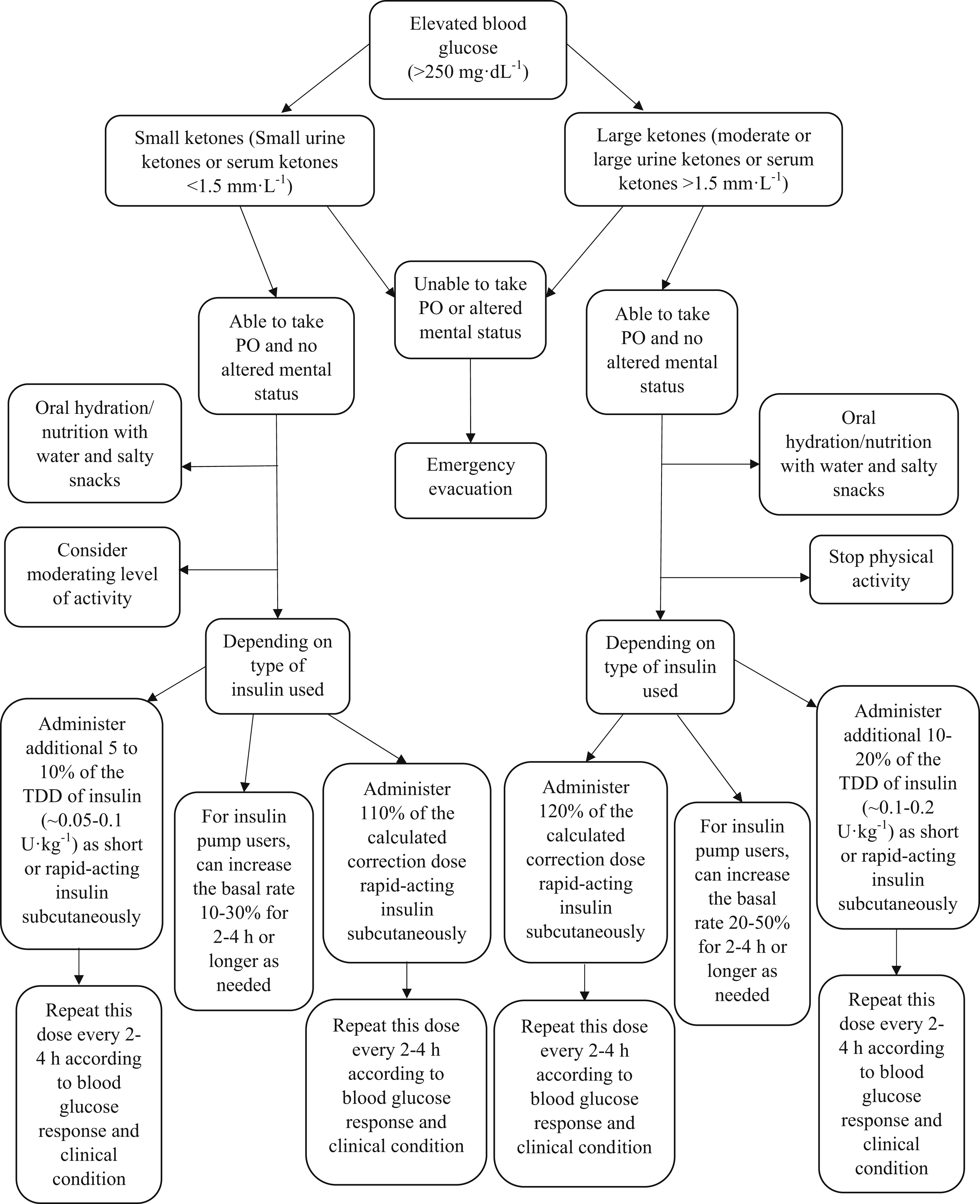
Algorithm for management of hyperglycemia and ketosis in the backcountry. EDD, estimated daily dose; PO, oral intake.
Recommendation
Ketosis may be safely managed in the wilderness if an athlete with diabetes and the athlete’s healthcare provider are comfortable with a treatment protocol and if the patient is able to take oral hydration and nutrition and shows no signs of altered mental status (
Both HHS and DKA should be considered medical emergencies managed by emergent removal or evacuation to definitive care (
Healthcare providers covering events or expeditions in the wilderness should have the ability to monitor blood glucose and ketones and have a basic familiarity with how to treat and triage glucose abnormalities (
There should be a plan for evacuation in the case of a hyperglycemic emergency (
Exercise-induced hyperglycemia
Exercise-induced hyperglycemia is common in type 1 and type 2 diabetes. In wilderness athletes specifically, there seems to be increased insulin requirements at some environmental extremes.35,36 Decreased insulin doses before exercise can promote a rise in blood glucose, as can malfunctioning insulin pump infusion sets. Overconsumption of carbohydrates before or during exercise, along with aggressive insulin reduction, can result in hyperglycemia during any exercise. The risk of hyperglycemia during exercise may be mitigated if intense activities are interspersed between moderate-intensity aerobic activities. Similarly, combining resistance training (first) with aerobic training (second) optimizes glucose stability in those with type 1 diabetes. Options to correct postexercise hyperglycemia include a conservative insulin correction (50% of usual) and/or an aerobic cool down. 16 It is important to remember that excessive insulin corrections after exercise may increase the risk of nocturnal hypoglycemia. As previously discussed, attention should also be paid to pre-trip level of fitness to mitigate glycemic complications from exercise.
Recommendation
Those with insulin-dependent diabetes should understand how to adjust insulin doses when hyperglycemia occurs during activity. This should be based on their individual experiences during exercise, training, and previous exposures to environmental stressors. This should be discussed in detail with their endocrine provider prior to embarking on a wilderness adventure (
EMERGING TECHNOLOGY
The management of diabetes is on the brink of large-scale change as new technologies become available. CGM and hybrid closed loop insulin delivery systems have ever-growing evidence favoring their use and the potential to alter the standard of diabetes care. The end goal of these developments is a completely autonomous technological system that functions as normal human pancreatic endocrine cells. These technologies offer the possibility of sophisticated glycemic monitoring and treatment in the wilderness, decreased risk of hypoglycemia, and maintenance of optimal glycemia for performance. Technological innovations may allow access to wilderness pursuits (eg, big wall rock climbing, scuba diving) that have historically been off limits to those with diabetes given excessive risks or difficulty in glycemic monitoring. 111 Important considerations for any electronic device include maintaining functionality in extreme environments, limited access to power sources, cleaning, and servicing in case of malfunction.
Multiple studies in individuals with type 1 diabetes comparing either CSII or MDI have validated positive clinical results of CGM, including reduction in HbA1c, reduction in time spent in hypoglycemia, and improvement in quality of life. 112 -115 CGM use reduces glycemic anxiety given real-time tracking and hypoglycemia alarm systems, an effect that could be beneficial for the wilderness athlete. 116
The US Federal Drug Administration approved a hybrid closed loop insulin delivery system (also known as the artificial pancreas) in October 2016. In this system, a CGM is paired with an insulin pump, and insulin delivery rate is adjusted based on CGM data, directed by an onboard algorithm independent of patient input. Preliminary data shows promise for safety and improved glycemic control.114,117-119 However, operator input is still required for meal bolus insulin because it remains difficult to autonomously alert an artificial system of an impending meal.
For various reasons, exercise poses a challenge to any automated insulin delivery system. 120 To date, only 1 study has evaluated such a system in the wilderness athlete. Those randomized to a single-hormone artificial pancreas versus sensor augmented pump therapy had more time in ideal blood glucose control, reduced time in hypoglycemia, and higher satisfaction with therapy. 121 There was no documented device failure for either system in the study’s alpine skiing environment.
A future target of research and development is the addition of other hormones to the artificial pancreas system. Glucagon has been studied most, as diabetes results in impaired secretion. 122 One study found improved glycemic control with less time in hypoglycemia with a dual-hormone artificial pancreas, as compared to sensor augmented therapy. 123 The future expectation may be that all individuals with diabetes will use CGM, and all insulin-dependent people will be encouraged to use a hybrid closed loop insulin delivery system, which would be a great benefit for the wilderness athlete undergoing high energy expenditure in wilderness environments. Still, resource-limited scenarios with extreme environmental conditions will limit complete technologic dependence on technology, and a backup analog management plan will likely always be necessary (Table 6).
Emerging technology
AP, artificial pancreas; BG, blood glucose; CGM, continuous glucose monitoring; MDI, multiple daily injection.
Recommendation
Although there is insufficient in vivo data on continuous glucose monitoring or novel hybrid closed loop insulin delivery systems to recommend their use for wilderness athletes with diabetes, the use of such technology may be considered after discussion with an individual’s endocrine provider (
Conclusions
As the number of athletes in wilderness and remote environments increase, the number of wilderness athletes with diabetes will also increase. There is strong evidence that exercise and outdoor activities have health benefits for individuals with diabetes. Individuals with diabetes and the healthcare providers who care for them should be fully equipped to support the pursuit of exercise through wilderness activities. During pre-trip planning, addressing the daily management of diabetes, acute medical issues, and considerations unique to the wilderness environment is a good start; there are so many variables that it is impossible to come up with a single set of guidelines that can be uniformly applied to all wilderness athletes with diabetes.
It is important to tailor and personalize the medical care of each individual based on personal history and input. Attention should be paid to physical preparation for an excursion, including muscular and aerobic fitness, as well as prior exposure to environmental conditions. Insulin doses and diet plans should be adjusted according to the type and degree of activity that will be performed, an individual’s baseline level of fitness, the individual’s athletic and disease history, and the environment to which the athlete will be exposed. Wilderness athletes with diabetes should carry a basic written plan developed with their endocrinologist describing their usual insulin regimen, a plan for basic adjustments in the backcountry, basics of hypo-/hyperglycemia management, and an emergency action plan. It is also important to consider the comfort level of an athlete’s travel companions, available resources, and emergency evacuation options.
We recommend that healthcare professionals and athletes with diabetes approach wilderness activities through shared decision making. When preparing for wilderness pursuits, it may be most important to consider the athlete’s own attitudes toward disease management, awareness of the complexities of their individual disease, and their comfort with daily adjustments. With thoughtful and thorough preparation and planning, the wilderness can be accessible and safe for individuals with diabetes.
Footnotes
Acknowledgements
Author Contributions: Clinical practice guideline concept and design (KV, LN, RF, CJ, AB, BC, MK, GL); literature review (KV, LN, RF, CJ, AB); drafting of the manuscript (KV, LN, RF, CJ, AB); critical revision of the manuscript (KV, LN, RF, CJ, AB, BC, MK, GL); approval of final manuscript (KV, LN, RF, CJ, AB, BC, MK, GL).
Financial/Material Support: None.
Disclosures: None.
Supplementary materials
Supplementary material associated with this article can be found in the online version at