






Abstract
Introduction
Point-of-care ultrasonography is a burgeoning field of practice and study. Although point-of-care ultrasonography has started to penetrate the field of wilderness medicine, its use in cold environments is often limited by poor battery performance. In the current study, we investigated the effect of chemical foot warmers on battery runtime of handheld ultrasound machines in cold weather.
Methods
This prospective study used a balanced, crossover randomization design to compare handheld ultrasound machines exposed to cold weather with and without the application of chemical foot warmers. Time to power off, ambient temperature, air humidity, and wind speed were recorded for each trial and compared in a mixed-effects model analysis of variance.
Results
Ultrasound machines showed significantly decreased functional battery life with decreasing temperature (P<0.01) and increasing wind speed (P=0.01). Addition of the chemical foot warmer resulted in a statistically significant increase in handheld ultrasound machine runtime compared with controls (P<0.001). Overall machine runtime was increased by approximately 21.8 min (95% CI 16.2–27.3).
Conclusions
The application of chemical foot warmers to handheld ultrasound machines exposed to cold environments prolongs usable battery life and, consequently, may allow for extended scanning time in austere and remote environments.
Keywords
Introduction
Point-of-care ultrasonography (POCUS) is a burgeoning field of practice and study. The value of portable ultrasound has been demonstrated in out-of-hospital settings such as disaster triage, low-and middle-income countries, and prehospital emergency medical services. 1 –3 In the last 10 y, POCUS has been increasingly used in numerous settings, including space, swamp, jungle, mountain, and desert environments.4,5 Proposed uses include diagnosing pneumonia, 6 evaluating central volume status and diagnosing acute mountain sickness, 7 diagnosing high altitude pulmonary edema, 8 excluding a diagnosis of pneumothorax, 9 detecting midline shift in head injury, 10 and aiding in the diagnosis of stroke. 11
One barrier to the use of POCUS in the wilderness is that handheld electronics are adversely affected by very low environmental temperatures. 12 Lithium-ion polymer batteries, such as those used in miniaturized ultrasound machines, are known to have poor performance as a result of changes in the chemical thermodynamics and kinetics of these batteries at low temperatures.12,13 Because shorter functional battery life has the potential to limit the utility of portable ultrasound in a remote setting, a simple and inexpensive intervention to prolong battery runtime would be valuable. In this study, we set out to determine whether the application of chemical foot warmer devices improves the battery life of portable ultrasound machines in cold weather.
Methods
Four previously used 2015 V-scan dual probe GM 000310 ultrasound machines with lithium polymer rechargeable batteries were obtained (GE Healthcare, Wauwatosa, WI). Previously used units were selected to better approximate the prior battery usage of real-world machines. The units had all been used as short- and long-term demo machines and therefore varied in their histories of previous charge–discharge cycles. Baseline indoor testing of the units was performed to ensure no batteries were obviously damaged.
The machines were individually labeled A through D. Each device was then randomly assigned a different permutation of 3 intervention and 3 control trials over the course of 2 d to achieve a randomized, controlled crossover design. Before each trial, units were charged fully at room temperature. The units were then placed outside for 30 min before each test to allow the devices to equilibrate with the environmental temperature. Two packages of self-adhesive chemical foot warmers (Heat Factory Inc, Carlsbad, CA) were opened 10 min before every trial. The heat packs were immediately shaken for 1 min, then left to sit outside in an area sheltered from any wind for 9 min before application. Warmers from the same package (Figure 1) were applied to the back of the screen and to the bottom of the device (nearest the battery) of each of the 2 devices assigned to the intervention group for a given trial. Devices in the control group had no warmers applied. All 4 devices were then placed in an identical orientation on top of their foam carrying case to simulate the surface area exposure that would accompany handheld use in a cold environment (Figure 2). 14 Devices were then powered up, set to the 2-dimensional cardiac scanning mode, and kept in this mode throughout the trial. Time in minutes until the screen powered off because of the automatic low-battery power off or complete battery failure was recorded for each trial. Local ambient temperatures were recorded using a calibrated electronic thermometer before and after the trials and were confirmed with local weather reports. Wind speed and humidity were obtained from local meteorological sources.
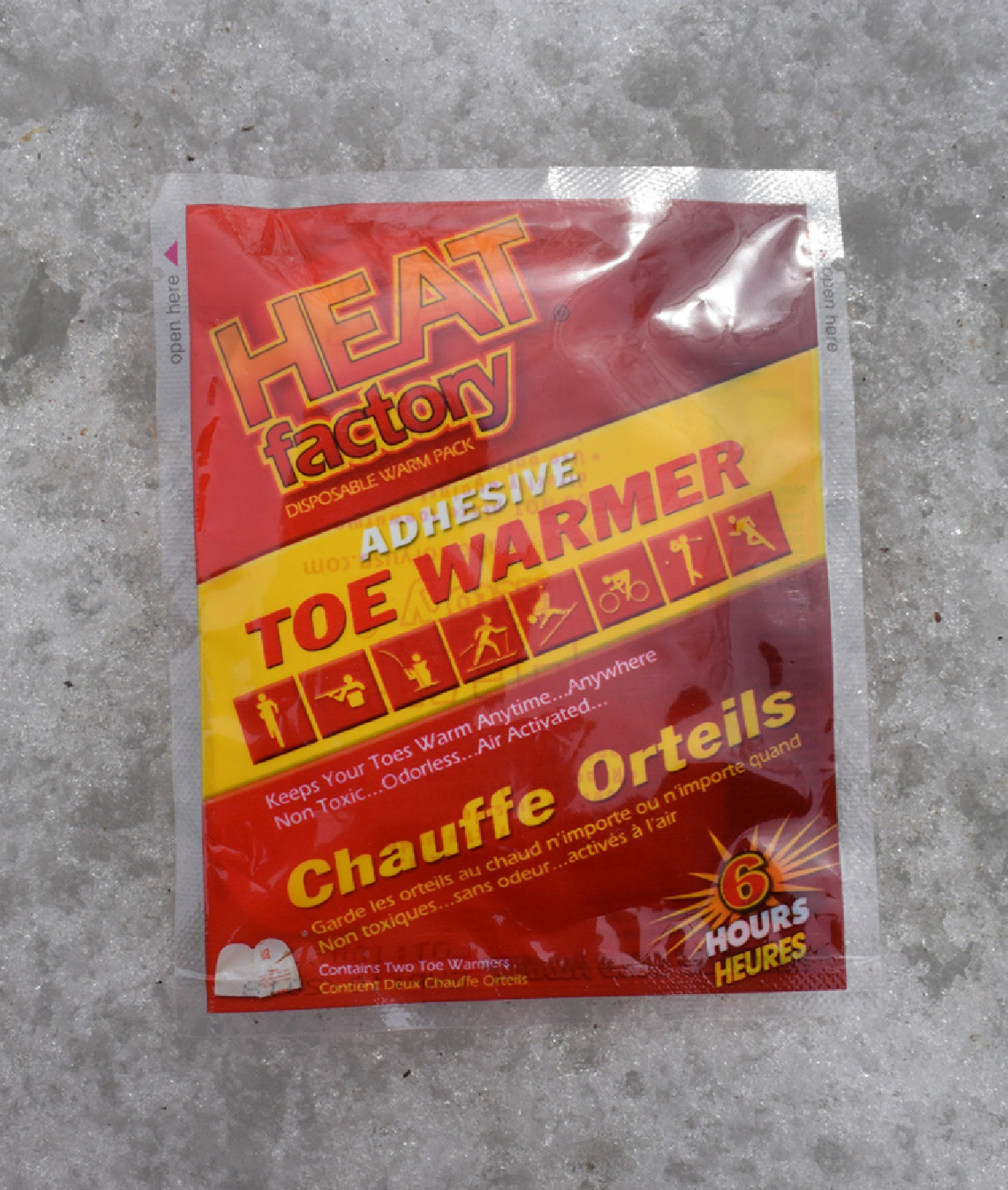
An example of the unopened chemical heat packs used in the study. Such commercially available “toe-warmers” are ideal for heating handheld ultrasound units because they are inexpensive, adhesive on 1 side, and generate more heat than the similar-sized heat packs sold as “hand warmers.”
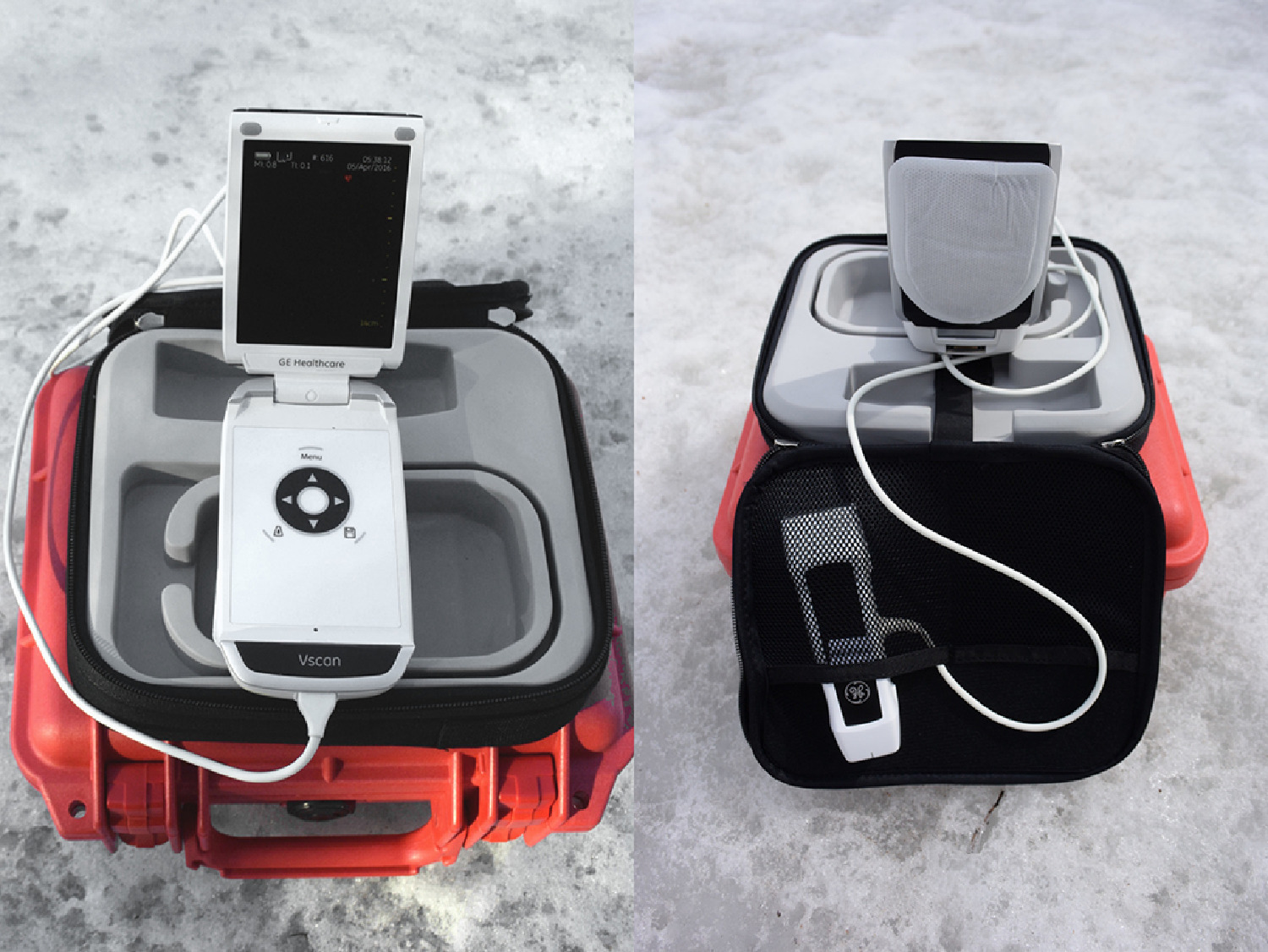
Experimental setup for battery runtime testing seen from the front (left) and back (right). The ultrasound machines were set up atop the manufacturer soft case with or without chemical heat packs depending on the allocation (pictured with heat packs applied). As a reference, the dimensions of the ultrasound units (GE VScan) are 135 mm × 73 mm × 28 mm, and each is positioned on top of a Pelican 1200 case. 14
Results were compiled and analyzed with a mixed-effects model analysis of variance. Descriptive statistics and 95% CIs were also calculated. All statistical analysis was performed using R (v3.3.1, R Foundation, Wien, Austria) through the RStudio GUI interface (v 0.99, RStudio Inc, Boston, MA). Data are presented as mean±SD with range, as appropriate.
Results
Temperatures during the study ranged from −4°C to −9°C with a mean temperature of −6.9±2.1°C. Battery runtime ranged from 50 min to 92 min in the control condition and 76 min to 106 min in the intervention condition (Table 1). In 100% of individual trials, both ultrasound machines in the intervention arm outlasted those in the control arm. Overall, mean battery runtime was 72.6±12.1 min in the control trials and 94.3±9.2 min in the intervention trials (Figure 3). The average increase in battery life was 21.8 min (95% CI 16.18–27.32), which was statistically significant (P<0.001). Significant relationships between machine runtime and both environmental temperature (P<0.01) and wind speed (P=0.01) were also observed. Humidity did not significantly contribute to battery runtime in the analysis of variance results (P=0.07). No interaction terms were found to be statistically significant.
Overall runtime statistics by experimental condition
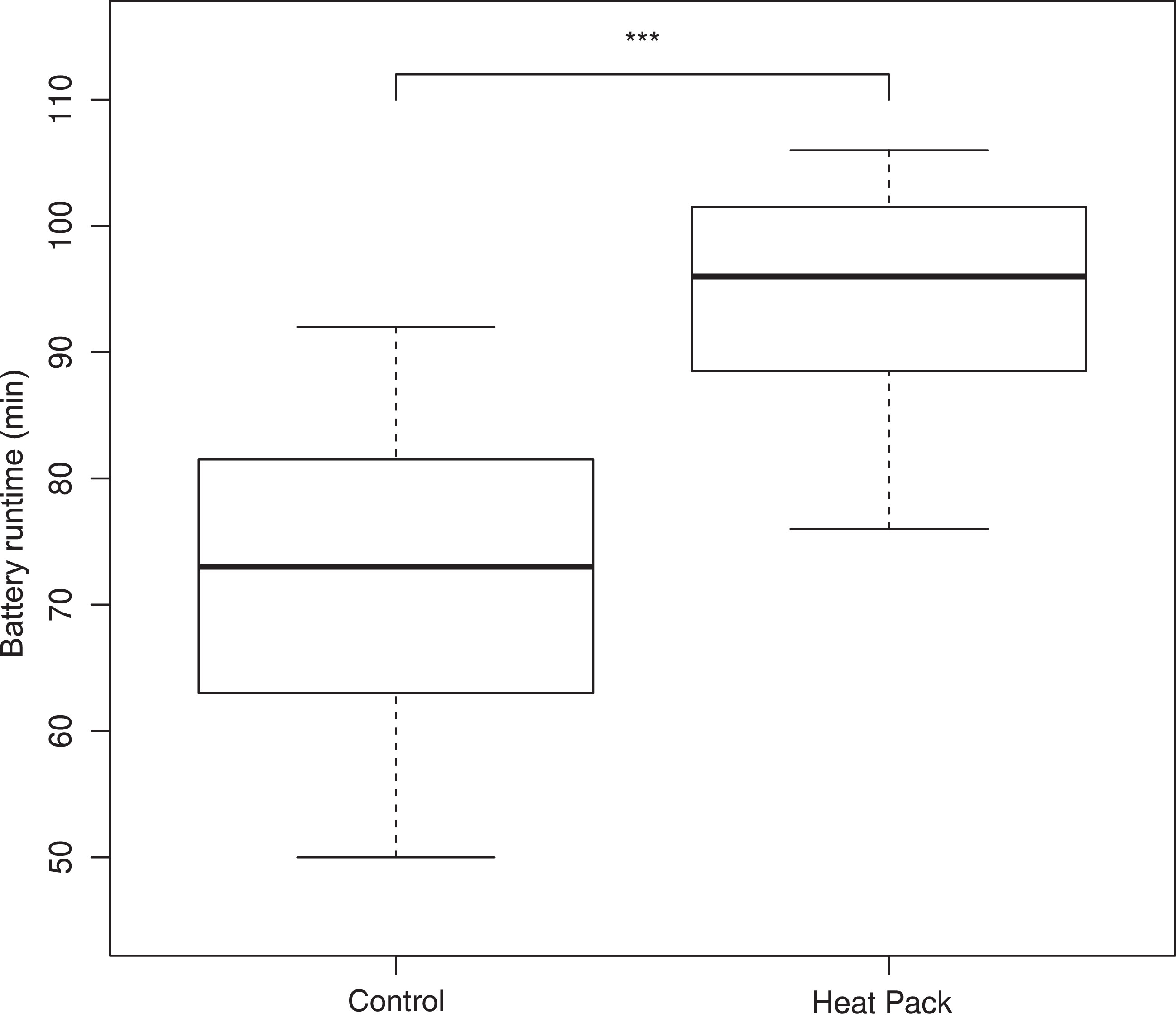
Comparison of ultrasound battery runtime in cold temperatures across all trials between machines assigned to receive adhesive chemical heat packs (Heat Pack) and machines without (Control). The mean difference in battery life was 21.8 min (95% CI 16.2–27.3), which is statistically significant (P<0.001).
Discussion
In this experiment, a statistically significant improvement in battery runtime was observed when chemical foot warmers were applied to portable ultrasound machines exposed to cold weather environments. Ultrasound machine batteries with chemical hot packs lasted, on average, 30% longer. Importantly, this magnitude of battery performance improvement is practically significant in remote wilderness environments. In such settings, routine access to electricity is limited (if available at all), and the availability of solar charging is heavily dependent on weather, time, latitude, and topography. Cumulative scanning time in the wilderness is therefore directly limited by battery performance. By increasing battery runtime by over 20 min, this practical and inexpensive intervention may allow for more frequent or prolonged scan sessions on a single battery.
The results of our experiment also confirmed the known relationship between battery performance and temperature. Lower temperatures were significantly associated with poorer battery runtime performance. Similarly, higher wind speeds were also correlated with differences in battery performance. Although devices in the control group subjectively generated some heat during the experiment, this heat was not sufficient to compensate for the low ambient temperatures. Moreover, the significant effect of wind speed in our study likely corresponds to convective cooling (similar to wind chill effect), whereby increased wind speeds more quickly cool the device to ambient temperatures. Higher wind speeds would therefore counteract the positive effect of device heating on battery runtime, thereby reducing performance.
Finally, there was no significant interaction between our intervention and environmental temperature or wind in our experiment. This was expected owing to the limited temperature range observed. In general, the foot warmers added sufficient heat to the heat generated by the machine to compensate for temperature and wind exposures during the study (−4°C to −9°C and 2 km⋅h−1 to 11 km⋅h−1, respectively). Milder temperatures closer to the lower limit of the temperature range recommended by the manufacturer (10°C) 15 were not tested, and it is not clear at what point the additional heat of the warmers begins to increase the usable battery life. Similarly, at extreme low temperatures or high wind speeds, the additional heat of the foot packs may become inconsequential. Future studies should explore the range of environmental conditions over which our intervention would be useful to aid in decision-making for the wilderness clinician, who must decide if it is worthwhile to use a potentially limited resource (foot warmers) for a particular ultrasound examination.
LIMITATIONS
One limitation of this study was the use of a single make of ultrasound machine. Given the increasing diversity and number of portable and pocket ultrasound machines, our study reflects only a subset of the machines available in the marketplace. Although the intervention is expected to be generalizeable to other portable machines with similar lithium-ion polymer batteries, the present study was not designed to answer this question.
A limited range of environmental temperatures occurred during the study period. In our study, ambient environment temperatures ranged from −4°C to −9°C. Although benefits are expected at a significant range of lower temperatures, further study is needed to identify the range of temperatures over which a meaningful benefit can be expected.
The variable history of charge–discharge cycles of the machines used was another potential limitation of the present study. Manufacturer-supplied demo machines with variable use were used intentionally to ensure batteries had undergone adequate wear to be generalizable to “real-world” machines. Although an effect was consistently observed during the experiment, the use of machines with variable battery histories has the potential to both over- and underestimate the magnitude of this effect. Therefore, it is possible that the additional runtime achieved with the chemical heat packs would vary when brand new or extensively depleted batteries are used.
Finally, in-the-field POCUS is more likely to be applied in multiple shorter sessions rather than a single prolonged scanning session. Given that a limited number of chemical heat packs are expected in austere setting, it may be more practical to reserve heat packs for when battery capacity is already low (ie, treatment rather than prophylaxis). This use was not studied in the current experiment. Future studies should investigate the use of chemical foot warmers as a rescue intervention.
Conclusion
Handheld ultrasound machines are becoming more prevalent in the remote setting but are limited by poor battery performance in cold weather environments. In the absence of ultrasound machines specifically designed for the cold weather environment, the application of chemical heat packs to handheld devices is an inexpensive and practical way to improve battery runtime in cold weather. In the present study, we demonstrated that chemical foot warmers are effective in prolonging the usable battery life of such devices. Because longer battery runtimes may allow longer or more numerous scanning sessions, wilderness medicine providers should consider packing chemical foot warmers as part of their handheld ultrasound kit when preparing to provide care in cold environments.
Footnotes
Acknowledgment
The authors thank Dr. Jessica Moe for her advice regarding the statistical design of the study.
Author Contributions: Study design (SR, RKS, DH, HC); analysis (SR, HC); manuscript (SR, RKS, HC); final approval (SR, RKS, DH, HC).
Financial/Material Support: Handheld ultrasound machines were provided on temporary loan by GE Healthcare Canada Inc.
Disclosures: None.