





Abstract

To the Editor:
A 42-y-old man was brought to the emergency department by his relatives with agitation, nausea, repetitive vomiting, diarrhea, and a retrosternal burning sensation 4 h after ingesting 20 to 25 seed pods of an unknown bush. At the same time, his 11-y-old daughter, who had ingested 10 to 15 seed pods of this plant, developed similar symptoms along with abdominal cramps and was referred to a pediatric hospital. The man reported the ingestion, and his brother confirmed the incident. On admission, he was agitated and not able to answer questions properly. He was constantly groaning and providing only one-word answers to questions. His vital signs were as follows: blood pressure 115/80 mm Hg, pulse rate 115 beats·min−1, temperature 37.1°C, and respiratory rate 18 breaths·min−1. Abdominal examination revealed mild diffuse tenderness.
His relatives were asked to bring a branch of the plant and its fruit. A plant ecophysiologist was consulted to identify the plant, which was discovered to be the bird of paradise shrub Caesalpinia gilliessii (Figure 1A and B). Treatment was initiated with 0.9% saline solution, ondansetron 4 mg intravenously every 8 h, and oral loperamide 2 mg every 12 h. The next day, the symptoms resolved and laboratory values were normal. He was observed for 24 h and discharged
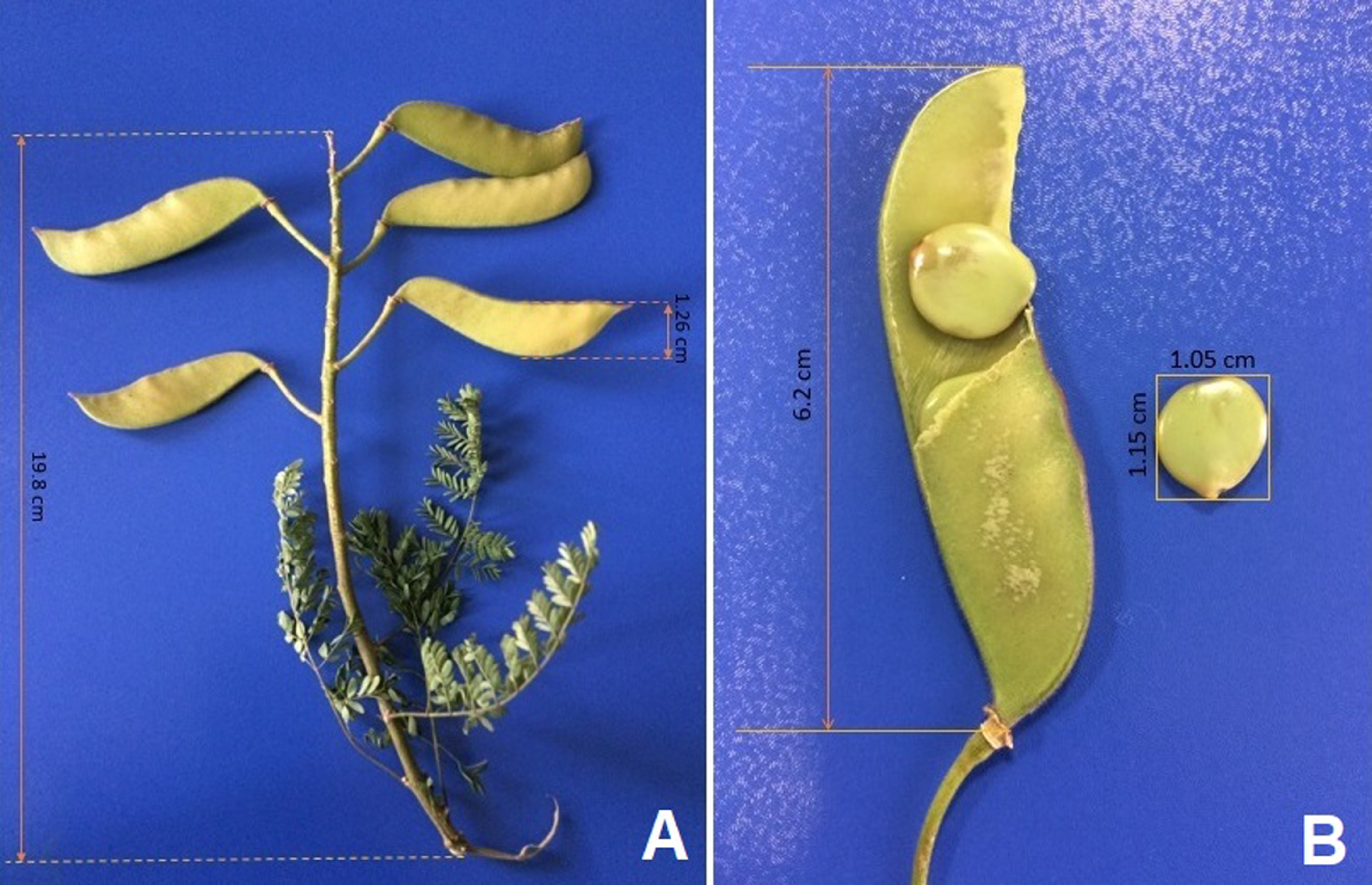
Bird of paradise shrub Caesalpinia gilliessii with scale references. (A) The branch. (B) The seed pods.
When asked why he had ingested the seeds and shared them with his daughter, the father stated that he confused them with an edible plant because of the similar appearance and sweet taste.
His daughter presented with vomiting, profound diarrhea, and abdominal cramps. She was resuscitated using intravenous infusion of 2300 mL of 0.9% saline over 24 h and treated with intravenous ondansetron 2 mg every 8 h and loperamide 2 mg orally every 6 h. She was followed over the next 72 h and released with normal clinical examination findings and without abnormal laboratory values.
This case is a rare literature report of a natural poisoning from this plant. 1 The authors did not find any reported case from Iranian sources, nor any published information on the relative response of children and adults to exposure.
C gilliessii, also known by the common names yellow bird of paradise, Barbados pride, brazilwood, dwarf ponciana, espiga de amor, flower fence, and ponciana, is a poisonous tropical plant that grows wild in pastures and dry habitats and can reach heights of up to 5 m. 2 The green seeds contain tannins that are cytotoxic protein precipitates,2,3 which can induce severe gastrointestinal irritation (nausea, vomiting, diarrhea), central nervous system disturbances (confusion, agitation, drowsiness, dizziness), and tachycardia. 2 The symptoms depend on the number of seeds ingested.1,2 Supportive care includes rehydration, antiemetics, antidiarrheal medication, and correction of any electrolyte imbalance resulting from severe gastrointestinal symptoms. Consultation with a poison control center should be considered to confirm plant identification and to differentiate the symptoms from other toxic ingestions.2,3 This plant should not be confused with Strelitzia reginae, known as bird of paradise flower that is a horticultural and ornamental plant widely used for flower arranging and belonging to a different botanical group. The poisoning should not be misidentified as toxicity from the castor bean plant (Ricinus communis), which grows in some of the same areas. The shiny seeds of the castor bean plant look similar to edible pinto beans, and its poisoning manifests with initial nonspecific symptoms resembling C gilliessii poisoning, including colicky abdominal pain, vomiting, diarrhea, and heartburn. Castor bean poisoning acts through the cytotoxic protein ricin (toxalbumin) and can result in more severe consequences and death. 4
C gilliessii is native to dry and desert regions of Argentina and Uruguay but is now widely found in other tropical and arid regions around the world, including the southwestern United States from California and Nevada to Oklahoma and Texas plus Georgia. 5 As a consequence of global warming and climate change, its distribution is increasing in Iran, including Qazvin province, where there is popular belief in the medicinal properties of wild plants. The pleasant taste and similarity of the seed to edible beans makes C gilliessii a high risk for poisoning from ingestion, which calls for raising public awareness. In addition, this risk creates an obligation to prohibit its cultivation in public and populous areas such as parks and schools.