




Abstract

An 11-y-old girl with a medical history of hypothyroidism presented to an emergency department in Central Texas with a rash over her right thigh (Figure 1). She had been playing outside in a tree-lined area with tall grass earlier in the evening. She had localized burning and paresthesia, and she reported pain and mild itching. There was surrounding erythema. She denied respiratory difficulties, gastrointestinal symptoms, fever, and facial swelling. She was otherwise well-appearing. Diphenhydramine was given before arrival with little relief of her symptoms. She was afebrile with reassuring vital signs. What is the etiology?
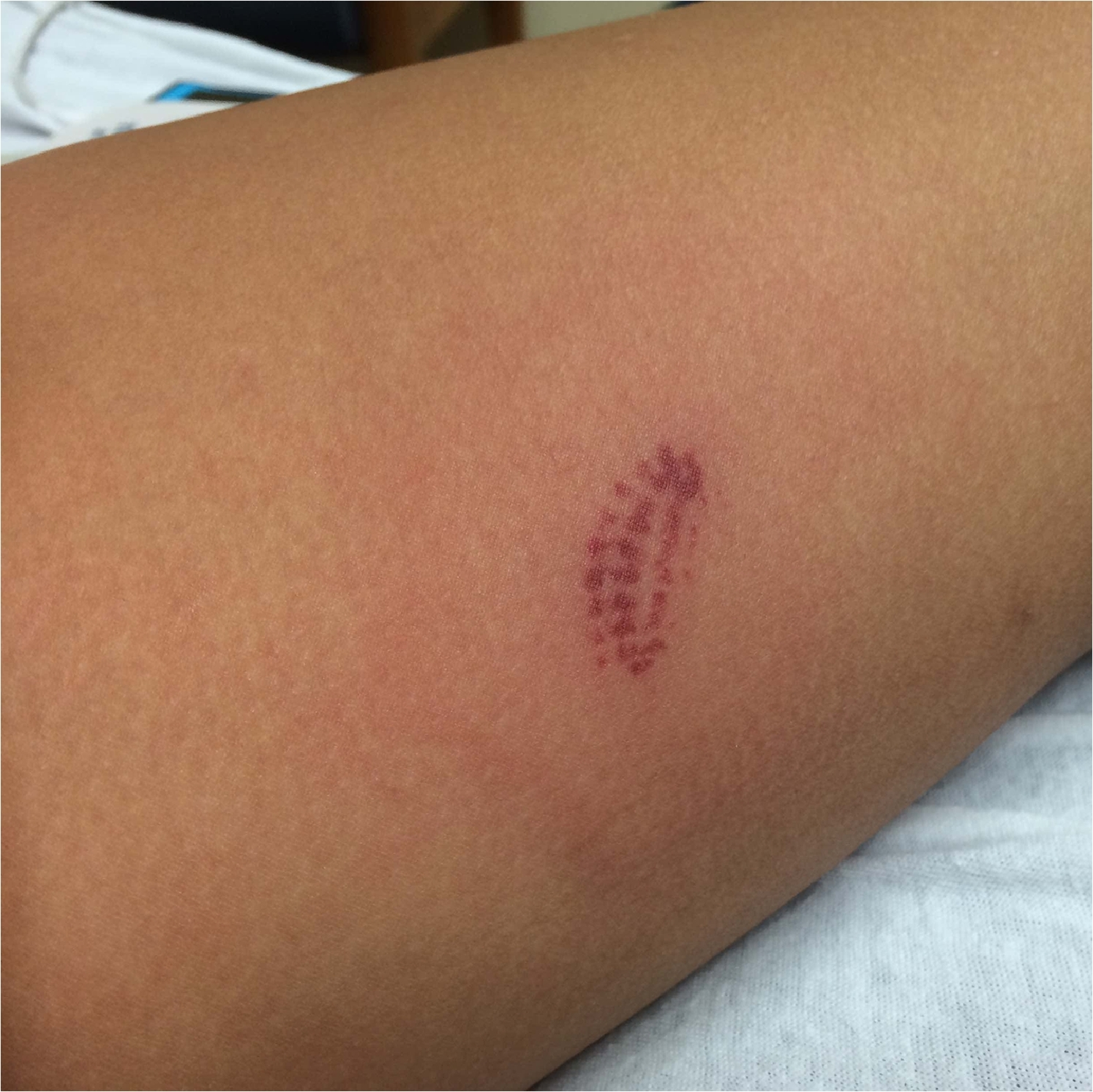
Rash on right thigh of 11-y-old female patient.
Diagnosis
Asp caterpillar (also known as the puss caterpillar—the stinging larva of the Southern flannel moth, Megalopyge opercularis) sting (Figure 2).

Asp caterpillar (mature instar of the southern flannel moth, Megalopyge opercularis). Photographs by Donald W. Hall, University of Florida.
Discussion
The asp caterpillar and its adult counterpart, the southern flannel moth, are found along the Gulf Coast and are most abundant in the state of Texas.1,2 Reports of children being stung in southern and central Texas are more common during summer and fall months, specifically July, October, and November. 3 About 200 cases each year are reported to Texas poison centers, 3 with numerous other exposures likely going unreported. Historically, there are 2 accounts of schools requiring temporary closure because of infestations. 2
The asp caterpillar and southern flannel moth can also be found along the east coast from New Jersey to Florida. The flannel moth produces 2 broods per year, one in early summer and another in the fall.1,2 Asp caterpillars are covered in venomous hollow spines, each with its own venom gland. With each molting stage the venomous larvae grow larger and hairier, becoming more toxic. 2 Adult moths (Figure 3) are harmless to humans. 2
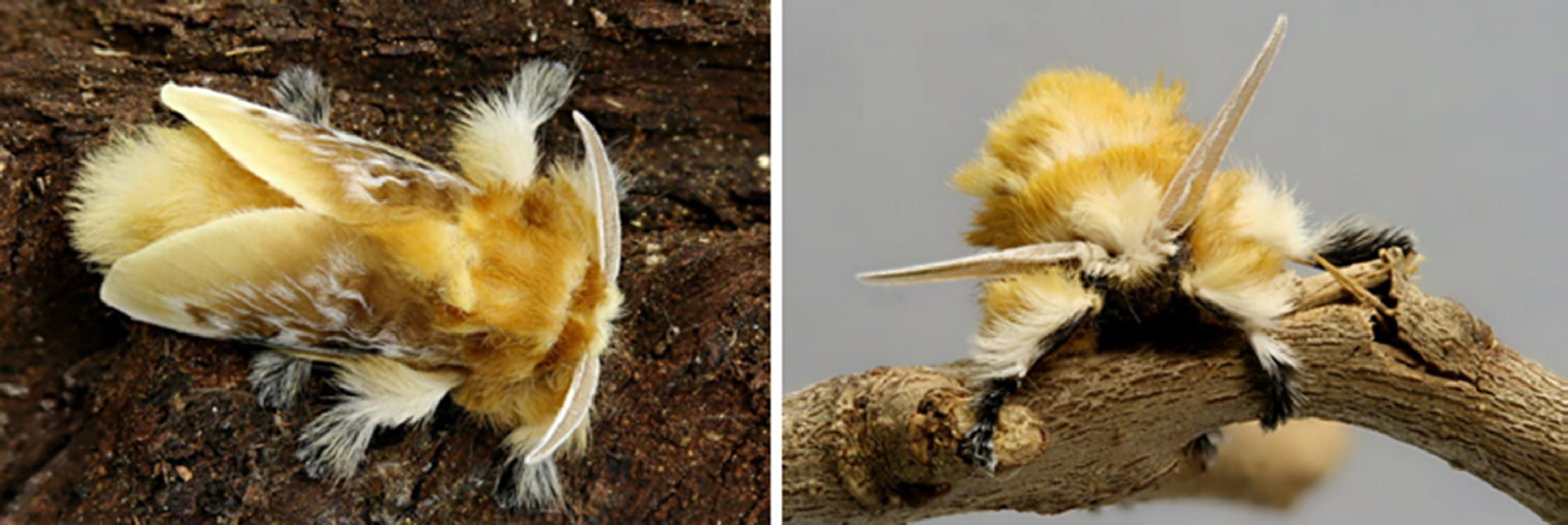
Adult male Southern flannel moth, Megalopyge opercularis. Photographs by Donald W. Hall, University of Florida.
Reactions to the sting vary by patient and by the location of the sting on the body. Thinner, more sensitive skin tends to react more severely. 2 Initially there is intense burning pain before the classic asp sting pattern appears. Localized erythema and lymphadenopathy may develop. More severe reactions, including anaphylaxis, may also occur.2,4 In documented cases in the literature, 90% of patients experience dermal effects only; the remaining 10% experience systemic responses. 3
Treatment primarily involves stripping off any residual spines with tape. Symptomatic care including antihistamines such as oral diphenhydramine, topical hydrocortisone, and ice may also be employed.1,2,4 Therapy should be escalated depending on the severity of the reaction, including epinephrine for true anaphylaxis. 4 This patient was started on scheduled diphenhydramine with complete resolution of her symptoms in 3 to 4 d.
Footnotes
Acknowledgements
The work described in the manuscript has been presented in abstract form in a resident photo contest at the Annual Scientific Assembly of the American Academy of Emergency Medicine, April 7–11, 2018.
Acknowledgments: Photographs of asp caterpillars and adult southern flannel moths were used with the permission of Donald W. Hall, University of Florida.
Author Contributions: Original case and photo (VK, AJ); drafting of the manuscript and literature review (KH); critical and final review of manuscript (KH, VK, AJ).
Financial/Material Support: None.
Disclosure: None.