






Abstract
In remote wilderness environments, local people with traditional knowledge of medicinal plants are potentially important first-line health care providers. We present a case of a 31-year-old man who fell off a horse while trekking through a remote mountain landscape in Ethiopia and sustained blunt force trauma to the hand. A local mountain hut keeper examined the patient’s hand and used heated leaves of the succulent plant Kalanchoe petitiana to treat a suspected metacarpal fracture. As first responder in a low-resource setting, the hut keeper relied on his traditional knowledge of ethnoveterinary medicine to improvise a treatment for a human injury in a remote mountain environment. Although in this case the outcome of the traditional intervention was positive, our analysis shows that the massage component of the intervention could have led to complications. Conversely, reports from the use of related Kalanchoe species suggest that heated Kalanchoe leaves could be useful in the compression component of traditional care for hand injuries. Validation of traditional remedies and their therapeutic potential are needed if they are to complement wilderness wound care safely and reliably. The documentation and validation of these remedies are urgently needed, as many medicinal plants and indigenous knowledge of how to use these valuable natural resources are being lost.
Introduction
Adventure travel and ecotourism have been marketed as sustainable forms of tourism that support environmental conservation. 1 To ensure a sense of exclusivity, the adventure travel sector is increasingly engaged in physical activities such as hiking and camping in remote wilderness environments2,3 despite the increased chance of injuries. 4 In the event of injuries in low-resource settings far from medical infrastructure and care, local people with traditional knowledge of medicinal plants are potentially important first-line health care providers because they often primarily rely on medicinal plants and traditional knowledge to treat human and livestock ailments. 5 We present a case of the improvised treatment of a horseback riding injury using ethnoveterinary medicine in the Bale Mountains in Ethiopia.
Ethiopia is characterized by a diverse landscape of contrasting ecoregions, ranging from hot arid lowland deserts to cool mountain landscapes with Afroalpine vegetation. 6 These ecoregions have a high biotic diversity, both in terms of species richness and turnover, and are home to a large number of ethnic groups. These people typically use a specific suite of medicinal plants sourced from their environment to treat human and livestock ailments. 7 –15 Upon review of the literature, we found 43 studies that documented Ethiopian traditional medicinal plants, 18 of which also reported the ailments for which the plants were used (average number of informants per study [mean±SE], 143±32; 42 studies; total number of informants across studies, 6011). On average, local communities throughout Ethiopia reported the use of 80±8 medicinal plants (43 studies) for 51±7 human and livestock ailments (18 studies) (see online Supplemental Material for data and location of studies). Gastrointestinal disorders, parasites, and external injuries as well as mental disorders and spiritual conditions are frequently treated using medicinal plants.
Here, we specifically address the application of an ethnoveterinary practice in the improvised treatment of a human injury in a remote mountain environment. This case report describes the use of heated fresh leaves of Kalanchoe petitiana A. Rich to treat blunt hand trauma sustained after a fall off a horse (Figure 1). This succulent plant is native to the highlands of Ethiopia (Figure 2), and its fresh leaves are reportedly used as dermal medicine. Heated leaves of K petitiana are used as human medicine to relax sore muscles and as veterinary medicine to treat swelling and broken bones in cattle.14,15 The anti-inflammatory, antimicrobial, and wound healing properties of K petitiana have been demonstrated in vitro and in animal models,16,17 but detailed case reports on its use in human medicine are lacking.
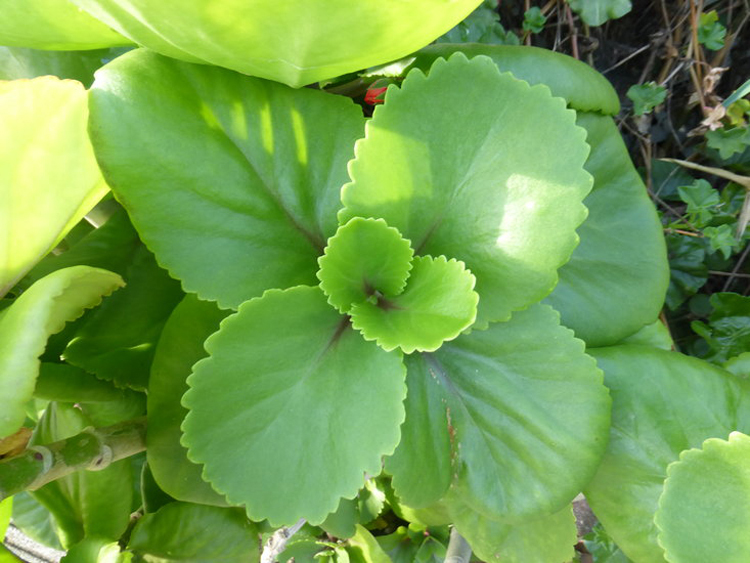
Leaves of Kalanchoe petitiana. Image by Zoya Akulova, 2015, and reproduced under Creative Commons license (CC BY-NC 3.0), with written permission.
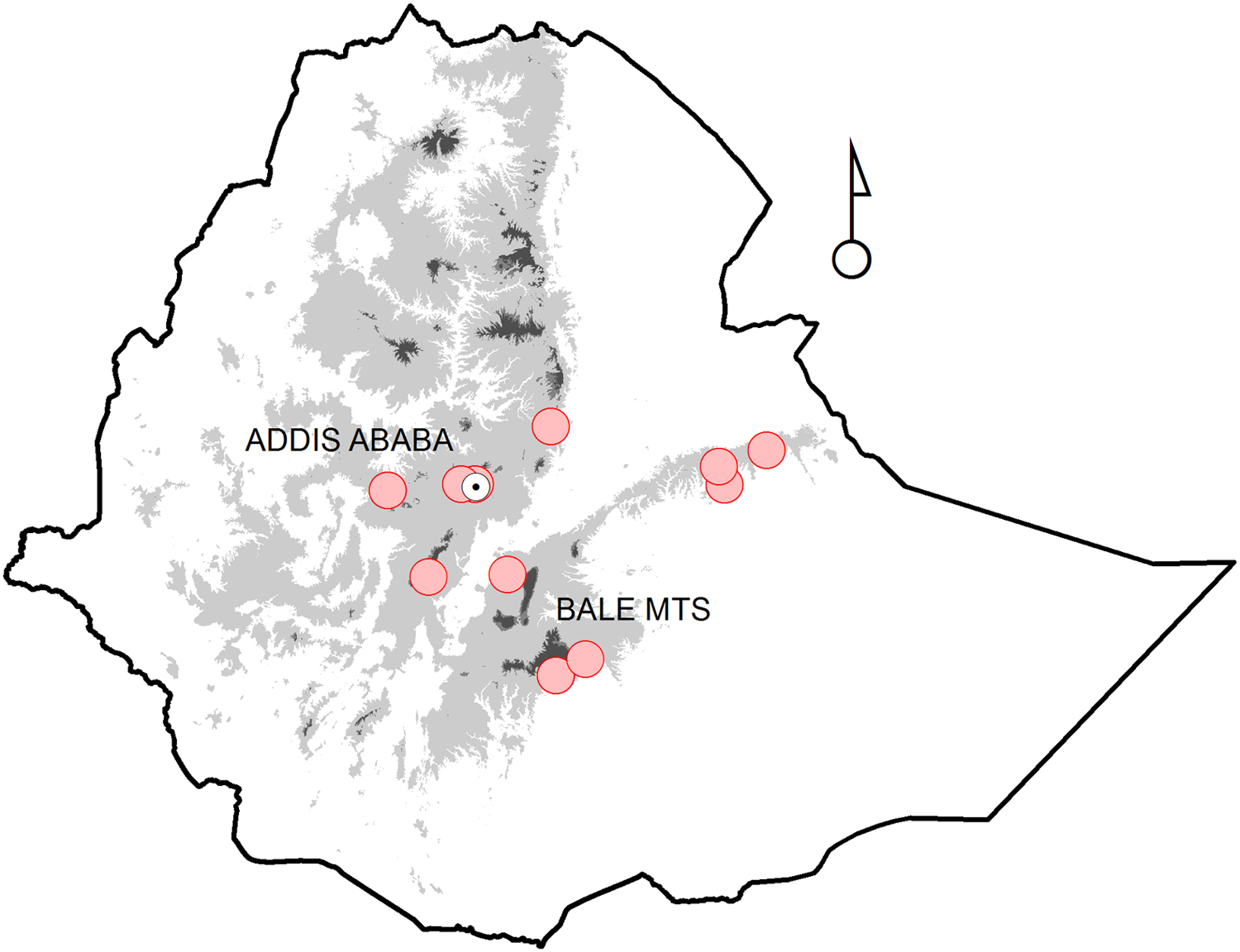
Occurrences of Kalanchoe petitiana in Ethiopia registered in the Global Biodiversity Information Facility with an indication of the Ethiopian highlands (mountainous areas with an altitude >1800 m shaded in gray). Occurrence data downloaded from GBIF.org on February 10, 2017, doi:10.15468/dl.bd5zlm. Elevation data and boundary data from EthioGIS, Geospatial Information System Ethiopia, Centre for Development and Environment, University of Bern Switzerland (1999).
Case presentation
In November 2006, an otherwise healthy 31-year-old man experienced blunt traumatic injury to the hand when falling off a horse in the Bale Mountains in Ethiopia. The Bale Mountains are a unique and remote alpine wilderness area southeast of the Rift Valley in Ethiopia, characterized by a wide variety of habitats that include Afroalpine moorlands, lava fields, moist tropical forest, and cloud forest, spread over a number of plateaus incised by wide valleys and separated from each other by steep escarpments and ridges. Horseback riding through remote mountain areas can be a rewarding outdoor experience, but the intrinsic steepness and roughness of mountainous terrain exacerbate the risks of injuries, which include extremity fractures as well as head and spinal injuries due to falling or being thrown while riding. 18 –20
While mounted and negotiating gullied terrain through degraded juniper-heath forest en route to Wahoro camp in the Adaba-Dodola protected forest (6°51’11’’N, 39°10’54’’E, 3271 m above sea level), the patient’s horse tripped on a rock, spooked, and bolted under a tree trunk that had fallen over a deep gully. This caused the patient, who was wearing a 10 kg backpack, to fall. A dive roll absorbed most of the impact of the fall, but the patient sustained substantial blunt force trauma to the back of the right hand by hitting it on a rock when exiting the roll. The patient reported intense pain over the metacarpal bones, pain on flexion of the fingers, and a strong reduction of functional capacity such as gripping. There was local swelling to the back of the hand, although the skin was intact. There was no obvious deformity of the hand. There were no injuries to head and neck, face, chest, or abdomen. Apart from the hand injury, there were only minor external bruises.
Under normal circumstances, clinical and radiologic examination of the hand would have been needed to properly diagnose the injury, 21 and first aid would have consisted of rest, ice, compression, and elevation (RICE) therapy. Instead, the hand was splinted using a fleece tubular scarf. Upon reaching the Wahoro mountain hut for the overnight stop, the hut keeper—a local farmer— examined the hand and suspected a metacarpal fracture, which he offered to treat using a medicinal plant he claimed to use to treat injuries in horse legs.
Fresh leaves of the succulent plant Kalanchoe petitiana (Crassulaceae; Oromo vernacular name An’chura/hanćura) (Figure 1) were collected from the forest margins, bushland, and clearings around the mountain hut. The thick elliptic leaves, approximately 7 × 10 cm in size, were first heated for approximately 10 minutes on an iron wood stove (Figure 3). The hot leaves were then used as warm gauze firmly pressed against the back and the palm of the injured hand (Figure 4). Subsequently, the leaves were used to rub the swollen area in firm strokes in a proximal to distal direction (ie, from the wrist toward the fingertips), which was reported by the patient to be very painful. The procedure was repeated for approximately 30 minutes. No oral analgesics were taken. The patient was able to handle his horse the next day and continued trekking as planned. At base camp, the hand was splinted using a modified elastic elbow support, and the middle finger and ring finger were buddy strapped using 2.5-cm-wide nonstretch white tape. The elbow support and tape were retrieved from a self-assembled emergency kit in the patient’s vehicle. The patient remained in Ethiopia for several weeks after the incident. A radiograph of the right hand taken 23 weeks later to diagnose an unrelated injury (snowboarding-related distal radius fracture) found hyperplasia of the cortex of the second metacarpal bone (Figure 5), but visual evidence was insufficient to diagnose a (healed) metacarpal fracture.
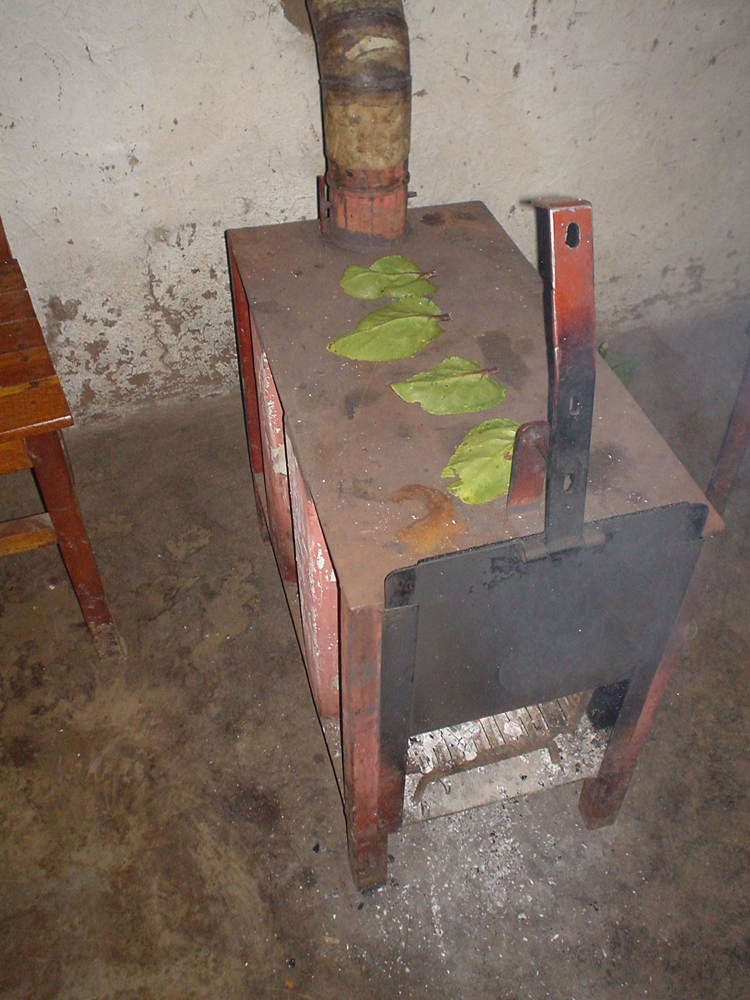
Heating of Kalanchoe petitiana leaves on an iron wood stove before their application.
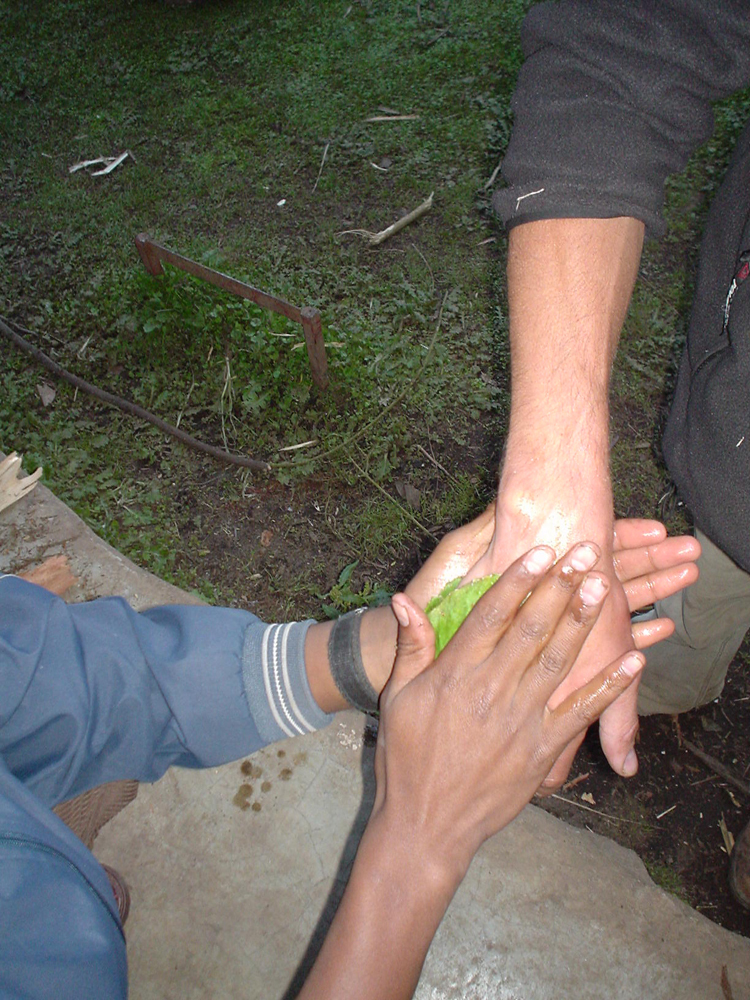
Application of pressure, with heated Kalanchoe petitiana leaves, on the dorsal and palmar aspect of the injured hand.
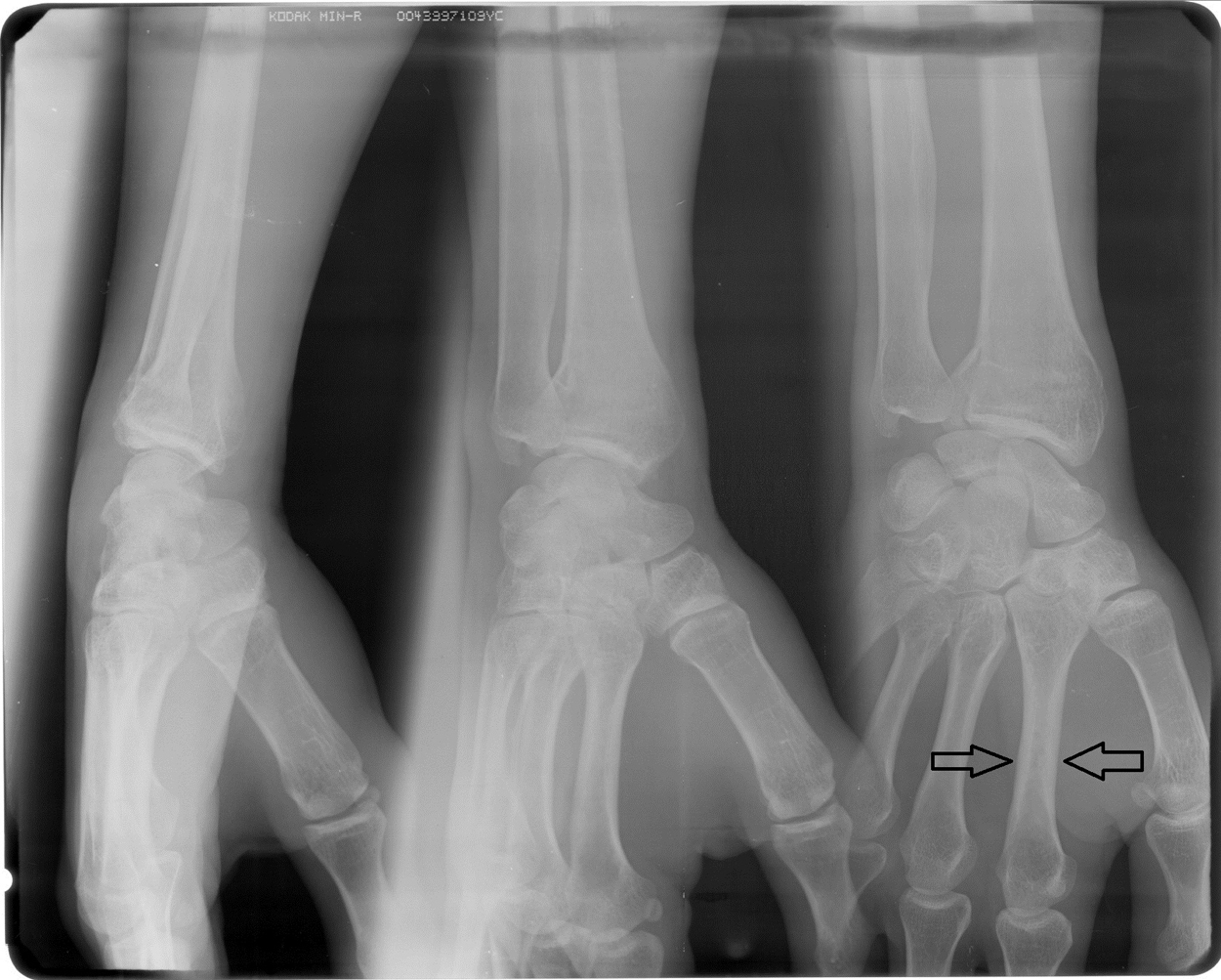
Radiograph of the right hand taken 23 weeks after the injury to diagnose an unrelated injury (snowboarding-related distal radius fracture), showing hyperplasia of the cortex of the second metacarpal bone (arrows).
Discussion
An Ethiopian hut guardian relied on traditional knowledge of a medicinal plant and methods designed to treat broken legs in cattle and horses to treat a human injury. Some previous studies have reported a close relationship between ethnoveterinary medicine and human alternative medicine and between the plant (and animal) species used in animal and traditional human health care. 22 –24 Thus, traditional knowledge of animal medicine could be useful to inform human medicine in remote environments, but a few reasons for caution can be illustrated using this case.
First, there is the possibility that the presented injury would have healed without treatment. In this case, the ethnoveterinary treatment had no adverse effect and potentially expedited the restoration of hand functionality that the patient needed for the remainder of his expedition.
Second, there should be some caution in the manipulation of injuries because livestock anatomy obviously differs from the human body. The compression and massage reported in this case are not entirely without risk. Applying pressure on the dorsal aspect of metacarpal fractures has been described as an emergency procedure to reduce angulated fractures, 21 and compression is part of traditional RICE care for this type of injury. The massaging, however, is a reason for concern. Massaging is one of the various traditional bone setting methods used in sub-Saharan Africa, but the technique often leads to complications such as nonunion and heterotopic bone formation. 25
A third reason for caution is the insufficient knowledge of the therapeutic value, phytochemistry, and pharmacology of many medicinal plants in remote areas. The limited evidence for the use of K petitiana in human and veterinary medicine is anecdotal,14,15 and the compounds responsible for the anti-inflammatory, antimicrobial, and wound-healing properties that have been demonstrated in vitro and in animal models16,17 have not yet been identified. Kalanchoe pinnata (Lam.) Pers. and Kalanchoe brasiliensis Cambess. are related species native to South America and are also known for their traditional medicinal uses, 26 –28 including veterinary medicine. 29 A number of studies suggests that quercetin-derived flavonoid glycosides are the bioactive molecules that produce antiophidic, antinociceptive, antiedematogenic, and anti-inflammatory activities of Kalanchoe leaf and flower extracts. 28 ,30–32 For K petitiana, quantitative data on its active components are lacking. This is of particular concern because a number of Ethiopian medicinal plants have already been found to have potential genotoxic effects. 33
This case report illustrates some of the opportunities and caveats in translating traditional ethnoveterinary practice to human treatment. Although in this case the outcome of the traditional intervention was positive, our analysis found that the massage component of the intervention could have led to complications. Conversely, data from related species suggest that heated Kalanchoe leaves could be used in the compression component of traditional RICE care for hand injuries. Validation of traditional remedies and their therapeutic potential are needed if they are to complement wilderness wound care safely and reliably. The documentation and validation of these remedies are urgently needed, as the combination of acculturation and the loss of habitat through deforestation and conversion to agriculture are threatening the long-term survival of these medicinal plants and the indigenous knowledge of how to use these valuable natural resources.
Acknowledgments: The authors acknowledge the intellectual property rights regarding traditional knowledge of local communities relevant for the conservation and sustainable use of biodiversity as recommended in Article 8(j) of the UN Convention on Biological Diversity, which aims at protecting these rights and encourages the conservation and wider application of such knowledge.
Author Contributions: Study concept and design (RA); acquisition of the data (RA, EN); analysis of the data (RA, MR); drafting of the manuscript (RA); critical revision of the manuscript (MR, RA); approval of final manuscript (RA, EN, MR).
Financial/Materia Support: None.
Disclosure Statement: None.
Footnotes
Supplemental Material
Supplementary data associated with this article can be found in the online version at