






Abstract

The lantanas or shrub verbenas are a large genus of perennial, flowering herbaceous plants and shrubs with over 150 species in the family Verbenaceae. Although native to the tropical Americas and Africa, the lantanas have been introduced worldwide are often encountered outdoors, and their colorful flowers are frequently collected for free bouquets and flower arrangements. Lantana camara is among the most commonly encountered species in the genus, and its cultivars have been sold commercially or introduced inadvertently worldwide. L. camara contain the greatest amounts of toxic pentacyclic triterpenoids, which are highly poisonous to ruminants and have led to costly livestock losses worldwide, especially in Australia and the United States. 1 –3 Despite its multicolored flowers and attractiveness to birds, bees, and butterflies, most veterinary toxicologists now regard L. camara, the ham and eggs plant, as one of the “ten most noxious weeds in the world” (Figure). 1
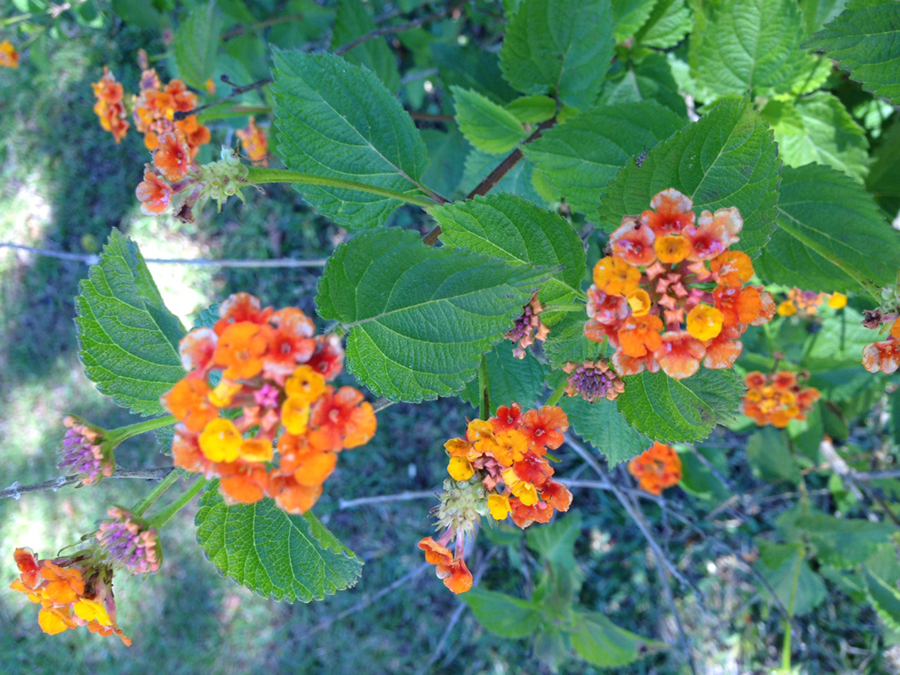
Although native to the tropical Americas and Africa, the colorful Ham and Eggs plant, Lantana camara, attracts birds, bees, and butterflies; grows prolifically throughout the southeast United States; and is considered an introduced, invasive, and noxious species in Asia and Australia. L. camara plants produce aromatic flower clusters called umbels with a mix of 2 to 3 colors of red, yellow, and orange giving the plant its common indigenous names, such as Ham and Eggs in the United States, and Spanish Flag or Red (Golden) Sage in Europe. The flowers, leaves, and berries are hepatotoxic to many animals, especially ruminants such as cattle, horses, and sheep, and can cause cholestasis, jaundice, and mucosal phototoxicity. Birds frequently consume the ripe berries without toxic effects. Human ingestion of the berries, flowers, and leaves can cause mild gastrointestinal toxicity with oropharyngeal irritation, nausea, vomiting, abdominal pain, and diarrhea. Fatal ingestions have only been described in animals. Photographer: JH Diaz. Source: Author’s personal collection.
In 1964, an acute gastrointestinal syndrome in children following ingestion of the unripe, green berries of L. camara was first described. 4 However, a retrospective review of a California poison control system database in 2010 found that although the ingestion of L. camara leaves, flowers, and berries was common among children, it was not significantly associated with any toxic effects. 5 Although fatal ingestions of L. camara occur in animals, they have not been reported in humans.4,5
Taxonomy, Distribution, Description, and Ecology
In the United States, lantanas grow prolifically in temperate zones stretching from the Southeastern Atlantic and Gulf Coasts across the Southwest to Southern California. The herbaceous or dwarf varieties will reach about 2 feet in height and are planted as ground covers and hedges. The taller shrubs can tower to over 6 feet in height and are planted as hedgerows and privacy screens. Lantanas are also planted in bird sanctuaries, butterfly gardens, and in honey gardens to attract bees.
All species will produce clusters of multicolored flowers in combinations of red, orange, yellow, violet, blue, and white florets. L. camara plants produce aromatic flower clusters called umbels with a mix of 2 to 3 colors of red, yellow, and orange giving the plant its common indigenous names, such as Ham and Eggs in the United States, and Spanish Flag or Red (Golden) Sage in Europe (Figure).
With the exception of a few fungi and herbivorous insects like the lantana bug, Aconophora compressa, lantanas have few biological predators because their berries, leaves, and flowers are poisonous to most animals, with the exception of birds. Birds relish ripe lantana berries and can consume large amounts without adverse effects. Birds also distribute lantana seeds from digested berries, widely propagating the species over broad areas including roadsides, highway medians, fields, and pastures.
Toxicology and Toxicity in Animals and Humans
Most Lantana species, especially L. camara, or Ham and Eggs, contain toxic pentacyclic triterpinoids known collectively along with their active metabolites as lantadenes. The lantadene-containing flowers, leaves, and berries of L. camara are hepatotoxic to many animals, especially ruminants such as cattle, horses, and sheep, and can cause intrahepatic cholestasis, jaundice, and mucosal phototoxicity.1,2 In addition to ruminants, many nongrazing animals are also susceptible to the hepatotoxic effects of lantadenes, including dogs, guinea pigs, rabbits, and rats. 3
Wolfson and Solomons first described an acute gastrointestinal syndrome in children following the ingestion of the unripe, green berries of L. camara in 1964. 4 However, in 2010, Carstairs and coinvestigators conducted a retrospective review of all reported L. camara ingestions reported to a California poison control system database over the period 1997 through 2008, and found no significant associations with any serious adverse effects. 5 The researchers described a total of 641 children with a mean age of 2.5±1.3 years (range 1–16 years) who had consumed L. camara berries and other plant parts over the reporting period. 5 The reported adverse effects among the study population included, in order of presentation, vomiting, abdominal pain, agitation, diarrhea, throat/mouth irritation, tachycardia, drowsiness, nausea, and mydriasis. 5 Most patients were treated at home. Fifty-one patients (8%) were treated in a healthcare facility, and only 2 patients (0.3%) were admitted to a hospital. 5 There were no statistically significant differences in the frequencies of adverse symptoms between those children who had ingested ripe vs unripe L. camara berries and between those children who had ingested L. camara berries vs berries from other plants. 5 The investigators concluded that the ingestion of L. camara berries, either ripe or unripe, was not associated with significant toxicity, and that most patients with asymptomatic L. camara ingestions could be treated at home. 5
Conclusions
Human ingestion of the berries, flowers, and leaves of L. camara, the Ham and Eggs plant, can cause mild gastrointestinal toxicity with oropharyngeal irritation, nausea, vomiting, abdominal pain, and diarrhea no different from the mild toxicity caused by the ingestions of the same parts from other nonpoisonous plants. Although biological and chemical control of invasive L. camara may be indicated in grazing areas for cattle, sheep, and horses at increased risk of hepatotoxicity, there is no reason to control or to restrict L. camara cultivation in the wild or in bird sanctuaries and butterfly gardens. Although L. camara flowers are very attractive to both animals and humans, humans should not consume L. camara plant parts in order to avoid mild gastrointestinal toxicity.
Author Contributions: Sole author contributed 100% to this article.
Financial/Material Support: None.
Disclosures: None.