





Abstract

To the Editor:
The Sateré-Mawé Indians, who reside along the border between the Pará and Amazonas states in Brazil, 1 are known for conducting a ritual in which young males subject themselves to the venomous stings of the ant species Paraponera clavata, or the bullet ant (Figure 1), which is commonly found throughout Brazil. This ritual serves to initiate young male members of the Sateré-Mawé community into adulthood. P clavata is infamous for its sting, which is purported to be the most painful insect sting in the world.2,3 P clavata is also known as the vinte-e-cuatro-horas ant, because the pain from just one sting can last for 24 hours. 1
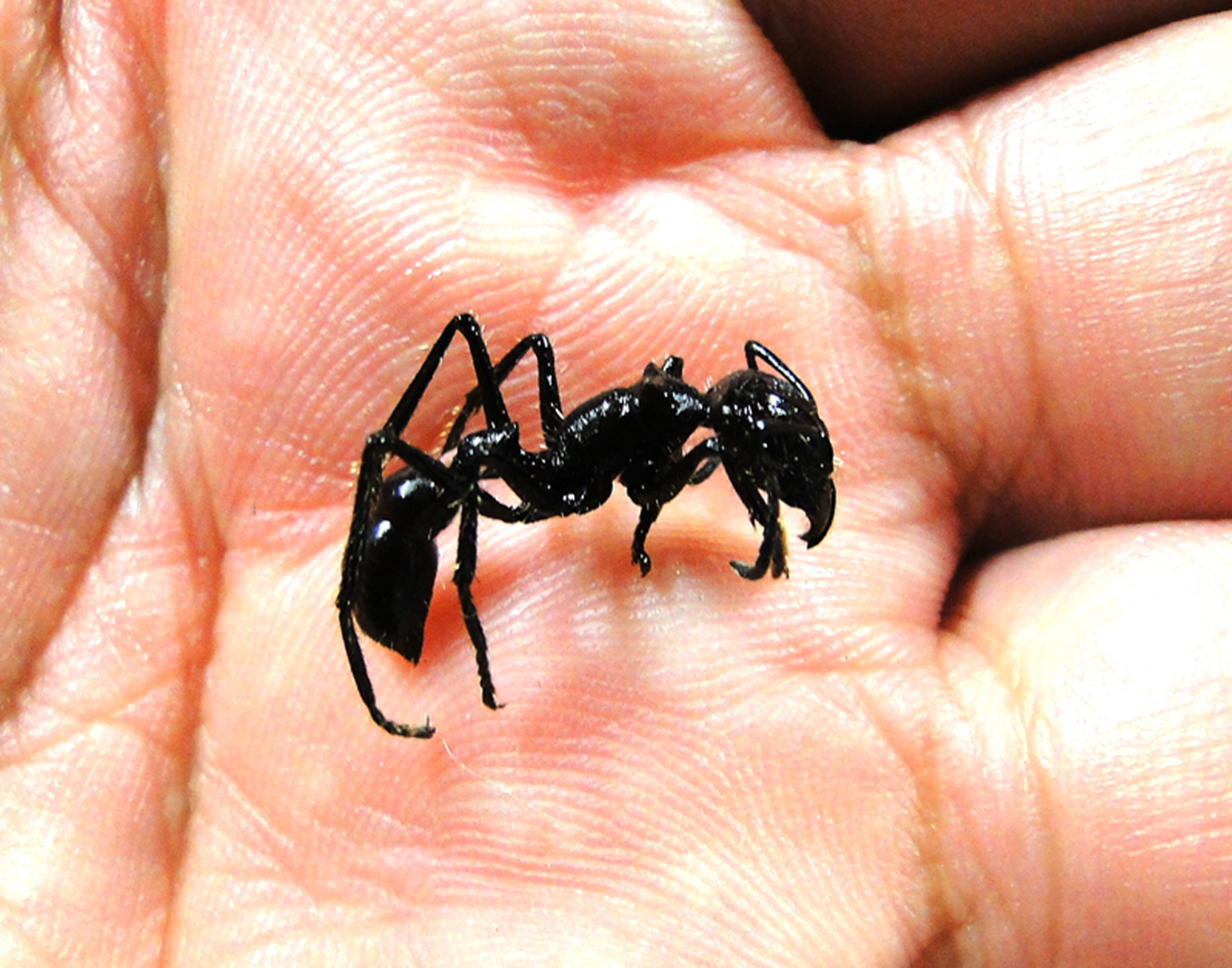
Paraponera clavata (Fabricius, 1775), the true tocandira.
Sateré-Mawé elders smoke the ants out of their colonies 4 and immerse the ants in a herbal brew that anesthetizes them. 5 The anesthetized ants are woven into gloves made from leaves of palm fronds, and their stingers are pointed inward. 5 These gloves are then placed in more ornate ceremonial gloves also made from leaves of palm fronds (Figure 2). Young males participating in the ritual don these ceremonial gloves on both hands. To become eligible for marriage and leadership roles within their community, they must show no emotion while enduring the stings of the ants. 4 The pain from one sting alone is excruciating, yet participants are exposed to the stings of dozens of ants woven into each glove.2,5 Dossey 5 reports that participants must wear the gloves for at least 10 minutes and repeat the ritual 20 times. 5 Haddad et al 1 report that participants must wear the gloves for nearly 30 minutes and repeat the ritual 25 times.
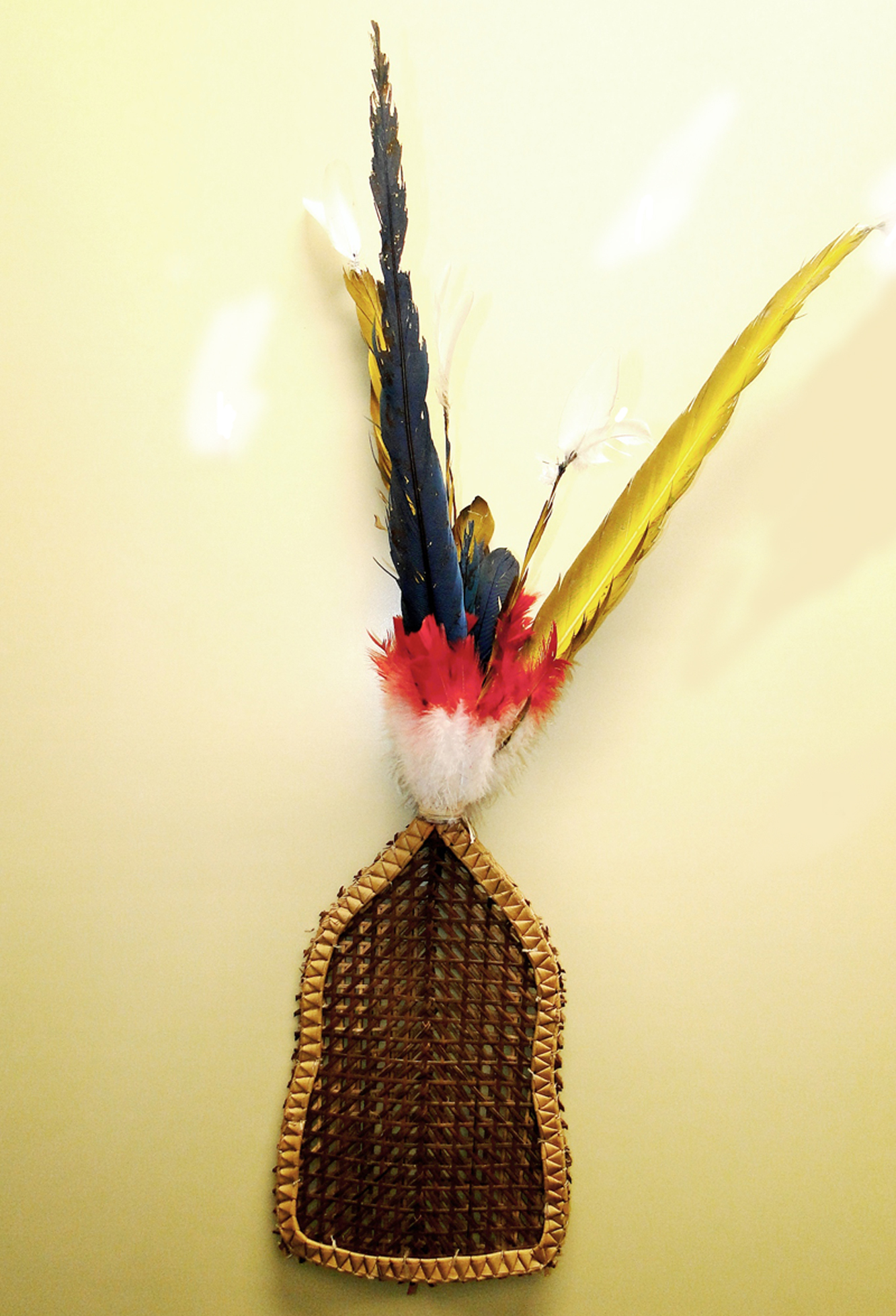
Ceremonial glove made of arumã palm strings and macaw feathers.
A person may need 2 weeks to recover from a single sting, 3 and participants of the ritual may shake uncontrollably for days. 2 Systemic manifestations, which include fever and chills, 1 can occur with just a single sting, given the high potency of the bullet ant’s venom. Stung persons may also experience tachycardia, cardiac arrhythmias, lymphadenopathy, local edema, hematochezia, diaphoresis, nausea, vomiting, and paresthesia and paralysis of the limbs. 4
In conclusion, this ritual among the Sateré-Mawé Indians is an intriguing example of envenomation functioning as a culturally sanctioned method of intentional self-injury. Nonnative healthcare professionals working in the vicinity of this indigenous community, such as through global health initiatives, may encounter Sateré-Mawé males who intentionally subject themselves to numerous stings from bullet ants and subsequently seek formal medical care. These healthcare providers must appreciate the cultural context in which this injury can occur, for these patients likely will expose themselves again to the bullet ant’s stings.
Footnotes
Acknowledgments
Dr Vidal Haddad Jr provided and gave permission for the use of the figures incorporated into this manuscript.