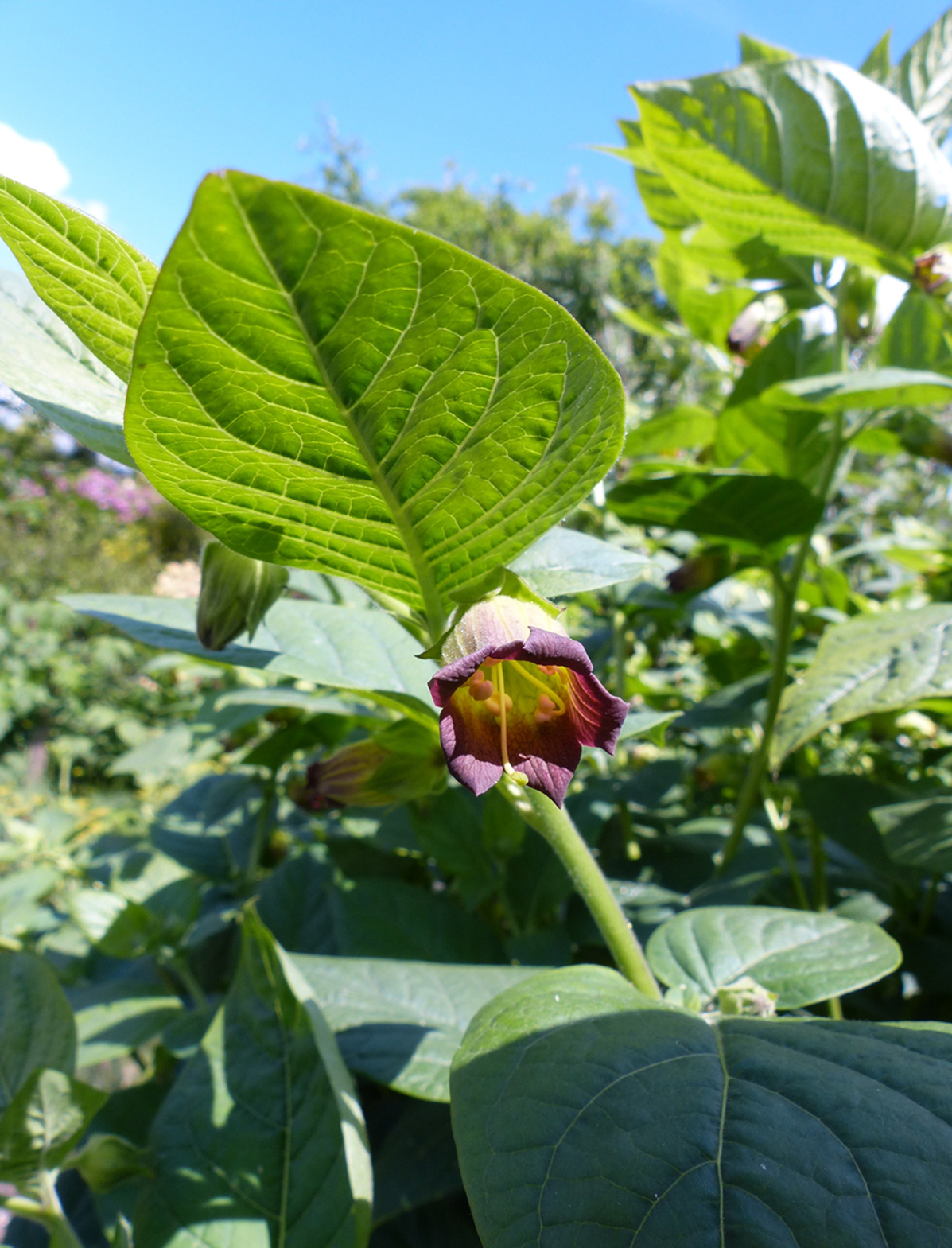
Atropa Belladonna. Atropa belladonna or deadly nightshade grows wild across central and southern Europe, and southwest Asia, and is cultivated in some parts of North America. It gains its scientific name Atropa from Atropos, one of the Three Fates of Greek mythology who is synonymous with the anthropomorphism of Death. The second part of its name, Belladonna comes from its historical association with causing mydriasis to increase perceived attractiveness. The plant is notable in medical terms because it contains a number of toxic components, including hyoscine, hyoscyamine, and atropine, most concentrated in the roots of the plant. Although cases of belladonna poisonings are relatively rare,1 with one study finding 42 cases out of 24,950 poisonings, over 29 years. Despite this, there are still multiple reports of poisonings in recent literature.2 Belladonna poisoning is likely to present clinically as a form of the anticholinergic toxidrome.3 Photograph by T. E. Mallinson, England.
References
1.
Jaspersen-SchibR.TheusL.Guirguis-OeschgerM.GossweilerB.Meier-AbtP.J.Serious plant poisonings in Switzerland 1966-1994. Case analysis from the Swiss Toxicology Information Centre. Schweiz Med Wochenschr1996; 126(25), 1085–1098.
2.
BerdaiM.A.LabibS.ChetouaniK.HarandouM.Atropa belladonna intoxication: a case report. The Pan African Medical Journal2012; 11, 72.
3.
MontoyaM.A.MavrakanasN.SchutzJ.S.Acute anticholinergic syndrome from Atropa belladonna mistaken for blueberries. European Journal of Opthalmology2009; 19(1), 170–172.