






Abstract


Aging brings both specific and general changes in organ structure and function, which can lead to behavioural problems. To accept these problems as being part of ‘old age’ is to neglect the care of these patients. As many medical problems, including cognitive dysfunction syndrome (CDS), first present with behavioural signs, early recognition of the signs is important for the pet's health and welfare. Early identification allows for prompt intervention, provides the best opportunity to resolve, control or slow the signs of disease and, in some cases, increases longevity. 1
Cognitive dysfunction syndrome is an established disorder in pet dogs; evidence points to its existence in cats as well, but formal criteria for diagnosis are lacking. This article provides an overview of what is currently known about CDS and brain aging in cats, reviews the clinical signs and discusses potential therapeutic options.
Behavioural problems in senior cats
We have compiled data on the prevalence of behavioural problems in senior cats (Table 1). Cases were derived from behaviour referral practice: 25 cases from one of our own [GML's] practice in Thornhill, Ontario, 33 cases from Dr Debra Horwitz in St Louis, USA, and 25 cases from a study by Chapman and Voith. 2 In addition, we examined the 100 most recent presenting behavioural complaints for senior cats posted on the Veterinary Information Network (www.vin.com).
Behavioural problems reported by owners of senior cats

In all of the above cases, the problems were sufficiently serious for the owners to seek help. It is very likely, however, that, as in dogs, the most common signs go unreported by owners. 3–5 A Hill's market research study, for example, reported that 75% of owners of dogs over 7 years of age had pets with one or more signs consistent with CDS, but only 12% reported the signs to their veterinarians. Moffat and Landsberg (cited by Gunn-Moore et al 2007) 6 used a questionnaire to evaluate whether there were any changes in behaviour in 154 cats aged 11–21 years. Particular emphasis was placed on identifying all signs, including those that owners might not voluntarily report. Sixty-seven cats (44%) had behavioural signs, but 19 of these had concomitant medical problems. If those 19 are excluded from the analysis, a notable 36% showed behavioural signs that were not associated with any recognisable underlying disease. The older the cat, the more likely the behavioural change, with 50% of cats over 15 years and 28% of cats aged 11–14 years being affected. The most common finding in the younger cats was alteration in social interactions, while in older cats the most common signs were alterations in activity and excessive vocalization. 6
These studies clearly suggest that veterinary clinics need to take a proactive approach in helping pet owners recognize and promptly report any behavioural signs for diagnostic evaluation.
DISHA — an aid to diagnosis
Cognitive dysfunction syndrome is an established neurodegenerative disorder of senior dogs that is characterized by progressive cognitive decline and increasing brain pathology. 1,7–13 There appears to be sufficient data to support the existence of CDS in cats, too, but much of the evidence has been extrapolated from work in other species.
In dogs, the signs of CDS are summarised by the acronym DISHA: the letters refer to Disorientation, and alterations in Interactions with owners and other pets, Sleep-wake cycles, Housetraining and Activity levels. 1,3–5 Ongoing studies have also identified other signs of cognitive decline, including altered responses to stimuli, increasing anxiety, and deficits in learning and memory. 1,7,14–18 Deficits in spatial memory have been identified in dogs as early as 6–8 years of age. 17 In cats, based on more limited data, cognitive and motor performance appears to decline starting at approximately 10–11 years of age, but functional change in the neurons of the caudate nucleus have been seen by 6–7 years. 19–21 Clinicians tend to assume that feline CDS has parallel signs to those seen in dogs. Therefore, the acronym DISHA is also used to describe clinical signs in cats (see box on page 839), but further work is needed to more accurately characterize feline cognitive dysfunction and its age of onset clinically. 6
As medical problems, including CDS, often begin with a change in behaviour, veterinarians must be proactive in acquiring a thorough medical and behavioural history, especially in senior pets. To this end, both the American Animal Hospital Association (AAHA) and American Association of Feline Practitioners (AAFP) senior care guidelines recommend that a good behavioural history be combined with the results of the examination and laboratory screening to ensure early detection and prompt diagnosis. 22,23 Although still in need of standardization, a senior cat questionnaire may aid in collecting a complete history. 1,23
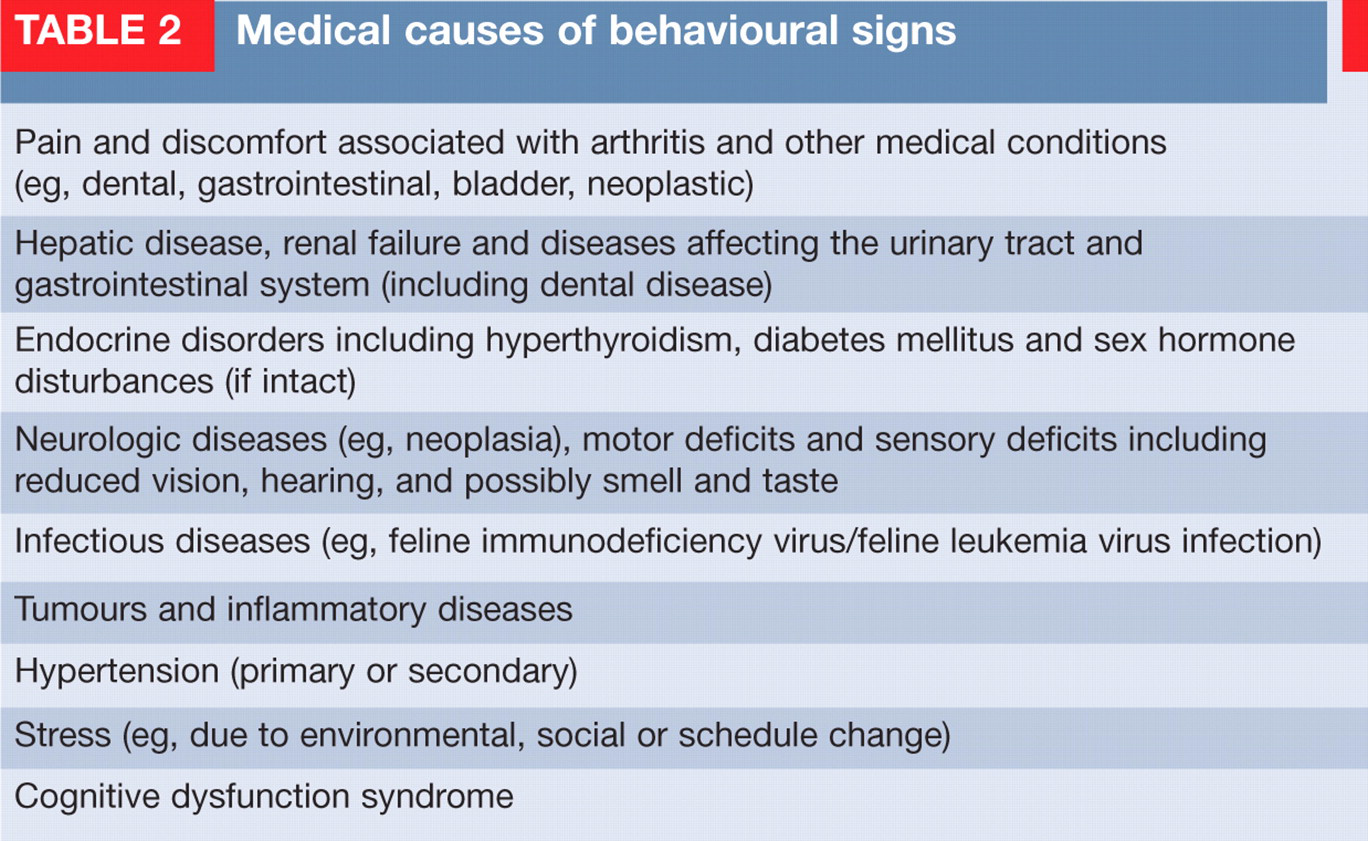
When behavioural signs are identified, a diagnosis of CDS can only be made by ruling out all other potential medical causes of the clinical signs. While a comprehensive physical examination along with laboratory screening tests can determine if metabolic disorders or infectious diseases might be contributing to the signs, hypertension, sensory deficits, pain and other neurologic disorders must also be considered (Table 2). As senior pets often have multiple health issues, the diagnosis of a medical problem does not rule out the possibility of concurrent CDS.
Medical causes of behavioural signs
Clinical signs of feline cognitive dysfunction
'DISHA'
DISORIENTATION
Spatial disorientation is reported in 22% of VIN cases (Table 1)
Rule out: neurologic disorders, sensory deficits, disrupted motor function, pain
INTERACTIONS
(ie, altered social interactions with people or other pets)
Most common presenting complaint in prevalence study in 11- to 14-year-old cats 6
Aggression, irritability and clinginess reported in referral and VIN studies (Table 1)
Rule out: pain and sensory deficits
SLEEP-WAKE CYCLES
(ie, primarily increased night-time waking)
Most common owner-reported complaint (61%) in VIN study (Table 1)
Rule out: pain, sensory deficits, hypertension
HOUSE SOILING
May be related to confusion/disorientation
House soiling was the most common reason for senior cats to be presented to behaviour referral practices (Table 1)
Rule out: medical causes for elimination problems
ACTIVITY
(ie, may be increased repetitive activity, aimless wandering, restlessness or decreased activity)
Activity changes were among the most common signs in the prevalence study in cats aged 15–21 6 and increased wandering was reported in almost 20% of VIN cases (Table 1)
Rule out: pain, mobility issues
Other signs
EXCESSIVE VOCALIZATION
This was one of the most common owner complaints in the VIN study (Table 1) as well as in the prevalence study for cats aged 15–21 6
Rule out: pain, sensory deficits, hypertension
ALTERED RESPONSES TO STIMULI
(ie, may be less responsive or display increase in anxiety or irritability)
Anxiety and irritability were seen in both referral cases and in the VIN study (Table 1)
Rule out: pain, sensory deficits
DECREASED SELF-HYGIENE
Decreased self-hygiene may be a sign of cognitive dysfunction although medical problems and pain could alter grooming
Rule out: medical problems, pain
ALTERATIONS IN APPETITE
Cognitive alterations could lead to an increase or decrease in appetite, although many medical problems could contribute
Rule out: medical problems
Age-associated brain pathology
Cognitive dysfunction syndrome, in dogs, shares many features with human dementia and is assumed to be related to pathological brain aging. 24 The evidence to support this hypothesis is derived from extensive studies examining pathological brain aging and the link with cognitive and behavioural changes.
In dogs, frontal volume decreases, ventricular size increases and there is evidence of meningeal calcification, demyelination, increased lipofuscin and apoptic bodies, neuroaxonal degeneration and a reduction in neurons. 10–12 Using magnetic resonance spectroscopy, preliminary studies have demonstrated an age-related decline in markers of neuronal health. 25
There is also clear evidence of age-associated brain pathology in cats. Imaging studies have identified cerebral atrophy in aged cats that likewise includes increased ventricular size and a widening of sulci, although this may not be as marked as that seen in the dog (Howard Dobson, Director of Imaging, CanCog Technologies, personal communication). Furthermore, magnetic resonance imaging in aged cats reveals small multifocal areas of decreased signal intensity on T1-weighted scans in predominantly the pyriform lobe that appear to be associated with cognitive decline (Howard Dobson, personal communication). A study of the cerebellum of old cats identified a loss of neurons and decrease in the number of dendrites in Purkinje cells, which might lead to a decline in information processing and motor deficits. 26 Acetylcholinesterase reduction and a reduction in Purkinje cells associated with cognitive deficits have also been documented in the dog. 27
In dogs, it appears there may be a depletion of catecholamines and a decline in cholinergic function with age. 28,29 In aged cats, there is marked atrophy of the cholinergic system in the locus coeruleus: mitochondria of affected neurons appear abnormal, with large vacuoles and accumulation of lipofuscin, there is vacuolation and myelination of dendrites, and, in some cases, axonal degeneration. 30 These cholinergic changes may lead to signs of cognitive dysfunction and alterations in rapid eye movement (REM) sleep. 26,31 With increasing age there is also an increase in oxidative damage, which occurs in dogs and other species, and is speculated to be a factor in aging cats. 6,32,33 Vascular and perivascular changes, including amyloid-beta (Aβ) accumulation within the cerebral blood vessels and micro-hemorrhage or infarcts in the periventricular vessels, may also be responsible for some of the clinical signs of cognitive dysfunction in senior dogs and cats. 6,8–12,24,34 In addition, there may be compromised blood flow and hypoxia within the brain of elderly cats because of decreased cardiac output, hypertension, anaemia and altered blood viscosity. 6,24
In humans, Aβ accumulation is linked to the development of dementia, is neurotoxic, and leads to compromised neuronal function, degeneration of synapses, cell loss and a depletion in neurotransmitters. Dogs display strikingly similar Aβ pathology to that seen in Alzheimer's patients, including the protein sequence and the temporal pattern of distribution. 8,35 Furthermore, increased Aβ is positively correlated with cognitive impairment in dogs. 9,10,12,35 The most striking contrast between humans and dogs is the absence of neurofibrillary tangles, although hyperphosphorylated tau is reported and may represent pre-tangle pathology. 36
Aβ plaques and perivascular infiltrates are present in the brains of cats older than 10 years; but compared with humans and dogs, plaques are more diffuse, which, overall, is more consistent with human brain aging than Alzheimer's disease. 6,8,34,37–39 However, the link between CDS and Aβ pathology in the cat is inconsistent, with some studies showing a positive link, 8,38 but others showing no correlation with severity. 39 The distribution of Aβ within the hippocampus (image A, page 841) and within cortical regions such as the parietal cortex (image B) is similar to that of aging dogs. In addition, the cerebellum is devoid of plaques in both species, but intracellular Aβ is detected (images C and D). Aged cats also demonstrate hyperphosphorylated tau, consistent with pre-tangle formation seen in the dog; however, neurofibrillary tangles are not reported. 7,34,38,40 Interestingly, the presence of abnormal tau accumulation within individual neurons of the cat appears to be associated with the presence of seizures prior to death (image E). 38,39
(A) Aβ1–16 (using antibody 6E10) is distributed as a diffuse cloud in the outer molecular layer of the hippocampus (arrow-heads) and appears again in the subiculum (arrow) in a 17-year-old cat

(B) Two layers of cortical immunostaining for Aβ1–16 can be observed in the parietal cortex of an 18-year-old cat, suggesting both input and output to this brain region may be compromised

(C) The cerebellum typically remains devoid of Aβ but it was observed within Purkinje cells (arrows) in an 18-year-old cat

(D) A higher magnification of the cerebellum shows that Aβ accumulates as aggregates within the cytoplasm of Purkinje cells
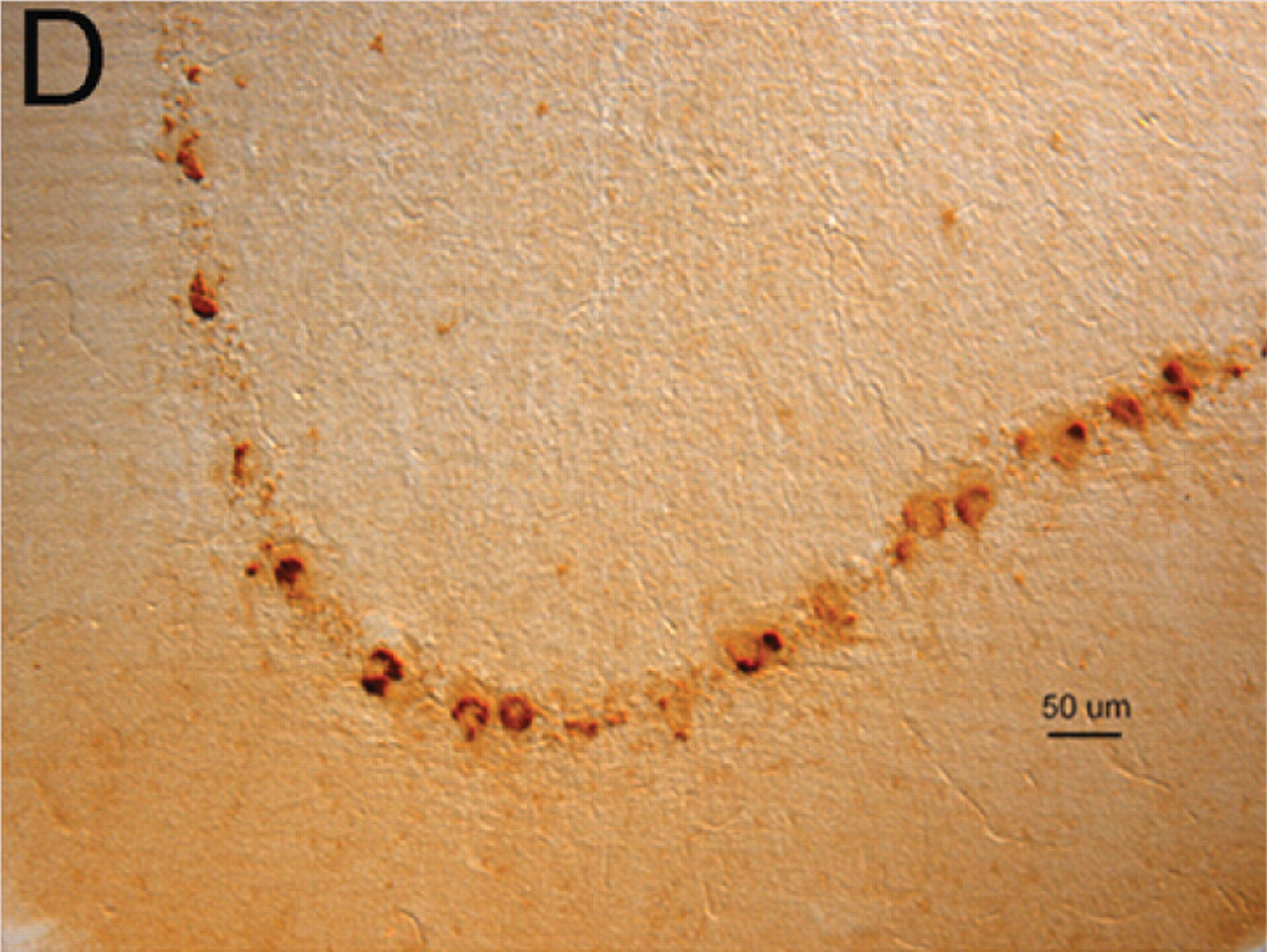
(E) In one 21-year-old cat that had seizures, hyperphosphorylated tau (immunostaining with PHF-1) accumulates within individual neurons in the hippocampus

These Aβ and tau pathology findings in aged cats are from Head and others (2005). 39 Images courtesy of Elizabeth Head
Laboratory-based evidence of cognitive decline
Given the parallels in pathological brain aging among cats, dogs and humans, we would expect to see cognitive decline in aged cats. However, there have only been a few published studies on aged cats and the results have been inconsistent.
Eye blink conditioning deficits have been found in aged humans and Alzheimer's patients, 41 and a study by Harrison and Buchwald showed similar deficits in a subset of aged cats. 21 Two other studies, though, were inconclusive or failed to find cognitive deficits in old cats. 19,42 Analysis of the methodology used in these studies does, however, raise important questions of interpretation. The first study, by Levine et al, 19 compared cats aged 1–3, 5–9 and 11–16 years on a series of tasks including locomotor activity and spatial reversal. Aged cats displayed altered patterns of habituation in locomotor activity. By contrast, they reported that aged cats were actually superior to younger cats in reversal learning, and that this likely reflected rapid forgetting of previous learning in the aged cats. This interpretation, however, is not consistent with data from other species, in which reversal learning deficits are hallmarks of age-associated cognitive decline. 14 One major difficulty of the Levine study was the differences in the source of the young and aged cats, which is potentially important because environmental and experiential differences can markedly affect learning, as demonstrated in the dog. 43 The second study looked at performance on a holeboard task and used a screening procedure to select animals for the final comparison; 42 animals that initially did not perform well on the task were excluded. However, fewer senior cats were able to meet the initial screening criterion than adult cats, possibly biasing selection towards the best senior performers.
Neuropsychological testing
The development and validation of tests for assessing cognitive function in dogs were first described by Milgram et al in 1994. 7 This ongoing research has now spanned almost two decades and has been instrumental in revealing age-related cognitive differences, establishing pathological correlates and identifying novel treatments for cognitive dysfunction. 7,14,15,17,18,28,29,44–48 Various protocols have been developed that use objects and locations to establish individual cognitive abilities such as learning, attention and memory. All testing uses a standardized apparatus, which allows the tester to present the subject with objects in different locations. By displacing the correct object, or object in the correct location, a food reward is obtained from a well beneath; the incorrect response is baited with unattainable food, which precludes the possibility of responding based on scent. In an object discrimination learning test, the subject must learn that a particular object of two is always correct. In reversal learning, the previously correct object is no longer rewarded and the previously incorrect object is. This test is a measure of executive function or, more specifically, the ability of an animal to alter a previously learned response, which is impaired with age. 14 Several other age-sensitive protocols have been developed that assess memory, 17,49 spatial ability, 50,51 attention and complex learning. 15
To date, there has been no published literature on the effects of age on neuropsychological test performance in cats. However, CanCog Technologies has now developed a neuropsychological test apparatus (Fig 1) and assessment protocols for use with cats, and preliminary data demonstrate age differences — with senior cats being impaired relative to normal adults. 52 The tests are identical to those used in dogs and, hence, also allow direct comparison between cats and dogs with respect to cognitive ability. This work is still in progress, but the initial data strongly support the existence of CDS in cats, and we anticipate that the feline battery will be instrumental in elucidating the link between brain pathology and age-related cognitive decline in cats, as well as in the development of interventions for feline CDS.

Cognitive test apparatus for cats. The subject in the picture is being tested on a discrimination and reversal learning test that occurs in two phases. Initially, the cat is required to learn that food is consistently found under one of the two objects (eg, yellow block). In reversal learning, which declines with age in cats, the object-reward association is reversed such that the cat then needs to learn that the food is now found only under the blue block. In either case, the incorrect coaster is baited with an unattainable reward, which prevents the cat from successfully responding using olfactory cues. Courtesy of CanCog Technologies, Toronto, ON
Treatment approaches
Cognitive dysfunction cannot be cured, but its progress may be slowed and clinical signs improved with medical and behavioural intervention. To date, however, there is a lack of clinical evidence to support specific treatment approaches in cats and this has important implications for the clinician, who must weigh up potential risks against projected benefits (see right).
Dietary and natural supplementation
Diets and supplements that improve antioxidant defence mechanisms have been documented to be effective in conjunction with environmental enrichment (see box below) for improving cognitive dysfunction in senior dogs. 45 In humans, a number of studies have found that dietary management may reduce the risk or delay the onset of dementia. For example, a high intake of fruits and vegetables, nuts, whole grains, and vitamins E and C may decrease the risk of cognitive decline and dementia. 55
Important considerations in the treatment of feline cognitive dysfunction
Preliminary studies in cats, and evidence extrapolated from dogs, demonstrate a potential for diet, natural supplements and drug therapy to improve the signs and slow the decline of feline cognitive dysfunction; however, clinical evidence supporting their efficacy in cats is lacking. This is important in several respects.
First, there are differences, sometimes significant, in how dogs and cats metabolize drugs.
Secondly, treatments that are safe in dogs and humans could be toxic in cats.
Finally, even those that are labelled for use in cats have demonstrated little or no evidence of efficacy.
There are currently only five approved treatments for human dementia and the only drugs approved in dogs, selegiline (l-deprenyl) and propentofylline, have both failed to obtain approval for cognitive disorders in humans. Therefore, the possibility of improving signs must be weighed against the potential risks of using products that are not licensed for use in cats.
In dogs, a senior diet (Canine b/d, Hill's Pet Nutrition) has been shown to improve the signs and slow the progress of cognitive decline. It contains a combination of fatty acids, antioxidants (vitamins C and E, beta carotene, selenium, flavonoids and carotenoids), dl-alpha-lipoic acid and l-carnitine. 15,18 The 3-year study showed that the enriched diet improved learning in the shorter term and measures of memory and executive function in the longer term, and that this was accompanied by an attenuation of Aβ deposition. 15,18,45,48 Recently, a diet that uses botanic oils containing medium-chain triglycerides (MCTs) to provide ketone bodies as an alternative source of energy for the aging brain (Purina One Vibrant Maturity 7+) has been shown to improve cognitive function in senior dogs, 47 possibly by improving mitochondrial function, increasing polyunsaturated fatty acids and decreasing amyloid precursor protein. 56,57
Behavioural management — ‘use it or lose it’
Canine studies have shown not only that mental stimulation is an essential component in maintaining quality of life, but that continued enrichment — in the form of training, play, exercise and novel toys — can help to maintain and even improve cognitive function (ie, use it or lose it). 45 This is analogous to human studies in which education, brain exercise and physical exercise have been found to delay the onset of dementia.
Environmental enrichment is also likely to have positive effects on cognitive function, health and quality of life in cats. Cats should receive sufficient outlets and opportunities for their normal behaviour patterns, while giving them control of the environment — including when and where to move, perch, hide and sleep. Provision of a structured and stimulating daily routine is important for maintaining behavioural welfare and may help maintain temporal orientation. 53 By contrast, inconsistency and lack of control can cause stress and negatively impact on health and behavioural well-being. 53,54 Enrichment should focus on ensuring positive social interactions, providing new and varied opportunities for exploration, climbing, perching, hunt and chase games, and offering a variety of stimulating ways to obtain food and treats, such as with feeding toys that require batting, pawing or rolling to release the food. By scattering favoured food, treats or catnip in different locations, the cat can engage in games of search and hunt. Novelty and complexity are important in developing enrichment strategies.
As pets age, organ dysfunction, pain, and declining mobility, sensory acuity and cognitive function may necessitate modifications to the pet's environment. Adding new odour, tactile and sound cues might help the cat to better navigate its environment. If mobility is affected, adjustments to ensure access to litter, as well as resting and perching areas, could be made. As urinary frequency increases, the location, size, shape and number of litter boxes may need to be altered. To maintain mental and physical enrichment in pets with health issues, owners may need to develop alternative strategies that ensure sufficient play, exploration and social interactions. However, dramatic changes to the environment, schedule or family can be stressful for elderly cats, as they may be more resistant to change and less able to cope. Therefore, if changes cannot be avoided, they should be made gradually. Some cats may adapt better by limiting the size of the environment, such as by confinement to a single room providing all of their needs.
Switch, a 12-year-old male cat, interacting with a couple of enrichment devices: (left) a food-filled toy dangling from the doorway (Fun Kitty, Premier Pet Products), and (below) a food-filled toy that he is rolling around the floor (Slim Cat, PetSafe)

Dietary interventions/supplements and pharmaceuticals with putative benefits for feline CDS
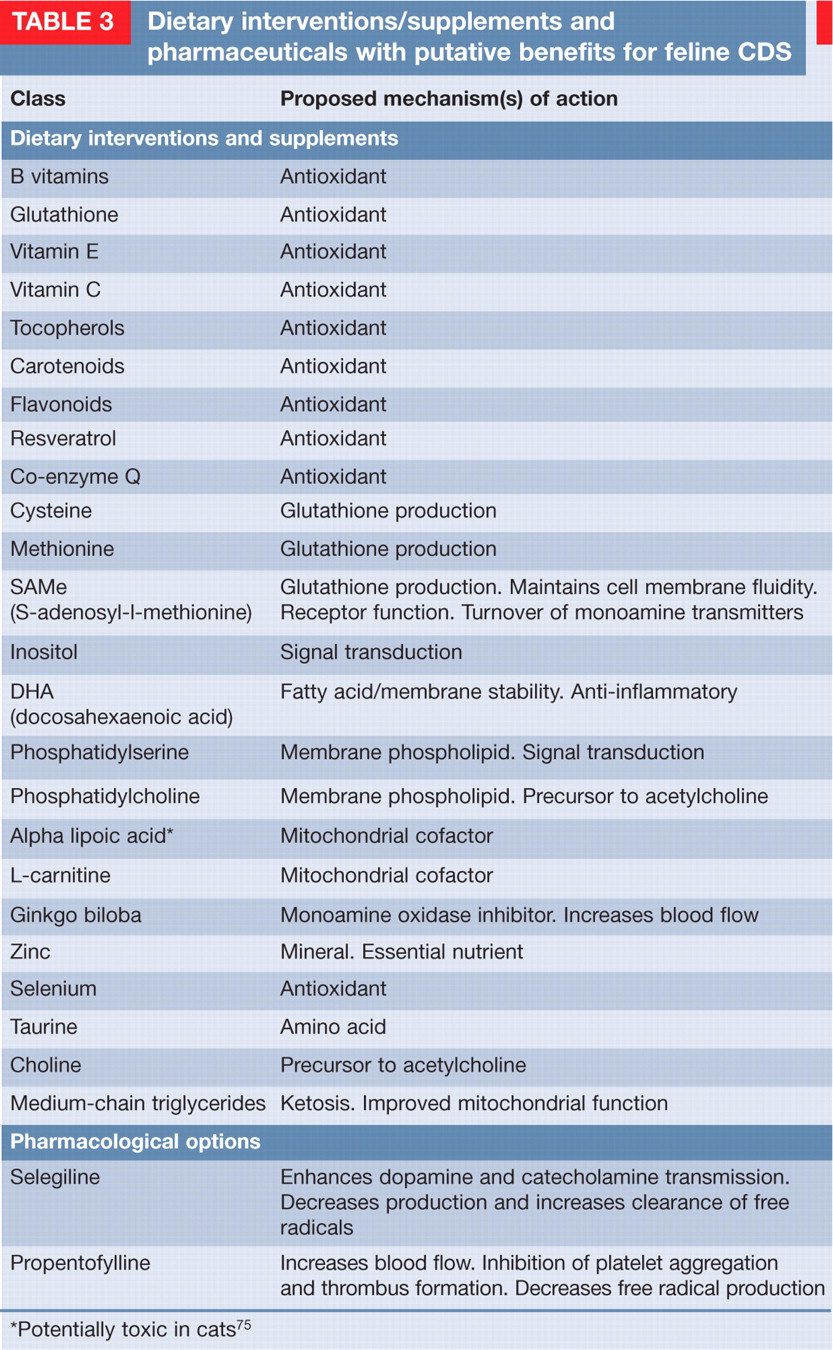
Potentially toxic in cats 75
Although no diet has been designed for CDS in cats, a range of products is now available for cats that contain antioxidants, fish oils and other nutritional supplements (Table 3). To date, there have been no reports in the peer-reviewed literature relating to their benefit for treating, preventing or slowing the progress of cognitive dysfunction in cats. However, a 5-year feeding study of healthy cats (aged 7–17 years) with a diet supplemented with antioxidants (vitamin E and beta-carotene), omega-3 and −6 fatty acids, and dried chicory root resulted in a significantly longer lifespan compared with control. 58 Elsewhere, in a preliminary study involving 46 cats, a diet supplemented with tocopherols, l-carnitine, vitamin C, beta-carotene, docosahexaenoic acid, cysteine and methionine increased activity compared with a control diet. 59 Another supplement for senior cats (Cholodin-Fel; MVP Labs) contains choline, phosphatidylcholine, methionine, inositol, vitamin E, zinc, selenium, taurine and other B vitamins. In one preliminary study, nine of 21 cats receiving the supplement showed improvement in confusion and appetite. 60 Diets supplemented with MCTs may benefit feline metabolism but have not been evaluated for feline CDS. 61
In dogs a number of clinical trials have reported improvements in signs associated with CDS using dietary supplements containing phosphatidylserine, a membrane phospholipid. 5,62–64 One product, Senilife (CEVA Animal Health), which also contains ginkgo biloba, vitamin B6 (pyridoxine), vitamin E and resveratrol, 65–68 produced significant improvement compared with placebo in a laboratory study using a memory task. 64 Although labelled for use in cats, efficacy studies have not been published. Another product containing phosphatidylserine combined with omega-3 fatty acids, vitamins E and C, l-carnitine, alpha-lipoic acid, coenzyme Q and selenium (Activait; Vet Plus) demonstrated significantly superior results compared with placebo in terms of improving signs of disorientation, social interactions and house soiling in dogs. 63 A feline version of Activait, which does not contain alpha lipoic acid, is also available, but likewise has not been tested in clinical trials. In a placebo-controlled trial in dogs with CDS, S-adenosyl-l-methionine (SAMe) improved activity and awareness. 69,70 SAMe, which is commonly used in cats with hepatic disease, may also have beneficial effects on CDS in senior cats.
Drug therapy
Selegiline is an monoamine oxidase B inhibitor licensed for the treatment of CDS in dogs (see Table 3 for suggested mode of action). 24 In laboratory studies and clinical trials selegiline has been found to improve signs associated with canine cognitive function. 71,72 Selegiline, at a dose of 0.5–1 mg/kg, has anecdotally been reported to be useful in clinical cases of cognitive dysfunction in senior cats for signs such as disorientation, increased vocalization, decreased affection and repetitive activity. 73 Except for occasional gastrointestinal upset, no adverse effects were reported.
Propentofylline (Vivitonin; Intervet), a xanthine derivative, is licensed in some countries for the treatment of dullness, lethargy and depressed demeanor in old dogs. 74 Propentofylline has anecdotally been reported to be useful in cats at a dose of one quarter of a 50 mg tablet daily. 6
As with canine CDS and Alzheimer's disease, there is evidence of cholinergic decline in senior cats (see earlier). 30 Therefore, when choosing medications for senior cats, it is prudent to avoid anticholinergic drugs. Although their efficacy, pharmacokinetics and toxicity have not been assessed in cats, drugs and natural products that enhance cholinergic transmission or increase the availability of acetylcholine might have potential benefits in improving signs of CDS in cats.
Case notes
Differential diagnoses included a medical cause such as metabolic disease, hypertension, pain, sensory decline and cognitive dysfunction. However, there were no other apparent signs of pain in the history or on physical examination and, while sensory decline was a potential contributing factor, no treatment options could be offered. Because the owner voiced an immediate need to deal with the vocalization, behavioural guidance was given while laboratory results were pending.
Patches at 19 years of age
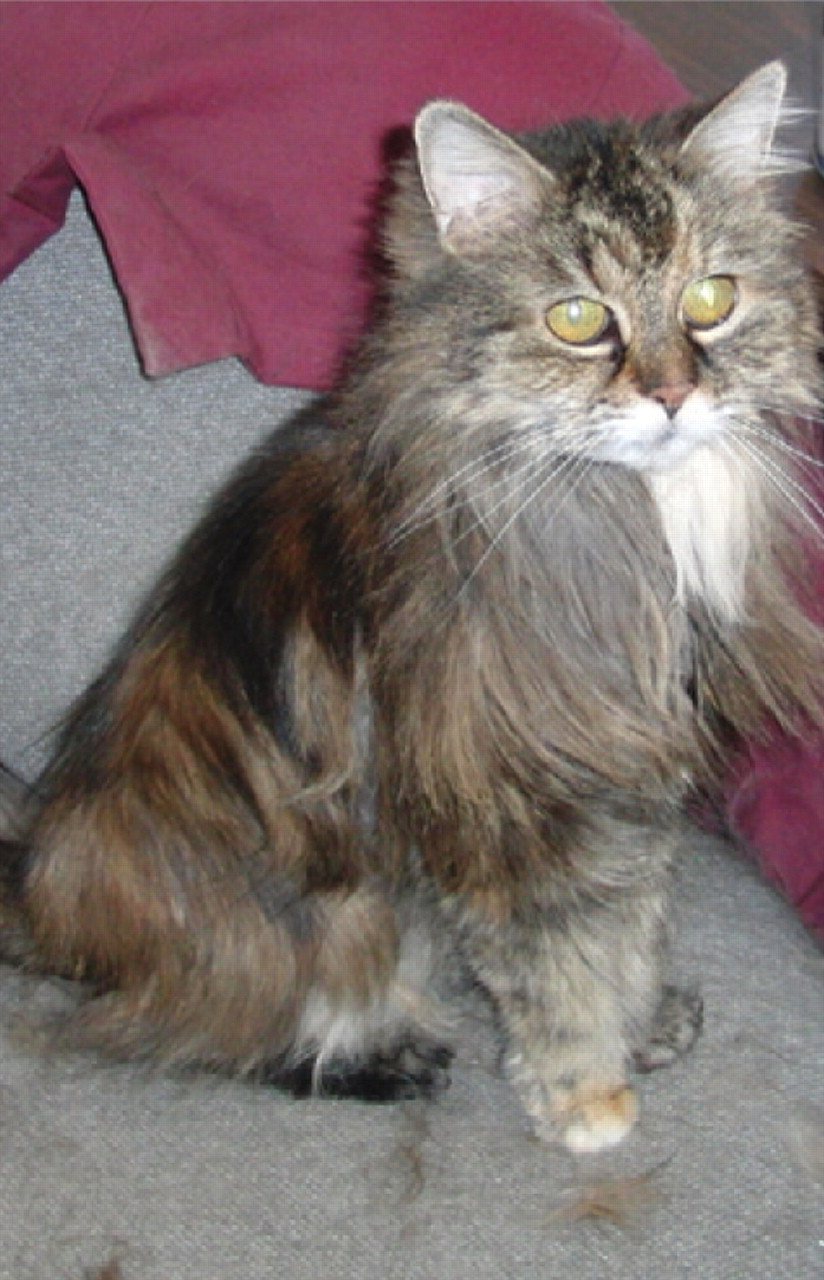
After 4 weeks the owners reported that Patches was more active and interactive, and slept better at night but would wake and vocalize at least once each night. At this point Senilife was also added. Over several more weeks the owners were able to successfully manage the problem.
At a 6-month follow-up the thyroid remained within normal limits, selegiline had recently been discontinued, and the owners were able to keep the problem under control by continuing the Senilife and reinstating the SAMe.
When she was 18, the owners sent a letter to say that Patches continued to be well controlled with the dietary supplements, adding that she now served as an alarm clock each morning at around 5 am. At the time of writing, Patches is well over 20 and stable.
The complexity in diagnosing and treating cognitive dysfunction in senior cats is illustrated by this case. While the clinical signs can be due to an underlying medical problem, in senior pets it is not uncommon to have multiple health issues that might require concurrent treatment. With multimodal therapy, the health and quality of life of this cat, and the bond with her owners, have been maintained for several more years already.
Adjunctive therapy
In conjunction with drugs for CDS it might also be necessary to consider medications that address specific signs. For example, antidepressants and anxiolytics may be indicated for a pet that is anxious or night waking. In humans, sertraline led to improved executive function in patients with dementia, and this and other selective serotonin reuptake inhibitors (SSRIs) may also be beneficial in reducing anxiety. However, paroxetine and most of the tricyclic antidepressants have anti-cholinergic effects and might best be avoided. SSRIs should not be used concurrently with selegiline. As buspirone has few or no side effects it may also be of use for anxiety in the elderly pet. Lorazepam, oxazepam and clonazepam have no active intermediate metabolites and might, therefore, be safer than other benzodiazepines when a more potent anxiolytic is indicated. Natural therapies for anxiety and aiding sleep might also be considered such as melatonin, aromatherapy, l-theanine, alpha-casozepine and pheromones.
Owner information
Senior care handouts (eg, the AAHA's pamphlet Senior Moments) and links to resources such as the websites of the AAFP (catvets.org), the Feline Advisory Bureau (fabcats.org) and the Catalyst Council (catalystcouncil.org) can help to further educate owners about feline geriatric care.
KEY POINTS
Although cognitive dysfunction syndrome is widely accepted in dogs, there is less data to support this syndrome in cats.
Nevertheless, three lines of evidence increasingly suggest that cognitive dysfunction syndrome is a similar disease process in cats:
— Cats show neuropathological changes with age that are similar in several respects to those seen in canine aging and in Alzheimer's disease;
— Recent laboratory studies indicate that aged cats show impairments on cognitive tasks similar to those used in dogs;
— Several clinical studies describe behavioural changes in cats that are not readily attributable to other medical problems.
The prevalence of age-related changes demands the inclusion of a behavioural wellness checklist in the routine care of senior animals. A suggested checklist, based on the prevalence of signs previously reported, is presented on page 839 of this article.
A thorough medical examination to rule out primary medical causes is essential in diagnosis, but the possibility of concomitant CDS should not be underestimated.
Dietary and pharmaceutical interventions, in combination with behavioural interventions, are warranted, but none have been sufficiently tested for feline CDS.
The acceptance and further study of CDS in cats is important to better understand the clinical presentation of the disease and to establish effective treatments.
Acknowledgements
Special thanks to Dr Bill Milgram, CanCog Technologies Inc, and Dr Elizabeth Head, University of Kentucky, for their valuable input.