






Abstract

Recommendations for optimal health care for cats throughout the different life stages. Practical suggestions and tools to facilitate improved veterinary visits and to enhance the client-veterinarian clinical encounter. A foundation from which to access sources of additional information.
Getting Started: The Wellness Exam
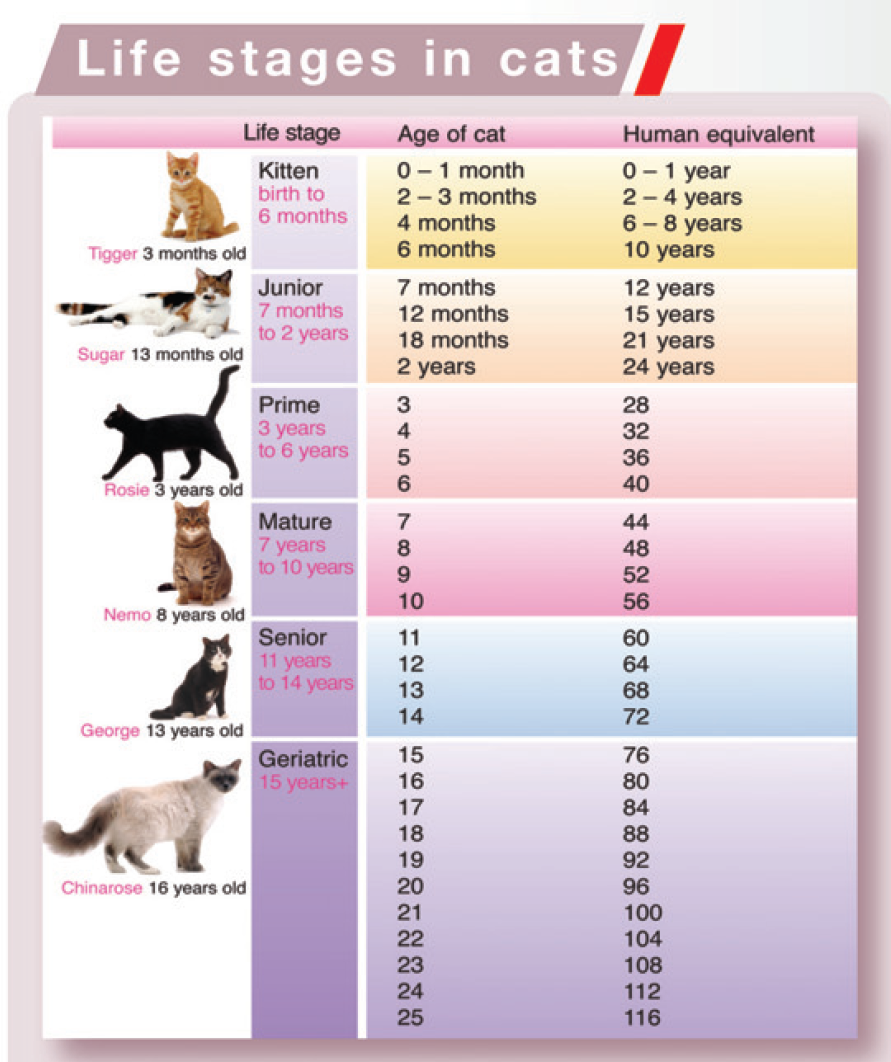
To achieve optimum feline health care, veterinarians must help owners to understand and appreciate the importance of regular preventive care for their cats at all ages. A consistent message from the entire health care team is crucial, beginning with the first kitten visit and reinforced during subsequent visits. Early detection of clinical abnormalities and behavioral changes can improve disease management and quality of life.5,5
How Frequent?
The panel supports the recommendations of the American Association of Feline Practitioners (AAFP) and American Animal Hospital Association (AAHA) that a minimum of annual wellness examinations and consultations for all cats is justifiable. More frequent examinations may be recommended for seniors and geriatrics, and cats with medical and behavioral conditions.
Life Stages in Cats

The AAFP and AAHA welcome endorsement of these guidelines from the European Society of Feline Medicine, and acknowledge the help of the Feline Advisory Bureau's WellCat for Life programme in helping to formulate the guidance.
A minimum of annual wellness examinations and consultations for all cats is justifiable. Semi-annual wellness exams are often recommended for all feline life stages by veterinarians and veterinary organizations.
Semi-annual wellness exams are often recommended for all feline life stages by veterinarians and veterinary organizations. Their reasoning includes the fact that changes in health status may occur in a short period of time; that ill cats often show no signs of disease; and that earlier detection of ill health, body weight changes, dental disease, and so on, allows for earlier intervention. In addition, semi-annual exams allow for more frequent communication with the owner regarding behavioral and attitudinal changes, and education about preventive health care. Further research is needed to identify the optimal examination schedule to maximize the health and longevity of the cat.
The panel members concluded that preventive veterinary care can improve quality of life, detect illness earlier and, therefore, reduce the long term expenses associated with a cat 's health care. They believe that cat owners are willing to seek more veterinary care when it improves quality of life and detects illnesses earlier, thereby reducing the long term expenses associated with their cat 's health care. Improved client communication and education of the benefits of regular veterinary care are essential to achieve that goal (Fig 1).

The benefits of regular wellness exams often are not immediately apparent to pet owners and need to be well explained. Courtesy of Ilona Rodan
The reasons pet owners have cited for not seeking care were that they did not know it was necessary, the veterinarian did not recommend it, and the need or benefit was not well explained. 7 Other obstacles include the cat 's stress or fear associated with veterinary visits and the practical difficulties of transporting cats to receive veterinary care. Suggestions for overcoming such barriers are provided on page 45.
History-Taking
It is not the intent of the panel to reiterate the basics of the veterinary visit, but instead to offer a checklist to assist the veterinarian (see Table 1). Where relevant, aspects of feline behavior, nutrition, and various disease prevention and detection strategies are expanded on in the text.
Wellness visit: discussion and action items


See text discussion. m = months, y = years, BCS = body condition score, MDB = minimum database, See text discussion. m = months, y = years, BCS = body condition score
History-taking includes the use of open-ended questioning (eg, ‘How has [cat 's name] been doing since the last visit?’). 8 This approach is often combined with a template or checklist, such as given in Table 1, to ensure important aspects are not overlooked.
Physical Examination
When performing the physical exam, particular attention should be paid to:
Observing the cat from a distance to assess breathing patterns, gait, stance, strength, coordination and vision.
Changes in parameters from prior exams (body weight, body condition score [BCS], vital signs).
Other specifics as noted in the discussion/ action items in Table 1.
Identification
According to one study, 41% of people looking for their lost cats considered them to be indoor-only pets. 9 American Humane Association records reveal that only about 2% of lost cats ever find their way back from shelters, a major reason being the lack of tag or microchip identification. Assuring the identification of all pet cats, regardless of their lifestyle, is recommended to increase the prospect of lost cats being returned to their owners. The wellness examination is the ideal time to discuss the importance of identification with owners. The benefits of both visible (eg, collar and tag) and permanent (microchip) identification should be explained and compliance with identification recorded in the medical records along with other elements of the history.
The Minimum Database
Although specific data documenting benefits are not available, the panel concluded that regular wellness examinations and collection of the minimum database (MDB; Table 2) can be valuable, allowing early detection of disease or trends in clinical or laboratory parameters that may be of concern. Additionally, it provides a baseline for interpretation of data recorded at subsequent visits.
The minimum database by age group
See text discussion. CBC = complete blood count, RBC = red blood cells, WBC = white blood cells, CHEM = chemistry, TP = total protein, ALP = alkaline phosphatase, ALT = alanine aminotransferase, BUN = blood urea nitrogen, T4 = thyroxine
Overcoming Barriers to Veterinary Visits
The panel recommends that the veterinary team endeavours to make the veterinary encounter comfortable for both cat and client. Integral to this is a better understanding of feline behavior.10,10 Some specific tips to help minimize the challenges associated with bringing a cat to the clinic are given below.
Once the client arrives at the veterinary clinic, the health-care team can take steps to reduce stress for both the client and the cat, as is feasible for their situation. 12 See below for some ideas for the waiting client and cat, and some tips to facilitate examination and treatment.
Reducing the Stress of Transport
Socialize kittens to the carrier and to travelling:
Keep the transport carrier out and accessible in the home.
Create and maintain a positive association with the transport carrier by making it a comfortable resting, feeding or play location.
When feasible, and if the cat is neutral or favorably inclined to car travel, encourage owners to take the cat on periodic car rides paired with positive experiences.
Withholding food prior to travel may prevent motion sickness, increase interest in treats at the clinic, and is beneficial if blood is to be collected.
Apply a calming synthetic pheromone to, and/or place familiar clothing from a favorite person in, the carrier on a routine basis and just prior to transport.13,13
Provide cover/hiding options in or over carrier (eg, blanket draped over carrier) during transport.

Supplementary Data
An AAFP position statement entitled ‘Respectful handling of cats to prevent fear and pain’ is available at www.catvets.com and included in the online version of this article at doi:10.1016/j.jfms. 2009.12.006
Making the Cat and Client Comfortable at the Clinic
Provide a separate waiting room for cats, or ensure their immediate placement into an exam room.
Minimize waiting times.
Provide elevated platforms in the waiting area so owners can place cat carriers out of reach of dogs.
Use calming synthetic pheromones in the environment. 14
Facilitating the Examination and Treatment
Provide a cat-friendly exam room:
Keep the room and table warm, with a non-slip surface for the cat.
Avoid loud noises or ambient sounds that may mimic hissing (eg, whispering).
Distract and reward with tasty treats/catnip/play.
Handle using minimal restraint:
See AAFP Feline Behavior Guidelines for tips on handling cats during the veterinary examination. 10
While gathering historical information, allow the cat time to adjust to the surroundings by removing the top or opening the door of the carrier. The cat should ideally remain in the bottom half of the carrier for as much of the exam as possible; this allows it to adjust to the examiner and the environment.15,15
Allow the cat to hide partially under a towel; use towels, rather than scruffing, for handling where additional restraint is needed.
Avoid making eye contact with the cat.
Determine the most comfortable position for the cat during the examination, such as the veterinarian 's lap.
Use sedation, anesthesia or analgesics as indicated to reduce stress and/or pain.
Keep hospitalized cats away from dogs and out of visual range of other cats. 17


Specific recommendations about age and frequency of laboratory testing depend on many factors.5,18,24 One consideration in determining this frequency is that the incidence of many diseases increases as cats age. Guidelines for management of mature, senior and geriatric cats may be found in the AAFP Senior Guidelines. 5 Retroviral testing is discussed in detail in the AAFP Retrovirus Testing Guidelines. 22 Measurement of blood pressure is discussed in detail in the ACVIM guidelines. 25 Although limited incidence studies have been performed to identify the age of onset of hyperthyroidism in cats, the panel recommends that veterinarians strongly consider T4 testing in the apparently healthy mature cat. More robust incidence data is needed to develop firmer recommendations.
Nutrition and Weight Management
Diet Basics
Energy and nutrient needs vary with life stage, sterilization status and activity, and so general feeding recommendations provide only a starting point. Individual intakes must then be adjusted to maintain the desired weight and body condition score (Fig 2).
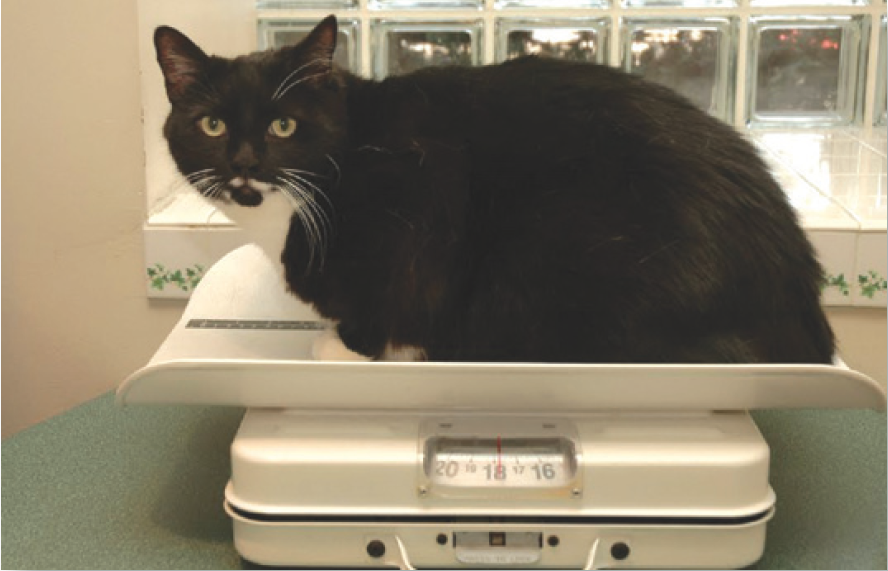
Regular assessment of weight and body condition score is important in cats of all ages — and this needs to be stressed to owners. Expressing any changes in weight as a percentage, or in terms of an equivalent weight loss/gain in humans, can be helpful. Courtsey of Deb Givin
Satisfactory diets for cats contain all the required nutrients in proper balance, are palatable and digestible, and are free of spoilage and contaminants. The specific source of nutrients in feline diets is irrelevant when these criteria are satisfied. 26 Both canned and dry food have been found to support health during all life stages. 27 The presence of a label guarantee that the food was tested using feeding trials provides the current best initial evidence that a diet is satisfactory.
The panel examined published peer-reviewed evidence-based studies in healthy, client-owned cats for any significant health effect of: feeding canned versus dry food (including contribution to dental health); providing a variety of foods versus a consistent diet; feeding high protein, low carbohydrate versus lower calorie and high fiber diets; feeding raw diets; providing dietary supplements, or access to grass or plants. Based on the available data, specific recommendations in favor of any of these practices cannot be made.
Despite the concern surrounding the effects of carbohydrate in dry foods, current evidence suggests that housing and activity (which may be a marker of welfare) 28 are more significant predictors of health.29–32 Evidence does not support the carbohydrate content of foods as being harmful or an independent risk factor for diseases such as obesity or diabetes.29,29
Cat owners are willing to seek more veterinary care when it improves quality of life and detects illnesses earlier, thereby reducing the long term expenses associated with their cat 's health care.
With regard to home-made foods, the veterinarian should discuss and share evidence about nutritional balance, risks associated with preparation and feeding of foods raw, and advantages of using food formulated for cats, referring clients to additional resources if required (Table 3).
Web resources for feline health care
Feeding Regimens
A variety of feeding styles can maintain good health in client-owned cats, including free choice or provision of meals. In addition to monitoring intake, considerations include:
Providing water via bowls, dripping faucets and/or fountains, to promote adequate intake. When increased water intake is desirable, feeding of canned foods may help achieve this.
Locating food in a quiet area, especially for nervous or fearful cats (eg, away from other animals or household items that may make noises intermittently). 34
Offering dry foods in foraging devices (eg, food balls or puzzles), 35 and in multiple small meals in several widely dispersed bowls to slow intake and increase mental and physical activity.
Weight Management
Obesity may occur at any age, but is most commonly encountered in middle age.32,32 The risk of obesity may be reduced by environmental enrichment, increasing opportunities for activity, and individualizing food intake. The energy density of cat foods varies widely, based on the moisture and fat content of the diet. This information should be helpful in determining a guideline of how much to feed.
Tips and items for discussion with clients include:
Slowly (<10% increments and decrements) adjust calorie intake to life stage and conditions (eg, sterilization, indoor housing).
Provide environmental enrichment to increase activity. 35
Switch to a diet with lower energy density (reduced fat, increased air, fiber and/or moisture).
Change the feeding strategy.
Switch to meal feeding, with portion control.
Introduce foraging devices (see above).
Introduce barriers to food access (eg, baby gates, elevated feeding stations).
Factors to Consider When Changing the Diet
Provide amounts of the new diet equivalent to previous energy (versus volume) intake, adjusting the initial amount as needed to maintain moderate body condition.
Consider offering the new diet as a choice in the presence of the usual diet to enhance acceptability, and make diet changes gradually to minimize the risk of gastrointestinal upset in cats with a history of this response to dietary change.
Warm the food to body temperature; adding fish/clam juice may increase palatability for cats with a depressed appetite.
Appropriate environmental enrichment is essential for maintaining the mental and physical well-being of cats.
Behavior and Environment
An outline of behavior and environmental items for discussion at each life stage is presented in Table 1. The following discussion elaborates on those items, where applicable. For detailed recommendations about normal cat behavior and management refer to the AAFP Feline Behavior Guidelines. 10
All Ages
Provide plentiful resources — hiding spots, elevated resting spots, food, water, scratching posts and litter boxes — throughout the home, particularly for cats kept indoors and in multi-cat households (Fig 3).
Controversy exists over whether cats should be kept indoors-only or in an indoor/outdoor environment (see box below). These debates reflect geographical and cultural differences, as well as individual owner preferences.30,37–41 They underline the importance of providing an appropriate and stimulating environment for the cat. 35

Environmental needs change with life stage, although environmental enrichment and adequate resource allocation remain important for all cats. While play and play items are a priority for the kitten and junior (a and b), easy access to a soft bed (c) and a comfortable resting spot, such as a sofa (d), assumes more importance in the senior and geriatric cat. Pictures (a), (b) and (d) courtesy of Deb Givin; (c) courtesy of Ilona Rodan
Lifestyle Choices

Kitten
Junior
Adult and Mature
Senior and Geriatric
Senior and geriatric cats exhibiting behavioral changes (eg, vocalization, changes in litter box usage) should always be evaluated for an underlying medical problem. 5
Parasites
Parasite control is important in cats of all ages. Prevention includes both animal and environmental control. The Companion Animal Parasite Council (CAPC) guidelines contain recommendations about prevention of ecto- and endoparasites, fecal testing, and more. 20 The United States Centers for Disease Control and Prevention website (see Table 3) also provides information on a variety of zoonoses. Items for discussion are listed in Table 1, and a few specifics are expanded on below.
Kittens
Because prenatal infection does not occur in kittens, roundworm treatment given every 2 weeks can start at 3 weeks of age. Kittens may begin receiving a monthly general endoparasite preventive at 8–9 weeks of age. 20
Heartworm: Key Points
Although the incidence in cats is lower than it is in dogs (10–15% of the rate in dogs), both indoor and outdoor cats are at risk of heartworm infection.
Infection with even a small number of adult worms can cause severe disease.
Signs differ from those in dogs, tending to be non-specific.
A combination of antigen and antibody testing increases the probability of an accurate diagnosis.
Adulticide treatment is currently not recommended for cats. There is no evidence that it improves survival in infected cats, and the death of adult worms can be life-threatening.
Monthly prophylaxis is both safe and effective. Some heartworm preventives also provide control of other parasites.
Clients face a potentially overwhelming amount of information at each visit to the veterinarian, so effective communication is essential.
All Life Stages
Feces testing allows monitoring of compliance with preventive medication as well as diagnosis of some endoparasites not treated by broad-spectrum preventives.
Heartworm presents a risk at all life stages in endemic areas. 52 Some points of note are listed in the box on page 51; additional details may be found on the websites of the CAPC and American Heartworm Society (see table 3).
Vaccination
Table 1 outlines the vaccination priorities to consider when designing a comprehensive, life stage-targeted wellness plan for a cat.
Dental Care
Diseases of the oral cavity are extremely common, 53 yet most owners are unaware that dental disease can threaten the health and welfare of their cat. The AAHA Dental Care Guidelines for Dogs and Cats provide details of dental care and dental charting. 54 Points of note include:
Cats need home and veterinary dental care at all life stages (see Table 1).
Disease affecting the teeth and/or oral cavity can cause pain and may lead to disease elsewhere in the body.
A minimum schedule of annual examinations is recommended for cats with healthy dentition. 54
Client education is fundamental since cats may not show overt signs of pain and discomfort associated with oral disease: 4
Discuss owner-usable interventions that will maintain or improve dental health; 55 for example, conditioning at home using treats to allow oral examination by lifting the lips. Although best started with kittens, older cats can be taught to accept brushing using positive interactions and rewards.
Dental diets, treats and chews exist, but do not all have equivalent efficacy and none substitute for veterinary dental care.56,56 The use of dental treats and chews may be a realistic, practical alternative to daily tooth brushing, although data about their comparative efficacy is lacking. The Veterinary Oral Health Council in the USA requires that strict standards are met before certification of food or treats for oral care. 58
Evidence-Based Wellness
Although the panel 's objective to provide evidence-based guidelines for health care related to life stage was not fully realized, the profession could develop more accurate recommendations through further research and through cooperation and data sharing. More robust data about disease incidence by age would assist practitioners in determining the value and desired frequency of routine wellness testing. In the meantime, we must rely on the available data, personal knowledge and experience to help owners maintain their cat 's health during its lifetime.
Most owners are unaware that dental disease can threaten the health and welfare of their cats.
Client Communication and Resources
Clients face a potentially overwhelming amount of information at each visit to the veterinarian, so effective communication is essential to allow cats to receive optimum health care. In addition to the literature created by veterinarians for their own clients, a vast number of other resources are available to assist veterinarians and their clients. Websites may be oriented towards pet owners, veterinarians, or both. Table 3 is limited to information about wellness, not disease, and is not intended to be exhaustive. These guidelines (which, at a later date, will be supplemented with additional links and materials to aid client education) are available online at www.catvets.com/professionals/guidelines/publications/
Key Points
These Life Stage Guidelines aim to enhance the health, welfare and longevity of cats by providing a concise template to help veterinarians, their staff and clients to improve preventive care.
Excellent resources are available to facilitate the design of a comprehensive, life stage-targeted wellness care plan for each cat.
Clear communication among veterinarians, support staff and pet owners should improve adherence to the wellness plan, thus improving the quality of health care delivered to cats.
More robust data about disease incidence by age would assist practitioners in determining the value and desired frequency of routine wellness testing.
The need for Feline Life Stage Guidelines was identified by the CATalyst Council, a US initiative comprised of animal health and welfare organizations and corporations to champion the cat in response to statistics that show an increase in the pet cat population coupled with a decline in veterinary visits and increase in shelter population. The guidelines are one part of that effort.
Visit www.catalystcouncil.org for more information, or contact:
PO Box 5872
Timonium, MD 21093, USA +1–866–979–0222
Footnotes
Acknowledgements
The AAFP and AAHA would like to thank Boehringer Ingelheim, Merial Ltd, Pfizer Animal Health and IDEXX Laboratories for their sponsorship of these guidelines and their commitment to help the veterinary community develop projects that will improve the lives of cats.
References
Supplementary Material
Please find the following supplemental material available below.
For Open Access articles published under a Creative Commons License, all supplemental material carries the same license as the article it is associated with.
For non-Open Access articles published, all supplemental material carries a non-exclusive license, and permission requests for re-use of supplemental material or any part of supplemental material shall be sent directly to the copyright owner as specified in the copyright notice associated with the article.
