






Abstract
The responses of 15 cats with histologically (n=14) or cytologically (n=1) confirmed nasal squamous cell carcinoma treated with 90Strontium plesiotherapy were reviewed retrospectively. Cats were treated such that a total dose of 50 Gy was delivered at a depth of 2 mm, administered in five fractions over a 10-day period. Of the cats, 11 were stage T2, three were Tis and one had only a cytological diagnosis precluding staging. Eleven of the cats achieved complete response (no visible lesion after 6–8 weeks) following the first cycle of therapy, and two cats with partial response achieved complete response with a second cycle of therapy. The remaining two cats achieved partial response following therapy, but further intervention was declined. Euthanasia was performed in these two cats because of progressive disease after 81 and 142 days. Of the 85% of cats that achieved a complete response, there was no recurrence of disease during a follow-up period of 134–2043 days (median 652 days). In addition to prolonged disease-free survivals, 90Strontium therapy produced excellent cosmetic results from the owners' perspective. These results demonstrate that superficial squamous cell carcinoma of the feline nasal planum responds excellently to 90Strontium plesiotherapy, and this form of therapy may offer advantages over other alternatives currently available.
WHO classification of feline tumours of epidermal origin (Owen 1980)

Many treatment modalities have been employed for local disease control but direct comparison between previously published reports is hampered by differing methods of evaluating treatment efficacy. Nasal planectomy (Withrow and Straw 1990), external beam radiotherapy (Théon et al 1995), cryosurgery (Clarke 1991), hyperthermia (Grier et al 1980), intralesional chemotherapy (Théon et al 1996) and photodynamic therapy (Stell et al 2001) have all been employed with varying degrees of efficacy.
Plesiotherapy involves the direct therapeutic application of a radiation source to an area of pathology. The use of 90Strontium (90Sr) in this way has been successfully employed for treatment of ocular SCC in human patients (Cerezo et al 1990) and more recently in dogs (Andrade et al 2003). There are occasional reports of its use in cutaneous feline neoplasms (Foster et al 1999), but to the authors' knowledge there have been no publications detailing its use in a series of cats, although Ogilvie and Moore (2001) mention an abstract presented at an oncology meeting in which 25 cats with nasal planum SCC were treated with 90Sr with good results reported. The purpose of this retrospective study was, therefore, to report the efficacy of treatment of cats with confirmed SCC of the nasal planum using 90Sr plesiotherapy administered with a hand held ophthalmic probe.
Materials and methods
Case selection
A retrospective review was undertaken of cats referred to the Oncology Unit of the Animal Health Trust for 90Sr plesiotherapy of SCC of the nasal planum during the 10-year period from March 1992 to March 2002. Criteria for inclusion were a histological or cytological diagnosis of SCC of the nasal planum, and a complete course of five doses of 90Sr irradiation.
Treatment protocol
A strontium ophthalmic applicator was used which incorporates a 90Sr β source (with a half-life of 28.6 years) incorporated in a rolled silver sheet with a 0.7 cm2 active face attached to a hand held applicator with a Perspex hand guard (Fig 1). The dose per minute at the surface of the probe and the fall off with tissue penetration was originally calculated by Amersham Buchler Braunschweig (Fig 2). Dose was compensated for isotope decay by recalculation of the time of application required, every 3 months. The protocol was based on achieving a total dose at 2 mm tissue depth of 50 Gy, delivered in five fractions, on a Monday, Wednesday, and Friday protocol.

Application of the 90Strontium ophthalmic probe.
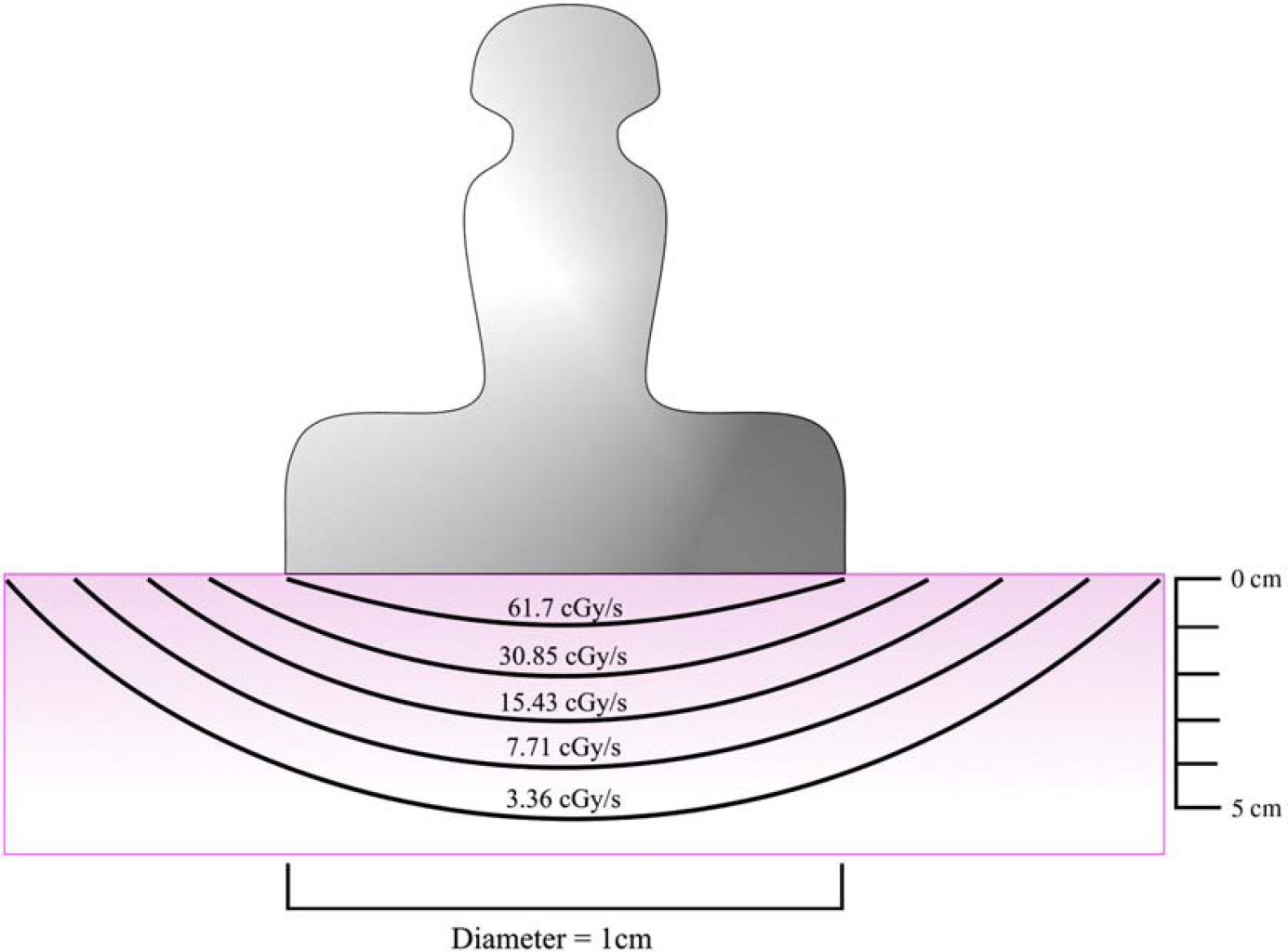
Schematic of penetration of β particles emitted by the 90Strontium probe (as of January 2002).
Animals were either sedated with intravenous midazolam (Hypnovel; Roche) and ketamine (Ketaset; Fort Dodge Animal Health) or intramuscular medetomidine (Domitor; Fort Dodge Animal Health); or were anaesthetised with intravenous propofol (Rapinovet; Schering-Plough Animal Health) for the procedure. The head was positioned with the nose elevated and the probe applied for the required time to deliver the fraction dose of 10 Gy at 2 mm depth (Figs 1 and 2). For tumour areas larger than the applicator (0.7 cm diameter), multiple adjacent non-overlapping applications were made in an attempt to administer an even dose over the whole tumour field, and to include the immediately adjacent normal appearing skin in the radiation field. No additional treatment or medication was used. If a crust or scab formed between treatments, this was removed, under anaesthesia, immediately before the subsequent treatment to ensure intimate contact with the tumour.
Data acquisition
Data retrieved from clinical records included: age, sex, colour, breed, the date the lesion was first observed by the owner, the date of first presentation to the referring veterinary surgeon, the date of histological/cytological diagnosis, tumour stage, date of 90Sr therapy at the Animal Health Trust and response to therapy. The tumour stage was based on the World Health Organisation (WHO) classification system of feline tumours of epidermal origin (Owen 1980) (Table 1).
Tumour response was determined visually, 6–8 weeks following completion of treatment, during follow-up re-examination at the Animal Health Trust. A complete response was defined as complete disappearance of the crusting lesion with re-epithelialisation to healthy skin. A partial response was defined as a greater than 50% reduction in tumour size but with identification of a residual lesion, however small. Additional information on long-term outcome was obtained from the clinical records (where animals were returned to the Animal Health Trust) and/or through contact with the referring veterinary surgeons and owners via telephone and fax questionnaire. For calculation of survival times a censor date of 28 November 2005 was used.
Results
Seventeen cats fulfilled the inclusion criteria. However, of these cats, one had complete surgical excision of the nasal planum SCC (with clean margins reported) and had immediate adjuvant 90Sr treatment, and one had 90Sr treatment that resulted in a partial remission and subsequently underwent surgery followed by external beam radiation therapy. As the effect of 90Sr therapy alone on outcome and survival could not be adequately assessed in either of these cases, they were excluded from further analysis.
Of the remaining 15 cases, their signalment and outcome are summarised in Table 2. There were no pedigree cats in this series, and their median age was 12.0 (mean 12.0, Table 2). The median follow-up time (from time of first 90Sr treatment) for these cats was 640 days (range 81–2043).
Response of cats following treatment with 90Strontium irradiation
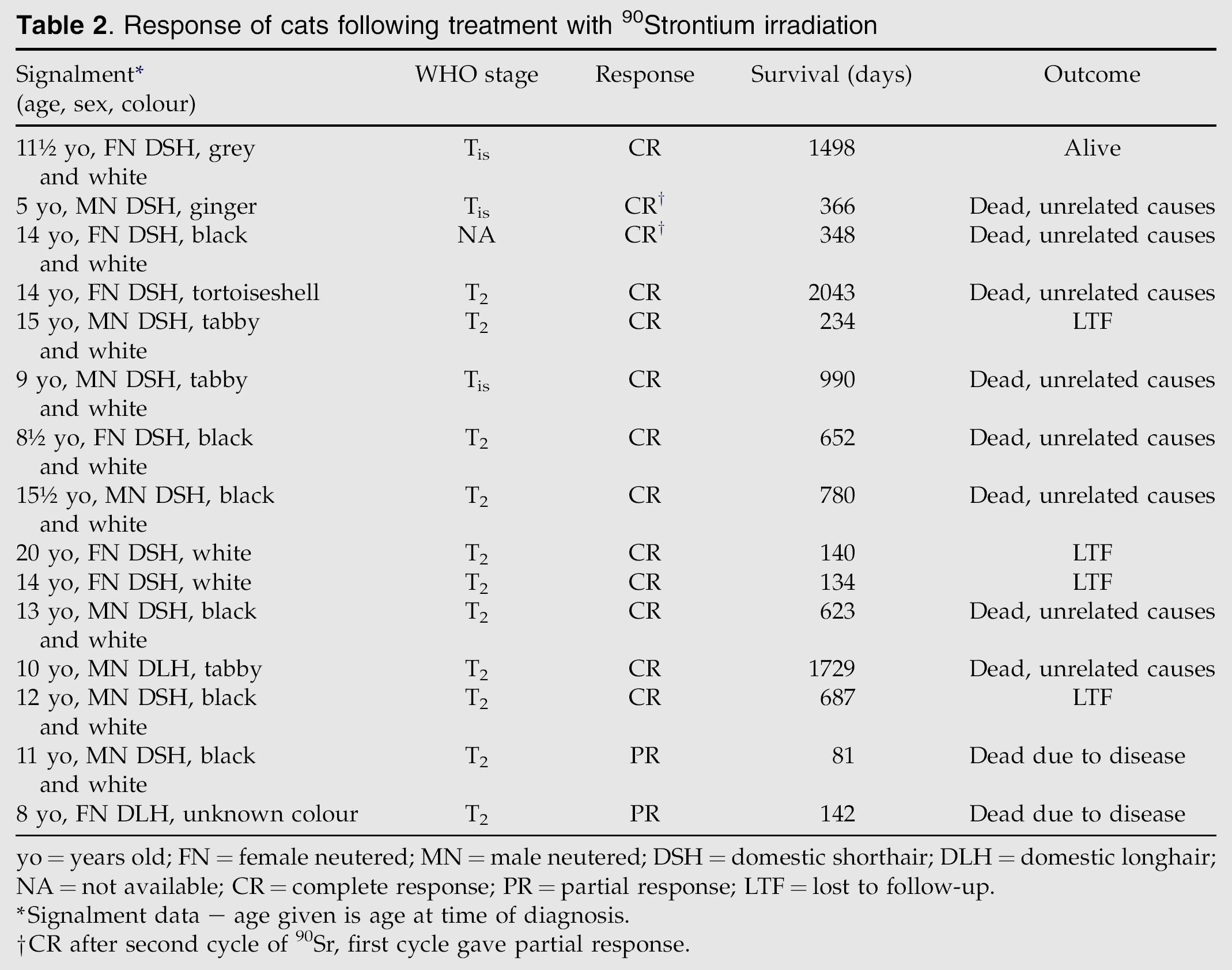
yo=years old; FN=female neutered; MN=male neutered; DSH=domestic shorthair; DLH=domestic longhair; NA=not available; CR=complete response; PR=partial response; LTF=lost to follow-up.
Signalment data – age given is age at time of diagnosis.
CR after second cycle of 90Sr, first cycle gave partial response.
Duration of disease
Information on the interval between the first appearance of a nasal planum lesion (as noticed by the owner) and first presentation to the referring veterinary surgeon was available for six of the 15 cats. This ranged from 0 to 694 days (median 112 days). The description by the owner and/or referring clinician at initial observation or presentation usually ascribed the lesion to a traumatic event such as a cat scratch.
Biopsy was usually performed when the lesion persisted despite symptomatic therapy or became ulcerated or crusted. Information on the interval between the first appearance of a nasal planum lesion (as noticed by the owner) and histological diagnosis of the disease was available for 14/15 cats, and this ranged from 23 to 2019 days (median 238 days).
Prior to referral to the Animal Health Trust for 90Sr therapy, 11 of the cats had received previous therapy. This mainly consisted of systemic antibiotics (n=9), and glucocorticoids or progestagens (n=3). In addition, one cat had received cryotherapy of its lesion on three occasions over an 8-month period (the last being 6 months prior to 90Sr therapy); one cat had received thermocautery of its lesion on two occasions over an 8-month period (the last being 4 months before 90Sr therapy), and one cat had undergone surgical excision of a lesion with reported complete histological margins 9 months before 90Sr therapy for a separate lesion that developed outside the surgical field.
Staging and therapy
Haematology, serum biochemistry or thoracic radiographs were not performed in all cases, consequently complete WHO TNM staging criteria (Owen 1980, Table 1) could not be determined. However, from the histological report and from clinical examination, three cats were presumptively classified as having carcinoma in situ (Tis), and 11 cats were classified as having T2 disease with local invasion histologically. In three cases the histology showed a poorly differentiated tumour. For one cat, the diagnosis was based on cytology from a fine needle aspirate and thus there was insufficient data to make a presumptive classification of tumour stage. Palpable lymphadenopathy was present in one cat at the time of referral, but histological examination of the excised node showed no evidence of neoplastic involvement. The time between histological diagnosis and first 90Sr therapy ranged between 0 and 419 days (median 34 days, >43 days on only four occasions).
When examined at the Animal Health Trust, five cases were found to have the lesion located on the left side of the nasal planum, three on the right side, and in the remaining seven cases either the central portion or both sides of the planum were involved. The lesion(s) extended beyond the nasal planum to the adjacent skin in the majority of cases (12 cats, 80%). Each cat received five doses of treatment as described, the number of radiation fields needed for each cat varied between one and nine (median 3.0). In two cats there were two separate lesions that were treated on the nasal planum.
Responses and remission times
Following each application of radiotherapy the lesions were often seen to become slightly erythematous and a dark crust formed. This was removed, as described, under anaesthesia, immediately before the subsequent treatment. After the final treatment, this crust was seen to reform, but to come away after a short period to reveal healthy epithelium. Any haired areas in the treatment field remained alopecic long term (Fig 3). Apart from this, no adverse reactions or untoward effects were observed in any of the cats treated and the treatment was very well tolerated. Four of the 15 cats were lost to follow-up after 134, 140, 234 and 687 days. The remainder were followed until death or the date of censor (Table 2).
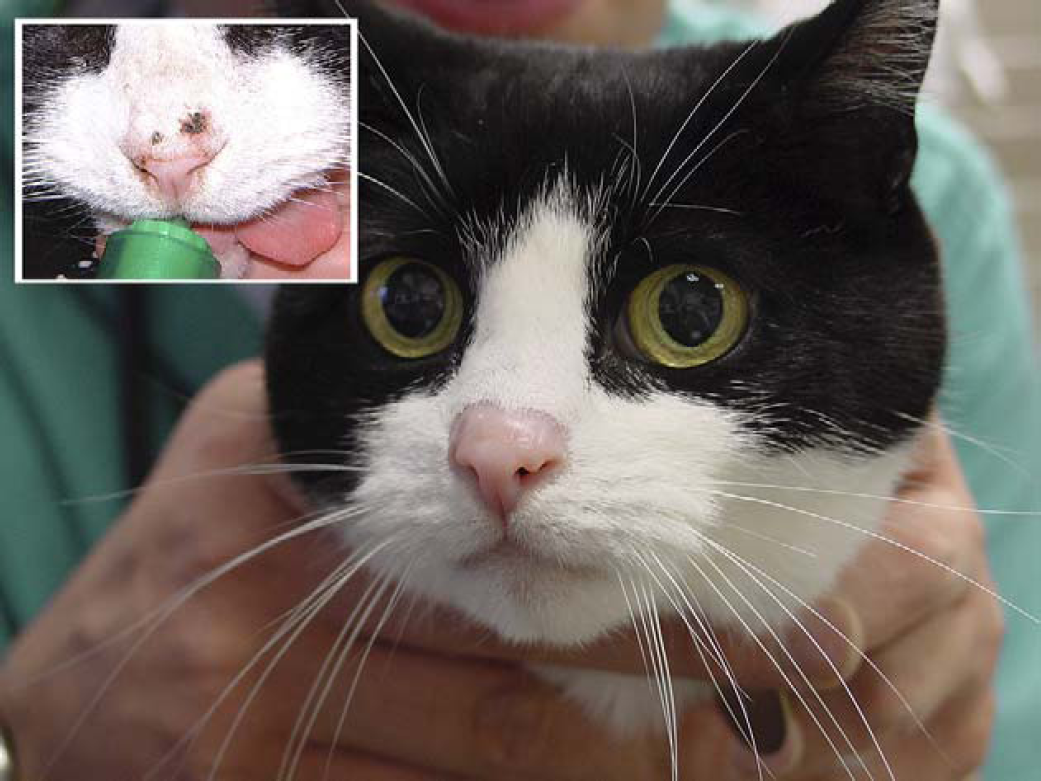
Typical appearance of a lesion after 90Strontium plesiotherapy. Inset shows appearance of lesions prior to therapy – in this case there was a SCC affecting the right nasal planum and separate lesions over the bridge of the nose.
Following initial therapy, 11 of the 15 cats (73%) achieved complete response (including two with poorly differentiated tumours) and none of these cats had evidence of tumour recurrence for the duration of the study. Four cats achieved a partial response following the initial treatment course, and each had a small crusting lesion remaining 6 to 8 weeks after treatment with subsequent progression. Two of these cats underwent a second cycle of 90Sr therapy 3 and 9 months after the original therapy. In both these cats, the second 90Sr therapy involved a single field of radiation, the original lesions having involved three (n=1) or four (n=1) fields. Following their second cycle of therapy, both of these cats achieved complete remission and remained disease-free for the duration of the study. For calculation of survival times, the date of the second treatment cycle was used in these two cats. The other two cats achieving a partial response (including one with a poorly differentiated tumour) did not receive additional therapy. Both of these cats had progressive disease and euthanasia was performed as a result of their disease after 81 and 142 days. These were the only cats that died as a consequence of their disease during the study. An additional five cats that had a complete response to therapy died due to unrelated causes during the study.
Overall, 90Sr plesiotherapy induced complete response in 13/15 (87%) of cats, none of which had recurrence. The disease-free interval recorded in these cats varied between 134 and 2043 days (median 652 days). The Kaplan–Meier survival plot is shown in Fig 4, with cats lost to follow-up and those that died of unrelated causes being treated as censored data. This figure also includes a plot treating cats that died of unrelated causes as uncensored data – this demonstrates that, as we were dealing with an elderly population of cats and as the 90Sr treatment was highly successful, most cats that died in the course of the study died of unrelated causes. Owners of the 13 cats that achieved complete response were invariably extremely pleased with the outcome, both from a cosmetic and welfare aspect.
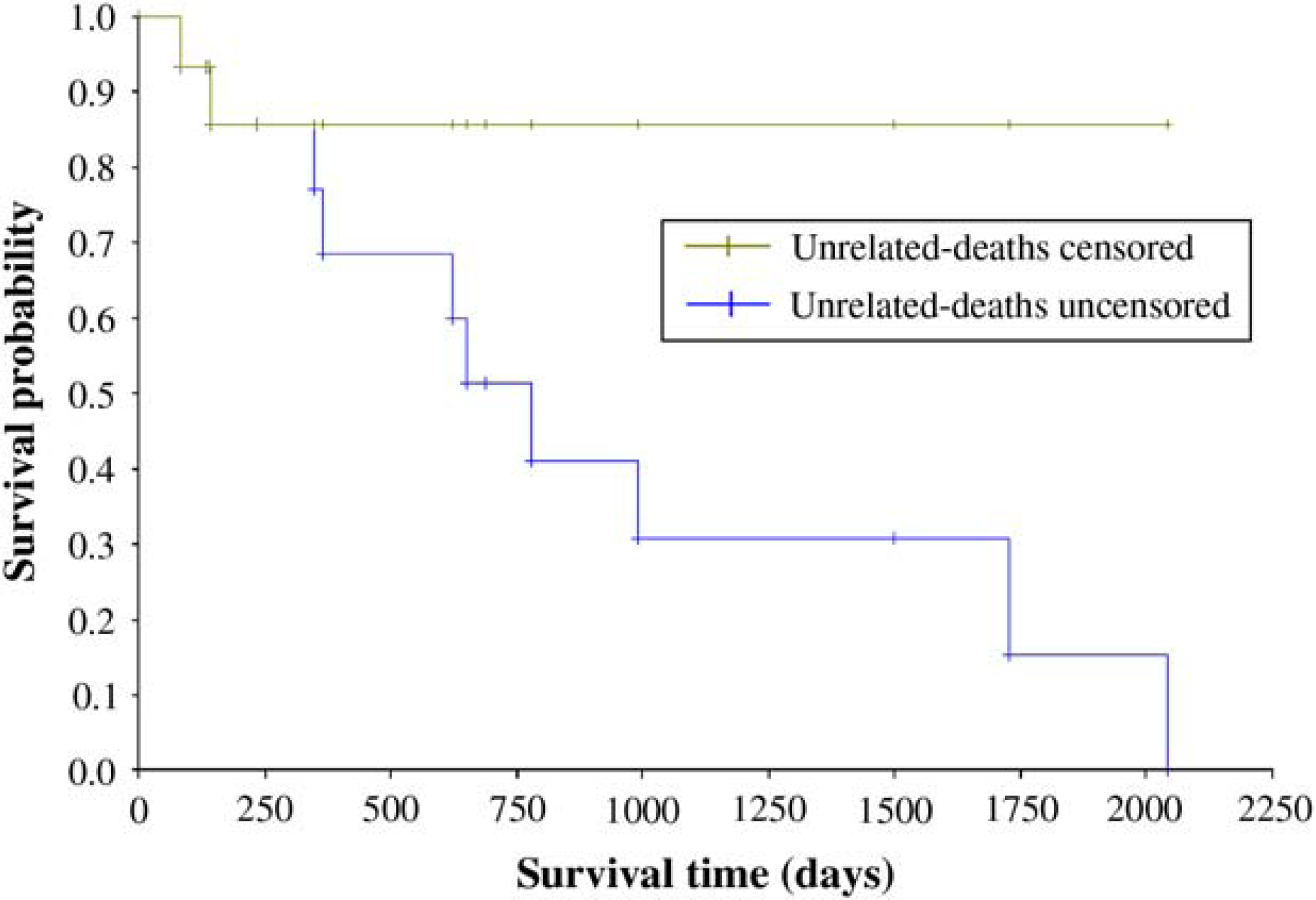
Kaplan–Meier survival plot of 15 cats treated with 90Strontium plesiotherapy.
The Kaplan–Meier product-limit estimate, censoring for unrelated deaths, gave 1-, 2- and 5-year survival rates of 85% on each occasion (with median survival times not being reached); whereas death-uncensored 1-, 2- and 5-year survival rates were 77%, 51% and 15%, respectively (Fig 3), with a median survival time of 780 days (95% CI=366–1729 days).
Discussion
To the authors' knowledge, this is the first published report of a series of feline SCC cases treated with 90Sr plesiotherapy, and as such provides some valuable data on this mode of therapy. In this study which incorporated lesions of stage T2 or less, a high proportion of the cats achieved complete response, and on each occasion this was achieved, there was no recurrence of disease observed, leading to prolonged disease-free survival times. Furthermore, the treatment was invariably well tolerated by the cats (without the need for specific analgesic therapy), and the owners were pleased with the outcome.
As previously reported by Clarke (1991), the current study found a great variation both in the time between owners observing a lesion and the cat being presented to a veterinary surgeon, and the time taken to perform a biopsy/aspirate to obtain a definitive diagnosis. The long intervals sometimes observed prior to 90Sr therapy undoubtedly reflect the slowly progressive nature of this disease, but despite this the prolonged delays in general did not appear to deleteriously affect the outcome in this study, where lesions were of stage T2 or lower. Nevertheless, given the pathogenesis of this condition and the progression from actinic damage through Tis to ultimately much more invasive lesions (stages T3 and T4), attempts should be made to avoid delays in presentation and diagnosis. This can be facilitated by increasing owner awareness of the occurrence of SCC, especially in white-faced cats, and prompt and appropriate investigation of persistent lesions. Prompt diagnosis and therapy may avoid the development of more deeply invasive (T3 and T4) lesions that have more restricted treatment options, and early therapy (when lesions are smaller) will also yield better long-term cosmetic results.
Théon et al (1995) found that coat colour, histological grade and the presence of multiple lesions were not prognostically useful when treatment with orthovoltage radiation was undertaken for nasal SCC. Similarly, in the current study, three cats had a poorly differentiated SCC on histology, but only one of these failed to achieve complete response to the first cycle of 90Sr therapy. Further therapy was declined in this cat, ultimately leading to euthanasia as a result of progressive disease. The two remaining cats with poorly differentiated tumours both achieved complete response after the first cycle of therapy.
It has been suggested that there is a reduced risk of SCC of the nasal planum in pedigree cats compared with non-pedigrees (Clarke 1991), possibly due to differences in the frequency of pigmentation of the nasal planum between these groups, or possibly due to the greater likelihood of pedigree cats being confined indoors. The current study was not designed to assess such risk factors, but it is interesting to note that none of the cats were pedigrees.
Several reports have detailed the responses of nasal planum SCC to external beam radiation therapy. In a series of 97 cats, Carlisle and Gould (1982) reported that 63% initially responded to monthly external beam radiation, the response and duration of remission being greatest in those cats with smaller, more superficial lesions. Similarly a fractionated orthovoltage course, reported by Théon et al (1995) achieved 60% 1-year progression free survival times with complete remission estimated in 56% of cases staged as T1 – again cats with stages T1 and T2 disease had better survival than those with more advanced disease. Proton irradiation (Fidel et al 2001) was also reported to produce complete remission in nine of 15 cases of T1 and T2 disease, with a median progression free survival time of 656±160 days.
Other forms of therapy have also been reported to produce good survival results. Surgical intervention with nasal planectomy (Withrow and Straw 1990) produced a mean survival time of 18 months in those cats where complete remission was achieved, which was similar to that reported by Lana et al (1997). Clarke (1991) documented 84% of 90 cases treated with cryosurgery to be tumour free at 12 months, but Lana et al (1997) reported frequent recurrence (8/11) treated by this means, and a reduced disease-free interval compared with surgery, although the stage of these tumours was largely unknown. Grier et al (1980) reported that hyperthermia therapy produced complete remission in 68% of cats treated with better responses generally seen in more superficial lesions (although follow-up was only for a maximum of 6 months and no distinction between nasal planum or pinnal tumours was made). Photodynamic therapy with systemic (Pearson et al 1993) or topical (Stell et al 2001) photosensitising agents has also been described for superficial tumours, with complete remissions achieved in nine of 14 and nine of 10 cases, respectively. However, adverse reactions were common, and Stell et al (2001) reported recurrence in seven of the nine cases between 19 and 56 weeks after treatment. The use of a neodymium–yttrium–aluminium garnet laser has been described in one cat (Shelley et al 1992), which produced complete remission for 7 months. Repeat treatments then produced subsequent remissions of 4 and 3 months. Finally, intralesional carboplatin has also been used as an alternative local treatment modality. Théon et al (1996) reported a complete response in 73% of 23 cats (with various stages of disease) treated in this manner, with low rates of recurrence; and de Vos et al (2005) also reported good responses in six cats with advanced nasal planum SCC treated with a combination of intralesional carboplatin and orthovoltage radiation.
Unlike orthovoltage radiation, 90Sr plesiotherapy only affects the immediate local tissue, rather than the entire nasal planum, and penetrates to a limited depth. This treatment is not, therefore, likely to be of benefit for more invasive (T3 and T4) tumours, when other forms of therapy (eg, orthovoltage radiation or surgery) would be the treatments of choice. Using 90Sr irradiation of a field slightly wider than grossly observed lesion (as in this study) may lead to inclusion of dysplastic cells in the treatment field not clinically apparent, but which if left untreated could progress to clinically apparent lesions. Where apparent recurrent lesions at the site of previous treatment have been described in previous studies, there are several possible explanations for this. Firstly, it could represent genuine recurrence with inadequate therapy and residual neoplastic tissue; secondly, it could reflect neoplastic transformation of dysplastic tissue at the margins of the original tumour if the field of therapy was inadequate; and thirdly, it could represent de novo carcinogenesis that has occurred from previously healthy tissue. However, the results of the current study demonstrate that, with appropriate selection of lesions, 90Sr therapy can provide excellent long-term results in treated cats, with minimal disfigurement. The relative ease and safety of this treatment, combined with the good outcome and cosmetic results achieved, suggests that this may be an excellent alternative to some other forms of therapy for superficial disease.
In conclusion, this study has demonstrated the effectiveness of 90Sr plesiotherapy in the treatment of superficial SCC of the nasal planum in cats. It has the benefit of being a local and repeatable treatment, which is both highly successful and produces excellent cosmetic results. The treatment course is relatively brief, well tolerated, and there were no adverse consequences of treatment. In the current series, complete response was achieved in 13 of 15 cats with T2 or lower lesions, and no recurrence was documented. These results compare very favourably with reports of other modes of treatment.