




Abstract

A2 Technologies
Portable Fourier Transform Infrared Spectrometer
A new addition to A2 Technologies' range of Fourier Transform Infrared (FTIR) spectrometers is a handheld portable FTIR spectrometer specifically designed for field-based surface analysis applications. Weighing 6 lb, the analyzer can be fully operated using only one hand, and also is capable of handling Attenuated Transmission Reflectance (ATR) applications for users in the general laboratory.
Featuring interchangeable internal-reflectance (ATR) and external-reflectance sampling interfaces, this system is designed for sampling almost any material. Designed to analyze solids, pastes, gels, and liquids with a traditional ATR, the novel spectrometer is also capable of analyzing large surface analysis with A2 Technologies' diamond internal reflection sampling system.
For more information, visit www.a2technologies.com, e-mail
Advanced Chemistry Development
Analytical Automation Suite
Advanced Chemistry Development's (ACD) new analytical knowledge management software is designed to expand high-throughput platforms and alleviate the bottlenecks of high-throughput qualitative spectral and chromatographic analysis by using automated processing, interpretation with an awareness of chemical structure, and management of data from multiple analytical techniques and instrument vendors. Standardized, uniform HT results are delivered to the desktops of users and decision makers via desktop, LIMS, or Web-based applications.
The ACD/Analytical Automation Suite consists of a number of modules for processing, interpretation, and storage of an array of optical and chromatographic techniques that are configured to meet specific needs.
For more information, visit www.acdlabs.com/labautomation.
Air Science
Purair Advanced Ductless Fume Hoods

This new, advanced range of ductless fume hoods with sophisticated airflow, filter alarms, and advanced safety features. These units are available from 2 to 8 ft, and are been designed to provide maximum operator protection when using hazardous substances. A face velocity at 100 fpm ensures containment of fumes, and an alarm alerts the operator when airflow falls to an unacceptable level. All mechanisms in the head section of the Purair are on the clean side of the filter to prevent contamination. Switches and electrical components are isolated from the dirty airflow and away from any contamination. The work area has a removable spillage tray that can be cleaned easily, and optional integral lighting is available.
The main filter can be chosen from 14 different types of carbon, including specialty media for vapors of organics, solvents, acids, mercury, and formaldehyde. HEPA filters for particulate filtration are also available. These units are energy savers. Clean air is recirculated into the laboratory; therefore, they do not exhaust expensive conditioned and/or heated air into the atmosphere.
For more information, visit www.air-science.com or www.airscienceuk.com.
ARTEL
MVS Multichannel Verification System

ARTEL's MVS Multichannel Verification System now offers an advanced automation function for streamlined performance verification of automated liquid handlers. A rapid, easy-to-use system that provides NIST-traceable results, the MVS is now able to automatically measure target volumes in groups of microtiter plates to minimize manual intervention during liquid-handler volume verification. The system's improved user interface allows for more frequent volume checks and easy integration with existing liquid-handling platforms.
For more information, visit www.artel-usa.com.
Pipetting Quality Management Certification Seminars (Level 2)

ARTEL's Pipetting Quality Management Certification Seminars (Level 2) are being offered June 23–24 and October 16–17 in Westbrook, ME. This vigorous 2-day training seminar for laboratory managers offers education on regulatory requirements, establishing internal liquid-handling quality assurance programs, diagnosing pipette failures, and calibration technologies.
For more information, visit www.artel-usa.com/seminars.
Beckman Coulter
DelsaNano Series Particle Analyzers

These new instruments can perform zeta potential and particle size analysis on the same sample. The systems are designed to deliver accurate size measurement on particles ranging from 0.6 nm to 7 μm. The DelsaNano also measures the zeta potential of concentrated material and solid flat surfaces such as films, paper, and glass. It is considered ideal for any liquid application, including pharmaceuticals, water treatment, paints, paper, and petrochemicals.
Beckman Coulter offers two models in this new series—the DelsaNano S for particle size analysis and the DelsaNano C for size and zeta potential measurement of particles in liquid suspension or zeta potential measurement of solid surfaces. An optional Auto Titrator can be easily integrated for pH adjustment of the sample.
For more information, visit www.beckmancoulter.com.
Biochrom
Gold Standard Biochrom 30 Amino Acid Analyser
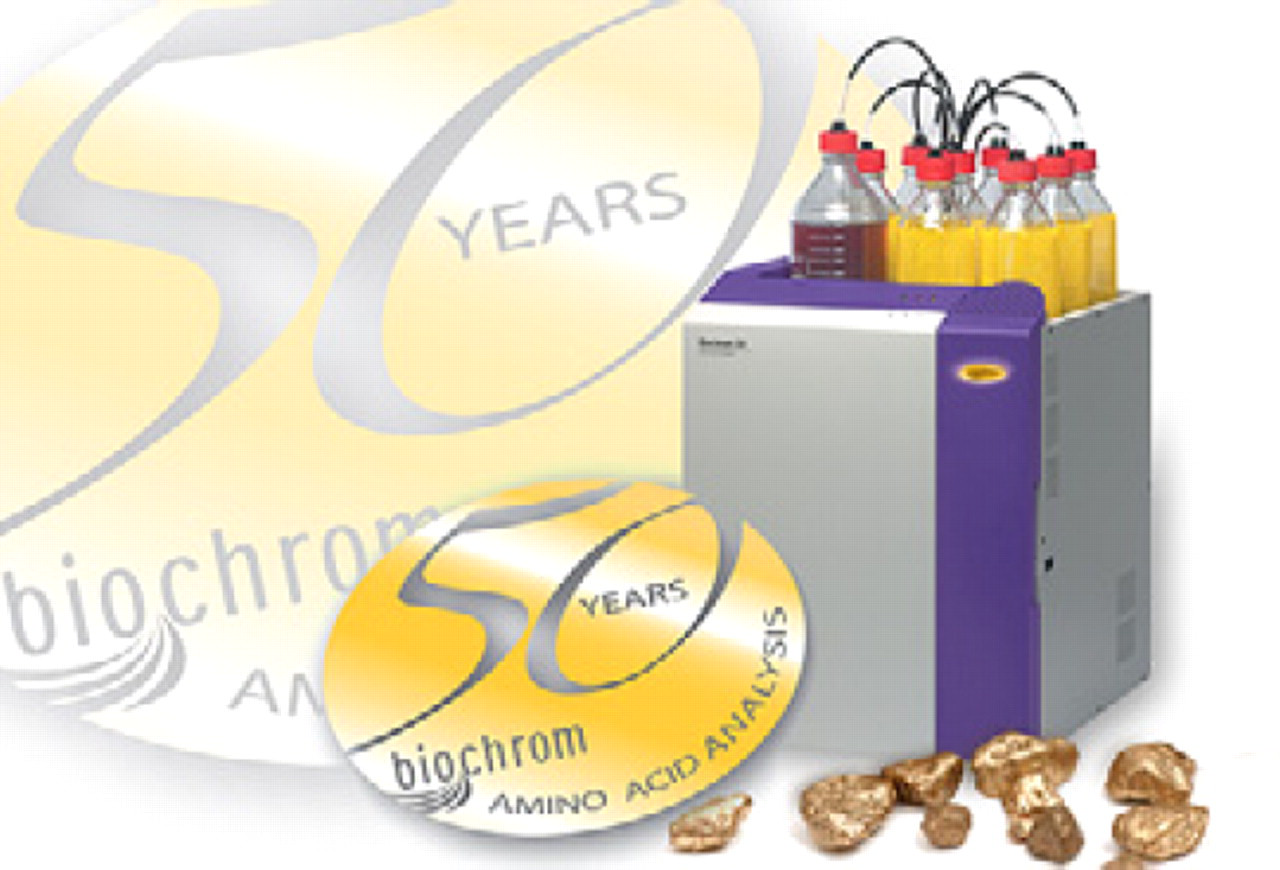
To celebrate the golden anniversary of automated amino acid analysis, Biochrom introduces the Gold Standard Biochrom 30 Amino Acid Analyzer.
The Gold Standard Biochrom 30 Amino Acid Analyser comprises the instrument, a 84-position cooled autosampler, an analytical column with top-up resin, a prewash column, operating software, EZchrom Elite data manipulation software, a chemical kit with calibration standard, ninhydrin and buffer bottles, instruction manuals, a tool kit, and spare parts/consumables kit. The system comes complete with a Pentium PC and Deskjet printer.
For more information, visit www.biochrom.co.uk.
BioTek Instruments
Synergy 4 Multimode Microplate Reader with Hybrid Technology
According to BioTek, its new Synergy 4 is the first and only multimode reader to combine filter-based and monochromator-based fluorescence detection technologies in one instrument for unlimited flexibility in current and future microplate-based assays. In addition to fluorescence intensity measurements, Synergy 4′s modular design allows detection of Fluorescence Polarization, Time-Resolved Fluorescence, Luminescence, AlphaScreen, and UV–Visible Absorbance.
For more information, visit www.biotek.com.
MicroFlo Select Dispenser
According to BioTek, its new MicroFlo Select Dispenser offers a unique design with three interchangeable cassettes in varying sizes for excellent performance in volumes from 1 μL to 10 mL. The peristaltic-driven dispensing and custom cassettes provide superior flexibility in liquid dispensing to many microplate and microtube styles and sizes.
For more information, visit www.biotek.com.
Liquid-Handling Control Software
Liquid-Handling Control (LHC) Software is now available for use with all of BioTek's liquid handlers, including the EL × 405 Microplate Washer and the new MicroFlo Select Dispenser. According to BioTek, full PC control provided by LHC Software is designed to increase convenience when programming important assay-specific protocol requirements in a familiar Microsoft Windows environment. Intuitive StepWise protocol creation offers an unlimited number of methods to be programmed and run from a PC or directly from the instrument's keypad, and parameters can be printed for GLP compliance. In addition, automatic protocol validation protects against errors.
For peak performance, custom maintenance reminders can be programmed, and Ultrasonic Advantage provides unattended washer manifold maintenance. For greater accuracy, multiple instruments may be controlled in parallel with LHC Software, and LHC Software supports BioTek's Bio-Stack Microplate Stacker integrations for high-throughput applications.
For more information, visit www.biotek.com.
BMG LABTECH
MARS Microplate Reader Analysis and Data Reduction Software
On the basis of a friendly graphical user interface, BMG LABTECH's MARS software now allows analysis and display of multiple measurement methods and has no limitation regarding the number of data points.
According to BMG, the most common detection modes include absorbance, luminescence, fluorescence intensity, fluorescence polarization, time-resolved fluorescence, and time-resolved fluorescence resonance energy transfer, to study compound solubility, antioxidant capacity, protein–protein binding, nucleic acid concentration, and second messengers such as ATP and cAMP.
MARS works on the NEPHELOstar, the OPTIMA series and OMEGA series of microplate readers as well as the high-end PHERAstar multidetection microplate reader, and the NOVOstar.
The MARS wizard creates an easy step-by-step calculation of a standard curve, and the Template Manager is a tool for building complex data processing protocols. New features include powerful sort and order functionality, averaging of raw and blank corrected data, lock on data trace, automated or user-defined range adjustment, zoom functions, and a curve fitting library to allow fast calculation of EC50, IC50, r 2, and CV values.
For more information, visit www.bmglabtech.com.
Brinkmann Instruments

StarFish Distribution Manifolds
Compact in design, the StarFish water manifold allows cooling water from a single source to be evenly distributed to up to five condensers, and then the flow recombined to one return/drain tube. Each water manifold contains a series of five shut-off valves that automatically open when a connector is plugged in, and close and seal when the connector is removed.
Consequently, reaction setups can be simply and rapidly plugged in or removed without water spills. Typically, two water manifolds are used in each system, one to distribute water to the condensers, and one to collect coolant for recirculation or send to drain.
Similarly, the StarFish gas/vacuum distribution manifold allows gas or a vacuum from a single source to be evenly distributed to up to five reactions making it ideally suited for both vacuum and gas purging. Each manifold contains shut-off valves, which automatically seal when a connector is plugged in or out.
For more information, visit www.brinkmann.com.
Cerno Bioscience
Formula ID
In cooperation with Dr. Christian Wold of SABIC Innovative Plastics, Cerno Bioscience has succeeded in demonstrating the ability to perform formula ID on a Thermo Scientific LCQ Deca Max ion trap mass spectrometer.
Using MassWorks sCLIPS (self-Calibrated Lineshape Isotope Profile Search), the latest addition to the MassWorks mass spectrometry software suite, the researcher was able to identify a set of trial compounds to within a top few compounds from a list of hundreds of formula candidates.
According to Cerno, formula ID normally requires accurate mass measurements typically provided by high-resolution time-of-flight, Orbitrap, or FT-ICR instrumentation. Ion traps typically cannot provide accurate mass measurements due to physical limitations of the ion trap analyzer, particularly in the older 3D trap designs such as the instrument used in this study. However, the cooperation with Dr. Wold demonstrates that by carefully controlling the ion trap conditions, it is possible to attain high-spectral accuracy that is suitable in itself for Formula ID. The approach uses Cerno's sCLIPS technology to correct the instrument line shape and allows highly accurate matching of the isotope pattern of the unknown ion against theoretically calculated ion candidates. One of the benefits of the approach is that it requires no known calibration ions, and instead uses the ion traps ability to scan in high-resolution mode to resolve the isotope peaks. The monoisotopic peak of the analyte ion can then be used to correct the measured isotope pattern for accurate matching to theoretical spectra.
For more information, visit www.cernobioscience.com, e-mail
Exeter Analytical
Direct Determination of Carbon, Hydrogen, and Nitrogen

According to Exeter Analytical, a method for easy, direct automated elemental analysis of material retained on glass or quartz microfiber filters used in water filtration and air monitoring applications is now available for its Model CE-440 CHN Elemental Analyzer.
The optimized methodology, using an Exeter Analytical Model CE-440 CHN elemental analyzer, requires a minimum of sample preparation and may be used for single samples or automated for higher throughput environments. The Model CE-440 is a static combustion system, with a unique horizontal furnace design, which enables easy removal of filter and sample ash between each analysis. Consequently, one combustion tube will analyze in excess of 1000 samples without the need for removal and cleaning. In addition, the Model CE-440 provides the capacity to process filters up to 47 mm in diameter in one analytical cycle.
For more information, visit www.eai1.com.
GE Healthcare
IN Cell Miner High-Content Manager Software
According to GE Healthcare, its new IN Cell Miner High-Content Manager (HCM) software for the management of complex data generated by cellular high-content analysis (HCA) and screening is a robust and scalable data management solution that has been developed in collaboration with EMC Corporation. The system is based on EMCs electronic content management system, EMC Documentum OEM edition, and handles data that have been generated by the IN Cell Analyzer and similar systems. By integrating the Documentum content management system with the IN Cell Analyzer, GE Healthcare provides a single platform that can enable users to consistently capture, manage, share, and archive HCA data.
For more information, visit http://www.gehealthcare.com/incell.
Genevac
SampleGenie

SampleGenie is a large volume sample pooling technology. Available in three sizes (50, 125, and 300 mL), the SampleGenie enables Genevac's EZ-2 and HT series centrifugal evaporators to accelerate the pooling of multiple large volume fractions into a single small sample vial. For high-throughput applications including compound storage, drug development, and environmental analysis, methods that can reduce analytical work are considered desirable. Pooling of fractions that contain a common analyte to yield a single sample saves time and is therefore desirable.
According to Genevac, until SampleGenie, no commercial technology existed for pooling and concentrating large volume fractions.
For more information, visit www.genevac.com.
VirTis 96-Well Freeze-Drying System

For high-throughput applications, the VirTis 96-Well Freeze-Drying System combines a choice of glass or plastic vials, set in an aluminum vial holder, with an exclusive LyoCap 96-Well CapMat Lyophilization Stopper.
The solid aluminum 96-well vial holders provide efficient and even heat distribution to ensure fast and consistent freeze-drying results for every sample. A range of glass vial sizes are available for high-efficiency freeze drying or economical 4-mL plastic vials in robotic friendly polypropylene are specially configured for the 96-well holder. The fluted LyoCap 96-well CapMat Stoppers enable samples to be quickly freeze dried and then sealed under vacuum, inert gas, or filtered air after the lyophilization cycle is complete.
In traditional 96-well freeze-drying systems, samples in the wells around the edges of plastic plates tend to dry faster. Samples in the middle wells retain more water to the point that they can collapse when freeze-drying is terminated. The unique combination of the VirTis 96-Well Freeze-Drying Systems' components eliminates the traditional edge effect freeze-drying problems encountered in standard 96-well plastic plates.
For more information, visit www.genevac.com.
Hamilton Company
MicroLab Nimbus Automated Pipetting Platform

According to Hamilton Company, its new MicroLab Nimbus meets the needs of smaller throughput automated pipetting applications, and is considered an ideal platform for fast plate replication and serial dilutions. It also can process single or dual nucleic acid separations, MALDI spotting, low-throughput ELISA, and other applications.
The body of the MicroLab Nimbus is designed to fit within a typical environmental hood. Its base configuration consists of a 96-channel pipetting head using Hamilton's precision CO-RE tip technology. The fixed deck has 9 to 12 SBS lab ware positions. Lab ware density is further enhanced by the utilization of Hamilton's proprietary “nested tip rack” design, which allows for tips to be stacked up to four racks high on the MicroLab Nimbus deck. A barcode scanner and lab ware gripper are available as options. The gripper can reach beyond the front, back, and left side of the instrument for custom integrations with other devices for expanded applications. The pipettor is controlled by Hamilton's Vector software.
For more information, visit www.hamiltonrobotics.com.
Integra Biosciences
Fireboy
According to Integra Biosciences, this new generation of Fireboy is an intrinsically safe and mobile alternative to the traditional Bunsen burner. Operating from a gas cartridge and powered from a rechargeable battery, the newly designed Fireboy range can be used safely where ever a user wishes to use it. Advanced temperature protection, flame monitor, and alarm display features serve to protect both the operator and operating environment. The gas ignition is considered both rapid and safe—the new FIREBOY requires no lighter or matches.
For more information, visit www.integrabiosciences.com, e-mail
Mediaclave
The new 30-litre version of the Mediaclave has been introduced as a highly safe and economical system for sterilization of microbiological media. In combination with Integra's Petri dish filler Mediajet and test-tube dispenser Tubefiller, users have the choice of a complete range of highly productive solutions for all media preparation requirements.
For more information, visit www.integra-biosciences.com, e-mail
LabCore
Prerecorded Webinar: Benefits of Centralized Lab Data Management for Environmental Labs
A 52-min Webinar now available on the LabCore Web site features Denise Schmidt, laboratory manager at the Rachel L. Carson Analytical Facility at Cary Institute of Ecosystem Studies; and Mark Ferrerro, founder and President/CEO of P-Wave, which is responsible for the development and marketing of P-Wave's LabCore LDMS product.
For more information, visit http://www.lab-core.com/webinar.
Labcyte
Echo 520 Liquid Handler
The latest member of Labcyte's acoustic dispensing family, the new Echo 520 Liquid-Handler system is designed to provide high accuracy and precision transfers of a wide variety of solutions for the laboratory that needs to transfer as many as 100,000 solutions per day. Like other Labcyte Echo liquid handlers, the Echo 520 improves data quality by avoiding loss of sample by adsorption onto tips and intermediate plates. This system uses the same acoustic droplet ejection technology that has enabled leading pharmaceutical companies to reduce the volume of their assays while obtaining more reliable data. The rapid ejection of 2.5-nL droplets facilitates the use of 96-, 384-, 1536-, and 3456-well assay plates.
For more information, visit www.labcyte.com. To view a video of acoustic droplet formation, visit www.labcyte.com/media/2nL.mpeg.
Mettler Toledo and Applied Biosystems
LabX Data Management Software and SQL*LIMS Collaboration
Mettler Toledo and Applied Biosystems have initiated a collaboration that allows seamless integration of Mettler Toledo's LabX Data Management Software with the Applied Biosystems SQL*LIMS laboratory information system. Together, the two platforms create a fully validated environment, increase flexibility in method development, and save time and expenses normally associated with instrument and method validation.
According to the companies, integrating the two platforms simplifies workflows, provides efficient data management and improves security processes. The LIMS takes control of the Mettler Toledo instrument via LabX, and sends all operator instructions to the instrument screen as a simple and intuitive user interface, so that users can operate the laboratory instruments as normal. The software guides the operator through each step of the worklist, ensuring SOPs are followed and avoiding procedural errors. It performs full data acquisition, data storage, and automated reporting and documentation for audit trails; data can be stored within the LabX database and/or the LIMS as appropriate.
For more information about Mettler Toledo's LabX Data Management Software, visit www.mt.com. For more information about Applied Biosystems' SQL*LIMS line of products, visit http://info.appliedbiosystems.com/sqllims.
Micronic
Automatic Screw Cap Handler

Easy to install and operate the Automatic Screw Cap Handler automatically applies or removes the screw caps from a full 96-tube rack in less than 15 s. In addition to delivering significant productivity gains, the Automatic Screw Cap Handler lowers the risk of sample contamination and eliminates the chance of repetitive strain injury inherent with manually applying and removing large numbers of screw top caps. To ensure optimal seal quality on samples, the Automatic Screw Cap Handler simultaneously processes all 96 tubes in a rack with each cap receiving the same torque.
Designed for stand-alone use, the Automatic Screw Cap Handler requires just a mains power source for operation, and fits neatly on a laboratory bench or inside an environmental control cabinet. Built for versatility, the instrument is compatible with the complete Micronic range of screw cap tubes (0.5, 0.75, 1.1, and 1.4 mL) and tube racks.
For more information, visit www.micronic.com, e-mail
Tubestrip 8

According to Micronic, Tubestrip 8 is a low-cost product for storage of up to eight samples in a linked row of 1.4-mL tubes. Used in conjunction with Micronic tube caps or bands, the Tubestrip 8 provides simple and high-integrity storage of clinical or biological samples even at −180 °C. Offering full compatibility with Micronic tube racks, the new Tubestrip 8 integrates easily into automated laboratory environments.
Manufactured in a modern class 7 clean room production facility, Tubestrip 8 is certified RNase and DNase free and nontoxic, according to the USP class VI test. Constructed from pure medical grade polypropylene, Tubestrip 8 also is resistant to most solvents.
For more information, visit www.micronic.com, e-mail
Millipore
MultiScreenHTS+

The latest addition to Millipore's MultiScreen family of filter plates is the MultiScreenHTS+ for radiometric kinase and GPCR assays. This new plate has a mesh backing to create uniformly flowing wells to improve washing efficiency. Its design reduces overall nonspecific binding, and reduces variability in both background and signal intensities. The filter plates allow for higher throughput, greater assay sensitivity, and detection flexibility. According to Millipore, validation testing shows a threefold decrease in well-to-well variability, and improved signal-to-noise ratio over traditional filter plates.
For more information, visit www.millipore.com.
Mole Genetics
GeneMole
This compact new automated DNA extraction system is designed to make low-throughput automated DNA purification available to any laboratory.
GeneMole is a closed and fully automated system comprising a liquid-handling robot capable of running 1–16 samples at a time. Operation is simple via an intuitive touchscreen menu. Set-up time is only 3 min. Samples are loaded in a rack and then transferred by the robot to sealed and disposable MoleStrips, which are prefilled with reagents. Sample volumes are from 50 to 200 μL with launch protocols available for DNA, DNA blood, DNA tissue, RNA cells, and RNA tissue. Using purification based on magnetic beads, high-quality nucleic acids are ready for downstream applications within 40 min. Use of the disposable MoleStrips eliminates crossover or contamination and makes GeneMole suitable for multiuser environments. Maintenance is considered minimal.
For more information, visit www.molegenetics.com.
PANalytical
Medipix2 Chip
According to PANalytical, the Medipix2 chip is a revolutionary photon counting X-ray detector developed by the Medipix Collaboration. This project involves CERN (European Organization for Nuclear Research) and PANalytical as well as other leading research institutes, including Nikhef, the National institute for subatomic physics in The Netherlands.
Medipix2 consists of a 300-μm silicon detector layer, which is attached to a pixel read-out chip with 256 × 256 55-μm square pixels. The original aim of the Medipix2 collaboration was to develop the system for medical imaging, such as mammography and heart investigations. However, one of the many advantages of the Medipix technology is that it has a very broad industrial relevance, with applications ranging from cement to pharmaceuticals.
For more information, visit www.panalytical.com.
Paraytec
ActiPix D100 Miniature UV Area Imaging Detector

According to Paraytec, its ActiPix D100 Miniature UV Area Imaging Detector now offers new measurement capabilities in applications including real-time study of diffusion processes, in-line quantification and sizing of biopharmaceuticals, dissolution and solubility testing, and membrane transport studies.
For more information, visit www.paraytec.com.
PerkinElmer
Application Note: RamanStation 400 to Obtain Optimum Raman Spectra from Wide Range of Samples
A new application note from PerkinElmer describes how to set scanning and processing parameters such as laser power, number of scans, sample focus, and baseline correction to minimize any adverse effects from laser-induced fluorescence or sample damage. This helps ensure quality spectra.
The application note, entitled “Parameter selection and spectral optimization using the RamanStation 400,” shows how a simple-analysis procedure can give good quality, reproducible spectra from most samples found in a typical laboratory.
For more information, visit www.perkinelmer.com/raman.
Application Note: LAMBDA 1050 to Gain High-Resolution Measurements in the NIR
A new application note from PerkinElmer focuses on how the advanced features of the LAMBDA 1050 UV/VIS/NIR spectrophotometer help ensure that demanding design requirements can be validated and controlled throughout the development and manufacturing process. According to PerkinElmer, the new LAMBDA 1050 spectrophotometer with its unique PMT, InGaAs, and PbS 3-detector module enables measurements at high resolution in the NIR region with excellent signal-to-noise ratio. This higher accuracy and sensitivity in the NIR makes the instrument ideally suited for the characterization of a wide variety of materials, including optical filters from simple neutral density to the most complex multilayered filter designs and the characterization of thin film coatings used in state of the art solar cell design and manufacture.
For more information, visit www.perkinelmer.com/new-limits.
LAMBDA 1050 Spectrophotometer
According to PerkinElmer, this new spectrophotometer is capable of testing a significantly expanded range of
advanced materials, including highly reflective and antireflective coatings, all types of glass from clear to highly absorbing safety glass, and all types of optical filters.
The LAMBDA 1050 is designed to help material scientists in a diverse range of industries accelerate the development of engineered materials including those designed to improve energy conservation or harness renewable energy sources. With its three-detector design, the LAMBDA 1050 has a full scanning range from 175 to 3300 nm. An InGaAs detector allows for expanded testing in the 800–2600 nm range for high-sensitivity measurement in the near infrared.
PerkinElmer says the system is the first commercially available spectrophotometer to include a choice of detector options in a single instrument. High-performance InGaAs integrating spheres and a proprietary universal reflectance accessory provide more accurate measurement and greater flexibility and sensitivity. Twin-removable sampling compartments for standard and customized applications give further flexibility to the system.
For more information, visit www.perkinelmer.com/new-limits.
Porvair Sciences
Chart: Chemical Compatibility of Microplates
A new chart details the chemical resistance of membranes and matrices used in microplates to a wide range of common laboratory chemicals. The new Chemical Compatibility Chart provides laboratory scientists with an easy-to-use reference guide as to the compatibility of different microplate matrices and membranes to a wide range of acids, alcohols, bases, esters, hydrocarbons/chlorinated hydrocarbons, ketones, and other chemicals. Chemical compatibility data for each material (tests performed at room temperature) are listed as “suitable,” “ok for medium term use,” or “unsuitable.”
For more information, visit www.porvair-sciences.com, e-mail
Filtration Plates

Drawing upon a selection of proprietary microfilters, Porvair Sciences now offers a comprehensive range of high-performance filtration plates with well volumes ranging from 350 μL to 5 mL, and optimized for applications including cell harvesting, DNA separations, binding studies, plasmid isolation, general filtration, and sample clean-up.
Included within the range are filtration plates that can simultaneously filter 96 or 384 samples of up to 350 μL volume providing. For larger volume applications (up to 5 mL/well), a choice of 48-well filtration plates are available. Each well on Porvair's filtration plates has an individual drainage spout to ensure 100% sample transfer and zero crossover contamination. Manufactured from ultra pure grade polypropylene or polystyrene, all Porvair filtration plates minimize leachates when used with most common solvents maximizing filtered sample integrity.
For more information, visit www.porvair-sciences.com/acatalog/Online_Catalogue_Filtration_Plates_44.html, e-mail
QIAGEN
QIAsymphony SP
This novel purification system offers medium- to high-throughput laboratories a unique combination of a broad application range and flexible processing with full sample traceability. QIAsymphony SP is the first module of a new series of instruments that can be integrated to automate entire workflows—from sample to assay.
QIAsymphony SP is designed to meet an increasing demand for flexible workflows. The system is able to handle an extensive variety of starting materials, such as blood, respiratory samples, tissues, and cultured cells, and uses proprietary QIAGEN magnetic particle chemistry. The instrument is preinstalled with dedicated protocols for purification of proteins, RNA, DNA, and viral and bacterial nucleic acids that deliver high analyte quality. QIAsymphony SP allows the use of sample volumes up to 1 mL and enables continuous loading of sample racks for increased workflow flexibility. The system can satisfy a wide variety of throughput needs, from a few samples a day up to a few hundred.
Other benefits include prefilled reagent cartridges, touch-screen operation, and technology that provides inventory control and full-process documentation.
For more information, visit www.qiagen.com.
Trans Fect Protocol Database and DNA Transfection Reagents

To complement and enhance the existing portfolio of transfection solutions, QIAGEN now offers the TransFect Protocol Database and two new DNA transfection reagents: Attractene Transfection Reagent and NanoFect Transfection Reagent. According to QIAGEN, the TransFect Protocol Database is a resource that provides cell-specific transfection protocols. The latest reagents use advanced technology to meet all DNA transfection needs.
The TransFect Database provides DNA, RNA, and siRNA transfection protocols for a wide range of cell types and plate or dish formats. Rather than adapting existing protocols to fit the cell type, the TransFect Database enables researchers to access exactly the protocol needed by simply entering the cell type, nucleic acid, and plate format at www.qiagen.com/TransFect. Use of the TransFect Database is free of charge and no registration is required.
Attractene Reagent is a nonliposomal lipid, which enables highly efficient DNA transfection of adherent cells, including difficult-to-transfect cell types such as HaCaT, MonoMac6, and HCT116. Using Attractene Reagent also ensures exceptionally low cytotoxicity. This reagent is suitable for a range of transfection applications, including transient or stable transfection, transfection of shRNA (short-hairpin RNA) vectors, and DNA cotransfection. Ease of handling means that Attractene Reagent is considered suitable for use with automated systems.
NanoFect Transfection Reagent uses advanced nanopolymer technology for highly efficient DNA transfection. NanoFect Reagent is completely chemically synthesized, free of animal-derived components, and has been tested for the absence of endotoxins. For these reasons, it is considered ideal for use when absence of animal-derived components is a priority, for example, in biopharmaceutical applications. Absence of animal-derived components also facilitates regulatory compliance. In addition, the absence of lipids makes this reagent suitable for lipid or signal transduction research.
For more information, visit www.qiagen.com/Transfection.
CompactPrep Plasmid Mega and Giga Kits

The CompactPrep Plasmid Mega and Giga kits are two new products for large-scale plasmid DNA isolation. According to QIAGEN, these new kits allow isolation of plasmid DNA in less than 50 min due to a vacuum-driven protocol. In addition, by using QIAGEN's QIAvac 24 Plus vacuum device in combination with the new QIAvac Holder, it is possible to process up to 12 preparations in parallel. Virtually no hands-on work is required during the entire procedure.
The CompactPrep Plasmid Mega and Giga kits produce highly concentrated, low-endotoxin plasmid DNA. The new kits use small columns that enable elution of DNA in a very low buffer volume, resulting in DNA concentrations of up to 2.5 μg/μL. In addition, by using a supplemental wash buffer, endotoxin levels are usually lower than 1 EU/μg DNA.
The resulting purified plasmid DNA is considered suitable for all routine downstream applications, including cloning, enzymatic restriction, in vitro transcription, and translation. Due to the kits' proprietary wash buffer, the extracted plasmid DNA also is considered ideal for transfection experiments, even with cell lines as sensitive as Huh-7.
For more information, visit www.qiagen.com.
miScript Controls
miScript Controls is a collection of six highly validated primer assays that enable normalization of real-time PCR results in miRNA quantification studies. miScript Controls are specific for several small nucleolar RNAs and small nuclear RNAs. Each miScript Control is effective in human, mouse, and rat, enabling miRNA experiments in all three species.
According to QIAGEN, its miScript Controls have high amplification efficiencies, are optimized to work under standard assay conditions, and target small RNAs that are constantly expressed in multiple different sample types. These features make miScript Controls ideal for data normalization. miScript Controls, in combination with the miScript System for SYBR Green-based real-time PCR, enable accurate quantification of hundreds of miRNAs from a single cDNA synthesis reaction.
For more information, visit www.qiagen.com/miRNA.
FlexiPlate siRNA Gene Family Lists
According to QIAGEN, its new FlexiPlate siRNA Gene Family Lists are flexible siRNA sets that enable RNAi screening of 54 human gene families. Lists of siRNAs for each gene family allow creation of customized siRNA sets with a user-friendly Web interface (www.qiagen.com/GeneGlobe). For maximum flexibility, controls, scales, and plate layout can be chosen to suit individual requirements.
Epigenetics, cell cycle, growth factors, and DNA repair are just a few examples of the wide range of gene families covered. For controls, the options include a toxic siRNA blend, validated positive controls, and the most extensively validated negative control currently available. Unmatched flexibility is ensured by the option to choose 0.1-, 0.25-, or 1-nmol siRNA amounts, and the ability to rearrange plates by simply dragging and dropping siRNAs.
siRNAs are designed using QIAGEN's HP OnGuard siRNA Design, ensuring potency and specificity. siRNA design incorporates neural-network technology and a proprietary homology analysis tool. Design features include 3′ UTR/seed-region analysis, SNP avoidance, and interferon motif avoidance.
For more information, visit www.qiagen.com/siRNA.
AllStars Hs Cell Death Control siRNA
AllStars Hs Cell Death Control siRNA is the latest addition to QIAGEN's AllStars portfolio of RNAi controls. Highly potent AllStars Hs Cell Death Control siRNA targets ubiquitous human cell survival genes. Transfection of this siRNA blend results in a high degree of cell death that is visible by light microscopy, making it an invaluable tool for siRNA transfection optimization and routine positive control experiments.
According to QIAGEN, AllStars Hs Cell Death Control siRNA has been functionally validated in a wide range of human cell lines and primary cells. This control siRNA enables RNAi start-up experiments in which multiple transfections are performed to determine optimal conditions. In high-throughput RNAi screens, AllStars Hs Cell Death Control siRNA is considered ideal for use as an internal positive control to ensure that optimal transfection conditions are maintained on every plate. Simple phenotypic analysis using light microscopy to observe the extent of cell death is rapid and inexpensive.
AllStars Hs Cell Death Control siRNA can be ordered in tubes in 1-, 5-, or 20-nmol amounts, or in 96-well plates in 1-, 0.25-, or 0.1-nmol amounts.
For more information, visit www.qiagen.com/AllStars.
Human Genome siRNA Sets
QIAGEN has enhanced its comprehensive range of high-throughput RNAi solutions with the launch of the Human Whole Genome siRNA Set V4.0, the Human Druggable Genome siRNA Set V4.0, and subsets for GPCRs, phosphatases, and kinases. siRNAs are designed using QIAGEN's HP OnGuard siRNA Design, which incorporates many unique and advanced features and delivers highly potent and specific siRNA.
According to QIAGEN, HP OnGuard siRNA Design integrates neural-network technology, proprietary homology analysis, and asymmetry analysis. The latest knowledge of the mechanism of miRNA-related off-target effects is used in the design of multiparameter, seed-region searches. siRNA design also takes advantage of the results of large-scale, wet-lab siRNA validation studies and genomewide analysis using Affymetrix GeneChip arrays. Up-to-date sequence information is used for SNP and interferon motif avoidance.
siRNA Sets are provided in flexible scales and formats, including individual siRNAs or pools, to suit specific screening requirements. The Human Whole Genome siRNA Set V4.0 targets 19,121 human genes and a supplemental set targeting 5318 predicted genes is also available. The Human Druggable Genome siRNA Set V4.0 targets 6961 genes of potential therapeutic value. Subsets target 490 GPCR genes, 696 kinase genes, or 205 phosphatase genes.
siRNA Sets are provided with complete siRNA sequence disclosure. All rights to any invention or discovery developed by researchers using these sequences belong to the researcher, allowing complete freedom for discovery.
For more information, visit www.qiagen.com/siRNA.
TissueLyser II
The new TissueLyser II, a more compact and robust version of the TissueLyser, is a bead mill that rapidly and effectively disrupts up to 48 or 192 samples at the same time. By providing fast access to DNA, RNA, and protein in multiple biological samples, the instrument is considered ideal for high-throughput applications in fields such as systems biology.
The TissueLyser II is fully compatible with all existing TissueLyser accessories, forming a complete system for sample disruption. Accessories include TissueLyser Adapter Sets, which accommodate racks of 2 × 24 tubes or 2 × 96 tubes, TissueLyser Bead Dispensers, and a range of bead types. For disruption of larger samples, Grinding Jar Sets are available.
Effortless disruption is achieved through high-speed shaking with beads to beat and grind samples. This action also simultaneously homogenizes samples to facilitate subsequent purification procedures. Tubes remain sealed during disruption to prevent cross-contamination, which is critical for sensitive applications, such as real-time RT-PCR.
A wide variety of samples, including animal and plant tissues, bacteria, and yeast, can be disrupted to release high-quality DNA, RNA, and protein for subsequent purification and analysis. The TissueLyser II system is an integral part of QIAGEN's complete solution for tissue management—from sample collection to DNA, RNA, and protein purification.
For more information, visit www.qiagen.com.
EZ1-Advanced

According to QIAGEN, this new platform is a low-throughput alternative for nucleic acid purification, and is an improved version of the BioRobot EZ 1. Several new features provide advanced safety and documentation. For example, an improved design allows the unit to be stored in a laminar-flow cabinet and an ultraviolet lamp decontaminates the inner surface of the workstation. EZ1-Advanced offers a proven, automated sample purification method for nonresearch settings such as molecular diagnostics, human identity testing, and veterinary control.
For more information, visit www.qiagen.com.
REPLI-g FFPE Kit
This new product supports the genomic analysis of fixed tissue samples, and is the latest development in QIAGEN's whole genome amplification portfolio. It eliminates problems associated with DNA fragmentation and damage caused by formalin fixation, and it uses a novel DNA processing reaction that allows the advantages of multiple displacement amplification, a key technology in the amplification of genomic DNA, to be extended to highly degraded DNA samples derived from formalin-fixed, paraffin-embedded (FFPE) tissue.
According to QIAGEN, isolation of sufficient genomic DNA from FFPE tissue is often difficult due to the low amount of DNA available. The REPLI-g FFPE Kit allows amplification of precious sample material while maintaining locus representation, enabling unlimited downstream analyses to be performed. Highly uniform whole genome
amplification directly from FFPE tissue can now be performed without the need for prior DNA isolation.
The REPLI-g FFPE Kit provides uniform amplification resulting in scalable and standardized DNA yields. After lysis of the tissue section, the DNA is processed using novel buffers and enzymes that ligate fragmented DNA. The long DNA strands created by the ligation reaction are amplified using proven REPLI-g technology. A 2-h amplification reaction typically yields 10 μg DNA, whereas 40 μg can be obtained after 8 h incubation. Once amplified, the DNA is suitable for immediate use in most downstream genotyping assays without further purification.
For more information, visit www.qiagen.com.
QIAxcel
The new QIAxcel automated system replaces tedious and time-consuming methods of nucleic acid separation in low-to high-throughput laboratories. QIAxcel, which is designed to take the place of traditional slab-gel analysis, is characterized by an unprecedented sensitivity—detecting concentrations of nucleic acids as small as 0.1 ng/μL.
Nucleic acid separation technologies are widely used for quality control or as an analytical tool, such as to determine the size of DNA fragments, or obtain more information on an organism's genetic composition. According to QIAGEN, the most commonly used method for nucleic acid separation is gel electrophoresis, using manually poured slab gels. However, this method is highly labor intensive and exposes users to hazardous chemicals such as ethidium bromide.
The QIAxcel system overcomes the bottlenecks of manual gel preparation, making nucleic acid separation easier and faster than ever. The system uses ready-to-go gel cartridges that allow samples to be prepared with minimal hands-on interaction, reducing manual handling errors and avoiding exposure to toxic reagents. QIAxcel can analyze up to 96 samples per run; 12 protocols can be performed in as little as 5 min.
Preprogrammed protocols, in combination with corresponding gel cartridges, allow separation and analysis of a variety of nucleic acids, including singleplex or multiplex PCR fragments, DNA digested with restriction endonucleases, synthesized oligonucleotides, total RNA, and complementary RNA.
The high detection sensitivity provided by the QIAxcel analyzer enables reproducible results, even with low nucleic acid concentrations. With resolution as low as 3–5 bp, the QIAxcel analyzer delivers greater accuracy than slab-gel analysis and a high degree of confidence in data interpretation.
For more information, visit www.qiagen.com.
Roche Diagnostics
Modular Analytics EVO System
According to Roche Diagnostics, this new EVO system combines proven Hitachi reliability and performance with significant software enhancements to optimize operational efficiency and increase lab productivity. These enhancements include STAT handling via SUPER STAT mode for faster STAT turnaround time, improved QC, and calibration management and rack flow enhancements. It is available in up to 96 different integrated chemistry and immunoassay configurations, and offers a broad and growing test menu of over 140 assays.
For more information, visit www.roche.com.
Spinomix
MagPie
The new MagPie system from Spinomix is an integrated diagnostic instrument that uses MagPhase technology, which Spinomix defines as an innovative method of minute manipulation of coated magnetic particles in a microfluidic environment. This technology opens new perspectives in standard magnetic particles-based assays through the integration of complex assay procedures within a simple and easy-to-use miniaturized and automated system.
According to Spinomix, MagPhase technology reached an important validation milestone late in 2007 using patient samples at the University Hospital of Geneva, Switzerland, with the development of a rapid MagRSA test for a scientific project sponsored and coordinated by the European Union research program.
For more information, visit www.spinomix.com.
Syrris
Atlas Syringe Pump

This new addition to the Atlas family of modular synthesis products has been designed as a flexible and intelligent module for volumetric dosing. An intuitive twist-and-click control allows for isolated operation, or control via the Atlas base or Atlas PC software allows intelligent, automated reagent addition and advanced flow profiles.
The Atlas Syringe Pump offers a range of control and configuration choices. The system consists of two syringes (with six port valves) that can be easily configured into two refilling flows or one continuous flow. A choice of dosing modes also allows simple reagent additions or the intelligent active control of parameters using Atlas pH and temperature sensors. Furthermore, a maximum temperature or pH threshold can be set to pause the pump in the case of an exotherm or if a reaction pH is exceeded.
The Atlas Syringe Pump can be supplied with the Atlas Potassium model, a jacketed reactor system including overhead stirring and temperature control, to add volumetric dosing. Furthermore, with its excellent chemical compatibility, a wide flow range spanning 0.5 μL/min–10 mL/min and operational flexibility (10 reagents to 1 reactor, 1 reagent to 10 reactors, 2 separate flows or 1 continuous flow), the Atlas Syringe Pump can be a valuable automation tool for the chemistry laboratory.
For more information, visit www.syrris.com.
The Automation Partnership
Fill-It System

TAP's new Fill-It system for automatically creating freezer ready cell stocks consists of an uncapping/recapping module fully integrated to a dispensing unit controlled by a simple user interface. The system can automatically unscrew lids from 96 or 24 cryovials; accurately and reproducibly fill each vial with cell stock, and then recap the tube in just 2 min. Because Fill-It's pump uses sterile disposable tubing and it's recapping module has a built-in method of preventing the wrong lid from going back on to a vial, the system eliminates many potential sources of contamination, ensuring frozen cell stocks are of the highest quality.
Fill-It can process common cryovials and tubes from suppliers including Nunc, Micronic, Matrix, Corning, and Greiner. The system uses SBS standard 24- and 96-way rack formats compatible with most commercial liquid handlers and is compact enough to fit in any laboratory or microbiological safety cabinets to maintain aseptic conditions for dispensing both mammalian and microbial cell suspensions.
For more information, visit www.automationpartnership.com.
Thermo Fisher Scientific
Thermo Scientific Stem-Cell Excellence Program
According to Thermo, this new initiative brings together nearly 100 essential laboratory products and services, spanning instruments, consumables, reagents, and informatics as well as service and automation, to address the needs of stem-cell researchers. The Thermo Scientific Stem-Cell Excellence program organizes the company's offerings around the four key steps in the stem-cell workflow: collection/preparation; expansion/differentiation; characterization/analysis; and storage/transport.
The Thermo Scientific Stem-Cell Excellence program is supported by a comprehensive Web portal that provides detailed product information and supporting application content on the full range of Thermo Scientific products and services associated with stem-cell research.
For more information, visit www.thermo.com/stemcell.
F5 Articulated Robot

Jointly developed with FANUC Robotics America, Thermo's new F5 was codesigned and purpose built for drug discovery applications using FANUC Robotics' core expertise in industrial robotics and Thermo Fisher's knowledge of laboratory automation. Consequently, the new F5 robot combines the performance of industrial robotics with the application-driven benefits of a traditional Thermo Scientific robot.
Offered exclusively by Thermo Fisher Scientific, the F5 is a six-axis articulated robot that features a linear track to service more instrumentation over larger working areas, integrated servo grippers with grip force control for the precise gripping of all plate types, and myriad plate storage and peripheral options. A compact controller, together with integrated lab-oriented software, provides reliable performance and increased speed of movement of any plate type and consumable. The ability to set-up rapidly with little training further improves operational efficiency.
For more information, visit www.thermo.com/automate.
KingFisher Flex Magnetic Particle Processor

On the basis of the KingFisher 96, Thermo Scientific says its new Kingfisher Flex offers increased flexibility and throughput with the incorporation of magnetic heads for both 96- and 24-well plates. The new 24-magnet head enables the high-speed processing of samples from 200 to 5000 μL in 24-well deep-well plates, providing 5x the yield with excellent reproducibility and quality. In combination with 20–1000 μL volume range for 96-well plate processing, the KingFisher Flex offers highly versatile, automated magnetic particle processing for DNA/RNA, protein or cell purification from virtually any source. Furthermore, the larger combined volume range (20–5000 μL) of the KingFisher Flex makes it suitable for clinical and biomedical research that requires larger volumes of starting material such as whole blood, as well as for industrial and process laboratories for quality control.
The new easy-to-use control panel, color display, and on-board memory of the KingFisher Flex ensure instant access to all settings and more than 100 protocols. For more streamlined workflows, the robot-compatible KingFisher Flex integrates smoothly with bench-top automation systems. An inbuilt heating block enables samples to be heated from 4 °C above ambient to 96 °C, for purifications where higher temperatures are required. The KingFisher Flex offers very fast purification of all samples (10–40 min per run), requiring the minimum amount of hands-on and preparation time. Furthermore, the BindIt PC interface software lets users easily set access control levels and offers clear reporting and advanced protocol management. These features are considered ideal for all biotech, research, and quality-control laboratories looking to automate sample purification, from single or multiple sources.
For more information, visit www.thermo.com/kingfisher.
Momentum Workflow Software
According to Thermo Fisher, for laboratory applications, Momentum lets users define, execute, and monitor complex processes in a powerful yet easy-to-use visual environment. As an intelligent solution, the software enables multiple workflows via real-time, data-driven decision making; eliminating the need for customized data handling. Its open topology editor allows users to specify the design, configuration, and operation of individual systems, and plug-in different schedulers to support a broad range of processes and workflows. Users also can manage multiple islands of automation, treating them as part of a larger connected system.
Initially, Momentum is being made available to drug discovery and development labs as the solution is considered well suited for numerous automation applications, including hit picking and inventory management, HTS/HCS screening, automated cell/tissue culture applications, and laboratory workflow management. The software's topology editor can empower a wide variety of applications, including analysis, measurement, and control.
The composite user interface is built on a .NET platform for easy configuration and customization. This software presents data from a variety of instruments in a standardized format for consistent storage in the SQL database. Momentum also provides full audit trails and detailed error logging for process traceability. Dynamic rescheduling and innovative instrument pooling accommodate workflow changes and instrument hot swapping. Momentum is compatible with any combination of instruments and plate movers, independent of vendor. Its ability to integrate and monitor automated, manual and delocalized systems facilitates the easy incorporation of new or upgraded technology or processes, ensuring operational longevity.
For more information, visit www.thermofisher.com.
Biodiesel GC Productivity Solutions for EN/ASTM GC Methods
Designed as a comprehensive set of solutions, the Thermo Scientific Biodiesel GC Productivity Solutions packages provide integration and productivity for the three most commonly applied Gas Chromatography (GC)-based methods: EN 14103 for fatty acid methyl ester characterization and linolenic acid methyl ester determination; EN 14105/ASTM D6584 for free and total glycerine content; and EN 14110 for methanol content. Delivering complete automatic characterization of pure biodiesel (B100), the unique Thermo Scientific Biodiesel GC Productivity Solutions offer full compliance with these official standards, which aim to certify the quality of pure biodiesel for any commercial trading.
For more information, visit http://www.thermo.com/com/cda/article/general/1,20543,00.html, e-mail
HyperSep Retain Polymeric SPE Products
Featuring unique functionalized polymer chemistry, Thermo's new HyperSep Retain product range delivers high recovery levels and high reproducibility. HyperSep Retain solid phase extraction (SPE) products provide sample preparation options for a wide range of applications, and enhanced retention for a wide range of analyte types.
According to Thermo, these new products offer benefits over silica-based SPE offerings. Fast method development can be achieved and problems associated with material drying out after conditioning are eliminated. HyperSep Retain is available in three chemistries: a polar-enhanced polymer material for balanced retention of polar and nonpolar compounds; cation exchange for enhanced selectivity of basic compounds; and anion exchange for enhanced selectivity of acidic compounds.
For more information, visit www.thermo.com/columns, e-mail
Torrey Pines Scientific
EchoTherm Model IN30 Bench Top Chilling Incubator

The new EchoTherm Model IN30 Bench Top Chilling Incubator controls from 4.0 to 70.0 °C, even at or near room temperature. It is Peltier based for heating and chilling, and as such, it has no compressors or CFCs, and it is virtually vibration free—which is considered ideal for protein crystallization in pharmaceutical, biotech, biochemistry, clinical, and other life-science laboratories.
Other applications include incubating marine samples below room temperature, enzyme reactions and deactivations, hybridizations, ligations, storing oocytes, and general lab incubations.
The IN30 features PID temperature control; digital display; accuracy to 0.1 °C; an RS232 I/O port for remote control and data collection; digital timer in hours, minutes, and seconds with user settable Auto-Off; and an audible alarm.
The compact unit has a chamber size of 12 in., high by 10 in., and deep by 14 in. wide and comes with two stainless steel racks with room for four. The overall size is 15.5 in., high by 18.5 in., and deep by 22 in. wide.
The IN30 comes with a universal power supply that operates from 100VAC to 265VAC, 50/60 Hz and 12 V DC and it is UL, C-UL, and CE certified.
For more information, visit www.torreypinesscientific.com, e-mail
TTP LabTech
Lab2Lab

This new automated sample transport system is for sending individual microtubes between analytical workstations or laboratories. Lab2Lab uses the pneumatic technology that's at the heart of TTP LabTech's comPOUND sample store and a simple network of uPVC tubing to connect a minimum of two stations and transfer samples using a blast of air. These stations can be instruments located in different rooms, or even on different floors of a building. Lab2Lab provides on-demand delivery of a single sample tube to a sampling device, then to the analytical hardware, and then to a waste container or collection point. Lab2Lab can be used standalone or as part of an automation workflow solution.
For more information, visit www.ttplabtech.com/lab21ab.htm.
comCHECK

According to TTOP LabTech, with this new solution for noninvasive volume detection for microtubes, researchers can quickly ascertain the volume of sample within a tube with an accuracy of 10 μL, and easily identify which sample tubes contain a liquid below an acceptable threshold volume.
comCHECK is designed to eliminate the issues with invasive level sensing, cap removal, and centrifugation by offering a cost effective, noninvasive solution that measures each tube in a full or partial rack. It can be used with 96-tube racks from all major suppliers and can operate stand-alone or be easily integrated into a laboratory system using the automation interface.
For more information, visit www.ttplabtech.com/comcheck.htm.
Velocity11
Technical Poster: Multistep Kinetic Fluorescence Whole Cell-Assay Automation

A new technical poster from Velocity11, entitled “”Automating Kinetic Fluorescence Whole Cell Assays Using the Velocity11 BioCel Screening Platform,” describes how a labor-intensive, multistep kinetic fluorescence whole cell assay is automated using the Velocity11 BioCel Automation Platform. According to Velocity11, kinetic fluorescence whole cell assays are widely used in high-throughput screening laboratories; however, a persisting challenge for this type of assay is in its automation. These assays frequently involve wash steps and multiple plate additions and ideally should be prepared entirely at 37 °C.
Using a Velocity11 BioCel Automation Platform, the poster describes a protocol for performing the entire process in a controlled environment. An example of an HTS process using the developed protocol demonstrates significant increases in throughput compared to a traditional workstation approach. Simultaneously, the automated protocol enables the screening scientist to run a much larger number of plates per day while maintaining assay standards and decreasing the amount of manual labor required.
For more information, visit www.velocity11.com/files/File/P022.pdf.
Technical Poster: High-Throughput Automation of in Vitro Cytochrome P450 Assay
Discovery of small molecule drug candidates typically involves assessment of in vitro ADME/TOX properties of hundreds to thousands of compounds. Usually such applications require several individual automated liquid-handling stations to perform the various testing protocols. Using a Velocity11 BioCel Automation System, the authors of this new technical poster describe an approach for assessing multiple compound properties rapidly and reliably. The investigations focus on a cytochrome P450 inhibition assay, and compare data from manual and automated runs. Using a range of eight compounds of varying potency, the robotic assay is able to produce data comparable with manual assays, and with variability acceptable for screening purposes. Considerable time-savings through automation of the processes is demonstrated.
For more information, visit www.velocity11.com/files/File/P014.pdf.
LabWare Racks
Velocity11 now offers three different types of lab ware racks. The existing durable standard economy rack is supplied as standard equipment on the BenchCel Microplate Handling System and VStack Labware Stacker. A new slot-style rack is available as an option in four sizes (tall, standard, small, and extra small). This slot-style rack is designed to allow users to simply load a stack of ANSI compliant lab ware microplates, lidded (microplates, tube racks, and disposable tip boxes) by sliding them in from the top of the rack down in a continuous path.

A third rack, a new front opening door-style premium rack, is available in two sizes—standard and extra small. For users who want to avoid lifting lab ware above the top of a rack, the door-style rack features easy front loading even while attached to the BenchCel Microplate Handler or VStack Stacker. Users can choose to load lab ware either by using the door-opening feature or loading as with the slot-style racks. The front door mechanism has a positive locking feature to ensure the lab ware is held securely. The door-style rack in extra small size is considered ideal for instruments placed in safety hoods, where access for loading lab ware is limited and taller racks will not fit due. All three rack styles work with Velocity11 products in forward or reverse positions.
For more information, visit www.velocity11.com.
Viscotek
Model 802DAT Dynamic Light Scattering Instrument

As option for its new generation system, Viscotek now offers Dual Attenuation Technology (DAT), a unique technique that controls the level of light that enters samples and controls the scattered light that goes to the detector. According to Viscotek, this enables researchers to work for the first time at optimum conditions for the laser and detector irrespective of sample type. The Model 802DAT is designed for laboratories that need a complete understanding of how natural or synthetic macromolecule behaves in solution.
Incorporating Viscotek's patented Single-Mode Fiber optical detection, DAT, and independent temperature control of microplates and samples, Viscotek says its HorizonDLS High-Throughput DLS plate reader sets a benchmark for automated biomolecular characterization. The HorizonDLS delivers the same unmatched sensitivity on ultra low-sample volumes as the Model 802DLS, but automatically, from the entire plate or selected wells, with no user interaction required. After manual or robotic placement of a prepared microplate into the temperature-controlled instrument, OmniSIZE software automatically makes measurements according to the user-programmed acquisition sequence, and the results are displayed in seconds. A complete size distribution of an entire microplate can be automatically accomplished in just minutes. According to Viscotek, the HorizonDLS delivers both productivity and performance to a broad range of applications including screening of aggregates before protein crystallization, monitoring size, and aggregation as a function of varying solution conditions; buffer optimization and characterization; and screening biotherapeutics for self-association.
For more information, visit www.viscotek.com.
Warwick Analytical Service
Microdetermination of Fluorine in Organic Compounds

Warwick Analytical Service has further refined its method for the potentiometric micro- and semi-microdetermination of fluorine in organic compounds. The accurate microdetermination of fluorine in organic compounds is considered to be of significant interest to a wide array of industries, including food and beverages, environmental monitoring, medical, pharmaceutical, and polymers.
Offered by Warwick Analytical Service as an analytical service, analysis of fluorine is carried out by combustion of an accurately weighed sample in a silica oxygen flask over an accurately measured volume of water and TISAB buffer solution. A fluoride ion-selective electrode is used to directly measure the potential of a range of fluoride solutions. The potential of the combusted samples are measured under the same conditions. The concentrations of the sample solutions are calculated from the derived calibration curve. Sets of work typically include certified reference materials or organic analytical standards. Results from these standards and the electrode response are monitored to detect trends in the method.
For more information, visit www.warwickanalytical.co.uk.
More News
Adept Technology signed ControlVision as its new regional distributor for Australasia (Australia and New Zealand). In addition, the company reached a production milestone with the shipment of its 25,000th robot.
Aspectrics concluded an exclusive strategic agreement with Qwest Scientific Group, appointing Qwest Scientific as manufacturer's representative to distribute Aspectrics' complete range of biodiesel analyzers across California, Arizona, Nevada, Utah, Hawaii, Washington, Oregon, and Idaho, and expanding Aspectrics' sales team with the introduction of seven Qwest representatives. In addition, Aspectrics appointed Scientific Support Services as the exclusive distributor of its complete range of EP-NIR biodiesel process analyzers across the United Kingdom and Ireland.
Beckman Coulter was awarded a homogenous time-resolved fluorescence (HTRF) certification from Cisbio for the PARADIGM Detection Platform. Cisbio's certification verifies that the PARADIGM meets or exceeds performance criteria for HTRF assays. PARADIGM is, according to Beckman Coulter, the first user-upgradeable and -configurable multimode reader with 10 available HTRF detection cartridges.
BioTek Instruments celebrates its 40th anniversary in 2008. According to the company, it is the only major instrument manufacturer to exclusively focus on microplate instrumentation and software.
An unusually high tenure of experience is identified as a principle element of the company's longstanding success, with 63% of employees having been at the company for greater than 5 years, and a voluntary turnover rate of 1%.
BioTek Instruments welcomed Ms. Gabriele Neumann to its international sales team as European Contract Sales Manager based in Germany. Neumann's responsibilities include the identification and development of value-added sales for all of BioTek's contract and OEM customer partners.
Cellexus Biosystems sold a CellMaker Lite2 disposable bioreactor to its first customer in Ireland, Dr. Amir Khan who is a principal investigator at Trinity College in Dublin. Dr. Khan is using the system to grow E. coli to produce proteins for structural studies.
Cellexus Biosystems was issued British patent GB2433216 covering the core technology for its CellMaker family of disposable bioreactor and fermentor products.
ChromSolutions announced its agreement with Armen Instruments to distribute its Centrifugal Partition Chromatography range of instruments in the United Kingdom and Ireland.
A recent poll conducted by ClinPhone revealed that the adoption of adaptive techniques is gaining rapid momentum due to major benefits that include effective selection of optimal dose, accelerated decision making, and shortened drug development timeline. Adaptive trials are studies that use accumulating clinical response data to decide how to modify aspects of the study without undermining the validity and integrity of the trial. According to ClinPhone, the use of interim analyses is not new, but the option to make design modifications within a formal framework accepted by regulators is a new development.
ClinPhone appointed Paula McHale as director of product management, data management solutions to help ensure the ongoing success of ClinPhone's Electronic Data Capture (EDC) product, DataLabs by ClinPhone, by contributing to the product strategy and providing input on EDC Marketing programs.
ESA Biosciences, a Magellan Biosciences company, appointed Jasmine Gruia-Gray, PhD, as vice president of life-sciences marketing. Dr. Gruia-Gray joins ESA after a 10-year career at Amersham Biosciences, now GE Healthcare, where she was most recently director of marketing for the company's protein sciences/protein characterization business.
Evotec announced that the CHDI Foundation has extended its collaboration with Evotec to the end of 2010 to help them advance its Huntington's Disease drug discovery programs.
Offering consistently high-active surface area, copper from Exeter Analytical was proven to both improve precision in N determination and also lengthen working life compared to material sourced from other sources. The quality of copper used in the reduction process used by CHN and Nitrogen analyzers is widely acknowledged to critically affect the precision of N determination.
A common manufacturing method of producing copper for use in analytical N determinations is to reduce copper oxide using hydrogen. A program of ongoing research and development at Exeter Analytical revealed a series of critical parameters that need to be satisfied to produce high-purity copper with the maximum porous active surface area. These include the ratio of cuprous to cupric oxide, the mix of gases used in the reduction process, gas flow levels, exact manufacturing temperatures, and the purification steps after the copper has been produced.
Regarding its planned NASDAQ listing in the context of the acquisition of Renovis, Evotec filed a registration statement on Form F-4 to register with the U.S. Securities and Exchange Commission the Evotec ordinary shares. These shares underlie the Evotec American Depositary Shares, or ADSs, that Renovis stockholders will receive in connection with the proposed merger. The Evotec ADSs are expected to be approved for listing on the NASDAQ Global Market under the trading symbol “EVTC” in 2008. JPMorgan Chase Bank as the depositary will issue the ADS.
FEI Company and the Netherlands-based FOM foundation announced a joint nanotechnology research project. The goal of the Industrial Partnership Program (IPP) is to advance electron microscopes and focused ion beam systems so that the structure of materials can be made visible and processed at the single-atom scale. FOM-sponsored IPPs link leading academic and industrial physical research to realize specific commercial goals.
FEI Company opened a NanoPort in Shanghai, China. The new facility is the fourth such location joining those already in operation in North America, Europe, and Japan. FEI NanoPorts provide centers of technical and applications excellence where FEI customers and partners can collaborate with FEI specialists on the ongoing development of new ideas and innovative solutions for advancing technology on the nanoscale.
Franek Technologies reports that with its most recent installations at Battelle National Biodefense Institute's new U.S. Department of Homeland Security's National Biodefense Analysis & Countermeasures Center, Myriad Genetics, and Syngenta, it now has approximately 175 certified power protection systems in place at top labs across the country specializing in bioterrorism preparedness and biofuel research. More than 135 power protection units are installed at the National Institutes of Health alone.
Franek Technologies announced that BioArtis Healthcare Corporation will serve as its distributor for key markets specializing in “in vitro” diagnostics and technical services throughout the Caribbean, Central America, and Mexico; and that Corporación Científica Venezolana, with which Franek Technologies has worked for over 2 years, will represent Franek Technologies in the high-end instrumentation market in Venezuela supporting both the PerkinElmer and Applied Biosystems product lines.
Good Products announced that former ClinPhone Senior VP of Sales and Marketing Patrick Hughes joined the company. Hughes is based at the Good Products North American headquarters in Irvine, CA, and is responsible for driving commercial growth and introducing new products to the U.S. market.
IDBS announced that UCB licensed IDBS's BioBook as a complete solution for managing late-stage biological research data. BioBook is being deployed across UCB's multiple European sites for drug metabolism and pharmacokinetics and pharmacology.
Invetech opened a new 15,000 square foot facility in San Diego, CA, to support the expansion of its client base in North America. The company says its new facility adds California-based design, engineering, and contract manufacturing services to its capabilities.
Labcyte and Allegro Technologies, which conducts business as Deerac Fluidics, reached agreement on the terms for combination of the two companies.
Malvern Instruments acquired Viscotek. The acquisition of Viscotek brings new and complementary technologies and expertise into Malvern Instruments, adding gel permeation chromatography, flow injection polymer analysis, and dilute solution viscosity, and extending the range of characterization solutions offered.
John Laub, President of the Nevada Biotechnology and Bioscience Consortium announced that the Consortium's board selected U.S. Senator Harry Reid as the recipient of the inaugural Harry Reid Award for Biotechnology in Nevada. In addition, the University of Nevada at Las Vegas College of Sciences received the organization award for Biotechnology in Nevada.
NextGen Sciences announced a commercial alliance with Paragon Bioservices to expand the portfolios of both companies with the ability to offer existing and future customers an integrated offering, including molecular biology, protein production, proteomics, functional assay development, biomarker discovery, and monitoring.
Renowned Dutch scientist and diffraction analysis pioneer, Dr. Hugo Rietveld, was in Almelo, The Netherlands, in January to officially open newly refurbished facilities at PANalytical's innovation and manufacturing center. The new parts of the site provide offices for more than 60 of PANalytical's Almelo workforce of 300 people as well as an upgraded assembly area, a new staff restaurant and a series of training suites.
PerkinElmer Life and Analytical Sciences announced an agreement with Elemental Scientific (ESI) to offer integrated sample introduction systems designed to improve throughput when making measurements under EPA Methods 200.7 and 200.8 analysis, which focus on the determination of metal concentration in drinking water, in addition to other environmental applications. ESI's Sample Changer-FAST system fully integrates with PerkinElmer's inorganic spectrometers and is offered with PerkinElmer's ELAN Inductively Coupled Plasma Mass Spectrometer (ICP-MS) and Optima ICP instrumentation.
QIAGEN opened a new Service Solutions Center in Singapore for the Asia-Pacific region.
RTS Life Science promoted Mike Pollard to the newly created role of Technical Sales Manager—Drug Delivery Automation. Pollard is responsible for representing RTS' portfolio of innovative inhaler, tablet, and device testing solutions to customers in pharmaceutical development and quality control.
Thermo Fisher Scientific was awarded a U.S. patent on spectrometric data cleansing. According to Thermo, this patent describes a method for filtering artifacts from Raman spectra and is of particular use in removing the distorted data points generated by cosmic ray interference. Elimination of spectral artifacts facilitates automated analysis by such methods as reference library searches and correlation with standard spectra.
Thermo Fisher Scientific was honored with the 2007 Frost & Sullivan Market Leadership Award for its outstanding contribution to the U.S. High-Content Screening (HCS) market. The award recognized the expertise of Thermo Fisher Scientific, its insight into individual customer requirements, and its technological innovation and advanced solutions for cell-based screening and analysis. Frost & Sullivan identified Thermo Fisher Scientific, with its range of Cellomics HCS products, as excellent in all areas of market leadership, demonstrating the ability to monitor market changes and implement superior market strategies to meet rapidly changing industry demands.
Thermo Fisher Scientific acquired nAscent BioSciences, a supplier of liquid-handling consumables for drug discovery screening applications. The nAscent product lines, which include the PocketTip pipette tip, will be integrated into Thermo Fisher's existing liquid-handling consumables business.
Thermo Fisher Scientific's LTQ Orbitrap linear ion trap mass spectrometer was chosen by the Institut de Recherches Cliniques de Montréal for use in a new proteomics research approach that the company says could profoundly impact the current understanding of the human proteome.
The Best and the Brightest of Labautomation2008
LabAutomation2008

2008 ALA Innovation Award Winner
“A Simplified Microfluidic Device for Ultrafast Genetic Analysis With Sample-In/Answer-Out Capability: Application to T-cell Lymphoma Diagnosis” by James Landers, University of Virginia.
2008 ALA Innovation Award Finalists
“New Proteomic Technologies to Detect and Monitor the Pos-Translational Modification Events That Commit Embryonic Stem Cells to Exit the Pluripotent State” by Joshua Coon, University of Wisconsin
“Break Free of the Matrix: Sensitive and Rapid Analysis of Small Molecules Using Nanostructured Surfaces and LDI-TOF Mass Spectrometry” by Hugh Daniels, Nanosys
“A Simplified Microfluidic Device for Ultrafast Genetic Analysis With Sample-In/Answer-Out Capability: Application to T-Cell Lymphoma Diagnosis” by James Landers, University of Virginia
“Nanoelectronic Devices for Detection of and Interfacing to Biological Systems” by Charles Lieber, Harvard University
“Electrokinetic Mixing in 1536 Well Plate Format” by Igor Mezic, University of California, Santa Barbara
“GRAVI-Chip: Robotisation of Microfluics for Fast and Automated ELISA” by Frederic Reymond, Diagnoswiss
“A Novel Scalable Liquid Array Platform for DNA and Protein Analysis” by David Rothwarf, Arrayomics
“Nanoparticles as Selective Matrices for Biological Mass Spectrometry” by David Russell, Texas A&M University
“Automation, Robotics and Remote Access at the SSRL Protein Crystallography Beam Lines” by Clyde Smith, Stanford University
“On-Chip Engineering of Lung Pathophysiology” by Hossein Tavana, University of Michigan.
2007 JALA Reader's Choice Award Winner
“The Ibis T5000 Universal Biosensor: An Automated Platform for Pathogen Identification and Strain Typing” by David Ecker et al., Isis Pharmaceuticals.
2008 Student Poster Contest Winners
First Place: “Development of a High-Throughput Microfluidic Array for Detecting Multiple Metabolites from Blood Components to Determine Drug Efficacy and Mechanisms of Action” by Nicole Tolan et al., Michigan State University
Second Place: “A High Throughput Method for the Fabrication of Polycarbonate Based Bioactive Platforms” by Peyman Najmabadi et al., University of California, San Diego
Third Place: “Near-Field Optical Imaging of Biological Protein Systems in Atmospheric and Aqueous Conditions” by Derek Nowak et al., Portland State University, Oregon.
2008 ALA New Product Award Winners
The Formulator by Formulatrix
QIASymphony SP by QIAGEN
Vision Pipettors by Viaflo.
Call for Papers
Win an Apple MacBook Air

All JALA manuscript submissions received before January 23, 2009, will become eligible to win an Apple MacBook Air. JALA publishes six peer-reviewed issues each year, and accepts manuscripts on an ongoing basis from ALA members and nonmembers. Lab automation professionals are invited to showcase their achievements by submitting method-focused scientific papers for publication consideration. Manuscript guidelines and submission information are available at www.labautomation.org/journal/submissions.cfm.
Podium Presentation Abstracts Due August 11
LabAutomation 2009

ALA is now accepting abstract proposals for LabAutomation2009 podium presentations and published poster presentations. Deadline for podium presentation abstracts is August 11. For details, visit www.labautomation.org.
All poster and podium abstract submissions received will become eligible to win an Apple MacBook Air.
One podium presenter will win $10,000 as the 2009 ALA Innovation Award winner.
ALA Innovation Award finalists will be provided with air travel to and from Frankfurt, Germany, hotel accommodations, and a per diem to present their work at ACHEMA 2009 in May.