




Abstract

Astech Projects
The Tablet-Pro from Astech Projects is a new tablet processing system for drug content analysis. It can fully automate content uniformity testing and stability analysis, leading to higher throughput rates than ever before. According to Astech, current industry expectations are one tablet every 30 min, which can create backlogs in batch testing that are often amplified by vessel size restrictions. Throughput with Tablet-Pro is restricted only by the number of modules. Improved scalability allows users to specify the number of homogenizers, vessel size, and volumes for dissolution.
For more information, visit http://www.astechprojects.com
Beckman Coulter
Cell Lab Quanta SC
Cell Lab Quanta SC is the second offering in Beckman Coulter's new family of affordable flow cytometers for drug discovery and basic clinical research. The Quanta SC combines side light scatter detection and a third fluorescent channel with Coulter volume measurement to deliver accurate, multiparameter cell counting and sizing. Up to five parameters can be studied at once, and the additional fluorescent channel and the side light scatter capability enable users to measure cellular granularity for simple three-color immunophenotyping applications. Because the system also incorporates Coulter volume measurement, users can carry out sensitive antigen density studies, critical for understanding apoptosis processes in more detail.
Quanta's multiple excitation wavelengths, including UV and laser light sources, allow flexible fluorochrome selection for a variety of multicolor analyses. Quanta SC is offered with a powerful 488-nm laser diode for fluorescent and side-scatter analysis as well as a mercury arc lamp for use with UV-excitable dyes. The Quanta SC analyzes a variety of cellular types including mammalian, yeast, and bacteria in research applications such as cell cycle, apoptosis, cellular enumeration and sizing, and basic immunophenotyping. The system's affordability and small footprint make it ideal for distributed testing in noncore labs.
For more information, visit http://www.beckmancoulter.com, call 800.742.2345 or 714.871.4848, or fax 800.643.4366 or 714.773.6611.
Biomek Fly-By Bar Code Reader
The new Biomek Fly-By Bar Code Reader from Beckman Coulter enables positive sample identification and microplate tracking during processing. As a sample moves through a process, the reader can identify it, confirm its location, and create a traceable data trail. Beckman Coulter believes that it is ideal for a wide range of drug discovery research applications, including primary and secondary screening and preclinical labs.
When integrated with Beckman Coulter's Biomek Software, the Fly-By reader can collect and transfer data sets associated with a sample whenever pipetting occurs, ensuring that the integrity of all tracked information remains intact. This accessory provides initial sample reading as well as confirmatory identification “on the fly” during a method. The identity of a particular microplate can be confirmed before or after plate processing steps such as pipetting, washing, reading, or transporting.
For more information, visit http://www.beckmancoulter.com, call 800.742.2345 or 714.871.4848, or fax 800.643.4366 or 714.773.6611.
Biomek P30XL Tips
New, extended-length tips are now available for use with Beckman Coulter's AP384-multichannel pipetting heads. Biomek P30XL Tips reach the bottom of deep 384-well labware, including the ABgene 300-μL deepwell plate and Nunc 300-mL reservoirs. The certified tips are a full 43 mm long, enabling maximum retrieval of valuable samples on Beckman Coulter's Biomek FX and NX and Multimek liquid handling platforms. In addition, the extended length enables larger volume pipetting—50 μL compared to 30 μL with the original P30 tip—for increased throughput and time savings. They are disposable and certified to be RNase/DNase free, compatible with 384- and 1536-well labware formats, and considered ideal for applications including assay miniaturization, plate replication, and compound library management and storage.
For more information, visit http://www.beckmancoulter.com, call 800.742.2345 or 714.871.4848, or fax 800.643.4366 or 714.773.6611.
Brinkmann Instruments

A new eight-page catalog from Brinkmann Instruments details how its RDT StarFish multiexperiment workstation may be easily configured to provide a productive solution to laboratories doing a range of heating and stirring experiments.
It illustrates how the RDT StarFish can be configured to provide, at its simplest level, simultaneous stirring and heating of a wide variety of vessel types and sizes—from small 2-mL vials to 250-mL round-bottomed flasks; as well as how it also can be configured to perform more complex procedures in parallel including synthesis, extraction, concentration, distillation, and digestion.
For more information, visit http://www.starfishchemistry.com or http://www.brinkmann.com, e-mail
Copley Controls

Copley Controls' new high rigidity ServoTube actuator with twin outrigger bearings is designed for applications subject to high side loading. A ball-bushing option with steel bearing rails provides maximum side-loading support. Optional polymer bushings, which use aluminum rails for reduced weight, are considered by Copley to be ideal for vertical loads. The new bearing structure minimizes the potential for jamming, simplifies actuator integration into rugged industrial equipment. Used with DeviceNet-compatible Xenus driver, the actuator can be integrated easily into PLC-based control systems.
For more information, visit http://www.copleycontrols.com, e-mail
DNA BioMed

The new HCTS2000 from m·u·t·automatically sorts closed primary sample tubes in laboratories. Sorting up to 2000 tubes per hour into seven target areas, the standard HCTS2000 eliminates bottlenecks and reduces costs and human error associated with manual processing. The HCTS2000 can expand up to 57 target areas, place tubes into external racks, and connect to the LIS for early sample registration and to obtain sorting rules.
For more information, visit http://www.dnabiomed.com, e-mail
eGene
Because it is essential to perform RNA sample quality checking prior to gene expression analyses, eGene now offers the GCK-RNA QC (Quality Control) Gel Cartridge Kit for its HDA-GT12 Genetic Analyzer. The kit can be used to check the quality of total RNA, poly A RNA, complementary RNA, fragmented RNA, and fragmented complementary DNA (cDNA) prior to performing Northern blots, real-time PCR, microarray, and microchip analyses, as well as for cDNA library construction.
For more information, visit http://www.egeneinc.com, e-mail
Genevac
Applications Report: Advanced Dryness Detection for Improved Throughput and Yield during Evaporation

A new applications report from Genevac entitled “Advanced dryness detection for improved throughput and yield during evaporation” discusses the importance of closely monitoring sample drying processes and presents solutions to save time and prevent sample loss. In many laboratories across a wide range of disciplines, removal of solvent from dissolved samples is a routine, daily procedure. The applications report provides a background to the principles of vacuum evaporation and provides data illustrating how different factors affect speed of drying and loss of sample.
The report demonstrates how fixed length drying methods typically are much slower than optimized procedures and with lower molecular weight organic molecules can lead to significant loss of the sample being dried. In addition, the report shows how using advanced dryness detection technology helps minimize sample loss by limiting the levels of vacuum and temperature used.
For more information or a copy of the report, visit http://www.genevac.co.uk, e-mail
Sample Accessories for the EZ-2 and HT-4 Centrifugal Evaporators
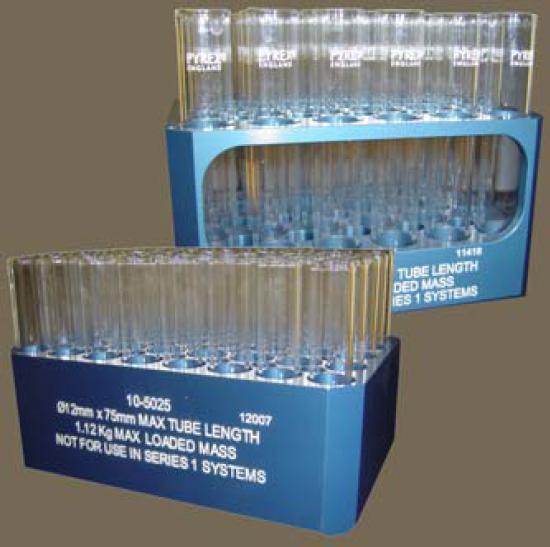
A new range of sample accessories designed to fit both the EZ-2 and HT-4 centrifugal evaporators is now available from Genevac. All items in the new “blue” sample holder range are available with short delivery times. An e-brochure provides technical information to help users identify the most suitable holders for their sample formats, and provides a list of sample holders and heat transfer innovations to optimize rapid and safe solvent removal from flasks, tubes, vials, microplates on Genevac's EZ-2 and HT series of evaporators. For applications requiring specific precautions, such as explosive or corrosive samples, special accessories are detailed.
For more information, visit http://www.genevac.co.uk/forms/options.html.
Guava Technologies
Guava EasyCyte Mini
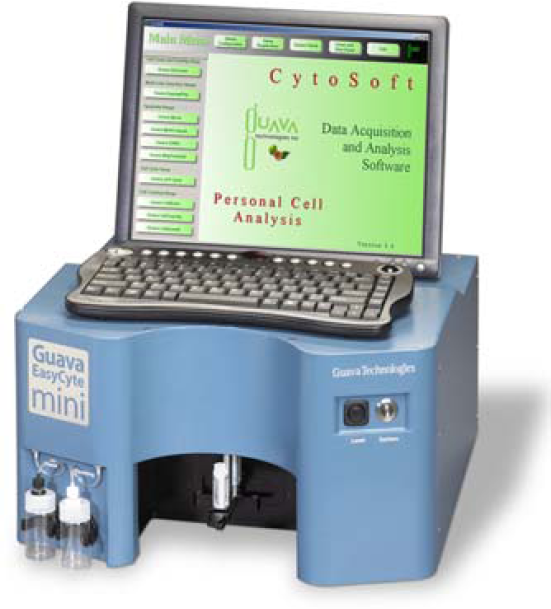
The latest addition to Guava's family of cell analyzers is the Guava EasyCyte Mini, which provides a solution to combined multicolor analysis and absolute cell counting.
Like other Guava platforms, the Guava EasyCyte Mini system incorporates enabling microcapillary technology, providing the advantages of small sample volume requirements in a very compact and easy-to-use system. The Mini system takes the Guava concept one step further by providing traditional blue laser analysis, thus expanding the selection of fluorescent dyes available to a Mini user.
The Guava EasyCyte Mini runs the entire suite of Guava's turnkey assays, enabling easy, fast measurements of GFP expression and viability, cell counting and viability, apoptosis, cell-cycle analysis, antigen detection, and more.
For more information, visit http://www.guavatechnologies.com, e-mail
Application Note: Cellular Analysis Using Easycyte System
A new application note that describes a novel multiplex approach to cellular analysis using the microplate-based Guava Easycyte system is now available from Guava Technologies.
The ability to obtain multiparameter information on compound behavior in the context of a living cell, quickly and easily, can be invaluable to the drug discovery process. The application note describes results for over 200 test cytoactive compounds in which the microcapillary-based Guava Easycyte system was used to measure Caspase 3/7 and 8 activities, mitochondrial membrane potential flux, phosphatidylserine translocation, membrane permeability, and cell-cycle disruption.
The reported results demonstrate how this combination of assays run on the Guava Easycyte five-parameter microplate cytometer can be used to identify both cell-cycle inhibitors and apoptotic inducers, as well as characterize their EC50 and quantify the percentage of cells affected. Furthermore, the detection of subpopulation effects for these compounds highlights the benefits of the Guava platform in analyzing populations at the single cell level.
For more information or a copy of the application note, visit http://www.guavatechnologies.com, e-mail
INTEGRA Biosciences
The new MEDIAJET is a next generation system from INTEGRA Biosciences that enables automated filling of up to 540 petri dishes at the push of a button. It incorporates a new mechanical dish guidance system, monitored by a set of sensors throughout the filling process. According to INTEGRA Biosciences, operational downtime and media loss due to dish jams resulting from variations in the diameter, shape, and rim profile of disposable plastic petri dishes can be completely eliminated with MEDIAJET.
For more information, visit http://www.integrabiosciences.com, e-mail
MicroCal
MicroCal has developed a novel Single Injection Method (SIM) for its Isothermal Titration Calorimetry (ITC) systems: the VP-ITC and AutoITC. This new technique provides application flexibility and enables higher throughput thermodynamic analysis of binding interactions than previously possible. Modifications to the injection system and stirring base of the VP-ITC allow for a broader range of cell stirring speeds and more precise injection rates that make SIM possible.
SIM technology provides a continuous, slow injection of ligand, producing differential power data that are converted into a binding isotherm. This is then fit to a binding model using a specific calorimetric analysis algorithm. SIM has been demonstrated to measure binding affinities between 103 M−1 and 109 M−1, and the data generated are comparable to those from a multiple injection ITC run producing precise measurements of changes in enthalpy (ΔH) and entropy (ΔS), binding affinity (K B), and the stoichiometry of binding (n). Depending on experimental conditions, a typical SIM experiment takes 20-50 min from the start of injection, whereas the same experiment using multi-injection methods requires 10-30 injections taking 45-120 min. With SIM therefore, throughput is greatly increased.
MicroCal's ITC solutions provide an accurate thermodynamic profile characterizing the binding of any two biomolecules, such as enzyme-inhibitor, protein-drug, protein-protein, antibody-antigen, and protein-DNA. These information rich data are obtained through the direct measurement of ΔH and the precise determination of ΔS, K B, and n. In addition, the VP-ITC and AutoITC instrumentation and data analysis software available from MicroCal, offer the perfect solution for more efficient drug discovery and development as well as rational or structure-based drug design. Furthermore, application of the SIM technology greatly enhances throughput and therefore enables faster, more in-depth characterization of molecular-binding mechanisms.
For more information, visit http://www.microcalorimetry.com.
Millipore
Tangential Flow Filtration Products
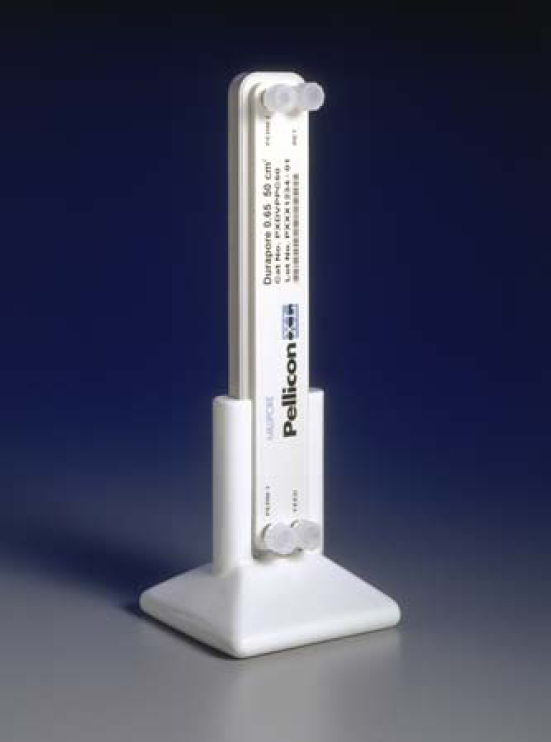
Two tangential flow filtration (TFF) products that allow researchers to easily and efficiently purify large volumes of protein-containing solutions are now available from Millipore. Applications typically include concentrating and desalting proteins from cell culture supernatants and fermentation broths. The high flux, low binding Millipore membranes used in these devices provide high protein retention and recovery.
Pellicon XL devices are available with a choice of Durapore PVDF membrane (microporous), Ultracel regenerated cellulose membrane (ultrafiltration), or Biomax polyehtersulfone membrane (UF), and membranes for concentrating and desalting from 100 mL to 2 L of protein-containing solution. According to Millipore, when compared to large stirred cell systems, Pellicon XL devices offer better flow rates with less processing time. Additionally, the devices can be docked with the Labscale TFF pump system from Millipore without the need for tubing or clamps.
For more information, visit http://www.millipore.com/bioscience, or call 800.MILLIPORE or 781.533.6000.
RiOs 3 Water Purification System
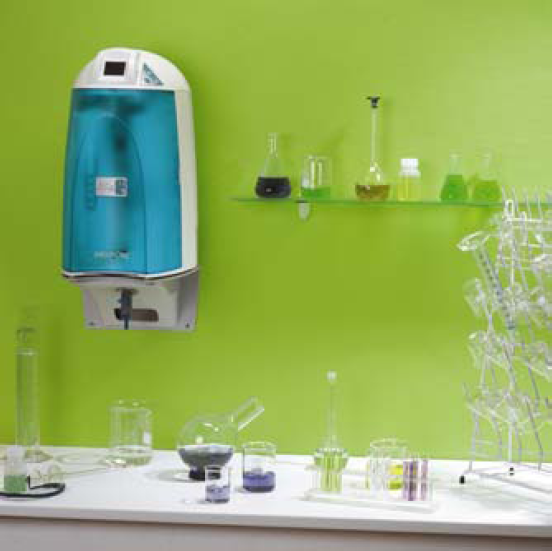
The new RiOs 3 water purification system from Millipore is designed to meet the needs of laboratories that require up to 30 L/day of high quality pure water from tap. This adaptable system is suitable for general noncritical laboratory applications such as manual cleaning and rinsing, and buffer preparation. It also can be used to provide feedwater for glassware washers, autoclaves, and humidifiers or as a pretreatment for ultrapure water systems, including Millipore's Synergy and Milli-Q systems.
The compact and lightweight (7.0 kg/15.4 lb) RiOs 3 system can be wall or bench mounted. Type III reverse osmosis product water is produced at a flow rate of 3 L/h at 20 °C. This product water is typically >94% free of ionic contaminants and >99% free of organics, bacteria, and particles. The water can be used on demand or stored in the integrated 6-L reservoir in optimal condition for use when needed.
For more information, visit http://www.millipore.com/bioscience, or call 800.MILLIPORE or 781.533.6000.
Protein Blotting Handbook
Millipore now has available the fifth edition of its Protein Blotting Handbook. It includes techniques for protein blotting, including 17 protocols for protein transfer, visualization, and immunodetection. This handbook also contains a detailed troubleshooting guide and several innovative methods, such as the Rapid Immunodetection Method that reduces detection time by several hours and the Double Blot Method that eliminates nonspecific binding.
Protein blotting is a key technology used by protein laboratories to detect low amounts of proteins in complex samples or monitor protein expression and purification. The handbook's membrane selection guide compares and contrasts the two most commonly used membranes for Western blotting applications. It also defines the basic principles and methods for process optimization. The protocols section is a compendium of both traditional blotting-detection methods, such as dot, slot, and Western blots, and other specialized procedures.
For more information or to obtain a copy, visit http://www.millipore.com/eblotting, or call 800.MILLIPORE or 781.533.6000.
NUNC

According to NUNC, one major problem in growing stem cells is the attachment to the surface of culture dishes and plates, causing them to differentiate. A new, low-cell-binding (LCB) surface from NUNC prevents cell attachment by presenting a phosphorylcholine moiety to cells, thereby mimicking the surface of a cell membrane. The surface is non-animal-derived, biologically inert, biocompatible, and ready for use with no prehydration step.
Typical applications for NUNC LCB plates include culture of suspension cells, stem cells, spheroids, embryoid bodies, and macrophages. The LCB surface resists protein adsorption, a benefit for measuring soluble cell products in low concentration.
The new surface is available in 60- or 90-mm dishes, or 6-, 12-, 24-, or 96-well plates, all clear, sterile, made with polystyrene, and irradiated.
For more information, visit http://www.nuncbrand.com, e-mail
PANalytical
A research program examining X-ray diffraction thin film stress analysis techniques has been conducted by PANalytical in cooperation with the Max Planck Institute for Metals Research. According to PANalytical, the program results are providing it with the scientific and practical basis to develop new commercial applications of residual stress analysis on polycrystalline thin films, coatings, and surfaces.
A scientific review article about the collaboration is available at http://www.panalytical.com/thinfilmstress.
Porvair Sciences
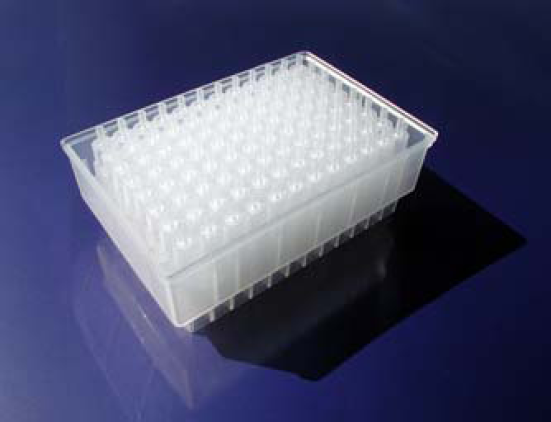
A new application note from Porvair Sciences describes the operational benefits of using its Microlute Solid Phase Extraction (SPE) system for analysis of drugs and drug metabolites in biological fluids.
Based on independent customer data, the application note describes how the SPE, prime wash, and elution volumes stages of sample preparation are significantly reduced using the Microlute, allowing faster sample processing and increased method sensitivity. The application note further shows that the individual well capacity of the low sorbent mass phases used in the Microlute is more than sufficient for the needs of analyzing the typically low levels of pharmaceutical drug metabolites found in biological fluids.
For more information or a copy of the application note, visit http://www.porvair-sciences.com, e-mail
Protedyne
Protedyne has fully automated Promega's P450-Glo assay kits on its BioCube System SX1400, providing an automated solution for high-throughput screening of cytochrome P450 activity. Cytochrome P450 enzymes play a pivotal role in the metabolism of drug compounds. Detecting adverse compound effects on enzyme activity at an early stage reduces attrition of toxic compounds in later stages of drug development.
The BioCube System configured to run the P450-Glo kits includes a fully enclosed four-axis robot with interchangeable tools, 20 position work deck, plate gripper SmartTool, 384-channel 20-μL SmartTool, 160 plate capacity carousel, tip box storage, and shaker towers. The system is capable of processing 51,840 samples (135 assay plates in 384 format) during an 8-h day.
An application note on this process is available at http://www.protedyne.com.
Radleys Discovery Technologies
Application Note: Metz Syn10 Reaction Station and Microbiological Research

A new independently researched and written technical report concludes that the Metz Syn10 Reaction Station shows great potential for applications in microbiological research. According to Radleys its Metz Syn10 is a compact, simple to operate instrument offering the facility to simultaneously carry out up to 10 reactions, with variable heating, cooling, refluxing, and stirring, from −30 to +150 °C.
In the context of microbiological research, the report demonstrates that the main benefit of the Metz Syn10 over conventional incubators is its exceptional control of temperature gradients, and the ability for different experimental profiles to be run simultaneously. The instrument is also shown to perform complex temperature profiles, which should enable diurnal temperature changes to be simulated.
The independent report includes an evaluation of the Metz Syn10 software and hardware, and analyzes the results of a series of experiments to compare the thermal behavior of different natural materials. The importance of flow rates, stirring patterns, temperature gradients, and use of different reaction vessels are investigated.
For more information and a copy of the report entitled “Adaption of the Metz Syn10 for Microbiology Applications”, visit http://www.radleys.com, e-mail
Laboratory Reactors and Lara Controlled Laboratory Reactor
Radleys Laboratory Reactors and Lara Controlled Laboratory Reactor (CLR) system are now available with new features intended to benefit pharmaceutical companies studying crystal morphology. A new split-jacketed reaction vessel option offers chemists several significant advantages. By stopping the flow of thermal fluid through the top half of the reactor, the split-jacketed jacket maintains a cooler internal surface than traditional reactor vessel designs. This technological advance reduces the incidence of crystalline deposits baking onto the inside of the vessel, above the surface of the liquid, improving yields and cutting down on time lost in cleaning between reactions. In addition, the split-jacket design lends itself to facilitating in-process monitoring of crystals. A split-jacket can be fabricated to provide a single wall viewing area between the upper and lower jacketed areas. This area can then be used to locate a video camera or microscope to view the formation of crystals within the vessel.
Radleys now also offer a new V4 zero dead space stopcock for its Laboratory Reactors and Lara CLR systems. Designed to enable quick, easy, and safe removal, the new valve eliminates the cleaning and removal problems associated with traditional stopcock designs. Its zero dead volume format ensures that all the vessel contents are stirred and heated/cooled evenly. The valve, available in 15 or 25 mm nominal bore to suit different vessel sizes, is manually operated to open for sampling or removal of contents. Constructed from borosilicate glass, PTFE, and FEP encapsulated silicone, the new V4 valve offers high chemical resistance and operates over the temperature range −50 to +200 °C. For more demanding applications, optional high performance o-ring materials are available.
For more information, visit http://www.radleys.com, e-mail
RDT Titan Range of PTFE Microplates
A new range of PTFE microplates for applications including storage of diverse compound libraries, collection of aggressive chemicals and compounds, as well as heated or cooled combinatorial chemistry reactions, is now available from Radleys Discovery Technologies. Manufactured from the highest grade, branded polymer, the new RDT Titan range of PTFE plates are manufactured to precise specifications and tolerances. Each plate meets SBS standards to ensure maximum productivity when used with robotic processing and automated liquid handling systems.
RDT Titan microplates are available in a choice of 24, 48, 96, and 384 round and square well formats, offering sample volumes from 100 μL to 10 mL, as optimized. They can be provided with a radial gas distribution system and gas-tight PTFE caps for air sensitive reactions under an inert atmosphere. These plates can be chemically or thermally sterilized, and are compatible for use with all leading centrifuges and vacuum centrifuges.
In terms of chemical resistance, the RDT PTFE microplates can be considered totally inert. They offer thermal stability to 300 °C, and are microwave compatible. RDT Titan plates are fully traceable back to the raw material manufacturer and will never contaminate samples.
For more information, visit http://www.radleys.com, e-mail
Syrris
The Lara Coflux reaction monitoring and calorimetry system from Syrris is now available in the U.S. Coflux and uses a new form of calorimetry known as constant flux (CF), which according to Syrris, offers high levels of performance and flexibility at a low price. CF technology is accurate and fast, needs no devices inside the reactor other than a temperature sensor, and allows real-time display of power and enthalpy. Coflux is designed to integrate with the modular and flexible Lara CLR system.
For more information, visit http://www.syrris.com, e-mail
Tecan
HS 400 Pro and HS 4800 Pro
Tecan's new HS 400 Pro and HS 4800 Pro are based on the HS series of hybridization stations, and are designed to maximize the reproducibility and reliability of microarray research by providing fully automated slide processing, from prehybridization to automated slide drying. These new instruments help to generate less background and fewer artifacts, while increasing detection sensitivity.
For more information, visit http://www.tecan.com, e-mail
LaserCheck Quality Assurance Tool
The new LaserCheck quality assurance tool from Tecan is a solid-state diagnostic tool that ensures continued performance of Tecan's LS and LS Reloaded series of microarray scanners by comprehensively testing the optical, mechanical, and electronic systems. LaserCheck operates a 45-min, 100-point diagnostic test using a wide-spectrum fluorescent dye, which is resistant to laser bleaching, to check the multiple lasers present in the LS series scanners, and provides documented test verification in both electronic and hard copy formats.
For more information, visit http://www.tecan.com, e-mail
Thermo Electron
VN Absolute Specular Reflectance Accessory

Thermo now offers the VN Absolute Specular Reflectance accessory for use with its Evolution 300/600 UV–Vis spectrophotometer series. The Absolute Specular Reflectance accessory incorporates the VN optical design, which according to Thermo, provides significant advantages over other available specular reflectance methods. The new Thermo VN accessory has research and QC applications for antireflective coatings, multilayer coatings, multilayer dielectric coatings, thin films, and laser mirrors. The accessory is particularly applicable for the optical and material science industries where Thermo is already well known for its leading FTIR solutions.
For more information, visit http://www.thermo.com/uv-vis, e-mail
Carousel Autosampler Accessory

The new Carousel Autosampler accessory from Thermo Electron is designed for use with its Nicolet Almega XR dispersive Raman microscope and NXR FT-Raman spectrometers. It automates the collection of Raman spectra from multiple samples and is designed principally for routine analysis environments such as QA/QC laboratories.
For more information, visit http://www.thermo.com/raman, e-mail
LCQUAN 2.5 Data Acquisition Software for Finnigan
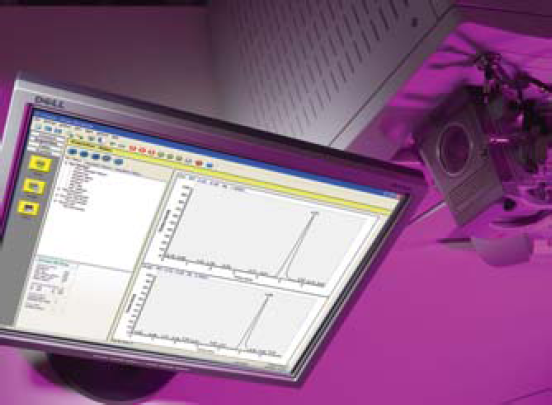
A new, improved LCQUAN 2.5 data acquisition software system is now available for Thermo's Finnigan TSQ Quantum series of triple quadrupole mass spectrometers. It features a bidirectional interface with Thermo's Watson LIMS 7.2.0.01 to provide secure, digital data transfer that is tailored for bioanalysis.
LCQUAN 2.5 enables 21 CFR Part 11 compliance (treats electronic records the same as paper records), and includes several additional new features. These include remote disc support that allows accessing and processing data from secure remote discs; a workbook-style, centralized file location for fast, easy data archiving and retrieval of relevant project files; a one window, and a quantitation environment that features a step-by-step workflow process for easy data acquisition and review.
For more information, visit http://www.thermo.com/ms, e-mail
Proteus Protein Analyzer System
The Proteus protein analyzer system is a new complete instrumentation package from Thermo that is based on FTIR technology and uses a Nicolet series FTIR spectrometer to nondestructively scan protein samples for structural defect and impurity analysis as well as process quality monitoring. The instrument is principally designed for QA/QC and basic research in pharmaceutical research organizations. The Proteus protein analyzer is available as a complete system, or as a kit for existing Nicolet 4700, 5700, 6700, or 8700 FTIR spectrometers.
For more information, visit http://www.thermo.com/ftir, e-mail
Migration Agent
Migration Agent is a professional services and software solution from Thermo that reduces risk and overcomes business challenges when migrating from any existing LIMS to a Thermo LIMS. Migration Agent employs service personnel for project management and implementation, as well as an extract, transform, and load tool to migrate data to deliver an effective and predictable migration.
For more information, visit http://www.thermo.com/informatics, e-mail
Application Note: ToxLab 2.0 Intelligent Sequencing Software

Thermo Electron offers a new application note for its ToxLab 2.0 Intelligent Sequencing Software. The application demonstrates the benefits of using the software for analysis of urine samples in drug testing and toxicology laboratories. The solutions maximize productivity and profitability for high-throughput laboratories where accelerated turnaround time and minimum cost-per-sample are vital for achieving productivity goals. Significant annual savings can result from the use of ToxLab 2.0 for sample acquisition and analysis.
For more information, visit http://www.thermo.com/gc, e-mail
Click-On and Super Clean Gas Filters
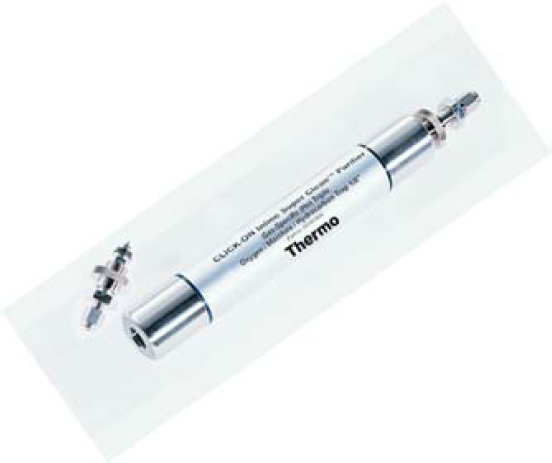
Two new gas filters from Thermo, the Click-On and Super Clean, are designed to address the needs of GC and GC/MS users in the environmental, food and beverage, flavor and fragrance, and petrochemical and chemical industries, who filter gas to improve analysis. The Click-On inline and Super Clean cartridge gas filters improve the quality of the gas going into the system (99.9999% pure or 6.0 grade), providing better analyses, compound identification, and quantitation. They feature moisture, oxygen, and hydrocarbon removal options as well as combinations of the three. Column lifetimes are prolonged by eliminating the damage associated with oxygen presence.
For more information, visit http://www.thermo.com/gc, e-mail
Galileo LIMS v 3.1

Galileo LIMS v 3.1 from Thermo Electron provides additional functionality to increase efficiency in the demanding high-throughput environment of in vitro ADME/Tox discovery laboratories. Highlights of the latest release of this LIMS include automatic results flagging, using a three-color system to indicate acceptance, rejection, or flagging of results; rapid study entry to accelerate the entry of concentration or raw data from analytical instrument into the LIMS; the addition of “IC50 shift”—a new experiment type to elucidate enzyme inactivation; and support for PAMPA permeability studies that are important in early screening of compounds. In addition, Galileo now interfaces with more analytical instruments, including a bidirectional digital interface to Xcalibur v 1.4 and 2.0, the controlling software for Thermo's line of mass spectrometers.
For more information, visit http://www.thermo.com, e-mail
Evolution 600 UV–Vis Spectrophotometer

The new Evolution 600 UV–Vis spectrophotometer by Thermo Electron is designed for excellent performance and flexibility in material science, life science, and general research analyses. According to Thermo, it is capable of analyzing virtually any sample such as optical components, thin film, glass, and plastics regardless of shape, size, or composition to enable analysis of samples not previously possible by instruments in this price range. In addition, this new instrument features enhanced performance specifications including improvements in dynamic range, resolution, wavelength accuracy, and photometric noise. Accessories for analyzing solid samples include a diffuse reflectance accessory, a VN absolute specular reflectance accessory, and a solid sampling accessory.
For more information, visit http://www.thermo.com/spectroscopy, e-mail
DFS Applications Brochure
A new brochure is available for DFS, Thermo Electron's new high-resolution GC/MS for trace and target compound analyses. According to Thermo, the DFS is the first completely new double focusing sector mass spectrometer of its class in more than 15 years. The new 18-page brochure provides scientists with key applications in trace compound analysis in sports doping as well as environmental contract laboratories and governmental authorities monitoring food, feedstuff, and environmental compartments with a complete guide to this new technology.
For more information or a copy of the brochure, visit http://www.thermo.com/dfs, e-mail
THK America

A new generation of complete motion control packages is now available from THK America as the result of a strategic alliance with Yaskawa Electric. According to THK, this new complete motion control package is the perfect fusion of its new high performance, low-cost VLA series of linear actuators with Yaskawa's Legend Servo Amp & Controller and Sigma II servomotors. It is an integrated, out-of-the-box motion control solution.
For more information, visit http://www.thk.com, e-mail
Velocity-11

BioCel 1200 is Velocity-11's new automated sample processing platform. With a footprint of 2 by 1.2 m, the BioCel 1200 is considered by Velocity-11 to be the most compact system on the market that is capable of automating a wide range of applications, spanning from compound plate replication and HTS assays in drug discovery research to nucleic acid sample preparation in genomics laboratories.
The BioCel 1200 uses the high-speed central robot found in the BioCel 1600 with the new capability of robotic reach outside of the system frame. This feature, combined with space-saving sliding doors, is designed to permit the flexibility to easily integrate large readers, compound stores, or other devices into the system. The new design also enables future expandability by combining multiple units with plug-and-play simplicity. The BioCel 1200 is operated with Velocity-11 VWorks automation control software.
For more information, visit http://www.velocity11.com, e-mail
Viscotek

The Model 270 Dual Detector from Viscotek is an entry-level system for detailed characterization of proteins, and other biomolecules. The Model 270 may be configured as a stand-alone Low Angle Light Scattering (LALS) detector or as a LALS and Viscometry dual detector. The Model 270 can be added to any commercial GPC/SEC system equipped with a concentration detector, instantly converting it into a powerful triple detector system.
Previously only available on Viscotek's TDA system, LALS detection is now available on an entry-level system. This means that for a wide range of proteins, peptides, and biomolecules, researchers can make routine direct determination of absolute molecular weight on the affordable Model 270. Unlike multiangle light-scattering (MALS) techniques that can only determine molecular weight by extrapolation, the model 270 LALS measures molecular weight directly and thus is considered by Viscotek to be more accurate. Incorporating patented optical technology that will effectively operate at an angle of only 7°, the LALS detector represents a major breakthrough in light-scattering technology. Configured with an additional differential viscometer, the Model 270 can provide further information including hydrodynamic radius, density, and conformation as well as provide structural data such as branching and aggregation.
For more information, visit http://www.viscotek.com, e-mail
More News
The In October 2005, the Nobel Prize in Chemistry was awarded jointly to three researcher teams: Robert H. Grubbs, and Victor and Elizabeth Atkins, Professors of Chemistry at the Since then, In addition, Wyatt announced that Richard Schrock of MIT uses a mini DAWN, a triple angle light-scattering detector for the measurement of absolute molecular weight, size, and conformation of macromolecules in solution.
For its systems, consumables, and software,
According to
For easier browsing and faster access, tutorials published in the
The The
Researchers at the Department of Geosciences at
The
Calls for Papers
March 15 is the abstract submission deadline for the Fourth International Forum on Life Science Automation, which will be held September 14-15, 2006, in Rostock, Germany. Core topics include high-throughput screening, high-end analytics, chemistry, biotechnology, real-time systems, automation assessment. For more information, visit http://www.lifescienceautomation.com or e-mail March 16 is the submission deadline for the
Lab automation professionals are invited to showcase their achievements by submitting method-focused scientific papers for publication consideration. Manuscript guidelines and submission information are available at http://labautomation.org/jalainstructions.php.