






Abstract

Overview
Chemical microarrays are applied by Graffinity as part of a proprietary drug discovery platform. Following you will find an overview of the Graffinity automated systems and processes for array production including: Production of Chemical Microarrays; Spotting of tagged compound; End-capping of active “anchor”-modules; Storage of chemical microarrays; Current system set-up. A specific focus is related to the results of the use of an automated storage device—the Kendro Cytomat 6002. Next to an optimized environmental control also the time and therefore cost saving issues are mentioned here.
Introduction
Low-affinity screening using tethered drug fragments on chemical microarrays is a highly promising approach for the rapid discovery and optimization of small molecules on the way to new drugs. 1 Such microarrays are applied by Graffinity as part of a proprietary drug discovery platform which combines chemistry and biology with physics, information technology and microsystem technology. 2 They provide detailed chemo-biological information of examined proteins for the subsequent “RAISE” process (Rapid Affinity Instructed Structure Evolution). In this process, small organic molecules are developed in an evolutionary way directed by their interactions with proteins. Detection of protein binding is facilitated by high sensitivity label-free imaging, which is based on the phenomenon of surface plasmon resonance (SPR). 3 In Graffinity's setup, a wavelength shift that corresponds to the increase of mass concentration on the chip surface during binding between the solubilized protein and the immobilized chemical substances is recorded. Currently, the Plasmon Imager® devices are capable of routinely processing 9.216 measuring points simultaneously in a four-fold parallel fashion.
Methods
Production of Chemical Microarrays. The Micro-arrays consist of gold-coated micro-structured glass plates with MTP-size footprint or with microscope slide-size footprint (Figure 1). A microstructuring step creates individual sensor fields which are separated from each other by means of an optical dense material. This microstructure then is coated homogeneously with a 600 Å layer of gold by vacuum deposition (Figure 2a). Next step before spotting of the individual screening compounds, is the coating of the whole array with a self-assembled monolayer (SAM). 4 The surface preparation was developed by Graffinity to enable the immobilization of chemical compounds while preventing the nonspecific binding of proteins. The layer consists of “anchor” molecules that act as a binding point for the tagged screening-compounds and “diluter” molecules that are needed for adjusting the desired ligand surface concentration (Figure 2b).
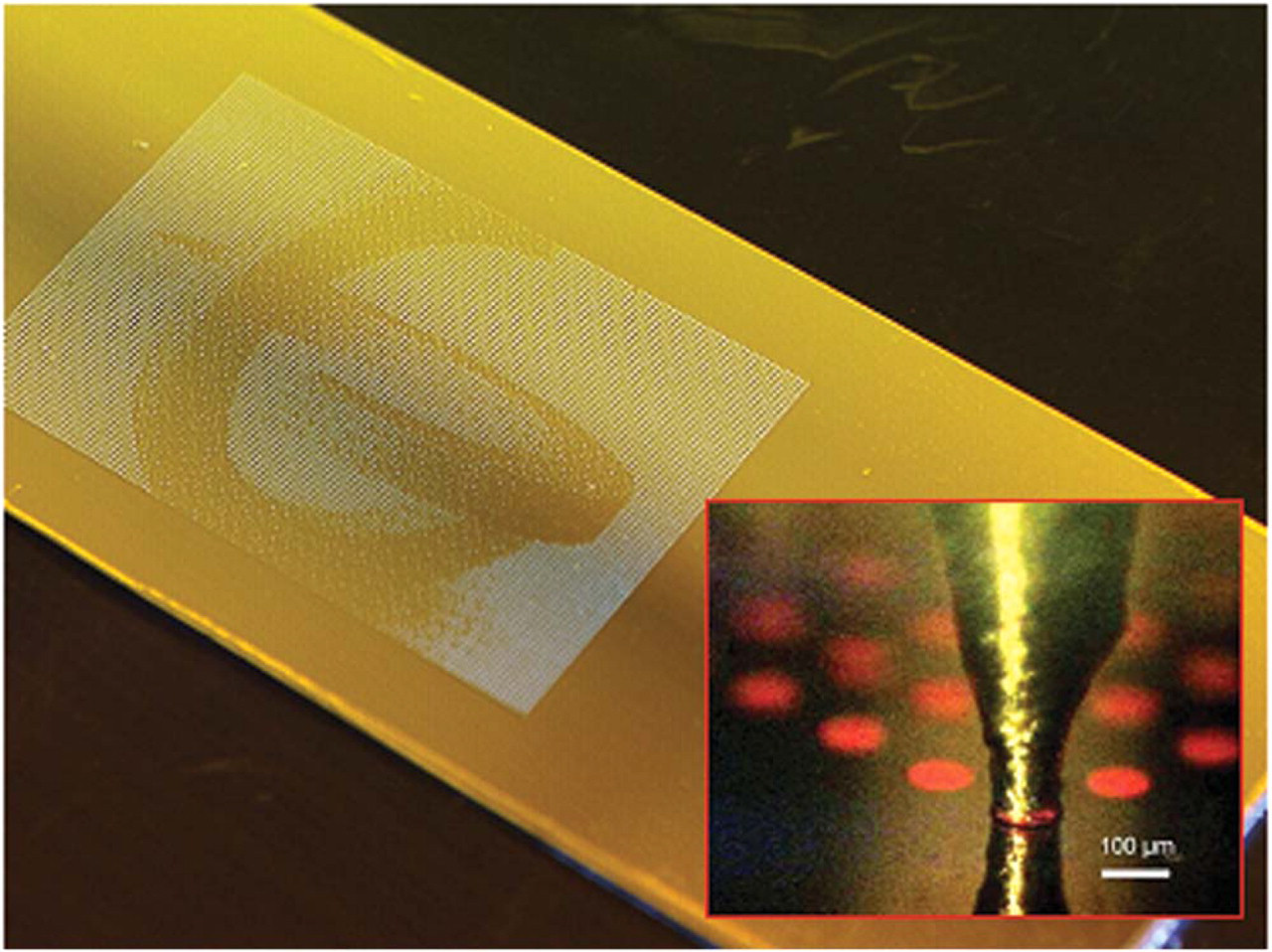
Slide-size chemical microarray. Enlarged, the spotting of one single pin onto the surface is shown.
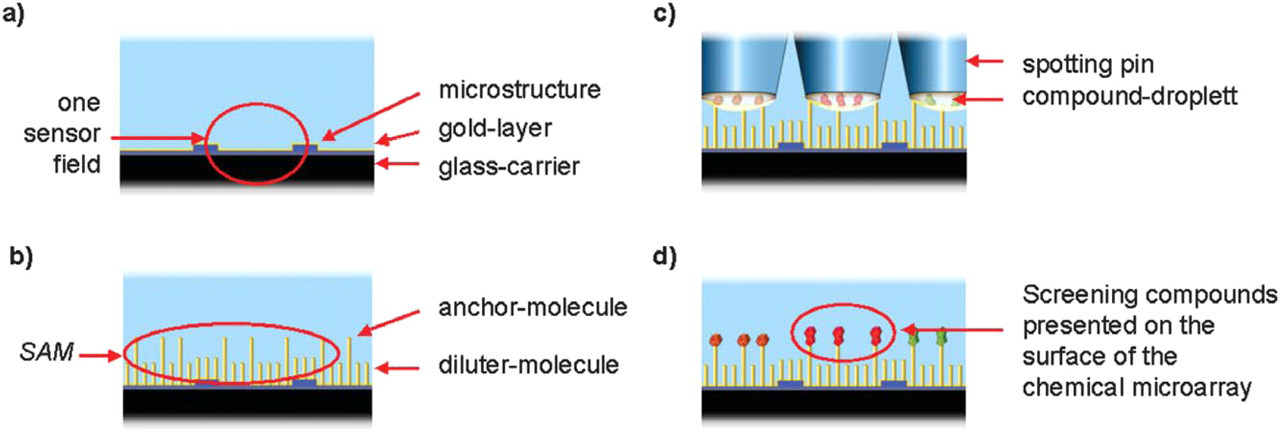
Schematic representation of the production process of a chemical microarray; including surface structure, SAM -formation, and spotting of chemical library compounds.
Spotting of Tagged Compounds. The transfer of chemical compounds onto the surface of the microarrays is achieved utilizing the HTSpot® procedure. The spotting of the substances is reliable and precise, placing compounds onto the microarrays in a custom-built automated environment to ensure both quality and reproducibility at high-throughput (Figure 3). The demanding point is the exact alignment of the spotting tool toward the sensor fields. An optical identification of the sensor fields and computer-controlled adjustment of the spotting tool for each spotting step (384 compounds are spotted in parallel) ensures the right placement of the nanoliter droplets on the sensor field and the saturation of the binding-points (Figures 2c and 2d).
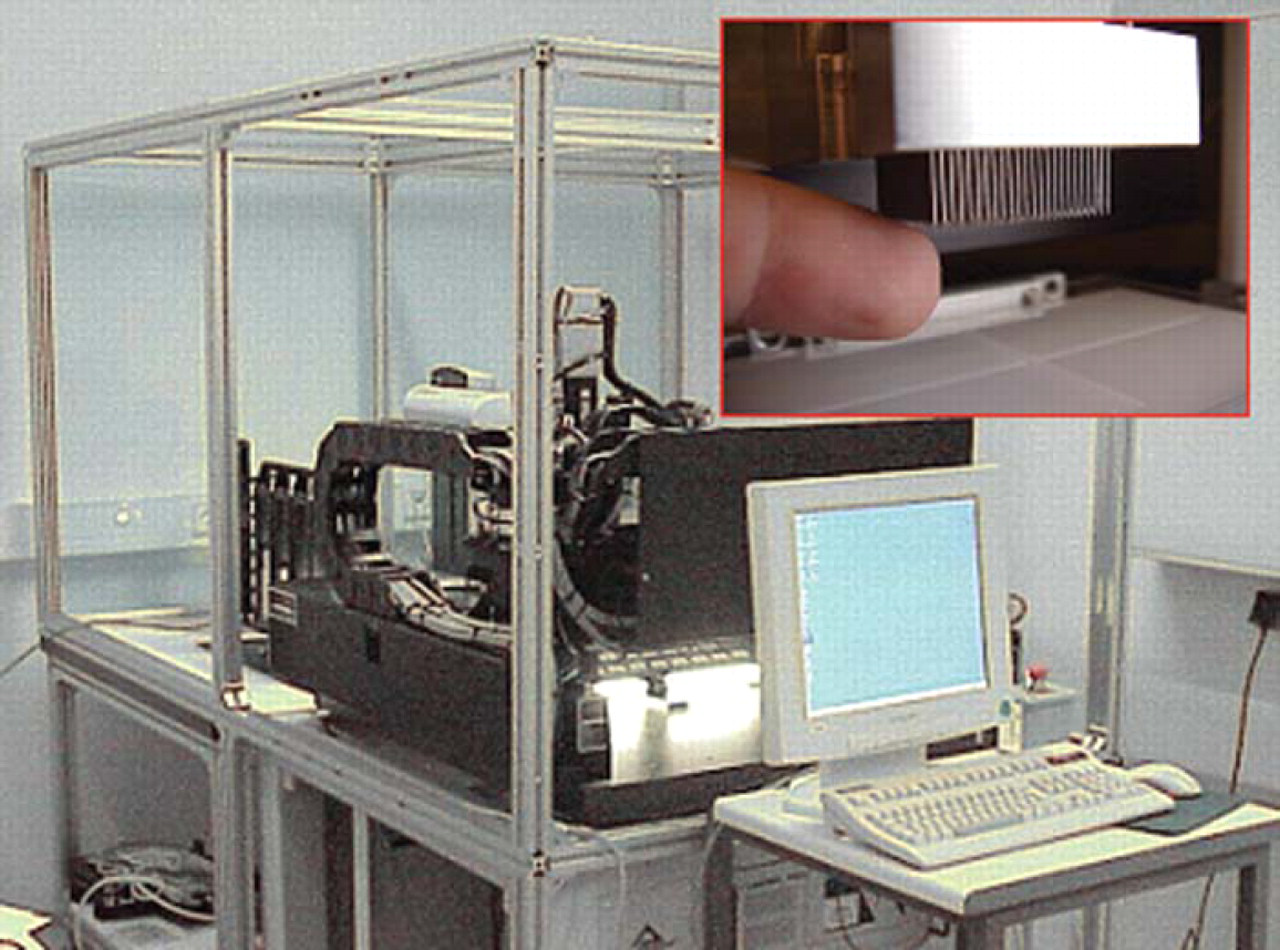
In-house developed spotter for the slide-size micro-arrays. Enlarged, the spotting pin array (384) can be seen.
Endcapping of Active Anchor Molecules. In the final step, active anchor molecules on the rims of the sensor fields which have not reacted with tagged screening compounds will be endcapped with a suitable, non-protein-binding compound.
Storage of Chemical Microarrays. Due to the very low concentration of the screening compounds on the surface of the array, utmost care have to be taken to ensure a stress-free chemical environment during storage. Graffinity choose a modified Kendro Cytomat 6002 for storage of its valuable chemical microarrays prior to the screening (Figure 4). Storage is done in an inert atmosphere of nitrogen with a controlled trace level of oxygen below 2% at 4°C and in the dark. To minimize the oxygen-level which rises during the loading respectively unloading of the arrays, an argon-swept compartment was built around the array-handling door of the Cytomat 6002. To reach the residual oxygen concentration of <2% additional sealing actions are necessary. The instrument is fully controlled by an in-house written software. The system is connected to a Oracle™ database that holds all relevant information about microarray ID, barcode, storage-position and storage date. Via the micro-array ID all information concerning spotted library, surface concentration and QC-relevant production parameters like solvent batches, operators etc. are accessible (Figure 5).
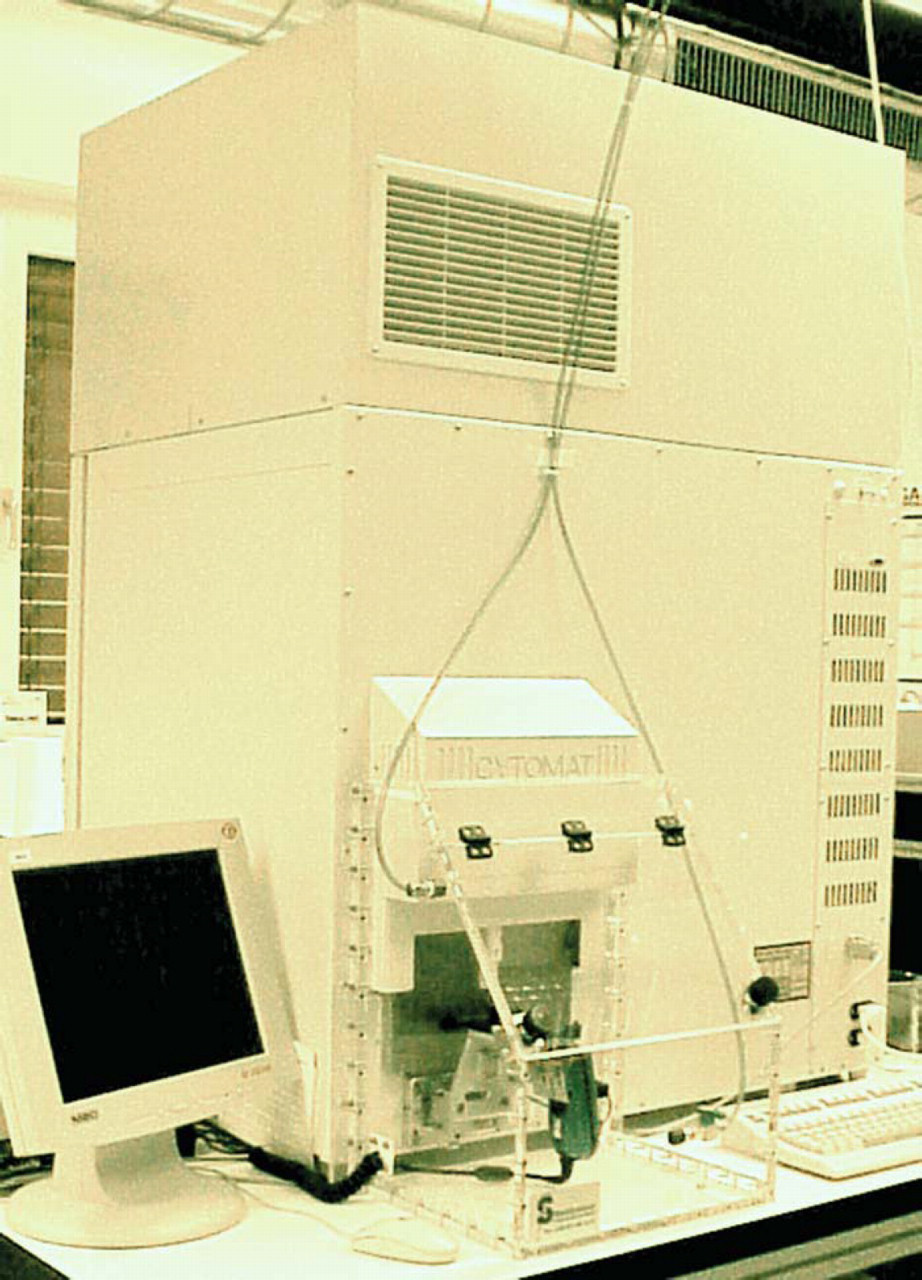
A modified Kendro Cytomat 6002 for the storage of chemical microarrays. In front of the instrument at the transfer station the additional argon-flushed housing can be seen.
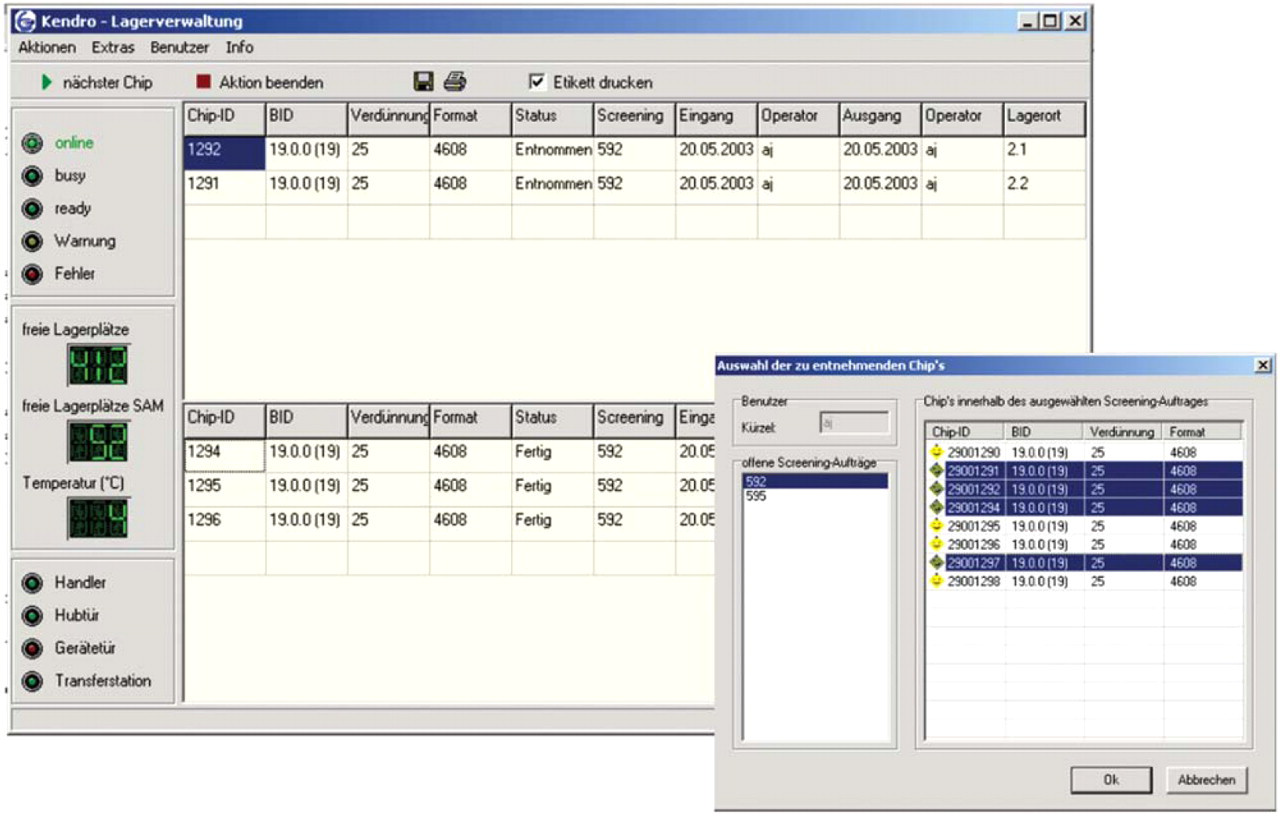
Screenshot of the in-house written software for hardware-control of the Cytomat 6002 as well as the Oracle™ database-connection.
Kendro offers customized solutions as a part of their supply of services. With a modified storage assembly the Cytomat holds up to 700 MTP-footprint microarrays or up to 2.800 slide-footprint microarrays (four of them in a MTP-footprint holder). The two different microarray sizes might be mixed in the system. Storing and handling microarrays in automated systems requires a slightly different approach when comparing it to microtiterplates. Microtiterplates are mainly made of polypropylene or polyethylene. The gold-coated micro-structured glass is a lot more sensitive to mechanical damages especially when doing an optical read as the next step. Special modifications have been made from Kendro to their Plate Shuttle™ System (PSS). The micro-arrays are stored in so-called stackers (Figure 6). To prevent scratches the storage levels of these stackers are coated with PTFE. Plate, respectively, microarray handler (for transportation between inside and outside of the environmentally controlled atmosphere) as well as the transfer position (Figures 7 and 8) are also modified with additional protection for the glass surface of the arrays.
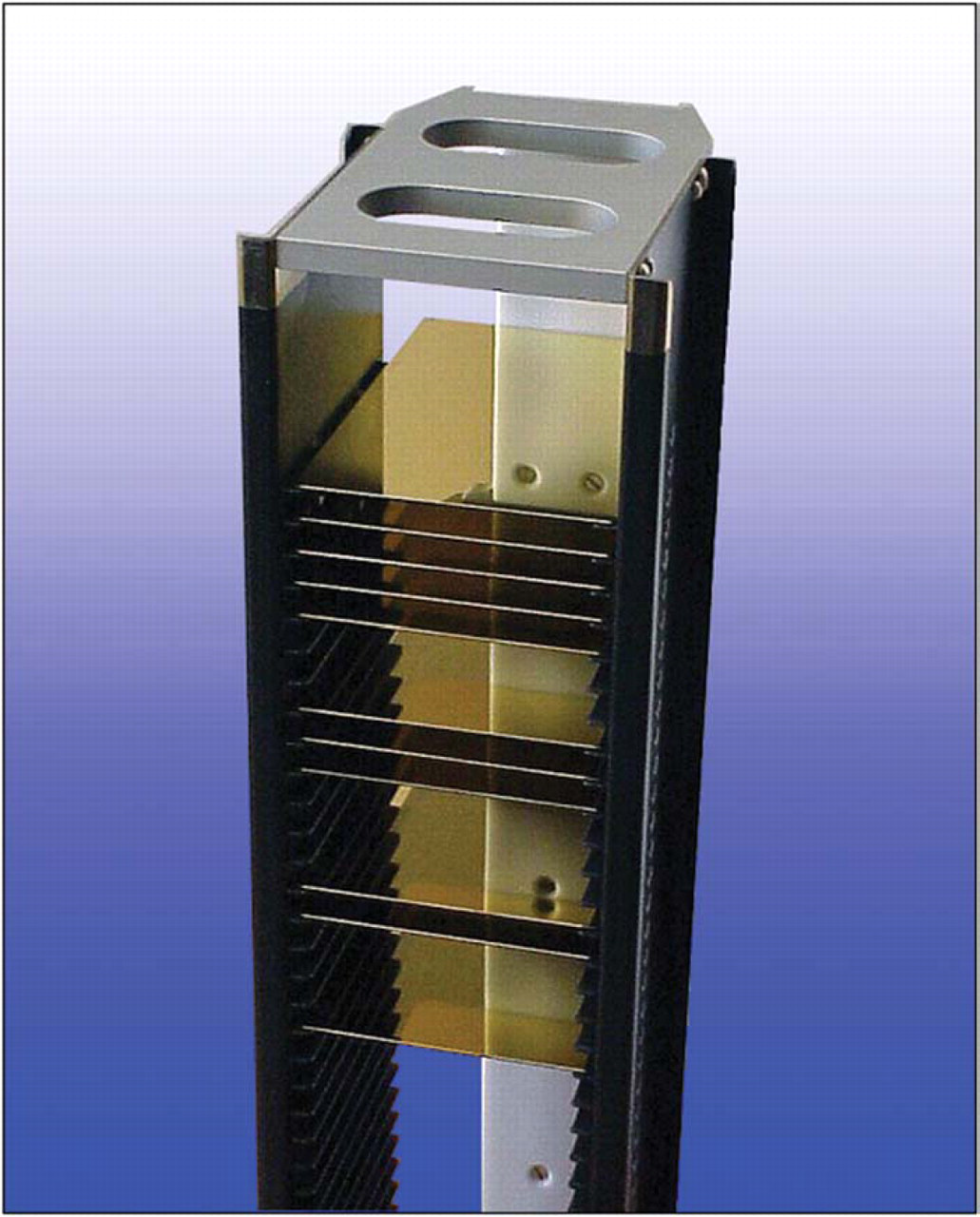
One stacker of the Kendro Cytomat 6002, modified to store Graffinity's microarrays instead of MTPs.
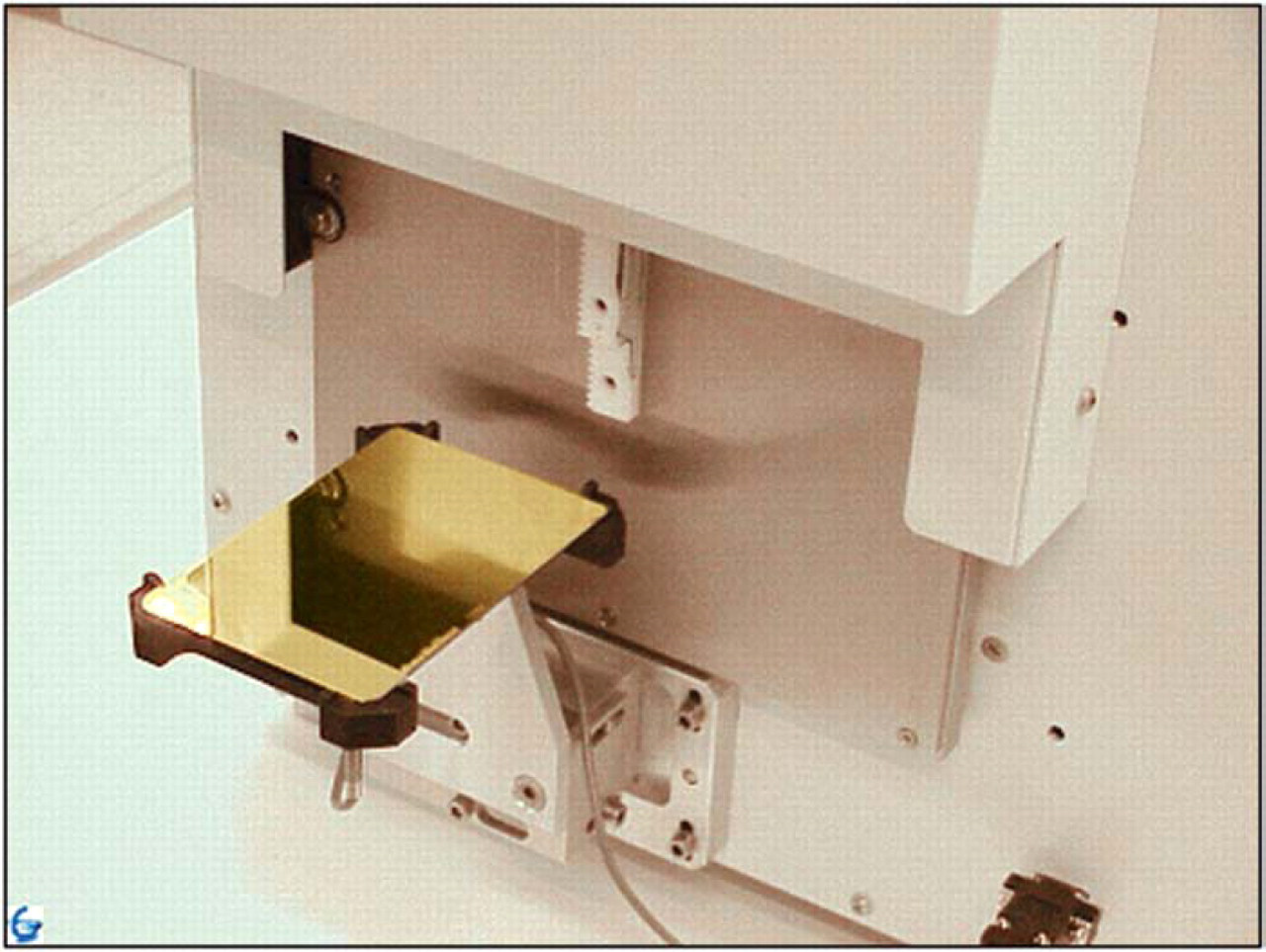
Transfer station of the Kendro Cytomat 6002 handling an MTP-size microarray.
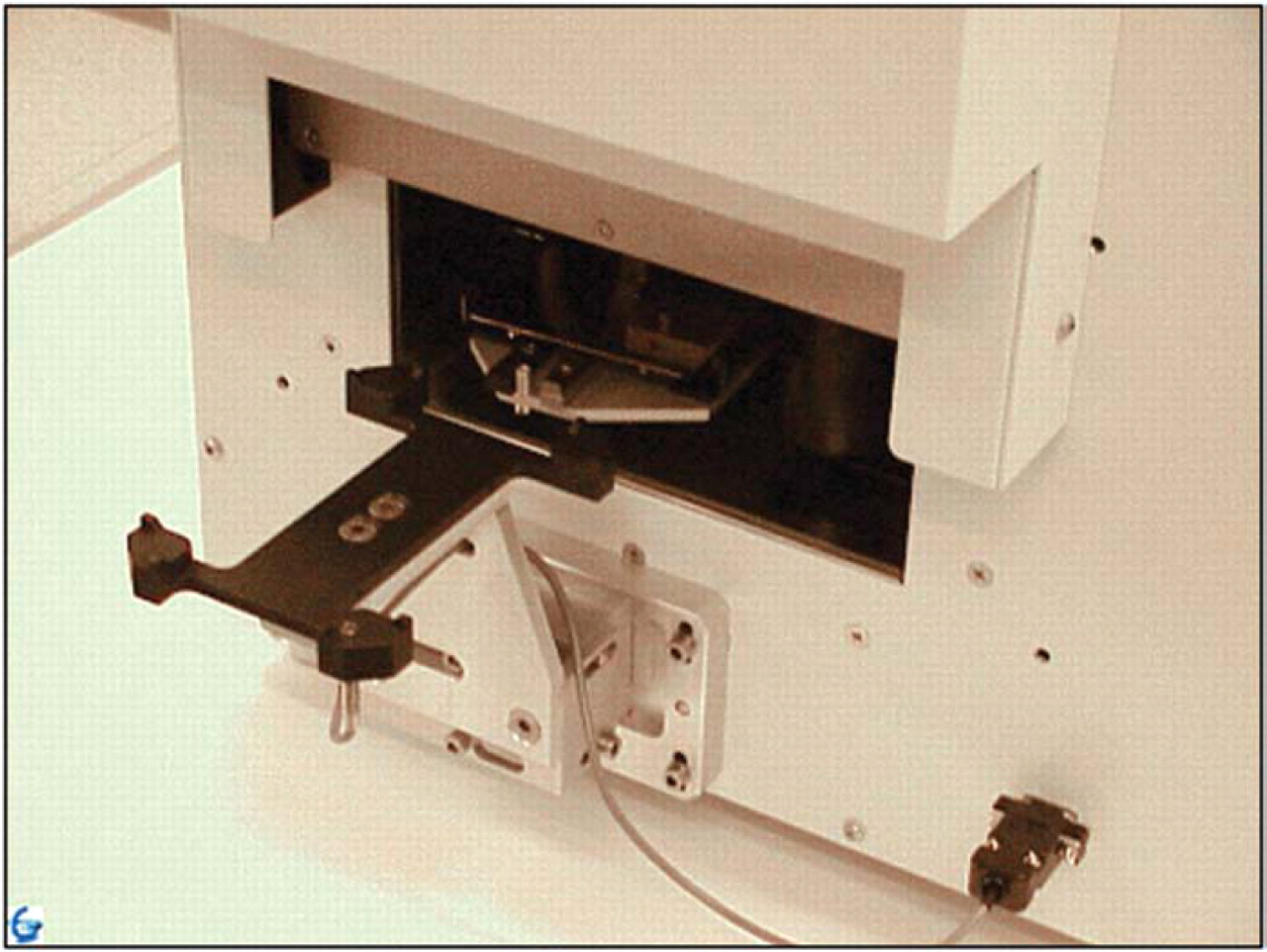
Transfer station moving an MTP-size microarray into the storage device.
Results
The automated system helped to increase throughput and flexibility of array production and screening. Several, in the past tightly linked steps could be demerged, i.e., chip production, spotting&endcapping and finally screening. Before the system was established the arrays were produced on demand to avoid damage during handling and storage that means each array batch was produced directly before the screening was done. Consequently, screenings had to be scheduled over several days. Now, the desired arrays can be selected from the available stock. This, for example, enables screening operators to start subsequent screening experiments like on-array competion experiments immediately after first binding results are obtained. Further, the controlled environmental conditions in the Kendro storage system enabled Graffinity to produce SAM-coated chips once a week in bigger batches and store them prior to the spotting step. The untreated, reactive SAM-coated chips are the most delicate intermediates in the overall process and had to be processed immediately in the past.
Next steps
Linking of the Kendro Cytomat 6002 to the SAM-coating device, to the spotting robot and to the endcapping-device by the mean of a 5 axis handling-robot. Use the above-mentioned robot to sort desired arrays into transportation boxes for the screening department, on demand.
CONCLUSION
The automated storage system helped to increase the throughput by increasing the flexibility of the overall process. The much better controllable environmental conditions allowed a much longer storage time of the chemical micro-arrays. The latest generation of arrays has microscopy-slide size with up to 9,600 spots. To use the capability of the Kendro Cytomat 6002 (e.g., single point of integration), we are thinking of a direct integration to our chip production and spotting system.