






Abstract
During the two decades after the Cold War, interactions between the peripheries of the former Soviet bloc and their neighboring regions activated to the extent that what can be called the New Border Regions emerged. To analyze this phenomenon, the paper proposes a new methodology – cultural geopolitics. While classic geopolitics focused on military, economic, and other material resources exploited by sovereign states (modern empires), cultural geopolitics highlights cognitive crafting by transnational actors, such as religious organizations, transborder nationalities, transnational corporations, and NGOs. Cultural geopolitics exploits the achievements that recent empire and religion studies have made. Cultural geopolitics facilitates the understanding, for example, of the Black Sea Rim region as a typical New Border Region.
The purpose of this essay
1
is to identify a new object of area studies after the Cold War
I wrote the first draft of this essay in autumn 2008, responding to APRC's proposal, but this final version has significantly benefited from the intensive discussion held at the international conference, “Eurasianness and National Identities in the Post-Soviet Era,” held at Hanyang University, Seoul, on June 18–19, 2009.
Program-21 tried to reverse this tendency towards excessive particularization of the former socialist studies so that these studies would soft-land to a loosely integrated discipline called “Slavic Eurasian studies.” As a theoretical background, we criticized the static demarcation and conceptualization of geographic areas, based on their alleged internal homogeneity, such as Europe, Asia, and Eurasia. We argued that areas (mega-areas) were conglomerates of meso-areas, which are significantly distinguishable from each other even within the same mega-area. With this qualification, areas expand, shrink, split, and merge through vertical integration between mega- and meso-areas, as well as through horizontal interactions between meso-areas (Ieda, 2005).
During the period of Program-21, this constructivist, cognitive, and non-primordial understanding of areas became dominant not only in Japan, 2 but also worldwide. Perhaps this is one of the reasons that leading Slavic associations (such as the ICCEES and AAASS) and research institutes (such as the Davis Center at Harvard University, the Kennan Institute at the Woodrow Wilson Center, the Russian and Eurasian Studies Center at Oxford University, and the Slavic Research Center at Hokkaido University) largely continue to cover the former socialist territories as their object of research, even if they changed their names after the demise of socialist regimes.
For example, a leading specialist in Chinese politics in Japan, Kazuko Mouri, formulates this cognitive change in area studies as “from homogeneity to relations” (Mouri, 2007).
Unsurprisingly, academic discussion continues. For example, Serhii Plokhy criticizes our concept of Slavic Eurasia as a revision of interwar Eurasianism, noting: “Eurasia is little more than a new name for the territory of the USSR, manifesting an attempt by specialists trained in Russian and Soviet area studies to stake out their pre-1991 territory under a more up-to-date and politically correct designation.” Plokhy argues that Ukraine belongs to Eastern Central Europe or Mitteleuropa, rather than Eurasia (Plokhy, 2007, 42). This view seems more or less persuasive in regard to early modern Ukraine, when Ukraine was actually a border region between the East Slavic/Eurasian and Polish/Lithuanian traditions. Along with Plokhy himself, Yaroslav Hrytsak provides a brilliant interpretation of Ukrainian history as a component of Central Europe (Hrytsak, 2005). 3 As far as the study of contemporary Ukraine is concerned, however, I do not know of any example where a political scientist specialized in Poland, let alone Germany, France, or Scandinavian countries widened his/her scope to include Ukraine and produced internationally recognizable results. This requalification has happened, unfortunately, to the former Russia specialists or political scientists with a post-Sovietology background. 4 I do not represent here the primordial view that Ukraine, “by nature,” is closer to Russia than to Poland. But one should not ignore the fact that post-Orange Ukraine, as was exactly the case with Ukraine under Kuchma, continues to be a country more understandable for those who know Russia or Belarus than those who are familiar with Central Europe. When this situation changes, the grouping of area specialists will change, too.
Unfortunately, it has not been well known that Japan has an influential Mitteleuropa school. See Hayashi (2007), Numano (2007), and Shinohara (2007), and other chapters in the same collection.
Excellent examples are Henry Hale and Oxana Shevel. Moreover, those who started as Ukraine specialists, such as Lucan A. Way, continue to produce analytic concepts by comparing this country with its Northern/Eastern, not Western, neighbors (Levitsky & Way, 2007).
By the same token, I do not know of successful examples in which specialists of Western Europe expanded their scope to incorporate the Baltic or Visegrad countries, though quite a few researchers and research institutes currently classify these countries as a subregion of Europe. Linguistically, it is much easier for those who have a command of Russian to learn Ukrainian or Polish than for Germany specialists to do so. On the other hand, however, we have not found a name for the region to replace the retrospective designation of “former socialist countries.” Despite the SRC's vigorous publications, conferences, and seminars, the word “Slavic Eurasia” continues to sound somewhat artificial. The quest for the very definition of this area will not be accomplished in the foreseeable future.
Program-21 found an important driving force for regional reconfiguration in post-communist Eurasia in activating political, economic, cultural, and strategic interactions between the peripheries of the former Soviet Bloc and its neighboring territories. These interactions took place, for example, between (1) East Central Europe and the European Union, (2) the Baltic countries/Russian Northwest and the Nordic countries, (3) Central Eurasia and Southwest Asia (the so-called Near East), (4) Central Asia and Sinkiang of China, and (5) the Russian Far East and Northeast Asia. Recent explorations of the Northern Polar Sea by Russia and the territorial debate between the countries fronting this sea should be regarded as another example of this regional reconfiguration. The activation of these transborder interactions surpassed the level that we had expected at the beginning of Program-21, and we came to the conclusion that the peripheries of the former Soviet Bloc and the neighboring territories are being merged into a group of new regions namable as the NBRs (see the map).
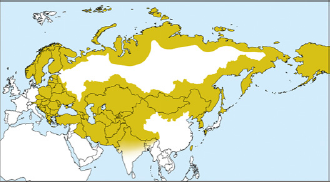
Because of the emergence of the NBRs, the characteristics of both the former socialist peripheries and their neighboring regions changed drastically. The Russian Far East cannot exist without mutual dependence on Northeast Asia. Shanghai, being a foothold of the Shanghai Cooperation Organization, is becoming a bridgehead to Eurasia. The Caucasus used to be a periphery of the Soviet Union, but this region is now like a magnetic field in which Russian, Turkish, and Iranian influences compete, even putting aside the United States and the European Union. It does not seem to be by chance that the first large-scale international conference focused on the South Ossetian conflict (August 2008), in which Russian, Georgian, Eurasian, and Western scholars took part, was held in Tehran in November 2008. 5 Turkey influences the Caucasus and Central Asia through its Islamic and ethnic Turkic networks, and thus reminds us of the pivotal role that the Ottoman Empire used to play in three continents. During the Cold War, Eastern Central Europe and the Baltic countries could easily demonstrate their raison d'être by their tacit resistance against Moscow, but now they face the difficult task of locating themselves amid the tempest of regional realignment of Northern Europe (Joenniemi, 2007).
The Institute for Political and International Studies of the Iran MFA convenes an international conference on Central Asia and the Caucasus each year; the sixteenth annual conference held on October 28–29, 2008 focused on “Confrontation in the Caucasus: Roots, Dimensions and Implications.” Seventeen Iranian and thirty-two foreign participants presented papers.
The NBRs are not newly born, but rather reborn, regions; they had taken shape before the beginning of the twentieth century, but the Russian Revolution, Cold War, and Sino–Soviet conflict artificially divided them into Soviet and opposing camps. After the Cold War, activating economic, social, cultural, strategic, and military interactions between the former Soviet Bloc and its neighbors resulted in the emergence of the NBRs surrounding Slavic Eurasia like a donut. This paper calls them “new” border regions only for the purpose of underscoring the differences between the classic and the revised versions; the latter reemerged after an interval of more than seventy years.
The border regions of Eurasia in the nineteenth-century were the focus of international competition, above all, between the British and Russian Empires. The competition around these regions created the cradle of modern geopolitics, represented by Halford Mackinder's famous concepts of Heartland and Rimlands (Mackinder, 1919). Today, the NBRs have become territories of crucial geopolitical significance again, as is exemplified by the South Ossetian conflict in August 2008. Occupying a huge portion of land area and population of Eurasia, the NBRs weigh 28 percent and 33 percent of the world oil production and deposits, and 40 percent and 53 percent of the world natural gas production and deposits, respectively. Twenty-one of the fifty-five countries in the world that experienced more than 7 percent average annual GDP growth during 2000–2005 are located in the NBRs. During 1990–2006, nineteen of the fifty-seven cases of regional conflict in the world, with more than a thousand victims, took place in the NBRs. Over the last decade, great and regional powers competed around the issue of how to pierce the NBRs by oil and gas pipelines. The NBRs experienced environmental catastrophes in Chernobyl, Semipalatinsk–Karaganda, and the Aral Sea and continue to face the difficult task of managing environmentally vulnerable and hardly recoverable spots, such as the Okhotsk and Baltic Seas and the Siberian tundra. In short, the hopes and miseries of mankind coexist in the NBRs, and the problem of how we can realize democratic and effective governance and sustainable development in the NBRs will significantly affect the world's future.
The crucial importance of these border regions has attracted researchers' interest. Most of the popular topics in recent Slavic Eurasian studies, such as energy and pipelines (Tabata, 2008), comparative or macro-regional studies of empires and religions (Akiba, 2007; Miller, 2007; Werth, 2007), and the history of international relations and trade in Northeast Asia, require viewpoints striding the borders between Slavic Eurasia and the neighboring regions. A more compelling example is that one third of graduate students of the Slavic Division of Hokkaido University, for whose education the SRC is responsible, are specialized in the NBRs and therefore oblige themselves to learn languages outside Slavic Eurasia. When we were young, we competed around how many languages in Slavic Eurasia we knew, but contemporary young scholars prefer to choose topics that require the learning of, for example, Chinese, Korean, Persian, Turkic, and Arabic. 6 This implies that we already have abundant young human resources to promote NBR studies on the one hand, but on the other, that Slavic Eurasian and other area studies will inevitably decline, if scholars stick to traditional division of labor.
There has been an honorable academic tradition among Orientalists of knowing many languages often belonging to different families, but emerging NBR studies have universalized this practice.
NBR studies cannot be a simple extension of existing area studies. As mentioned above, we need additional language skills and methodologies beyond the borders between traditional area studies. During the Cold War, it was sufficient for Caucasus specialists to have a command of Russian and a few local languages. Currently, it is desirable to know Turkish and Persian additionally for an understanding of Caucasian politics. Disciplinarily also, we need to expand our methodological basis by incorporating, for example, Orientalist expertise. Orientalist knowledge, for instance, expertise in Islam, will become all the more important in future Slavic Eurasian studies. Unfortunately, universities and academic institutes in the world are not ready to respond to these new challenges. NBR studies have so far been conducted under individual initiatives. Even world-leading institutes, such as the Davis Center and the Kennan Institute, have not launched collective projects focused on the NBRs. The SRC's recent initiative for this purpose did not enjoy the government's support.
Since NBR countries do not have developed area studies, one cannot expect local specialists to play a leading role. Moreover, in comparison with the admirable tradition of the border-crossing approach in historical studies of Eurasia, 7 current analyses of the NBRs, even the best ones, are based on traditional geopolitics (see, for example, Lakoba, 2005) or Eurocentric views (asking, for example, whether the European Union's Neighborhood Policy facilitates the democratization of Eastern Europe). 8
For example, Robert D. Crews, who published a serious monograph on Islam in the Russian Empire (2006), is running a project on extraterritorialities that the Russian Empire enjoyed in Qajar Iran (2007). Michael Reynolds, who is a living bridge between Slavic and Near East studies, recently presented a paper on how the Armenian Revolutionary Federation (Dashnaktsutiun Party) unfolded its activities striding the borders of the Russian, Ottoman, and Qajar Empires and criticized the essentialist notion of inevitable confrontation between Armenian nationalism and the Ottoman Empire (Reynolds, 2008).
See, for example, Lankina and Getachew 2006.
It is true that the NBRs, in a sense, are a renewal of the “inner crescent of Eurasia” of the nineteenth century, a field of competition between empires. However, the NBRs in the twenty-first century have important new features, incomprehensible by traditional geopolitics (Tuathail, 1996). First, while nineteenth century border regions were a passive object of colonial competition between the great powers, there are twenty-three newly independent and four unrecognized states in the NBRs, 9 which sometimes manipulate the great powers. Secondly, traditional geopolitics mainly focused on states, while border-crossing actors such as religious organizations, NGOs, multinational corporations and interest groups, and transborder nationalities are playing growing roles in NBR politics. Criticism of so-called realism in international relations studies (or a state-centered understanding of world politics) has a long historiography. The realist's premises that “states are key actors in world politics” and that “states can be treated as homogeneous units acting on the basis of self-interest” proved to be intellectually too vulnerable and boring, and could not but be challenged by liberalists, functionalists, and constructivists during the 1970–80s (Katzenstein, 1998, 658–659). An unfortunate byproduct of this legitimate challenge was that transnationalism lost its initial interest in society and culture, since this challenge was mainly initiated by the “international political economy” school. 10 However, since the second, post-Cold War wave of transnationalism exploits constructivist methods and focuses on competition of ideas and “epistemic communities,” this economic determinism in transnational studies will soon be overcome. 11 Thirdly, traditional geopolitics measured the military and economic strength of states, while crafting of cognitive elements (so-called soft power), such as historical discourse, geographic imagination, attractiveness of the political regimes, pervasive mass culture, sports, and cuisine, often affect the balance of power in the NBRs. Not only the United States and the European Union, but also China and Islamic countries and even recent Russia 12 are spending huge sum of money to popularize their own spatial perceptions and historical consciousness (Euro-Atlanticism, Islamism, Neo-Eurasianism, Asian democracy, etc.).
This essay continues to count South Ossetia and Abkhazia as unrecognized states.
If Robert O. Keohane and Joseph S. Nye (1970), who proposed transnationalism as a new research agenda, covered various transnational actors, such as religious organizations, trade unions, and revolutionary movements, twenty-five years later, Thomas Risse-Kappen et al. (1995) limited their interest to the activities of multinational corporations and international non-governmental organizations. Narrowing the object of research, Risse-Kappen et al. carefully examined under what conditions transnational (non-state) actors do matter, while criticizing Keohane and Nye's zero-sum understanding of relations between transnational and traditional interstate politics.
On the second wave of transnationalism, see Orenstein 2006.
A recent initiative that the Russian government made was the attempt to establish the “Russian World” offices, aimed at calling for interest in Russian language and culture, at prestigious libraries and universities in the world. The Japanese branch was opened in Hakodate.
This does not mean that soft power policy is an instrument that homogeneous states or unified ruling elites deliberately use. Rather, cultural geopolitics focuses on the independent actors, including substate ones, that compose a bureaucratic politics barely controllable by a single headquarters. 13 On the other hand, the understanding by cultural geopolitics of culture as an operational resource distinguishes it from the dominant position in international relation studies, which often regards culture as comprising unchangeable behavioral norms (Huntington, 1993).
Skepticism of the existence of a single headquarters in imperial (colonialist) arrangement has been promoted not only by the school of bureaucratic politics in international relations studies, but also by historical studies of empires. For example, Alexei Miller argues that there was no unified concept of Russians shared by imperial bureaucrats and intellectuals in the Russian Empire with the consequence that the contents of Russification policy were always at stake among them (Mиллep, 2000). Asano Toyomi maintains that there was no unified Korean policy in the Japanese bureaucracy even on the eve of Korea's incorporation into the Japanese Empire (1910), which, as Asano regards, was an outcome of the defeat of Ito Hirobumi's Korean policy (Asano, 2008).
Fourthly, this competition in soft power is conducted not so much through direct export of ideologies from the stronger to weaker countries as through manipulations of international organizations, such as the EU, Council of Europe, OSCE, Shanghai Cooperation Organization, and Organization of the Islamic Conference. One may regard these organizations' territorial jurisdictions as products of varying historical and geographic imaginations. The populations (at least the intelligentsia) in Central and Eastern Europe perceived their countries' EU accession as a “return” to what they once belonged to and “recovery” of historical justice, violated by Bolshevism. This sense of “return” or “recovery,” even though quite dubious from an objective historical perspective, functions as a much more powerful driving force than, for example, a sense of “innovation” or “development” when people imagine new geographic units. One should not forget that the vigorous expansion of the Russian Empire was realized under the banner of “reunification.”
The four characteristics listed above are not completely new. Transnational actors and spatial perceptions were important for the border regions of nineteenth-century Eurasia as well, but classic geopolitics lacked a vantage point from which to conceptualize their importance. Overall, classic geopolitics cannot be a sufficient tool to analyze the NBRs. We need methods to analyze not only states but also transnational actors, and not only the material but also the cognitive influences of these actors. This is why we propose a new set of methods classifiable under the name of “cultural geopolitics.” Cultural geopolitics aims to synthesize research agendas (such as empire and religion studies, transborder histories, and imaginary geography) developed under Program-21. A common feature of these genres is the endeavor to mobilize methods of humanities for the social sciences and current analyses.
The supremacy of the humanities over the social sciences seems to be a common feature of Japanese area studies in general. Like it or not, area studies in post-war Japan have been driven by the humanities, since neither the government nor business expected much from academic area studies. Education in the political sciences in Japanese graduate schools, with a few exceptions, mainly provides historical expertise, with negligible training in statistics, which should be indispensable for modern political scientists. The call for cultural geopolitics intends to capitalize on the merits of Japanese area studies (strong humanities), rather than to struggle to overcome the weaknesses. This should be a viable way to make Japanese area studies internationally competitive. Comparative advantage is not a rule solely applicable to economics. Furthermore, I will examine how expertise brought from the booming genres of the humanities, such as empire and religion studies, can be exploited for the social sciences and current analyses.
During the past decade, we have experienced two intellectual trends of empires. The first is the notion of the contemporary world as imperial, typified by a renowned book coauthored by Michael Hardt and Antonio Negri (2000). The unilateral dominance of the United States (Forsythe et al., 2006) and the rapid growth of the information economy (Friedman, 2005) also inspired the idea of the imperialized world. The second trend is the rising interest in empires in academic historical studies, exemplified by studies on the composite monarchies of Europe (Armitage, 1995, 1997, 2000; Canny, 1998; Colley, 1994; Elliot, 1992; Pocock, 1975; Robertson, 1994) and the North Eurasian (Sugiyama, 2003; Sugiyama, 2008a, 2008b), Ottoman, Romanov, and Japanese Empires, 14 as well as by constructivist analyses of the religions and the confessional relations of empires. 15 However strange it is, one can hardly find a link between these two trends. When political scientists analyze current problems of ethnicity, religion, and state secession, they rarely refer to historical studies of empires. 16
See an analysis of the Japanese Empire as a conglomerate of multiple law territories in Asano (2008).
See numerous essays published in Ab Imperio and Kritika: Explorations in Russian and Eurasian History. An important origin of this approach is Kappeler 2001, the German original of which was published in 1993.
For example, Henry Hale (2008) starts his book on ethnic politics and secessions by describing his observation of standard norms for ethnic behaviors, with few references to ethnic histories. I mention this not to criticize Hale, but to note the different traditions between American and Japanese political studies on ethnicity.
This situation becomes even more pronounced in regard to the territories of the former Russian Empire and the Soviet Union, since historians specialized in these territories have focused on ethnic and confessional relations and viewed the empire as no more than a background to these relations. 17 Only a minority of historians (for example, Lieven, 2001; Maцузaтo, 2004; Marshall, 2006) have been interested in imperial mechanisms per se. One cannot find a similar overconcentration on ethno-confessional factors in the studies of the British, Ottoman, Japanese, or other Empires. This specific feature of imperial studies of Russia is a result of the coincidence of several factors: after the liberalization of the Soviet Union, foreign historians began to enjoy opportunities to explore local archives in non-Russian territories, and this change coincided with the period when constructivist methods flew into the post-Soviet historiography. Understandably, ethno-confessional issues became good test cases for this new method. The emphasis on ethno-confessional factors in Russian imperial studies, potentially, might provide valuable insights when we examine ethno-confessional relations developing in the former Soviet Union, but does not make historical empires a conceptual framework to analyze the contemporary world. We need, perhaps, to make the research trend of the Russian Empire closer to that of other empires, whereby scholars pay more attention to imperial mechanisms per se.
Alexander Semenov calls this approach “empire as context,” typified by Kappeler, while naming D. Lieven's position “empire as instrument.”
The socialist period separates the age of classic empires and the current world. Therefore, we may welcome the popularity that imperial interpretation of Soviet history enjoys today (Martin, 2001). This new trend in Soviet studies might possibly bridge the gap between the two periods. The Soviet Union was an empire of affirmative action, which tried not only to “emancipate” nationalities, but also to designate and demarcate them from above (Gorenburg, 1999). The intensity of the affirmative action that these nationalities enjoyed strictly depended on the prestige of the territorial entities granted to them: union or autonomous republic, or national district, etc. The Soviet authorities promoted national historiographies in order to justify this hierarchy of ethno-territorial formations, producing and theorizing specific notions of aboriginality (avtokhtonnost') and title nations. The ethno-territorial formations also tried hard to promote historians recruited from their title nationalities to justify themselves. Understandably, these historians began to look for their ethnic roots in the ancient past, readily forsaking the Marxist axiom of nations being a bourgeois (modern) construction. Despite the apparent accusations of the precedent historiographies, primordial and territorialized notions of nation consistently strengthened from pre-Revolutionary, Soviet, and post-Soviet historiography (Uyama, 2002). This is the reason that a historical dispute could become the prelude to a bloody civil war in the ruins of the Soviet Union and Yugoslavia (Maцузaтo, 2007).
Only a few decades ago, a socioeconomic understanding of empires was predominant. This position was even mildly Marxist, modernized by Wallerstein's world-system theory. Scholars believed that empires were a result of uneven capitalist development that separated the world into metropolises and colonies. In other words, these scholars regarded empires as an attribute of a definite historical stage, which should be replaced by a system of nation states, and distinguished modern empires from their precedents. On the other hand, empire studies in the last decade have focused on institutional and ideational continuities between modern and premodern empires. The composite monarchy school in European history emphasizes the medieval origins of the conceptual and institutional components of composite monarchies. Specialists of North Eurasian empires emphasize the persistent influence of the nomad principles of state building: personal (non-territorial) states modeled after cavalier battle formation. These historians argue that North/East Eurasian history, at least, since the Great Yuan to the Qing Empire, should be interpreted as a single and consistent process (Sugiyama, 2008b), criticizing, as a corollary of their position, the conventional notion of the Qing Dynasty as a sinified nomad state (Sugiyama, 2003, 2008a).
The imperial understanding of Russian history has largely been limited to the centuries after Peter the Great. In fact, however, the future Russia's imperial core emerged much earlier, during the thirteenth-fifteenth centuries. The Mongolian invasion in the first half of the thirteenth century terminated the Kyivan tradition of a federation of princedoms and in the latter half of the same century, Danil, the youngest son of Alexander Nevsky, established the Moscow Princedom. In the mid-fifteenth century, Russia's Orthodox Church factually became independent of the Constantinople Ecumenical Church, in the context of its resistance to Constantinople's attempt to unify with the Roman Catholic Church to be saved from Ottoman assault. In the same period, the Qipchāq Khanate split into the Kazan, Astrakhan, Sibir, and Crimean Khanates, the future acquisitions of Russia. The rudiments of the Russian Empire were established during these fateful two hundred years on the very spot where the peripheries of three traditions
Thus, during the last decade, all imperial studies of Europe, Eastern, and Western Eurasia began to pay more attention to political ideas and institutions, rather than to the socioeconomic basis of empires, and to interpret modern empires in their continuity from premodern precedents. Similar to the intellectual trend in international relations studies, ideas and values have come to be interpreted as resources (rather than norms) that can be constructed and manipulated. Moreover, researchers, from global theorist Negri to scrupulous Orientalist Kiyohiko Sugiyama, began to regard empires as continent-wide or trans-sea/-ocean interactions, rather than territorial state entities, however big they were. Even those historians who continue to see empires as states emphasize the lack of definite boundaries on their fringes. According to Toshiteru Matsuura, empires are “another name for ceaseless struggles to expand their frontiers.” Empires' territorial frontiers are “constantly obscure and never fixed, because they are the fluid spheres of conflict between two momentums that expand and push back. When an empire gains demarcated, visible fringes, it is even possible to say that this ‘empire’ is already dead” (Matsuura, 1997, 51–52). Alfred J. Rieber echoes this statement: “Empires differ most strikingly from nation states in their way of imagining and fixing their boundaries. The contrast stems from diverse conceptions of universalism and power. Imperial ideologies are inspired by the ideal of universal domination but accept limitations imposed by their own cultural traditions and the constraints of power politics” (Rieber, 2004, 198).
Thus, overexpansion is a crucial attribute of empires. On the other hand, the intellectual boom of empires has been driven by widespread disappointment with the nation state system, incapable of overcoming environmental catastrophes, poverty, illiteracy, HIV, and ethnic-driven genocide. Previously, people imagined that the nation state system would replace the system of empires. But it has become clear that the nation state system, even putting aside its obsession with homogenization, is an unrealizable idea, nothing but the flaws of which make empires indispensable, exactly as the unrealizable ideal of socialism made black markets unavoidable. The overexpansion of empires and the unattainable features of the nation state ideal, combined together, generate the unexpected negotiation power of peripheral actors vis-à-vis imperial cores. It would be unconceivable for heavily indebted countries, such as Georgia and Moldova, to twist the United States around their little finger if the world were constructed after the model of the nation state. But in an imperial world, the most indebted can be the most dictating, because the strongest needs to rule the fringes of its influence not only by military and economic means, but also by values and endless promises, as a result of which the strongest often becomes a hostage of its own discourse. This is one of the reasons that the NBRs have become not only objects of harsh competition between imperial cores, but also subjects determining this competition.
Thus, despite the present, unfortunate distance between historical and current empire studies, if the research trends described in this section—focus on imperial mechanisms, interest in socialist empires, the concept of empire as interaction rather than a territorial entity—develop, it will make historical expertise in empires more applicable to current studies.
The collapse of the Soviet Union discredited the secular worldview that had been dominant under socialism. The oppression of religions ended. People visit churches, mosques, and synagogues not only to satisfy their individual spiritual quest, but also to reinforce their ethnic identity. The post-Soviet experience of religious revival provides compelling counterproof against the conventional equation of modernity with secularization, according to which religion should steadily become a private affair (Casanova, 1994).
However, area study specialists have not been ready to pay the necessary attention to religions reviving in the former Soviet Union, perhaps because of inertia from the Soviet period when religions did not play an important role in society. One may notice several insufficiencies in the study of religions in the former Soviet territories: lack of cooperation between various academic disciplines dealing with religions and between specialists in different religions; poor conceptions of politics among religion specialists, who often concentrate on state–religion relations; insufficient fieldwork and uncritical reliance on historical and humanities expertise 18 ; and negligence of the transnational features of religions, particularly Orthodoxy.
In Anglo–American countries, specialists in Eurasian Islam would seem to split between the Orientalists, versed in the theological and historical aspects of the issue but negligent in the current Muslim societies of the world, and those who are interested in current Islam from the viewpoint of conflictology and geopolitics, but with poor knowledge of Islam as a religion. French scholarship has a more sound tradition of combining theological and political analyses of Islam (for example, see Peyrouse, 2007).
Researchers would seem to have devoted too much attention to state–church relations (moreover, their constitutional aspect), 19 with the premise that Orthodoxy is a religion patronized by the secular state and, accordingly, propagates for its patron. Another premise of this approach is that Eastern Christianity is authoritarian and anti-civic by nature (Huntington, 1993; Prodromou, 1996). Recently, researchers' concern about Putin–Medvedev's authoritarian tendency strengthened the notion of the ROC as a lesser ally or even an ideological instrument of the Russian secular authorities. However, based on the World Values Survey, Christopher Marsh finds that devout believers of the ROC tend to be more democratic and civic than non-believing Russians (Marsh, 2005). The notion of the ROC as the secular state's instrument cannot explain the fact that Russia is a rare territory in the Orthodox world that the Pope has not been able to visit (and this was what Putin yearned to realize). In my view, the relations between the Russian secular authorities and the ROC are close to an alliance. Since this issue also concerns the spatial dynamism of Orthodox politics, we will return to it later. In any case, it is an urgent matter to incorporate as many new issues as possible into religion studies. 20 To widen the scope of religion studies, we should recruit researchers, particularly political scientists, into religious studies.
Not only in regard to Russia, but also Romania, Orthodoxy specialists tend to concentrate on state–church relations. See, for example, Andreescu (2007).
For example, John and Carol Garrard focus on relations between the ROC and the Russian Orthodox Church Outside Russia, religious leaders' former collaboration with the security organs, and relations between the ROC and the Russian Army (Garrard & Garrard, 2007). A. B. Mitrofanova analyzes Orthodox “fundamentalism” (Mитpoфaнoвa, 2004).
Since 2003, when I launched a project on Islam in Dagestan, I made constant endeavors to describe the multiple political functions played by religions. Coauthor M. -R. Ibragimov, local ethnographer, and I described the Sufi brotherhoods in Dagestan playing pseudo party roles, representing ethnic, social, and clientelistic interests (Matsuzato and Ibragimov, 2005). We also tried to overcome the conventional conflict-driven image of Dagestani politics by analyzing de facto pluralism realized through competition among Sufi brotherhoods as well as nested social and ethnic cleavages, which neutralize one confrontation by an alliance of the same actors in another sphere of life. 21 Another stabilizing factor is the consociational behavior of the elite, according to which victors try to compensate losers' loss by providing them with another concession, rather than eliminating them (Ibragimov and Matsuzato, 2005). Moving to Islam in the Ural–Caspian macro-region, I identified close ties between the features of Islamic politics in each region and the regional population's spatial self-image and the regional administration's development strategy (Matsuzato, 2007). In short, I devoted myself to enriching the concept of politics in religion studies.
For example, Russians are Orthodox Christians, the Nogais and Kymyks practice the Hanafi and Shafii school of Sunna respectively, and Azerbaijanis are Shiites, but they are allies when they encounter the massive migration of the Mountain Caucasians (the Avars, Dargins, Tabasarans, and Lezgins) to lowland Dagestan, though these Caucasians share the Shafii school of law with the Kumyks.
Religious politics is characterized by spatial dynamism or active interactions between various levels, from communities to international relations. In religious politics, spatial perceptions of the world, often determining and determined by the image of co-believers abroad, play important roles. This is a widely accepted view in regard to Hasidic Judaism (Akao, 2007) and Islam. For example, the Presidency of Religious Affairs of Turkey (Diyanet, or Muslim administration) dispatches lecturers of theology not only to Sunnite Central Asia, Russian Muslim regions, and Crimea, but even to Shiite Azerbaijan. Moreover, it dispatches about twenty imams to Crimea. 22 In contrast, Orthodoxy politics has been interpreted in the context of caesarpapism (though this is not a canonic term at all, but an accusatory label, similar to such terms as Stalinism and Trotskyism), sometimes to the extent that this concept is confused with the Protestant state church system. 23 In fact, however, the rules of the game in Orthodoxy were determined by the seven Ecumenical Councils by the eighth century, when sovereign states were neither existent nor conceivable. In 2006–2008, inspired by the fact that Abkhazia and Transnistria are located between the jurisdictions of the ROC and Romanian Orthodox Church, I argued that Orthodoxy politics are characterized by incongruence with secular state borders and are thus transnational by nature (Matsuzato, 2009).
My interview with Mehmet Görmez, vice president of the Diyanet, on March 29, 2007 in Ankara.
It is true that the ROC experienced two centuries of secular control by the Synod since the Petrine reform of 1721 until the Russian Revolution and perhaps this is a reason that Constantinople criticizes the ROC as inherently caesarpapist. However, Peter I′s church reform did not derive from Orthodoxy per se, but was inspired by his contact with the state church ideology consolidating at that time in Protestant countries. See Cracraft (1971, chap. 1).
In Orthodoxy, territorial incongruence between secular and religious borders sometimes has serious significance. Rhodes Island, a territory of Greece, belongs to the jurisdiction of the Constantinople Church. Antioch (belonging to Turkey) continues to be the formal residence of the Patriarch of the Syrian Orthodox Church. Recently, the Orthodox Church of Georgia (OCG) reintegrated Georgia's historical region of Tao in northeastern Anatolia into its jurisdiction after persuading the Constantinople Church and the Turkish secular government. In fact, it would be a caricature if the OCG continues to be built in the secular territories bestowed by the atheist Soviet state and, at the same time, hoists the slogan of “inviolable canonic territory” to resist the religious independence of Abkhazia and South Ossetia.
Contrary to conventional wisdom, Orthodox politics are characterized by their contradiction with sovereign state principles. For instance, the ROC can neither recognize nor incorporate the unrecognized Abkhazian and South Ossetian Orthodox Church even if the Russian secular government has recognized Abkhazia and South Ossetia. 24 The Kyivan Patriarchate, which claimed independence from the Moscow Patriarchate immediately after Ukraine's independence, has become a huge unrecognized church. Moreover, including President V. Yushchenko, many people seem to misrepresent the Kyivan Patriarchate's argument: it does not only claim that the state independence of Ukraine should eventually be followed by Ukraine's religious autocephaly; it argues also that the very removal of the Kyivan Metropolitan See to Vladimir first and Moscow afterwards in the fourteenth century was uncanonic. This is why the debate between the Moscow and Kyivan Patriarchates reveals a feature of total war. Recognition of the Kyivan Patriarchate would imply negation of the whole history of the ROC. Another example of the transnational characteristics of Orthodox politics is Moldova, which has become a field of competition between the Russian and Romanian Orthodox Churches. As a result, relations between the Russian and Romanian Churches have become hostile while secular relations between the two governments remain normal, whereas the ROC and OCG continued to keep amicable relations even when the two secular governments warred.
If it does so, it will lose legitimacy to criticize the “violation of canonic law” by the Kyivan Patriarchate and the Romanian Orthodox Church in Ukraine and Moldova.
Considering the transnational religious politics described above, perhaps we need to assume a geographic unit called Western Eurasia, composed of Western Siberia, European Russia, Belarus, Ukraine, and other Black Sea countries, including Turkey, Caucasus, and Syria. Western Eurasia is a common stage for border-crossing politics run by Islam and Eastern Christianity (Orthodoxy and Monophysitism). 25
Historical reconciliation between Orthodoxy and Monophysitism, which started in the 1990s and continues today, is another factor intensifying transborder politics in the Black Sea and Eastern Mediterranean Rims. This phenomenon directly affects the Karabakh conflict by spiritually consolidating the alliance between Russia and Armenia.
To conclude this essay, let me briefly examine transborder politics in the Black Sea Rim, a typical NBR, by employing the methods of cultural geopolitics described above. Recently, this region began to attract worldwide attention because of the South Ossetian conflict in August 2008 and the issue of unrecognized states in general, the constant instability of Ukraine and Georgia after the color revolutions in 2003–2004, growing Islamism in Turkey, pipeline and energy diplomacy, the EU accession of Romania and Bulgaria, and the IOC's decision to hold the Winter Olympic Games in Sochi. However, academic references to this region have been based, at most, on classic geopolitics, identifying it as an arena of competition between the transatlantic alliance and Russia.
A way to view this region more substantially, from within, is to consider border-crossing political interactions as its inherent feature. The Black Sea Rim is located between Eastern Europe and the Near East. In Eastern Europe, nation building started late, but nevertheless, more or less stable nations have emerged. In the Near East, religious and linguistic specifics have made nation building extremely difficult and transborder minorities, such as the Kurds, Maronians, and Alevis, enjoy abundant chances to split national communities. It is because of this intermediary location of the Black Sea Rim that debate on national formation and state legitimacy often determines the life or death of states. In Eastern Europe, self-assertions by the Moravians, Kashubaians, and Samogitians (Lowland Lithuanians) do not have a serious impact on the state building of the Czech Republic, Poland, and Lithuania, while in the Black Sea Rim, debates around Moldavianist historiography and the existence (or non-existence) of the Mingrelians as a nationality may directly affect the state building of Moldova, Transnistria, Georgia, and Abkhazia. Poland, at least officially, does not address territorial demands to Lithuania, Belarus, and Ukraine, while in Romania, not only nationalist but also liberal parties cannot forsake the slogan of “restoration of historical Romania.”
In 1990, both Lithuania and Moldova declared that the Molotov-Ribbentrop Pact was null and void from the very date of its signing. The legitimate counterargument that in this case, Lithuania should return Vilnius to Poland did not find any serious resonance in Lithuania, but in Moldova, the left bank immediately held a referendum to declare independence. In contrast to the Czech Republic and Poland, in the Black Sea Rim, even overtly pro-American governments such as those of Georgia and Romania were quite cautious in recognizing the independence of Kosovo. “Those who live in glass houses shouldn't throw stones.” 26 It was not by chance that unrecognized states (Nagorno–Karabakh, Abkhazia, South Ossetia, and Transnistria) could only be consolidated in the Black Sea Rim, though tens of similar separatist movements were observed in the last years of the Soviet Union. If the situation in Eastern Europe is not conducive to civil war and the opposite is the case for the Near East, unrecognized states in the Black Sea Rim are institutionalized civil wars.
My interview with Alexander Rondeli, president of the Georgian Foundation for Strategic and International Studies, on February 8, 2008 in Tbilisi.
The Black Sea Rim is colored by vigorous transnational actors, such as religious organizations, NGOs, transborder nationalities, and multinational corporations and interest groups. 27 While in Central and Eastern Europe, sovereign states control border-crossing actors under the guise of Euroregions (in other words, transnational actors are promoted because their obedience to sovereign states is secured), in the Black Sea Rim with the outlook of a classic sovereign state system, state boundaries are porous. Among transnational actors operating in this region, NGOs and transnational corporations have been relatively well studied. For example, Shinkichi Fujimori (2005) and Margarita Balmaceda (2007) published excellent studies on Ukrainian gas traders. In view of the booming political economy approach to post-Soviet societies, their perspective seems to enjoy opportunities for further development. Furthermore, I focus on understudied issues or areas that are well known but whose transnational characteristics have been unnoticed: that is, unrecognized states, transborder nationalities, 28 regional powers, and religions. It is exactly these factors that make the Black Sea Rim an attractive test site for cultural geopolitics.
In the interwar period, leftist parties as branches of Komintern or Socialist International operated as typical transborder actors. In the contemporary world, however, many countries have adopted laws to prohibit or limit parties operating internationally, supposing that such parties can easily become instruments for intervention in domestic politics by foreign powers. A typical example is the Armenian Revolutionary Federation (Dashnaktsutyun Party), created at the end of the nineteenth century to liberate Armenians from the three empires, Russian, Ottoman, and Qajar. Ironically, independent Armenia has often questioned the legality of this party, international by birth, and actually repressed it in the late Ter–Petrosyan period.
The term “transborder nationalities” is widely used in anthropology, but not in political science.
Despite their isolated image, the unrecognized states have been catalyzing transnational political, ethnic, and confessional interactions in the Black Sea Rim. The difficulties that the populations of these territories face because of the international blockade do not allow outside co-ethnicities and co-believers indifferent to this issue. The large number of widows and orphans caused by the civil wars at the beginning of the 1990s motivated NGO activities in these territories. The positions of the elite on this issue are highly divergent not only in the surrounding countries, but sometimes in these territories themselves. For example, there are both pro-Transnistrian and pro-Moldovan positions in Russia and Ukraine, an overtly pro-Moldovan position in Transnistria (the Social Democratic Party under the leadership of Alexander Radchenko), and a pro-Transnistrian position in Moldova (for example, the newspaper Moldavskie vedomosti). These varying positions ally with and confront each other transnationally. 29 Moreover, the unrecognized states try to incorporate transborder nationalities, such as the Mingrelians of Abkhazia and the Moldovans of Transnistria, into the national communities, in order to evade international criticism of ethnic cleansing, raise the legitimacy of their states, and, if possible, exploit the ethnic cleavages of their former suzerains (the status of the Mingrelians in Georgian society and the confrontation between Moldovanists and pan-Romanists in Moldova).
This should not be regarded as a confusion, but as a sound phenomenon that binds the actors beyond barriers like Gulliver's bonds and limits the possibility of a coercive solution. Understandably, one does not observe similar nested transnational alliances around the Karabakh issue, and this implies a much stronger impetus for repeating a war.
Even putting aside the issue of unrecognized states, the existence of ample transborder nationalities often affects the politics of the Black Sea Rim. The existence of Transylvanian Hungarians makes the Romanian government show self-restraint regarding the Kosovo issue. The Hungarian, Slovak, and Rusyn populations in Transcarphathia make it difficult for the Ukrainian government to Ukrainianize this region; only Russian can be the language of interethnic communication. The Moldovan government used the Bulgarians in Gagauz as a counterweight to Gagauz separatism, while Transnistria succeeded in incorporating Bulgarians into the national community.
Another fact facilitating transborder politics in the Black Sea Rim is the existence of regional powers, Russia and Turkey. During the Cold War, Turkey was a stalwart of NATO in this region. As was the case with Korea, Turkey even sacrificed its democratization to win the Cold War. Yet after the Cold War, the European Union invited the former allies of the opposite camp, not Turkey, whose citizens, understandably, felt betrayed. Continuing negotiations for EU accession, Turkey conducts independent regional diplomacy, as exemplified by President Gul's historical visit to Armenia in September 2008, immediately after the South Ossetian conflict. Tactfully dodging United States' opposition, Turkey endeavors to develop its relations with Iran. Turkey did not chorus the accusation of Russia after the South Ossetian conflict; it is no secret that MFA leaders of Turkey dislike Saakashvili even personally. By recognizing South Ossetia and Abkhazia, Russia succeeded in stopping the expansion of NATO into the Caucasus. Despite these facts and despite the more than 7 percent annual economic growth these countries are achieving, they have not grown to be a match for the United States and the European Union. Unable to defy the transatlantic alliance at the interstate level, these countries try to expand their influence by means of soft power, such as religion, popular and cyber culture, mobile phone networks, youth movement, and sports diplomacy.
Religious organizations are one of the oldest transborder (transimperial) actors in human history. This is especially true for the Black Sea, which is an inner sea of Orthodoxy and Islam. Around this sea, the largest and second-largest Orthodox churches in the world, Russian and Romanian, and the oldest, Constantinople, are operating. Turkey has strong influence on Muslims in the former Soviet territories not only because of Hanafi theology, but also because of its historical advantage in having provided the Russian Empire with a specific method of Muslim administration through a spiritual board (Diyanet), distinguished from the Arabic theocratic model and supposedly advantageous for modernization and secularization of the state.
As I argued above, Orthodoxy is a transnational religion, more similar to Islam and Catholicism than to the Protestant state church system. This is a natural result of history: while Protestantism was a twin of the modern sovereign state, Orthodoxy was born as an imperial religion and has remained as such. It is true that the split of the Ottoman Empire resulted in the split of the Constantinople Ecumenical Church and the emergence of a number of national churches, the jurisdiction of which almost overlaps the sovereign state boundaries. However, one should not forget that this process required several decades (for example, it took forty-seven years since the state independence of Romania for the emergence of the Romanian autocephaly).
Indisputably, the geopolitical features of the future Black Sea Rim will be determined by the question of whether the ROC will repeat the tragic fate of the Constantinople Church. Since the ROC learnt much from the experience of the Constantinople Church and accumulated theological and organizational know-how for its own survival even in the case of the demise of its patron, be it the Russian Empire or the Soviet Union, in my view, it will not easily surrender to split. In the nineteenth century, pan-Slavic sentiment urged a number of Russian Orthodox leaders to support the autocephaly movement in the Balkans, but the other part of the church opposed it, asking what they should do if the Georgian Orthodox leaders requested the same (Werth, 2006). In the twentieth century, the ROC was forced into a protracted canonic debate with the Ukrainian Autocephalous Orthodox Church abroad and the Romanian Church, which, in alliance with Nazi Germany, incorporated not only Moldova and Transnistria, but also South Ukraine into its jurisdiction. This protracted experience perhaps explains why the ROC unilaterally declared the federalization of its organization, raising the status of the Ukrainian, Belarusian, and Moldovan Churches to metropolitan sees at the beginning of 1990 (while it was not too late), 30 whereas poor M. Gorbachev would waste precious time, chattering around the issue of federalization of the USSR until the summer of 1991.
Understandably, leaders of the Kyivan Patriarchate and the Romanian Orthodox Church criticize these “autonomies” as purely formal and hypocritical, and characterize the ROC as hypercentralized, as it used to be before.
On the other hand, some Ukrainian Orthodox leaders hurried to create a patriarchate in 1992, without undergoing the necessary procedure for separation from the mother church, which has not gained recognition in the Orthodox world. Despite the furious endeavors of Ukraine's secular authorities, the Kiyvan Patriarchate has only organized 2781 parishes and tangibly left behind 9049 parishes, which have decided to stay under the jurisdiction of the Moscow Patriarchate. 31 None of the Orthodox churches in the world, including Romanian and Constantinople rivaling Moscow, recognize the Kyivan Patriarchate as canonic.
I rely upon neutral data provided by the RISU/“Religious Information Service of Ukraine” at Ukrainian Catholic University in Lviv (http://www.risu.org.ua/eng/major.religions/orthodox.kp/; http://www.risu.org.ua/eng/major.religions/orthodox.mp/, accessed December 4, 2008). Taras Kuzio (2000) indentifies the total sum of parishes under the jurisdiction of the Kyivan Patriarchate and the Ukrainian Autocephaly Church as 6000, without noting the source. Even putting aside the fact that Kuzio underestimates the contradictions between the two national churches, this number would seem to be unrealistic. According to the RISU, the total should be 3795.
In contrast to the Kyivan Patriarchate, which rushed to independence and, as a result, failed to be legitimate, the rivalry between the Russian and Romanian Orthodox Churches over Moldova, intensifying after 2006, poses a much more serious challenge to the ROC. In contrast to the Ukrainian secular authorities, which fully support the Kyivan Patriarchate, the Moldovan leaders, including pro-Romanian M. Snegur, recognized the Chisinau–Moldovan Metropolitan See of the ROC as the only legitimate Orthodox Church in the country, and persistently rejected registration of the Bessarabian Metropolitan See (resumed in 1992) of the Romanian Orthodox Church as a judicial person. This see sued before the European Court for Human Rights, which in 2001, ordered the Moldovan government to register it and materially compensate for the loss that it suffered during the ten years of rejection. From that time on, Moldova became a field of competition between the two Orthodox churches.
Thus, all the factors briefly described in this section, Orthodoxy, Islam, transborder nationalities, unrecognized states, and regional powers, facilitate transnational politics in the post-Cold War Black Sea Rim.
The NBRs, emerging after the Cold War, are of vital importance for mankind, and have academic potential to enrich the humanities and social sciences significantly. Unfortunately, area study communities in the world have not been ready to respond to this challenge, but continue to limit their scope according to the artificial division of labor created during the Cold War.
One cannot understand geopolitics in the twenty-first century solely through the prism of military, economic, or other material means. Rather, cognitive crafting plays all the more crucial a role in determining geopolitical competition. This is especially true for the multiethnic and multiconfessional NBRs, in which various geographic and historical imaginations compete. Learning from the most progressive spheres in the humanities, such as imperial and religion studies, transborder history, and imaginary geography, we might create a set of approaches called cultural geopolitics.
To include booming empire studies in the arsenal of cultural geopolitics, we ought to bridge historical and current empire studies by focusing on imperial mechanisms, deepening the study of socialist empires, and conceptualizing empires as interactions, rather than state entities. By all appearances, the twenty-first century is becoming a century of religions. In particular, it is difficult to overemphasize the importance of religions in the geopolitics of the NBRs. The massive participation of researchers of various disciplines in the study of religions will break its traditional narrow scope and make religion studies an indispensable subgenre of area studies.