






Abstract
This article aims to gain a better understanding of the relationship between economic recession and entrepreneurship. The process of entrepreneurship, rather than the action itself, is a complex phenomenon, and such complexity surfaces when local context conditions worsen after an economic recession. This paper addresses the issue of how the likelihood of individuals to engage in the creation of new firms is affected by a recessionary climate. Furthermore, the study focuses on how the recession-driven shake-out effect varies across local contexts (i.e., sub-national regions). The case of Spain in the critical period of 2007–2010 is examined by using multilevel logistic mediation models on individual-level and sub-national region-level panel data. The results show that entrepreneurship shrinks during economic downturns, suggesting a pro-cyclical trend. A weaker perception by individuals of business opportunities resulting from the shake-out explains, to a large extent, the lower propensity to create firms during economic recession.
Introduction
In recent years, world economies have witnessed one of the most severe economic recessions since the Great Depression of the 1930s (IMF, 2009; Parker, 2012; Shane, 2011; World Bank, 2009). Peripheral countries of Europe, such as Portugal, Italy, Ireland, Greece, and Spain, have been some of the most affected economies after the 2007–2009 financial crisis. A rise in the unemployment rate, limited access to financing, and a decline in the growth of gross domestic product (GDP) are noticeable consequences of this economic recession (Papaoikonomou et al., 2012; Mishkin, 2011). Although entrepreneurial activity is seen as an engine of growth, it is not exempt from shake-out effects of economic downturns (Congregado et al., 2012; Rampini, 2004). However, beyond the main macroeconomic indicators, how does a global crisis affect the
Most scholars agree that understanding the relationship between economic cycles and entrepreneurship is important for policy intervention in order to predict and generate more favourable conditions for firm creation (Fairlie, 2013; Koellinger and Thurik, 2012; Ghatak et al., 2007). However, this relationship warrants further research as the entrepreneurship literature provides mixed results on the effect of business cycles on business start-up rates (Parker, 2011). Moreover, little is known about the effect of sudden shocks in the economy on different stages of the entrepreneurial process (Simón-Moya et al., 2014; Santos et al., 2017). The vast majority of previous studies has analyzed such impacts by focusing on the entrepreneurial
Following cognitive and planned behaviour theories of the mid 1990s, entrepreneurship can be conceived as a process involving both the opportunity perception and the subsequent action to create a new firm. An emerging research stream raised the issue of why some individuals, and not others, explore and exploit entrepreneurial opportunities. Well-known scholars emphasized the idea that entrepreneurial actions are preceded by intuition and opportunity perception (Krueger, 1993; Mitchell et al, 2002). In turbulent periods, sporadic shocks in the business cycle affect not only labor markets, but also the decisions of individuals to start up new firms (Audretsch and Acs, 1994; Highfield and Smiley, 1987). These decisions can be altered by how individuals perceive opportunities to create a new firm in a non-favourable context. In this vein, business cycle theorists hold that economic shocks can produce an ambiguous effect (Parker, 2011; Fairlie, 2013). Such shocks may allow individuals to detect and exploit new entrepreneurial opportunities prompted originally during a new recessionary context, or alternatively, economic shake-outs can discourage the detection and pursuit of new business opportunities due to pessimistic growth expectations of (would-be) entrepreneurs.
In this paper, we claim that the economic crisis affects not only the capacity of individuals to start up new firms but also their desire, ability, need and motivation to identify and exploit new business opportunities. Presumably, the response of the whole entrepreneurial process to a recessionary economic shock (i.e., the process starting from opportunity perception and leading to the action of creating a new firm) should be heterogeneous across more or less economically advanced sub-national regions. Thus, the main objective of this paper is to provide new insights on how a recession-driven economic shake-out affects the entrepreneurial process (besides the action) at a sub-national context.
We expect to make a modest contribution by shedding light into the subject of economic recession and entrepreneurship. Furthermore, we aim at empirically testing main notions of planned behaviour and business cycle theories, by focussing on the analysis of the entrepreneurial process. We expect to contribute to the abovementioned fields of entrepreneurship in several ways. First, we study a pioneering subject by unravelling the missing link between the shakeout effect of an economic downturn and entrepreneurial action, by focussing on why and how the business opportunity perception of individuals mediates this effect. We further argue that as entrepreneurial action follows intention, at an earlier stage economic shake-out shapes opportunity perception. As a matter of fact, we merge business cycle and planned behaviour notions to propose (and test) that the advent of a severe crisis affects business intentions, which ultimately, determines entrepreneurial action (i.e., firm creation). Second, unlike other studies we analyse the shakeout effect on the entrepreneurial process at a sub-national level, since we expect such an impact to be unequal within a country. With this fine-grained analysis, a more precise academic understanding, and insights for policy making, are provided on how an economic shake-out
The structure of the paper is as follows. The next section outlines the theoretical background explaining the link between the recession shakeout effect and the process of entrepreneurship and proposes the hypotheses of the study. The third section describes the methodology and data, and the fourth section summarizes the results. Finally, the study ends with our main conclusions and implications.
The missing link between an economic recession-driven shakeout effect and the process of entrepreneurship
An economy-wide shock is a sudden, substantial and unanticipated change in the macroeconomic context. Typically, an economic shock is characterized by a significant decline in the aggregate demand which, in turn, hurts consumer and investor confidence (Mishkin, 2006; Suarez and Oliva, 2005). A sudden shock may also weaken the self-confidence of potential entrepreneurs to engage in firm creation because business opportunities vanish or simply because such opportunities are disregarded and ignored. During an economic downturn, both entrant and incumbent firms face several obstacles: reduced access to credit and financial markets, a disruption of supply goods and services, and increasing uncertainty about the recovery. However, unemployment rises as a result of the closure of less competitive firms, and entrepreneurship turns into a valued self-employment choice for a substantial share of jobless people.
There is a broad consensus in the literature on the fact that individual-level characteristics alone do not fully explain entrepreneurial action. Context matters for understanding why, when and how individuals get involved in the entrepreneurship and firm formation processes (Fuentelsaz et al., 2015; González-Pernía et al., 2015; Welter, 2011). Sound theoretical arguments and empirical evidence suggest that entrepreneurship is predominantly a “regional event” since major contextual factors shaping entrepreneurial behavior operate at a lower scale regional level (Feldman, 2001; Sternberg and Rocha, 2007). Although the recent economic recession is considered to be a global phenomenon, its impact varies not only across countries but also across sub-national regions. 1
For instance, according to the Spanish National Institute of Statistics, the unemployment rate in Spain rose from 8.2% in 2007 to 19.9% in 2010; however, at the end of the period, the difference between the lowest and highest unemployment rates at the region-level was approximately 18 percentage points. In terms of GDP growth, the regional disparities were similar.
The effect of spatial economic contexts on entrepreneurial activity has been documented since the early 1990s (Reynolds et al., 1994; Acs and Storey, 2004; Bosma et al., 2008; Fritsch, 2008; Audretsch and Peña-Legazkue, 2011; Acs et al., 2015; Bishop and Shilcof, 2017). Past findings show that the rate of new firm start-ups is influenced by a bundle of macroeconomic conditions (such as the level of economic growth, the unemployment rate, the aggregated demand, etc.), and therefore, the entrepreneurial activity is sensitive to changes in GDP per capita, unemployment rates and interest rates (Congregado et al., 2012; Fritsch et al., 2015; Koellinger and Thurik, 2012). Moreover, macroeconomic fluctuations influence expectations and market opportunities to start up new firms (Reynolds, 1994; Reynolds et al., 2002). 2
The intra-class correlation indicates the proportion of the variance due to the aggregate level-2 unit. According to Guo and Zhao (2000), the intra-class correlation for binary data models can be estimated as follows:
An emergent research stream on the theory on business cycles and entrepreneurship offers two unclear predictions about how individual and firm behaviors are affected during economic recessions: a pro-cyclical prediction and a counter-cyclical prediction. In the first case, entrepreneurial behavior and entrepreneurial activity are negatively affected by the impact of a recessionary environment (i.e., pro-cyclical trend). Under this lens, business opportunities vanish as a consequence of the drop in demand for goods and services. In the second case, the entrepreneurial activity is positively influenced by a recessionary environment (i.e., counter-cyclical prediction). A shrinking market reduces job opportunities, which pushes individuals to start a business for subsistence. Overall, findings provide mixed results about the relationship between the economic context and entrepreneurship.
Entrepreneurship is understood as a process where opportunities are perceived, and actions are undertaken to exploit such opportunities via business formation (Vegetti and Adăscăliţei, 2017). To contribute to this ongoing academic debate and following the work by Stuetzer et al. (2014), we argue that the missing link between the impact of the economic crisis shakeout and the process of entrepreneur-ship can be explained by the influence of unemployment rate changes on entrepreneurial action (i.e., firm creation) mediated by changes on individual opportunity perception across heterogeneous sub-national spatial contexts (see Fig. 1).
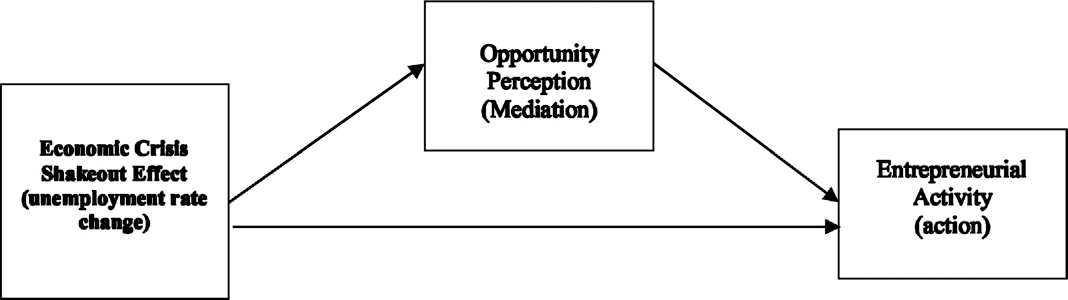
Opportunity perception as the missing link between economic recessions and entrepreneurship.
In this paper, we hold that entrepreneurial
The “entrepreneurial action” view: A one-stage direct effect
Individuals create firms in distinct contexts with different motivations. Indeed, a higher unemployment rate may lead to increased or decreased entrepreneurial activity (Parker, 2011). Unemployed individuals are more likely to create a firm when the opportunity cost of earning an employee-wage is lower than the income earned from entrepreneurship (and/or when there is also a low switching cost from being employed to becoming an entrepreneur). When higher unemployment rates are positively associated with new firm formation rates, the unemployment-entrepreneurship positive linkage reflects a countercyclical pattern (Carree et al., 2002; Simón-Moya et al., 2016; Storey, 1991).
An alternative argument suggests that a high level of unemployment mirrors a contraction of market demand. A more pessimistic expectation of individuals about obtaining firm profits during a recession would discourage the creation of start-ups (Audretsch and Fritsch, 1994; Storey and Johnson, 1987). In this case, the unemployment-entrepreneurship negative relationship would describe a pro-cyclical trend (Acs and Armington, 2004; Armington and Acs, 2002; Carrasco, 1999). The incipient business-cycle entrepreneurship theory needs further refinement, and more empirical evidence, to gain an overarching understanding of this phenomenon and to accomplish a more accurate prediction capacity (Parker, 2011).
In a recent study, Koellinger and Thurik (2012) showed the existence of a pro-cyclical trend in their study conducted on 23 OECD countries for the period of 1972–2007. Similarly, Shane (2011) found that during the 2007–2009 recession, the United States had fewer businesses and self-employed people than before the economic downturn. Other findings also suggest that a pro-cyclical trend of entrepreneurship in a recessionary period reflects a higher risk perception of individuals for business creation (Ghatak et al., 2007; Koellinger and Thurik, 2012; Parker et al., 2012). Like in most empirical studies on this issue, we also believe that entrepreneurship is vulnerable to business cycles, and therefore, firm creation decreases in periods of economic downturns. This is largely due to the fact that unfavourable context conditions discourage new firm creation.
Nevertheless, we do not expect this effect to be the same across all sub-national contexts. Territories at sub-national level are diverse, markets work differently, and resource mobility is difficult for high switching costs. Studies conducted at the country level suggest that poorer countries generally exhibit higher entrepreneurial rates than richer countries (Reynolds et al., 2002). Therefore, developing territories are associated with higher levels of necessity-driven entrepreneurs, whereas more developed regions evince higher levels of opportunity-driven business start-ups. Simón-Moya et al. (2016) confirm these results and conclude that entrepreneurial activity is greater in contexts with lower levels of development, greater income inequality and considerable levels of unemployment. At the same time, they found that necessity-driven entrepreneurship plays a more prevalent role in these locations. In a similar vein, other findings from more developed economies, such as the U.S. and Germany, demonstrate that opportunity-driven entrepreneurship shows a pro-cyclical trend, whereas necessity-driven entrepreneurship shows a stronger counter-cyclical trend (Fairlie and Fossen, 2018). However, we lack evidence on how these results unfold at a local context level.
A recent study by Santos et al. (2017) on the impact of the economic crisis on entrepreneurship in Europe reveals that prior to the outbreak of the economic crisis (i.e., year 2008), lower-income Southern countries of Europe (i.e., Spain, Portugal and Greece) had a higher entrepreneurial activity than that of their Nordic counterparts (i.e., Sweden, Norway and Finland). However, after year 2008 the trend reversed. Nordic regions were more likely to engage in entrepreneurship than Southern Europe during recession. Vegetti and Adăscăliţei (2017) provide an explanation to this phenomenon arguing that the decrease in entrepreneurial action has been more pronounced in European territories where access to finance has been more difficult (i.e., Southern EU contexts). In other words, in EU regions where would-be entrepreneurs faced better borrowing and consumer demand conditions (i.e., higher-income locations like the Nordic countries), the recession did not have a significant negative effect on entrepreneurial action. A similar phenomenon can be observed in Spain for the same period. In general, entrepreneurial activity has declined in recent years. Poorer sub-national regions faced the highest entrepreneurial activity right at pre- recession, but during the second decade of the current century this tendency has been inverted. According to the Spanish Global Entrepreneurship Monitor (GEM) report (Peña et al., 2018), sub-national territories with higher GDP per capita in Spain show now a higher entrepreneurial activity at post-recession, than their lower-income counterparts. For instance, a more favourable and advantageous economic context of places like Madrid and Catalonia has slowed down the declining trend of entrepreneurship. Moreover, Spanish GEM data also show that there is a gap between low and high income sub-national territories in terms of the prevalence of informal investors for start-ups. Considering these compelling arguments and the empirical evidence associated to them, likewise we posit that the
H1a
A recession-driven economic shakeout (i.e., a higher unemployment rate) affects negatively the direct “action” of firm creation.
H1b
A recession-driven economic shakeout negative direct effect on entrepreneurial “action” is stronger in lower-income than in higher-income sub-national regions.
The “entrepreneurial process” view: A two-stage indirect effect (with mediation)
Entrepreneurial actions refer to factual behavior in response to a judgmental decision under uncertainty about a possible opportunity for profit (Hastie, 2001). Cognitive theories of entrepreneurship hold that individual perception of entrepreneurial opportunities is a central motivating factor that triggers entrepreneurial behavior and action (Camelo-Ordaz et al., 2016; McMullen and Shepherd, 2006). The identification and pursuit of entrepreneurial opportunities represent a chance for an individual to generate economic value by creating a new firm. Therefore,
By adopting an
Entrepreneurs take a step forward onto a later stage consisting on the action of creating a new firm, when they are confident about their own skills, motivated and with a strong desire (or need) for self-employment. At early stages of this continuum, entrepreneurs explore and exploit opportunities when they have greater expected values associated with the following: (i) the industry's characteristics (e.g., higher profit margins, large expected demand); (ii) the macroeconomic conditions that also influence their expected values (e.g., economic growth, lower unemployment, low cost of capital); (iii) and access to suitable resources (Nabi and Liñán, 2013; O'Brien et al., 2003; Stuetzer et al., 2014). Therefore, in recessionary periods, the probability that individuals perceive opportunities resulting in entrepreneurial action is also related to their perception about contextual factors that dampen (or boost) entrepreneurship (Papaoikonomouet al., 2012; Williams and Vorley, 2015).
Several studies hold that a higher unemployment rate is understood as a negative determinant of individuals’ opportunity perception (Audretsch and Thurik, 2001; Evans and Leighton, 1990; Ghatak et al., 2007; Koellinger and Thurik, 2012; Shane, 2011). Individuals face different occupation alternatives: self-employment, waged-employment and unemployment (Knight, 1921). Under the premises of cognitive and planed behaviour theory, the choice of self-employment depends, to a large extent, on opportunity perception (Santos et al., 2017).
Following an
H2a
A recession-driven economic shakeout (i.e., a higher unemployment rate) affects negatively the early phase of opportunity perception.
H2b
The perception of a business opportunity positively affects the action of creating a new firm, so that a lower entrepreneurial opportunity perception will lead to a lower entrepreneurial action.
H2c
Opportunity perceptions exert an indirect (mediating) effect on the relationship between a recession-driven economic shake-out (i.e., unemployment rate change) and entrepreneurial action (i.e., firm creation).
Methodology
Database
The dataset includes both individual-level and NUTS-2 region-level data from Spain over the period of 2007–2010. The case of Spain is suitable for the analysis of the current economic crisis at a sub-national context for two reasons. First, the country has profoundly suffered the consequences of the last economic crisis with a recession that has been characterized by an unprecedented rise in unemployment. According to official statistical sources, the INE (Instituto Nacional de Estadística) reported that the number of newly created firms dropped from 410,975 new firms created in 2008 to 321,180 in 2010; moreover, the stock of active firms in Spain fell from 3,422,239 to 3,291,263 firms during the same period. Second, Spanish sub-national regions differ in terms of their level of economic development (i.e., GDP per capita at the NUTS-2 level regions). The time span of our study includes two periods: the period before and the period immediately after year 2008 (i.e., the year in which the shake-out started to occur). The selection of this period allows us to compare our findings with those obtained by other recent studies (Carreira and Teixeira, 2016; Fairlie, 2013; Foster et al., 2016; Nabi and Liñán, 2013; Santos et al., 2017; Simón-Moya et al., 2014; Vegetti and Adăscăliţei, 2017).
Data on individual variables come from the Global Entrepreneurship Monitor (GEM) project, an international research program focused on entrepreneurship that has annually conducted a standardized survey in more than seventy countries since the end of the last century (see Reynolds et al., 2005 for more details). Similar to the study by Camelo-Ordaz et al. (2016), we used GEM data from Spain to analyze the effect of individual-level variables. The information was complemented with data at the regional level from the Spanish National Institute of Statistics (Instituto Nacional de Estadística, INE by its Spanish acronym). Our final sample consisted of 51,314 individuals interviewed (via the GEM survey) and living in one of the 17 regions of Spain (at the NUTS-2 level representing the territories of Comunidades Autónomas) during the 2007–2010 period.
Description of variables
The dependent variable (
To test the
The main explanatory variable representing the recession-driven economic shock is represented widely in the literature by the change in unemployment rate (
A set of control variables at both the individual-level and the region-level was also added to our model. The control variables at the individual-level were categorical variables indicating demographic, human capital-related and perceptual variables. These have been widely used in the entrepreneurship literature (Arenius and Minniti, 2005; Guerrero and Peña-Legazkue, 2013; Lévesque and Minniti, 2006; Jimenez et al, 2015; Mickiewicz et al, 2017; Minniti and Naudé, 2010; Santos et al, 2017; Vegetti and Adăscăliţei, 2017). In fact, GEM surveys capture basic information on the profile of individuals, such as their risk attitude, income, education, gender or age (Bosma, 2013). We included as control variables age and gender of respondents. We segmented them by age groups (
We also have added context-level control variables for sub-national regions to reflect other contextual proxies beyond the shake-out effect. Given the purpose of the study, we considered the unemployment rate (
Empirical model
A multi-level analysis was conducted to analyze the impact of the recent recessionary economic period on nascent entrepreneurial activity. More specifically, we examined the impact of the change in the unemployment rate at the region-level on the propensity of individuals to engage in nascent entrepreneurial activity. According to our reasoning, this entrepreneurial process is represented by a relationship mediated through the opportunity perception at the individual-level. The empirical analysis consists of a multilevel mediation model (MacKinnon, 2008) in which the explanatory variable (
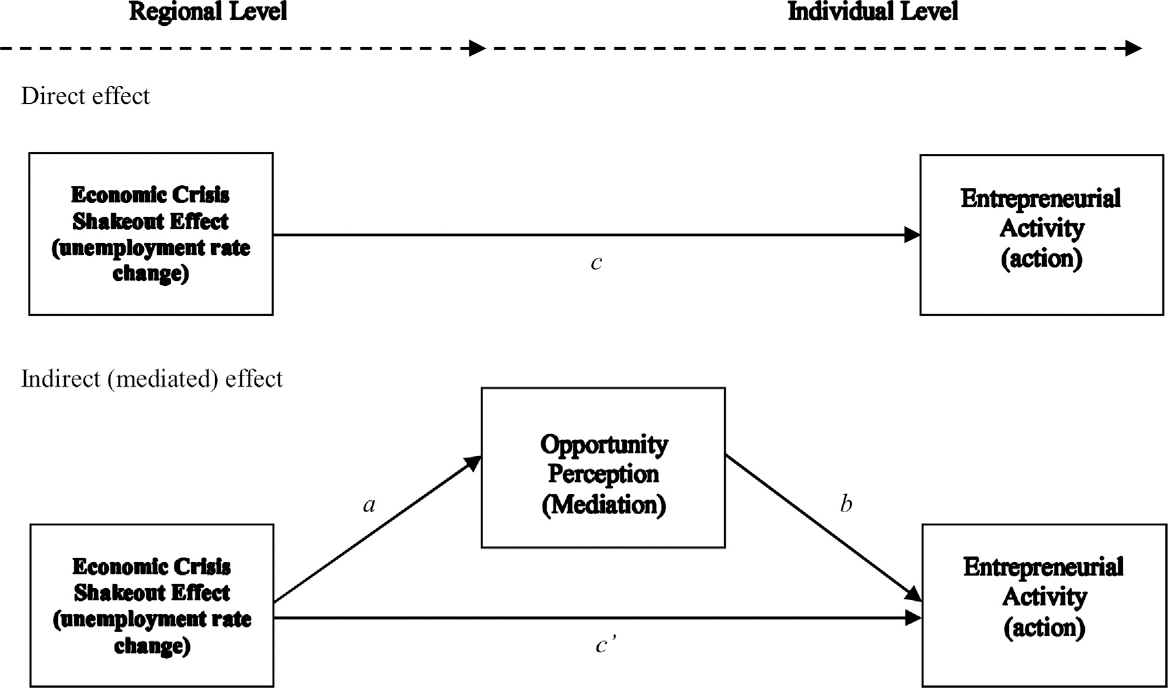
Illustration of the direct and indirect effect of a recession-driven economic shake out on the entrepreneurial action.
The multilevel mediation model is represented by three systems of equations:


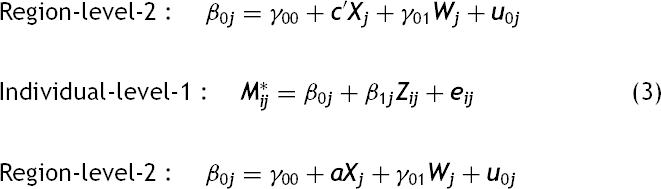
The individual-level-1 part of Eq. (1) includes the dependent variable, 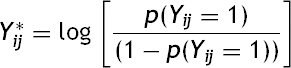
The region-level-2 part of Eq. (1) indicates that the region-level intercept, β0
In Eq. 2, the individual-level-1 part includes the coefficient 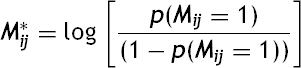
Descriptive statistics
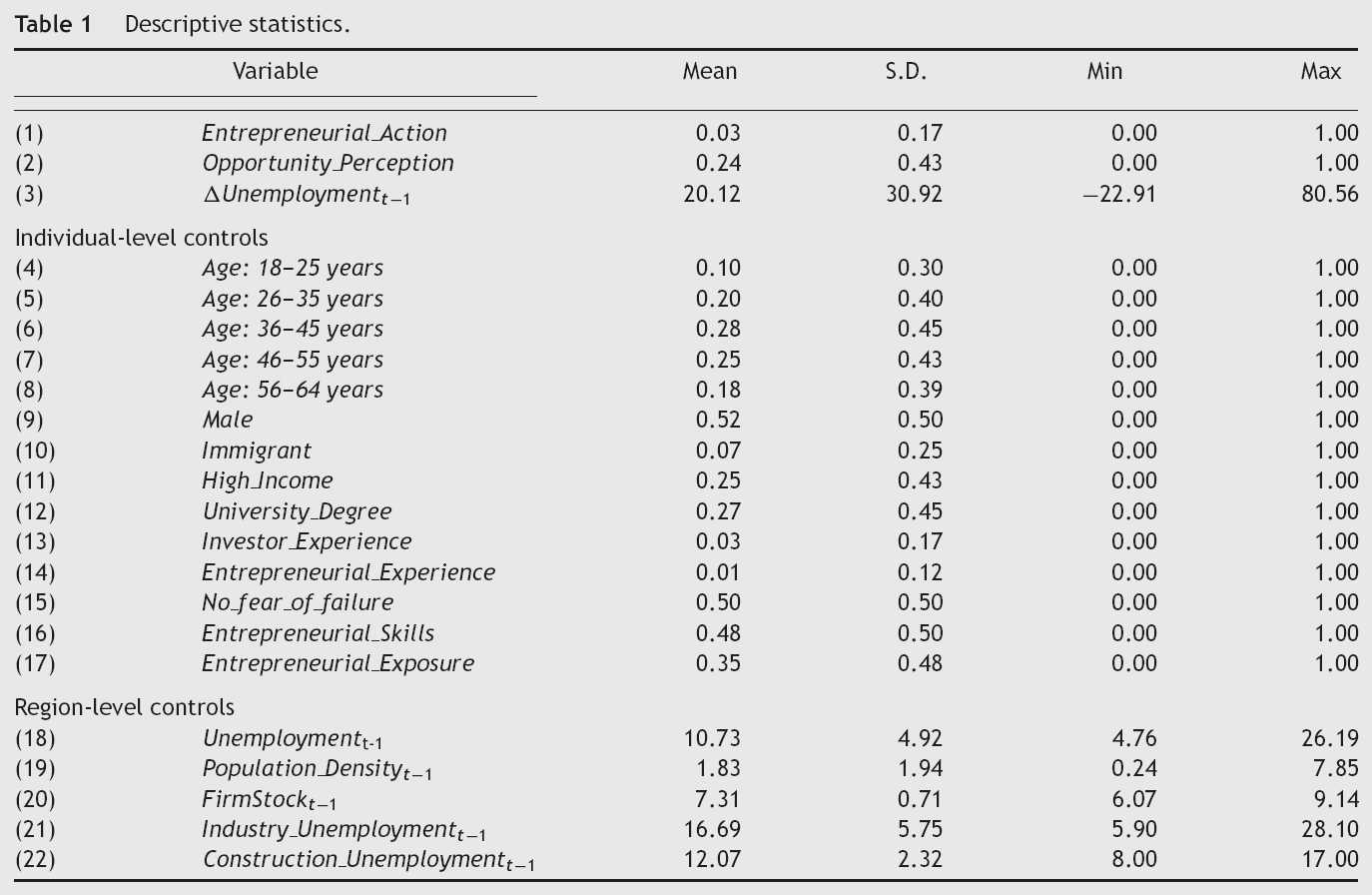
Table 1 shows the descriptive statistics, while Table 2 illustrates the correlation matrix for the whole sample during the period of 2007–2010. As exhibited in Table 1, approximately 24% of individuals perceive business opportunities in the next six months and 3% of the individuals are engaged in a nascent entrepreneurial activity. These figures are similar to those of other European countries obtained by Santos et al. (2017) for the period of the economic crisis in the EU.
Descriptive statistics.
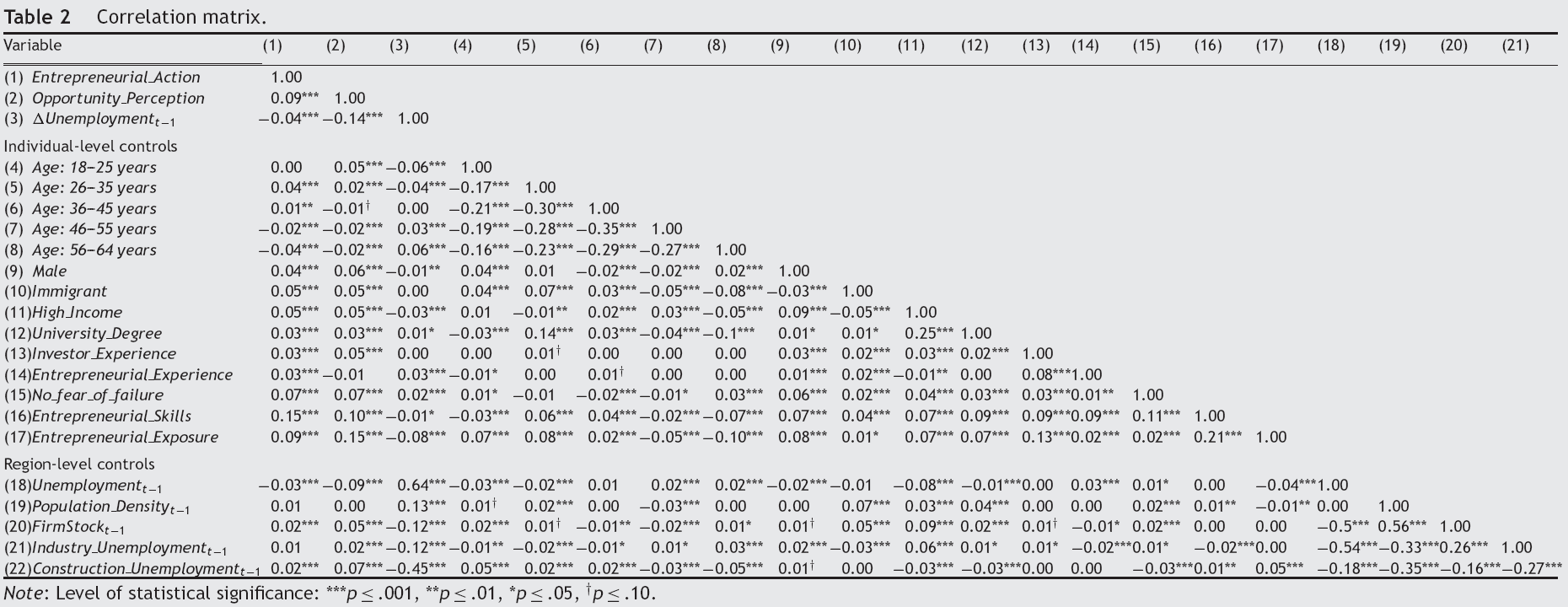
On the other hand, the correlation matrix in Table 2 reveals that most explanatory variables are not highly correlated. However, a few coefficients were slightly above 0.50 (e.g., the coefficients between
Correlation matrix.
Results
Direct effect of economic shake-out on entrepreneurial action
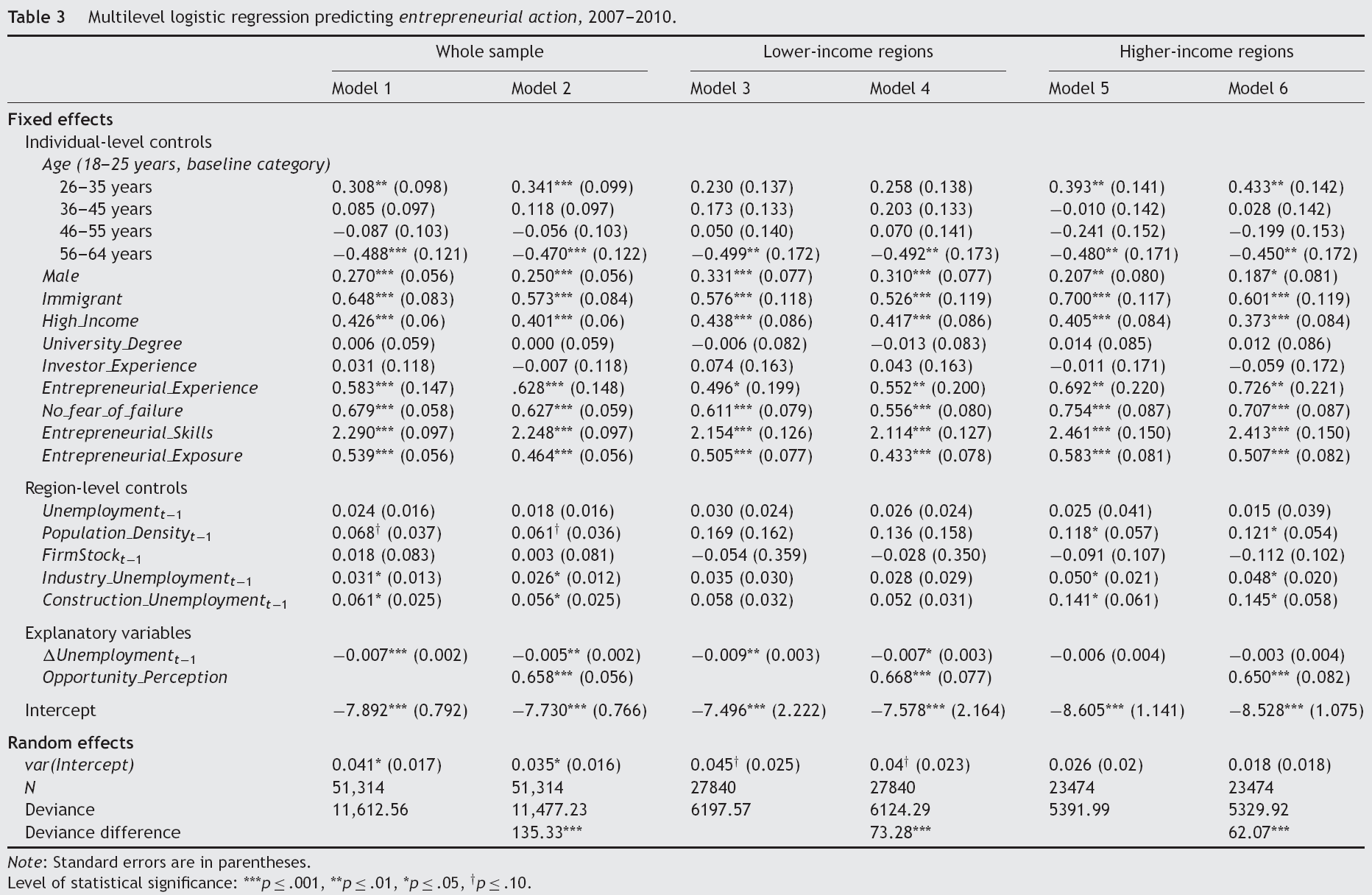
The results shown in Table 3 correspond to the
Multilevel logistic regression predicting
Level of statistical significance:
To test hypothesis H1b, whether the shake-out effect of the economic crisis differed across local contexts, a median-split analysis was performed by separating the data into
Indirect effect of shake out on entrepreneurial action mediated by opportunity perception
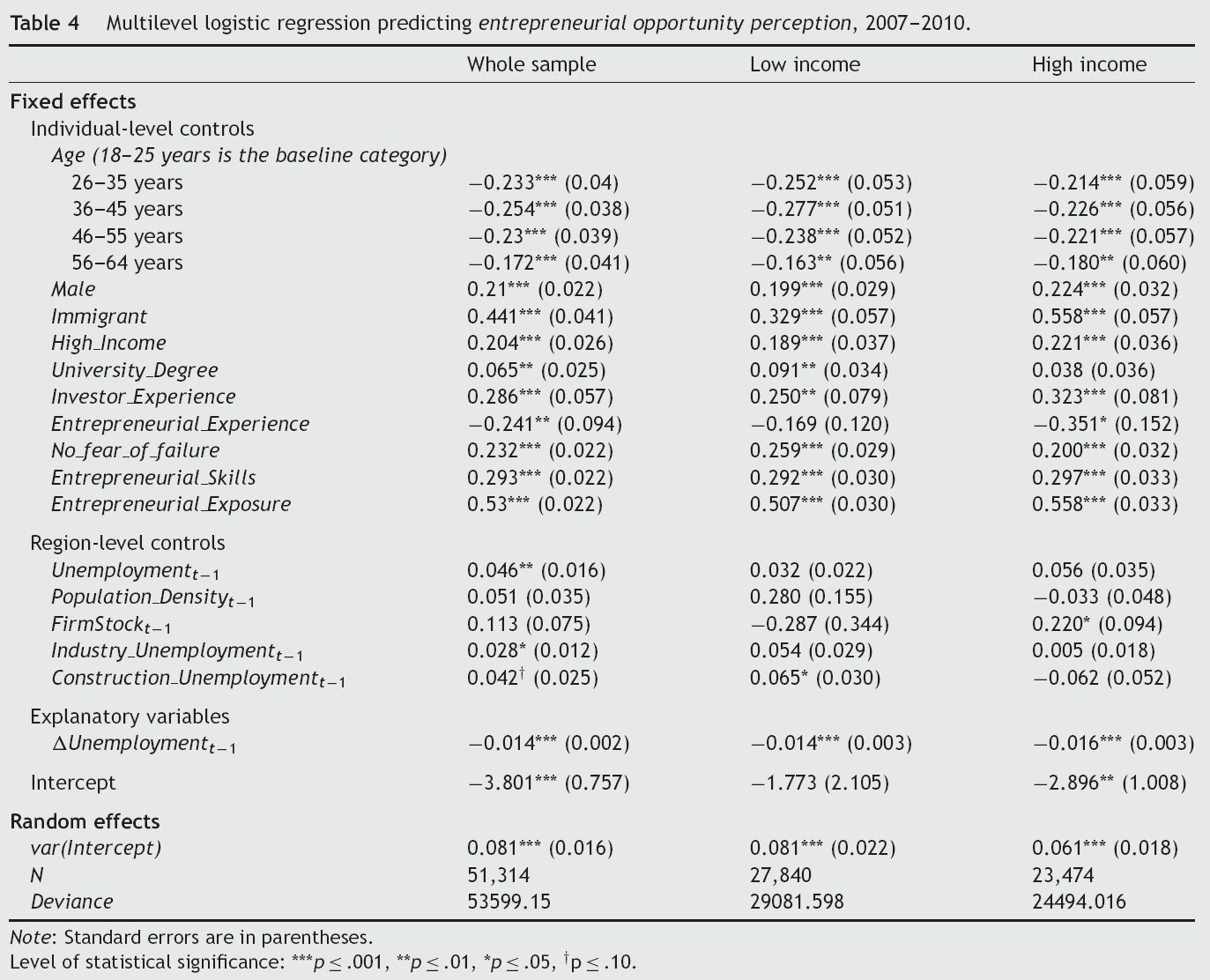
To test hypothesis 2a, we ran a multilevel logistic regression test by which we predict the effect of the change of the regional unemployment rate on the mediator variable: perception of business opportunities (i.e., Eq. (3) of our empirical model). Separate tests were conducted for the whole sample and the samples of individuals in
Multilevel logistic regression predicting
Level of statistical significance:
p ≤ .10.
The
A preliminary test of mediation was applied for hypothesis 2c, following the standard procedure proposed by Baron and Kenny (1986). According to this procedure, mediation exists if three conditions are met. First, the explanatory variable is a significant predictor of both the dependent variable and the mediator variable. Second, the mediator variable is a significant predictor of the dependent variable. Third, the effect of the independent variable on the dependent variable decreases when the mediator is added to the regression model. If the effect of the explanatory variable is no longer significant when the mediator is added, then the effect is
The results for the whole sample in Tables 3 and 4 show that the three abovementioned conditions were met. Thus, the negative effect of unemployment rate changes on individual entrepreneurial action was mediated by the individual perception of business opportunities. And this mediation was partial since the shake-out effect decreased but remained significant after adding the mediator. We conducted an additional robustness check by estimating the mediation effect and a test of significance (Sobel, 1982). Because coefficient estimates from logistic regressions cannot be directly compared across models, coefficients involved in the mediation shown in Fig. 2 were standardized before estimating the mediation effect (MacKinnon, 2008).
3
Table 5 shows the standardized coefficients
This is done by multiplying each coefficient by the standard deviation of its corresponding predictor variable and then dividing the product by the standard deviation of the outcome variable. For more details, see Mackinnon and Dwyer (1993) and MacKinnon (2008, p. 306–307).
The percentage explained by the indirect effect is estimated as follows:
Standardized coefficients for the estimation of the
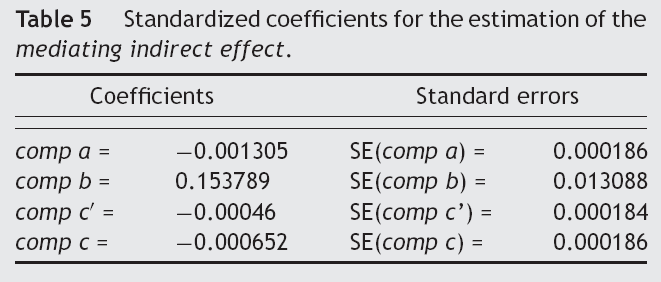
Therefore, the results suggest that opportunity perceptions mediated the relationship between unemployment rate changes and entrepreneurial activity (i.e., hypothesis 2c is accepted). In other words, there exists a negative
Most control variables behave as expected. It should be noted that
Conclusion
While there are numerous stylized facts on firm entry, exit, survival and growth (Geroski, 1995), the literature has not resolved yet the long debate on the relationship between business cycles and entrepreneurship. Most studies support the opinion that such a relationship is complex, and the subject still warrants further research (Acs and Storey, 2004; Audretsch and Peña-Legazkue, 2011; Fritsch, 2008).
Our findings suggest that economic context matters for the
The paper is not without limitations. Only one proxy has been used to describe the recession shakeout effect (e.g., changes in unemployment rate of regions as in the study by Fritsch et al., 2015), and the study is limited to the case of Spain during a precise economic recessionary period (2007–2010). Although the results can be seen as solid and valid enough as several additional tests for robustness were conducted (e.g., findings were similar when other proxies of the current crisis were considered, such as changes in GDP per capita), we suggest that further studies should be undertaken in other geographical contexts to authenticate our
The results provide interesting implications for policymakers. First, an economic cycle correlates positively with the entrepreneurial
In addition, policymakers should be aware of the heterogeneous entrepreneurial activity displayed across sub-national contexts (Bishop and Shilcof, 2017; González-Pernía et al., 2012). Our findings show that the entrepreneurial
Several avenues for future research are suggested. It would be interesting to study the influence of other mediating factors between the economic context (i.e., business cycles) and entrepreneurial action to better understand the process of firm creation. In this paper, opportunity perception was analyzed as a coherent mediator in the entrepreneurial process, but the effect of other mediators subjected to policy intervention remains to be explored (i.e., fear of business failure, self-confidence about entrepreneurship skills, etc.). Comparing the results with other findings from distinct economic contexts and business cycles may confirm (or challenge) the consistency of this phenomenon. Our study could be enhanced if the study of the shakeout effect focused not only on the quantity of start-up firms but also on the quality of the firms created during economic recession periods (e.g., rates of high-growth or gazelle firms, global-born firms, innovation-driven firms, etc.) and the motivation for firm creation: opportunity versus necessity-driven entrepreneur-ship (i.e., as in Fairlie and Fossen, 2018; Fuentelsaz et al., 2015). These are intriguing issues that we leave for further research.
Funding
The authors are grateful for the financial support of IT-1050, granted by the Department of Education of the Basque Government.
Footnotes
None.
Acknowledgements
The authors are grateful to participants at the RENT XXIX Conference for their helpful comments on an earlier version of this paper. The authors also thank two anonymous reviewers for their insightful comments and suggestions to improve the manuscript. Any errors, interpretations and omissions are the authors’ responsibility. This research was supported by the Department of Education of the Basque Government (financial support IT-1050).