






Abstract
The paper analyzes the influence of management capabilities on the innovation performance of technology-based SMEs and the role that gender diversity in the top management team plays in this relationship. We use a sample of 205 Spanish SMEs from technology sectors and a hierarchical regression analysis to test our hypotheses. The results confirm that management capabilities affect both product and process innovation positively. In addition, gender diversity in the top management team moderates this relationship positively. In other words, management capabilities have a greater influence on both product and process innovation when the management team is more balanced in number of men and women. This study contributes to better understanding of the factors that explain how management capabilities translate into greater organizational achievements and argues the need to analyze the role of top management teams and their composition more extensively, especially in the context of technology SMEs. The study also contributes new evidence to the small number of studies that analyze the effect of gender diversity in top management teams on innovation.
Introduction
An organization's management capabilities are crucial to achieving congruence among its competences and the changing conditions of its environment (Penrose, 1959; Kor and Mesko, 2013). These capabilities combine greater technical, human, and conceptual abilities (Katz, 1974) to construct, integrate, and reconfigure the organization's resources and competences (Adner and Helfat, 2003). In this way, capabilities can achieve greater profits (Castanias and Helfat, 2001) and competitive advantages for their organizations (Carmeli and Tishler, 2004).
From a theoretical perspective, Kor and Mesko (2013) show that management capabilities contribute to establishing a dominant logic in the firm that takes concrete form in routines, procedures, and capabilities that influence implementation of strategies and the search for new options for growth and innovation. In fact, research in the last decade obtains empirical evidence of the relationship between management capabilities, strategy, and performance (e.g., Adner and Helfat, 2003; Barbero et al., 2011; Carmeli and Tishler, 2004; Castanias and Helfat, 2001; Kearney et al., 2014; Sirmon and Hitt, 2009).
In spite of advances in studying the influence of management capabilities on organizational results, many research questions must still be addressed to achieve greater knowledge of this relationship and of the mechanisms or conditions through which it occurs (Helfat and Martin, 2015).
On the one hand, much empirical research performed to date treats different dimensions of management capabilities—for example, cognitive capabilities and capabilities for managing human and social capital—separately (e.g., Adner and Helfat, 2003; Sirmon and Hitt, 2009; Quintana-García et al., 2013). Few studies have attempted to analyze the interactions between all of these capabilities or have treated them jointly (Carmeli and Tishler, 2004; Hitt and Ireland, 1985). On the other hand, analysis of how the different levels of management capabilities lead to differences in performance achieved have hardly taken into account aspects related directly to the characteristics of the managers who make the decisions. Specifically, Helfat and Martin (2015) suggest that the research on management capabilities can be enriched by incorporating literature on top management teams, since these teams lead organizations’ growth, adaptation, and strategic change. In this respect, the framework of
Based on the foregoing, this study aims to contribute new evidence on the relation between management capabilities and performance achieved by considering the characteristics of the top management team. Specifically, it analyzes the influence of management capabilities on innovation performance in technology-based SMEs, and the role of gender diversity of the top management team as a moderating variable in this relationship.
Technology-based firms need managers who exploit the resources and capital of their firms to innovate constantly and respond to the rapid, discontinuous changes in their environment (Makri and Terri, 2010). In this context, achieving results from product and process innovation is crucial for firms’ survival and success. Some studies stress that precisely the lack of management abilities, especially in managers in the technology sector, subjects the firm to greater difficulties in achieving success and development of its business (Gapaldo and Fontes, 2001; Storey and Tether, 1998). Further, SMEs have greater resource limitations than large firms, and their administrative support systems for the decision-making processes are less developed. SMEs thus depend more on the capabilities of management to achieve results (Lubatkin et al., 2006).
Further, study of how management capabilities affect innovation performance in SMEs may be conditioned by their greater administrative flexibility and the strong participation of the top management team in all of the firm's processes and activities (Escribá-Esteve et al., 2009). We believe that a top management team—one that is responsible for strategic or critical decisions for the firm's development (Collins and Clark, 2003; Papadakis and Barwise, 2002) and whose composition favors a climate of cooperation, communication, generation of ideas, and creativity—is a relevant factor in explaining how management capabilities lead to greater innovation performance. For example, it has been shown that organizational cultures more oriented to values such as flexibility, creativity, autonomy, or connection with the organization positively encourage product and process innovations (Naranjo-Valencia et al., 2012). Prior studies like that by Kearney et al. (2014) suggest that small firms’ management capabilities sustain development of innovations because these capabilities encourage interaction and use of resources, as well as development of a culture that fosters collaboration among workers and innovation.
Within the literature on the composition of management teams, some studies indicate that women improve management abilities, decision-making processes, and innovation (Bagshaw, 2004; Dessler, 2001; Díaz-García et al., 2013; Torchiaet al., 2011). In their role as managers, women tend to be more people-oriented, more democratic and consultative, and more inclined to interpersonal relations (Brown et al., 2002). Gender diversity thus contributes to improving social relations, developing an open work climate (Nielsen and Huse, 2010), and establishing a much more varied view of problems that generates more diverse ideas (Milliken and Martins, 1996).
We draw on both the theoretical support derived from
Our research makes three contributions to the literature on management capabilities and innovation, and the gender literature. First, it suggests that management capabilities are an effective resource for SMEs in the technology sector, a resource that can be employed to improve their innovative performance by helping them to face their varied limitations more fully through better management of their resources and capabilities. We thus extend the results obtained previously by Barbero et al. (2011), which show that management capabilities positively influence the growth of SMEs through their positive effect on expansion of the market and innovation; and the study of microfirms in the tourist sector by Kearney et al. (2014), which shows that management capabilities influence innovation.
Second, this study incorporates a new variable of explanatory analysis in the relation between management capabilities and innovation—gender diversity in the top management team—and confirms the need to incorporate literature on top management teams to better explain the mechanisms by which management capabilities influence organizational results. Specifically,
Third, our study contributes to the literature on gender by confirming the importance of incorporating women into management levels to achieve firms’ innovation performance. Although the academic literature's interest in gender diversity as an explanatory variable of entrepreneurial results has intensified (Adams and Ferreira, 2009; Dezso and Ross, 2012; Joecks et al., 2013; Jurkus et al., 2011; Krishnan and Park, 2005; Smith et al., 2006), most studies focus on financial results and on large firms. Our study takes an original approach in focusing on nonfinancial results and technology-sector SMEs, where women have a smaller presence.
To develop this study, the following section presents the literature review and research hypotheses. The next section shows the methodology used and the data analysis. Finally, we discuss the research results and main conclusions, as well as the limitations and future lines of research
Theoretical framework and hypothesis development
Relationship between management capabilities and innovation
The top management team is the group that adopts the firm's general decisions, establishes the objectives to be achieved, and designs the means to achieve them (Kor, 2006). This team plays a crucial role in any kind of organization, but its importance is, if possible, even more significant in SMEs (Rubio-Bañón and Aragón-Sánchez, 2009). It is considered to be their most important asset (Lerner and Almor, 2002); conversely, its absence or a deficit in management capabilities is one of the greatest factors in SME failure (Martin and Staines, 1994; Rubio-Bañón and Aragón-Sánchez, 2009). Penrose (1959) was one of the first researchers to indicate lack of management talent as the main limitation for organizational growth. She affirms that management services are unique elements in each firm, cannot be acquired in the short term on the market, and will enable the organization to grow depending on their use and availability.
Management capabilities refer to the capabilities with which managers construct, integrate, and reconfigure the organization's resources and competences (Adner and Helfat, 2003). These capabilities enable top management teams to face their environment, improve organizational performance, and maintain and create competitive advantages (Carmeli and Tishler, 2004). This study proposes the influence of management capabilities on product and process innovation, as the two main areas for evaluating the performance of the innovative process (Prajogo and Sohal, 2006).
Firms need their managers to employ their capabilities to design organizational and strategic processes that lead organizations to innovate and obtain more growth (Eisenhardt and Martin, 2000). Some studies suggest that innovation processes require top management teams to use their management capabilities to assign and distribute the firm's resources and activities properly (Hoskinsson et al., 1993; Kraus et al., 2008; Wolff and Pett, 2006).
Some researchers argue that firms can achieve product innovation by managing their resources properly and coordinating their actions (Hoskinsson et al., 1993; Kraus et al., 2008; Markides and Williamson, 1996; Smith and Cooper, 1988), designing strategies that drive new product development (Yadav et al., 2007) or establishing external relationships with customers and suppliers to generate knowledge and external competences to complement their own (Wu et al., 2007). As a whole, top management teams should use their management capabilities to detect, develop, and deploy new products (Yadav et al., 2007).
As in the case of product innovation, the top management team plays a vital role in the success of process innovations (Murat and Baki, 2011). Process innovation requires that the management team have the capability to manage resources efficiently and capture synergies between resources located in different parts of the organization (Tidd, 2000). All of these actions oriented to achieving results in process and product innovation depend on management capabilities.
The management capabilities that SMEs develop successfully are composed of the human, technical, and conceptual resources of their top managers (Katz, 1974). Katz defines human abilities as the ability to work effectively with people and to construct a climate of cooperation and security in which employees feel free to express themselves. Goh and Richards (1997) stress the role of psychosocial facilitators such as trust and commitment in generating innovations in the organization.
The human abilities of top managers are relevant to achieving innovation performance. Employees’ commitment and relations based on trust contribute to generating an organizational climate that favors collaboration and support, crucial factors for fostering product innovation (García-Cruz and Real-Fernández, 2013). Processes of new product development require top management to stimulate its employees to share their ideas and develop new products (Sethi et al., 2001). Small firms make it easier for managers to be very close to work posts and to their employees. It is essential that they use their human capabilities to improve communication and trust and to achieve a work climate that encourages exchange of knowledge and drives the development of innovative products (Prajogo and Ahmed, 2006; Wilkinson, 1999).
In the same way, process innovation often requires close collaboration with workers. Thus, top management teams can use their human abilities to ensure that the organization's members interact and exchange their knowledge and ideas in order to participate in problem solving and in the creative processes needed for the development of process innovations (Sheremata, 2000). Burt (1992) indicates that managers who have an internal network of relationships can easily obtain information and other resources with which to improve the organization's performance. Top managers can use their abilities to generate positive attitudes among their employees, reduce communication problems, and improve performance (Hoonsopon and Ruenrom, 2012).
On the other hand, technical abilities involve knowledge that facilitates use of tools, techniques, and effective procedures to develop the organization (Katz, 1974). Top managers can implement techniques, programs, and systems that drive development of innovations in the organization's products and services, such as training programs or participatory systems that encourage proposing ideas and creating new products or services.
Top managers can also improve development of successful innovative processes by using their technical abilities to design procedures that lead the organization to improve its performance. Implementing innovation in the organization's processes requires a high level of technical abilities that encourage and increase individuals’ capability to generate new and improved procedures (Jack et al., 2014).
Katz (1974) also indicates that managers’ conceptual abilities are related to the capability to see the firm as a whole and to recognize how the organization's various functions depend on each other and how changes in any part will affect all other parts. In this way, managers’ capabilities enable them to analyze what happens, perceive tendencies, anticipate changes, and recognize opportunities and potential threats (Martin, 2011; Yukl, 2002), as well as to establish processes that are useful for developing new products (Maggittiet al., 2013). Authors like Barberoet al. (2011) believe that new product design depends on management capabilities due to their influence on identification of new tendencies and opportunities. In the case of SMEs, which are characterized by their closeness to the market, managers have greater knowledge of the customer and can use their capabilities to respond rapidly to customers’ needs (Pil and Holweg, 2003).
Based on the foregoing arguments, we propose that managers’ capabilities benefit development of product and process innovations. We therefore propose the following hypotheses:
Hypothesis 1a
Management capabilities have a positive effect on product innovation.
Hypothesis 1b
Management capabilities have a positive effect on process innovation.
Gender diversity in the management team as a moderating variable in the relation between management capabilities and innovation
Starting from the arguments that led us to propose a positive relationship between management capabilities and innovation performance, one can argue from
The central premise of
According to Krishnan and Park (2005), gender is a richer, more complex demographic variable than other variables, such as age, education, functional career, or seniority of members of the management team, since its effects originate in managers’ socio-cognitive base. Gender diversity constitutes an important measure of the top management team's diversity and provides all of the benefits that a diverse team can give the organization (Catalyst, 2004).
Previous studies show that gender diversity in the top management team provides different types of abilities, knowledge, and ideas that generate benefits for the organization (e.g., Krishnan and Park, 2005; Ruigroket al., 2007; Torchia et al., 2011). For example, based on critical mass theory, Torchia et al. (2011) find that, a top management team composed of at least three women (size of the minority group) will be more heterogeneous and have more interaction, permitting high-quality decision making and generation of more creative, innovative solutions than homogeneous groups. Homogeneous groups usually have a lower range of abilities, ideas, and experience than heterogeneous groups.
Ruigrok et al. (2007) confirm that women in top management teams not only bring different perspectives, abilities, and knowledge, but also contribute different values, norms, and understanding relevant to improving this team's functioning and the organization's results. According to Østergaard et al. (2011), gender diversity is related to improvement in problem solving, creativity, learning, flexibility, and variety of capabilities, which can increase the probability of introducing new products or services in the organization.
Arguments from social cognitive and gender theory also suggest that men and women have different socialization experiences—such as professional experience or affiliation with social networks—which shape different innovative strategic options (Bandura and Bussey, 2004; Manolova et al., 2007). Díaz-García et al. (2013) indicate that gender diversity in the R&D team enables the team to be more innovative and adaptable, since individuals with different social experiences and professional trajectories can generate diverse perspectives, capabilities, and knowledge, which, when combined, can create new knowledge and encourage development of creativity and innovation.
As Miller and Triana (2009) suggest, gender diversity in the top management team provides the firm with different human and social capital that helps top management teams to produce new ideas, allocate resources properly, and detect research opportunities, actions that improve the firm's innovation. In contrast, top management teams with a majority presence of either men or women tend to take less advantage of the potential of gender diversity to enable management capabilities to encourage product and service innovation to a greater extent.
Gender diversity in top management teams also contributes improvements in abilities such as conflict resolution, adaptation to change, and integration (Krishnan and Park, 2005). Further, the multiple roles that women perform in their personal life provide psychological benefits that enrich interpersonal and leadership abilities (Ruderman et al., 2002). With greater gender diversity, it is more likely that these abilities will facilitate implementation of management capabilities and generate a work atmosphere that facilitates communication, proposal of ideas, and employee participation, encouraging greater develop of product and process innovations. In fact, gender diversity in the top management team increases the possibility of connecting with each member of the organization and generating an open work environment (Nielsen and Huse, 2010). Process innovations require changes in organizational structure, administrative systems, and production techniques employed (Ettlie and Reza, 1992). These changes could imply variations in work relationships and the specifications of tasks to be performed, changes that require strong support from employees and a good work climate.
In addition, since the presence of women on the top management team may be perceived as inclusion of different minority groups in the firm's highest level and thus as a positive sign for the rest of the organization (Tidball, 1980), it can improve workers’ attitudes (Appold et al., 1998). Homogeneous top management teams can use their management capabilities to improve the work climate and their employees’ attitude, but some members of the organization may feel excluded and have a negative attitude toward the top management team's ideas.
Based on the foregoing, in situations of greater gender diversity in the top management team, we can expect the search for and allocation of resources that influence innovation to be performed with the contribution of new perspectives, knowledge, values, and socialization experiences that are less present in more homogeneous groups. The implement of management capabilities will translate into more novel, creative routines and procedures that can help the firm to find opportunities for development and change in products or processes. Kor and Mesko (2013) explain these mechanisms through which management capabilities translate into organizational performance and term them management's dominant logic and the firm's dominant logic.
The positive effects of gender diversity mentioned here and those derived from women's different cognitive and social bases will influence the dominant management logic created from management capabilities, which is merely the application of the mental models, knowledge, and abilities of the top management team to the specific context of the firm (Kor and Mesko, 2013). According to Kor and Mesko (2013), this logic guides the management team in its interpretation of the information relevant to the firm, decision making, allocation of resources, and establishment of expectations about the firm.
We can expect top management teams with more gender diversity to develop a dominant management logic that reflects the knowledge, values, and socialization experiences of the women, taking into account their perceptions of the environment, way of interrelating with other members of the team, and expectations about their own performance and roles (Manolova et al., 2007). When top management teams are more diverse, management capabilities will translate into generation of a dominant management logic that incorporates women's perspective and that can take materialize in more novel and creative decisions, different configurations of resources, or a favorable, participatory climate that encourages product and process innovation. As indicated, gender diversity in the team permits organizations to take advantage of the team's different management abilities and to generate greater creativity and innovation (Bagshaw, 2004; Dessler, 2001). In contrast, top management teams with less diversity will contribute less to development of a dominant management logic with the above-mentioned characteristics inherent in gender diversity.
Over time, with the putting into practice of the dominant management logic, this logic ends up becoming the dominant logic of the firm, understood as a system of expectations, beliefs, and properties that infuse the firm's routines, procedures, and commitments. This dominant logic informs and influences the organization's members in achieving their productive efforts and initiatives (Kor and Mesko, 2013). With time, therefore, greater gender diversity can encourage consolidation of a dominant logic in the firm with routines and procedures sustained by management and cultural styles that derive from this diversity and thus encourage achievement of better results in product and process innovation.
Based on the foregoing, we propose that the relation between management capabilities and innovation performance will be promoted by greater gender diversity in the top management team and that the relationship will be less positive when the team has less gender diversity.
We therefore propose the following hypotheses:
Hypothesis 2a
The greater the gender diversity of the management team, the stronger the positive relationship between management capabilities and product innovation.
Hypothesis 2b
The greater the gender diversity of the management team, the stronger the positive relationship between management capabilities and process innovation.
Methodology
Sample
The study population is composed of Spanish technology-based SMEs, a business sector rarely analyzed and one that plays a crucial role in Spain's economic development (Farinas and López, 2006). These SMEs operate in a technology-intensive industry that is measured by its degree of innovation, research, and development.
The technology-based firms were selected following the criterion proposed by the Spanish Statistical Office (SSO). The SSO classifies technology-based firms as those situated in the following sectors: pharmaceutical industry; aeronautic construction; production of communications, office, and computer equipment; technology manufacturing industry, chemical industry, and all sectors involved in production of transportation-related equipment and material goods. The sector also includes the high-tech services that compose telecommunications and research and development activities.
According to the data consulted in the SSO, there were 103,125 technology-based firms in Spain in February 2010. We used the European Commission's criterion to select the SMEs, which indicates that SMEs have fewer than 250 workers, a billing volume under 40 million euros, and an annual balance-sheet total that does not exceed 27 million euros. After choosing the sectors and the study population, we identified firms that fulfill these requirements based on the SABI database (a Bureau van Dijk database of data from the central balance sheets of Spain and Portugal), and obtained a total of 7304 Spanish firms. We obtained the contact data of the firms’ CEOs from this database.
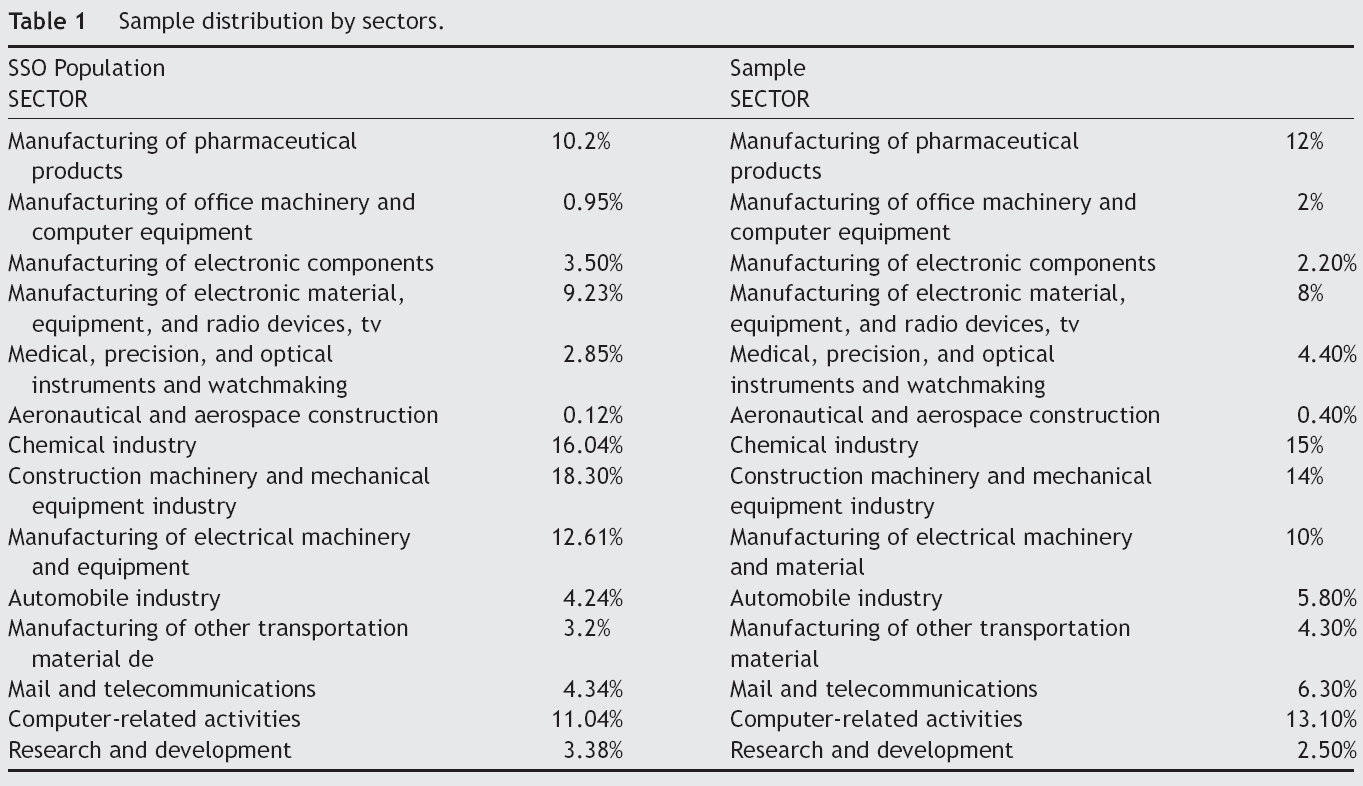
We collected the data in May 2010 using the CATI interview method. Taking into account the distribution of firms by sector, we chose a random sample of 998 firms to contact to set up interviews. We ultimately obtained 224 complete questionnaires. We discarded 19 because they were not answered by the firm's CEO, to whom they were directed because the CEO has holistic knowledge of the firm's situation. We thus obtained 205 useful questionnaires for the study, giving a response rate of 20.54%. Table 1 shows the distribution of the study sample by technology sectors.
Sample distribution by sectors.
A brief descriptive study of the sample highlights that most of the firms are consolidated, as 82% were over 15 years old, 16% from 5 to 10 years old, and only 2% under 5 years old. As to sales volume, 79% of the firms surveyed showed a sales volume of 7–40 million euros, 20% a volume of 1–7 million euros, and only 1% a volume below one million euros. 13% of the firms surveyed were microfirms, with fewer than 10 workers, and 70% employed 10–50 workers. The remaining 17% employed 50–250 employees.
To avoid the problem of measurement error that could affect the research results and validity of the conclusions, we used several techniques to control for common method bias (Podsakoff and Organ, 1986; Podsakoff et al., 2003). First, we protected anonymity and reduced evaluation apprehension by including instructions in the questionnaire that stressed the anonymity and confidentiality of the data requested and the absence of correct or incorrect responses. These procedures aim to reduce respondents’ apprehension about the evaluation and make them less likely to answer the questions according to social desirability, desire to please, or the researcher's expectations. Second, we performed a pretest to control for ambiguous items. Like any measurement instrument, the questionnaire should be tested before its definitive application. We tested it by choosing a small sample of individuals with similar characteristics to the study population to evaluate whether the questions, concepts, and items included in the survey were formulated properly. This method sought to prevent the respondents from developing their own meanings for the questions.
Third, we used Harman's single-factor test, which consists of an exploratory factor analysis of all construct items as if they were a single item, to discount the possibility of obtaining a single factor that counts for most of the variance. The principle factor analysis of all measurement elements eliminated 6 factors with their own values greater than one. These factors explained 64.46% of the variance. Since the first factor represents 23.73% of the variance (less than half of the variance explained by the set of factors with own values greater than one), it is highly unlikely that common method variance is a serious problem in the data (Podsakoff and Organ, 1986). If any common method bias were present, its effect would be insignificant. We thus discounted the possibility that all data cluster in a single component and correlate highly amongst themselves.
Finally, we used the SABI database to confirm the existence of nonresponse bias. To do so, we drew a sample of 100 technology-based Spanish SMEs that did not answer the questionnaire. A t-test for independent samples showed that the mean differences were not statistically significant between the samples of responding and nonresponding firms relative to annual sales (
Variable measurement
Innovation performance
The measurement scale for innovation performance used in this study was developed by Prajogo and Sohal (2006). The scale is based on the key criteria for innovation used widely in studies of innovation, such as Deshpande et al. (1993), Hollenstein (1996), Miller and Friesen (1982), and Subramanian and Nilakanta (1996). These criteria refer to level of originality, use of latest technological advances, number of innovations, and speed of innovation (see Appendix 1). As Prajogo and Sohal (2006) indicate, four characteristics of innovation are applied to the two greatest areas of innovation, product innovation and process innovation. This distinction has also been articulated in the innovation literature. For each scale item, we asked the CEO to evaluate on a scale from 1 to 7 (where 1 represents much less relative to your main competitors, and 7 much greater than your main competitors), the extent to which the different statements contained in the items reflected the reality of their firm.
Management capabilities
Management capabilities were measured with the scale developed and validated by Hitt and Ireland (1985), and subsequently by Carmeli and Tishler (2004). This scale measures the degree to which the company attracts and retains highly qualified and competent managers and the ability to resolve conflicting opinions, improve effective coordination and collaboration among top managers, generate enthusiasm, and motivate the management team to achieve better performance (see Appendix 1). For each item in this scale, the CEO evaluated from 1 to 7 (where 1 represents strongly disagree and 7 strongly agree) the extent to which the different statements contained in the items reflected their firm's reality. In previous studies that used this scale (Hitt and Ireland, 1985; Carmeli and Tishler, 2004), as in others that measure management capabilities with different scales (e.g., Barbero et al., 2011), management capabilities were measured through the CEO's opinion.
Gender diversity in the top management team
Following previous studies, we considered the top management team of the SMEs in the sample to be the set of persons identified by the CEO who take strategic or critical decisions to develop the firm (Papadakis and Barwise, 2002; Collins and Clark, 2003). To measure gender diversity in this team, we calculated the Blau Index for each firm in the sample. This indicator is often used to measure demographic heterogeneity (Ruigrok et al., 2007). The formula is represented by the equation [
Control variables
As control variables, we chose firm size and age; expenditure on research and development (R&D); gender, age, years in the position, and education level of the firm's CEO; and technological intensity. Numerous prior studies have used firm size, since large organizations are more likely to develop more innovations due to their broad base of resources and capabilities (Henderson and Cockburn, 1994), leading us to expect a positive influence. The SABI database provided the date on which the firm was founded, which enabled us to calculate its age. We used age because older organizations do not usually make great innovations due to their strategic conservatism (Rhee et al., 2010). R&D expenditure was measured through mean percentage of total sales dedicated to R&D in the last three years. This measure was obtained by surveying managers of the firms studied. The control variables used have been included in previous studies of the issue analyzed (Carmeli and Azeroual, 2009; Sánchez-Peinado et al., 2010; Delgado-Verdeet al., 2011). The CEO's gender, age, years in the position, and education level are also variables that have been used in previous studies of the effect of the top management team on development of innovations in organizations (Wei and Lau, 2012; Nielsen and Nielsen, 2013). These measures were obtained by surveying the managers of the firms studied. The CEO's gender was coded 0 for a woman and 1 for a man. CEO education level was coded on two levels, 0 for no university study and 1 for university study. We used two dummy variables to classify technological intensity (high, medium-high, and cutting edge), where the variable technological intensity takes the value 1 for firms belonging to the high-technology sector and 0 for other cases (medium-high and cutting edge). The variable technological intensity B takes the value of 1 for firms in the medium-high technology sector and 0 for other cases (high and cutting edge).
Analysis and results
Reliability and validity of scales
The measurement scales for innovation performance and management capabilities have been validated in prior studies. To confirm that they maintained the psychometric properties required in our sample, we performed exploratory factor analysis (EFA) and confirmatory factor analysis (CFA). The results of the EFA confirmed the one-dimensionality of the scales for management capabilities, product innovation, and process innovation.
We then performed a confirmatory factor analysis (CFA), using the statistical program LISREL, to evaluate convergent validity. Hulland (1999) proposes that an indicator must fulfill three necessary conditions to be valid: (a) all factor loadings must be significant (
Confirmatory factor analysis of scales.
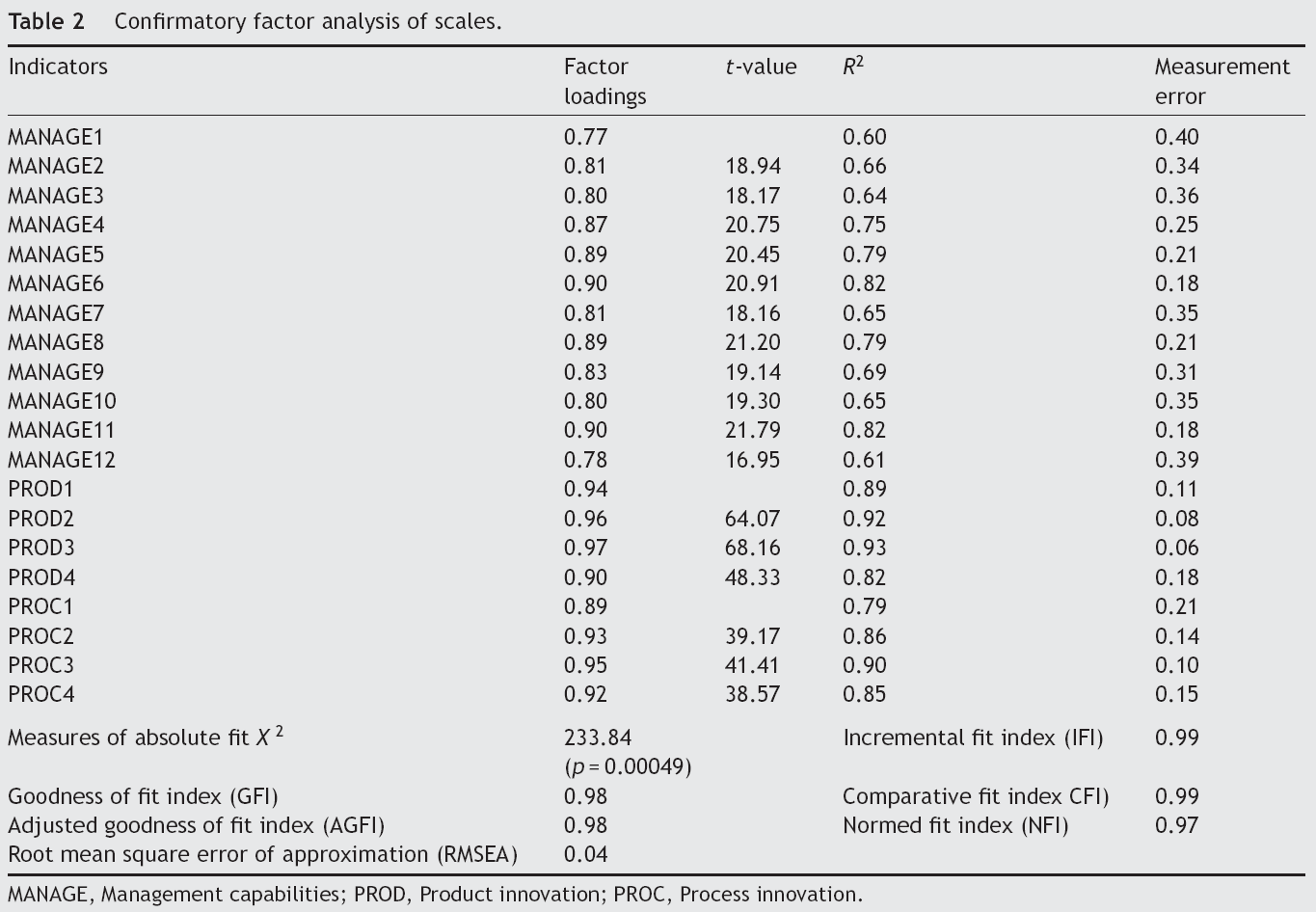
MANAGE, Management capabilities; PROD, Product innovation; PROC, Process innovation.
The analysis of internal consistency of the scales shows Alpha Cronbach coefficient (α = 0.7), acceptable according to the minimum recommended value of 0.7 (Hair et al., 2004) (see Table 3). Further, composite reliability is greater than 0.7 and variance extracted greater than 0.5 (Hair et al., 2004) (see Table 3).
Internal consistency of scales used.

Hierarchical regression analysis
To contrast the hypotheses, we used the hierarchical linear regression technique. Before the regression analysis, we performed tests to confirm whether the data used were appropriate, observing whether they fulfilled the assumptions of linearity, normality, and multicollinearity (Hair et al., 2004). To test for normality, we used Q-Q graphs, obtaining satisfactory data for both variables. We also examined linearity through the partial regression graphs and confirmed that the residuals do not show curvilinear distribution patterns, which permits us to explain the dependent variable through a linear regression. To confirm the absence of problems of multicollinearity, we calculated the tolerance indices and variance inflation factors (VIF) for each variable, obtaining tolerance variables between 0.755 and 0.980 and VIFs from 1.02 to 1.324. The tolerance values (close to 1, threshold set at 0.1) and VIF (close to 1, threshold set at 10) were within the appropriate levels, indicating that there are no problems of multicollinearity.
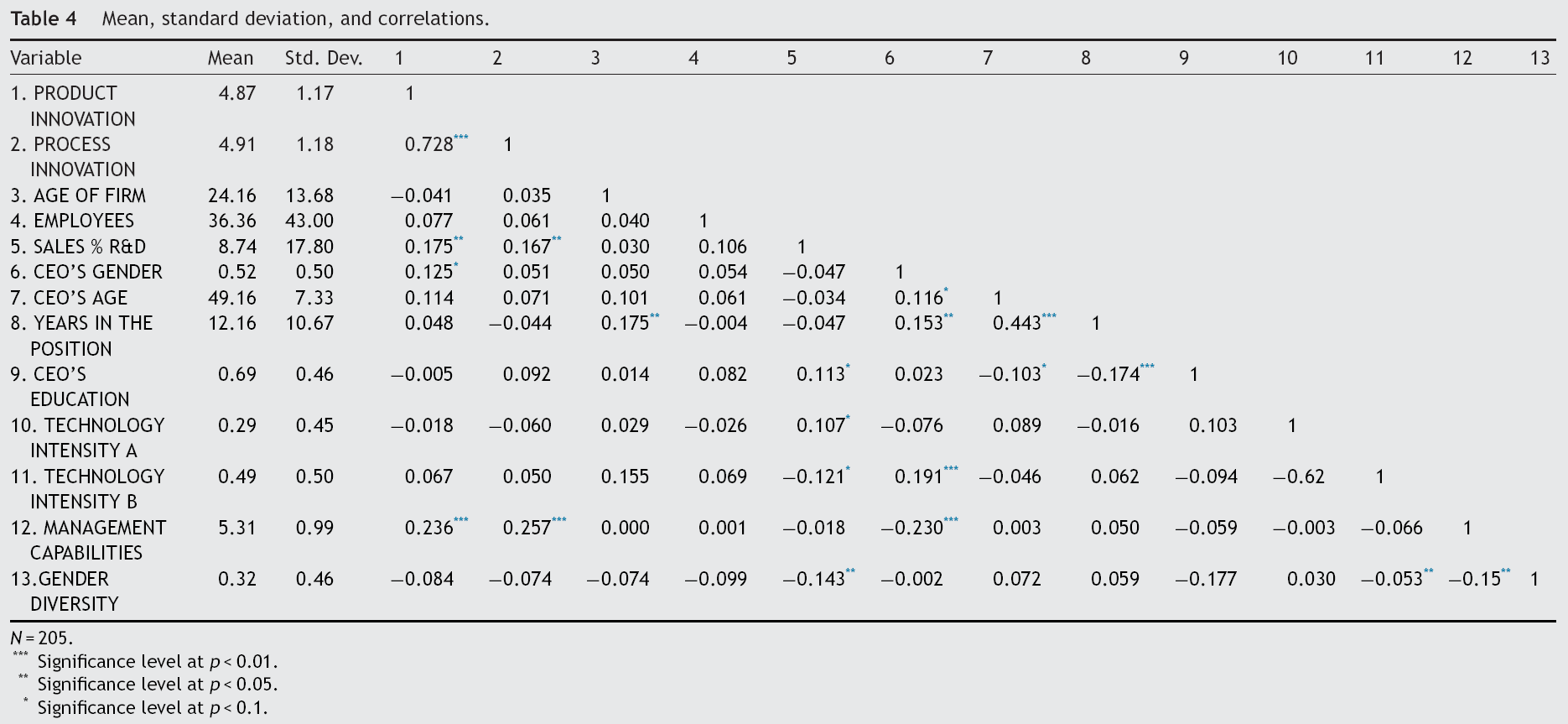
Table 4 presents the descriptive statistics and correlations between the different study variables.
Mean, standard deviation, and correlations.
Significance level at
Significance level at
Significance level at
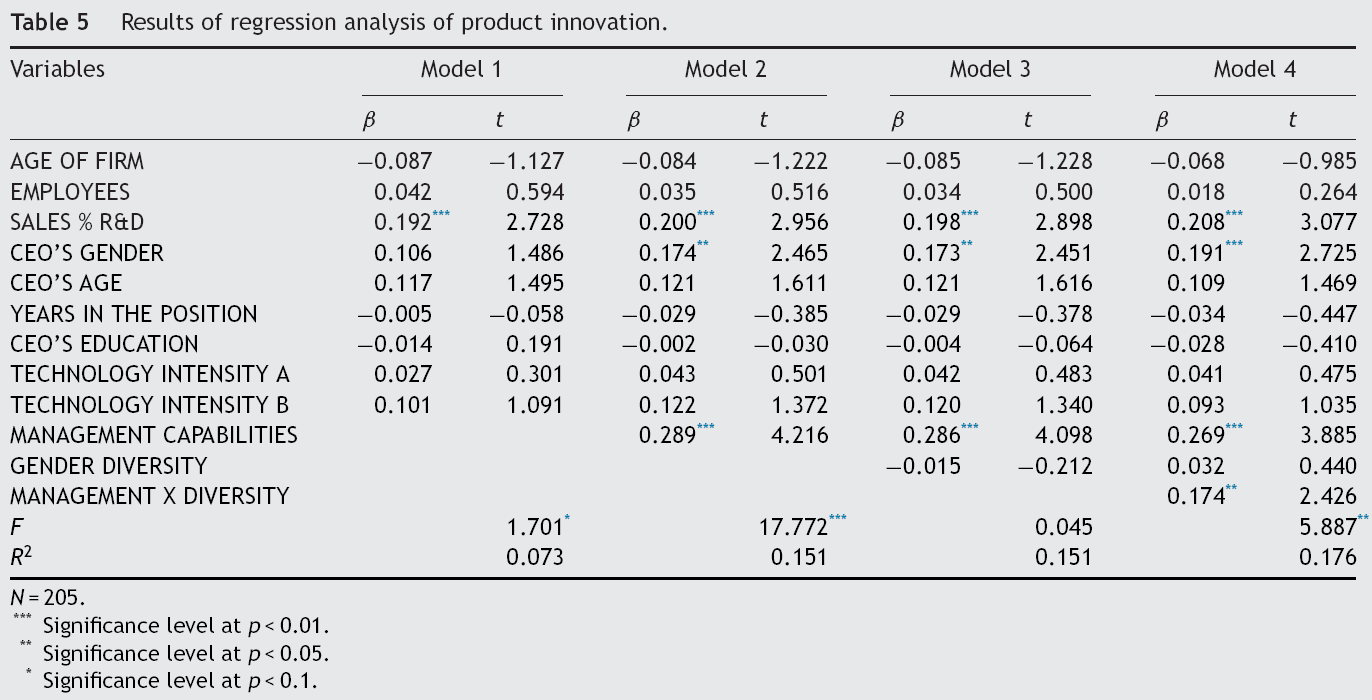
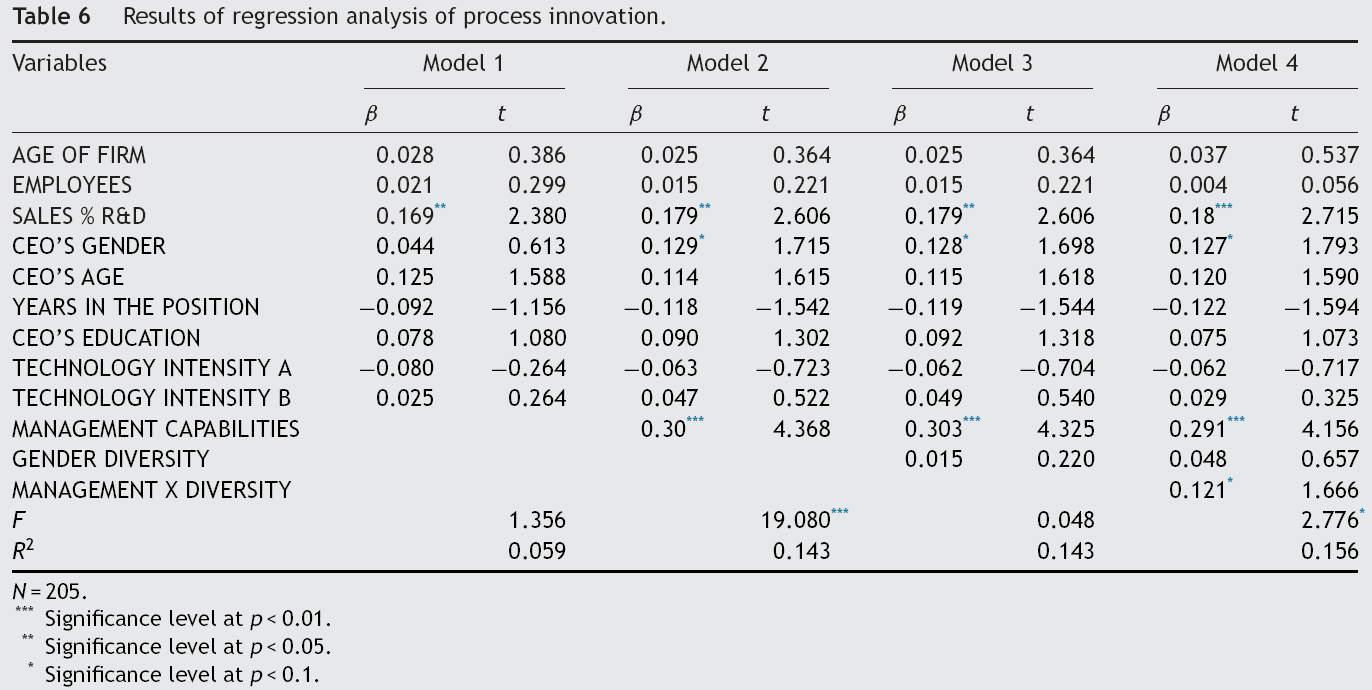
Tables 5 and 6 show the hierarchical regression analyses to evaluate the influence of management capabilities on product and process innovation, respectively, and the moderating effect of gender diversity of the top management team. Following the recommendations of Cohen et al. (2003), the variables were introduced in the models in 4 steps: first the control variables (Model 1), then the variable representing management capabilities (Model 2), then the variable gender diversity (Model 3), and finally the variables representing the interaction effects (Model 4).
Results of regression analysis of product innovation.
Significance level at
Significance level at
Significance level at
Results of regression analysis of process innovation.
Significance level at
Significance level at
Significance level at
Model 1 of the two tables highlights the strong positive and significant influence of percentage of sales dedicated to R&D, for both product innovation (β = 0.192;
Model 2 permits us to test Hypotheses 1(a) and 1(b). We observe a positive relationship between management capabilities and product innovation (β = 0.289;
In Model 3, we add the variable of gender diversity in the top management team. The results show no direct significant effect of gender diversity on either product or process innovation. Finally, Model 4 (Tables 5 and 6) introduces the interaction of gender diversity of the top management team with management capabilities and product and process innovation. To introduce the interaction term, the variables were first centered (Aiken and West, 1991) to eliminate possible problems of multicollinearity between the explanatory variables and the interactions terms, enabling us to obtain more easily interpretable estimations (Cohen et al., 2003). The results indicate the presence of a pure moderating effect of gender diversity in the top management team on the main relationship, since the direct effect of this variable on product and process innovation is not significant, whereas the interaction terms for product innovation (β = 0.174;
The significant interaction of gender diversity in the top management team requires further investigation to achieve better understanding of its meaning. Construction of figures to represent the moderating effect is one of the main techniques used for such analysis (Aiken and West, 1991; Dawson, 2013; Dawson and Richter, 2006). Fig. 1 indicates that the relationship between management capabilities and product and process innovation varies according to level of gender diversity in the top management team. We see that the positive relationship between management capabilities and product and process innovation is stronger with high levels of gender diversity than with low levels (see Fig. 1).
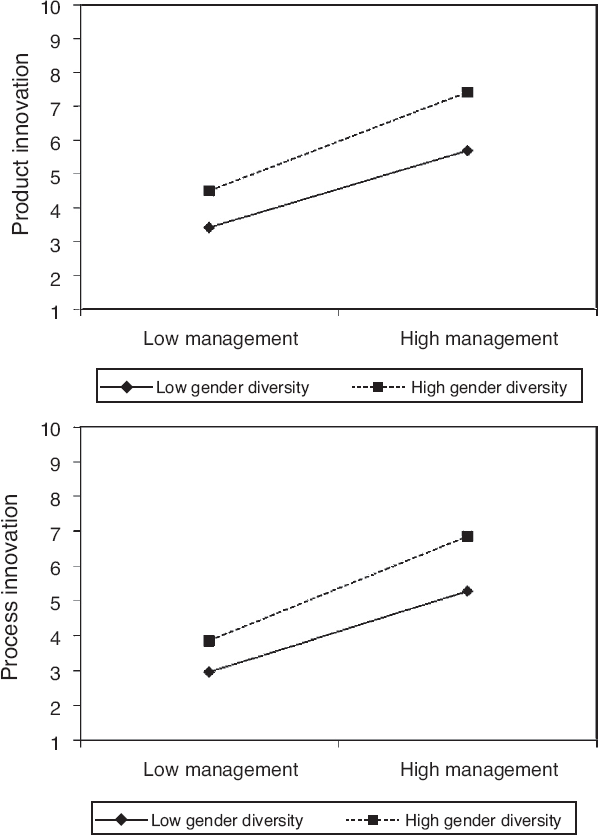
Moderating effect of gender diversity.
Conclusions
This study has deepened our knowledge of the capabilities enabling firms to obtain better results in product and process innovation. We focus on management capabilities because the academic literature argues that firms whose managers have higher management capabilities can adapt better to the environment, create competitive advantage, and generate greater benefits (Helfat and Martin, 2015).
First, our results confirm that management capabilities have a positive and direct influence on innovation performance of SMEs in technology sectors. This is consistent with prior studies that show effectiveness of management capabilities to be an organizational resource to generate new innovations in firms (Adner and Helfat, 2003; Carmeli and Tishler, 2004; Kearney et al., 2014). Our study suggests that management capabilities in technology-sector firms where innovation is crucial are just as important as technological or innovation capabilities (Quintana-García et al., 2013).
We also confirm empirically the positive effect of management capabilities on product and process innovation performance. This is an original contribution, particularly in the context of SMEs, as previous studies stress the lack of research analyzing how management capabilities influence these firms’ growth and success (Barberoet al., 2011). This result also shows that SMEs in technology sectors with broader management capabilities obtain better results in product and process innovation than firms whose managers have a narrower range of capabilities. This result is relevant because many managers in technology sectors have highly qualified technical profiles but lack the conceptual or human abilities that are equally valuable for achieving better innovation performance. If previous studies suggest that technology-based firms need management teams that complement their management abilities or entrepreneurial knowledge with their scientific or technical knowledge to improve their entrepreneurial results (Ensley and Hmieleski, 2005; Lockett et al., 2005), this article confirms that they can also achieve better innovation performance.
Second, our results support the conclusion that gender diversity in the top management team positively moderates the relationship between management capabilities and product and process innovation performance. The innovation performance in technology-sector SMEs achieved by deploying the management capabilities of the top management team is greater when these teams’ members are more gender-diverse. Gender diversity in the top management team thus seems to encourage a work climate that stimulates development of new ideas, exchange of knowledge, communication, and trust, while also favoring execution of more processes and routines, and use of resources that are more effective in achieving innovation in products and processes. The results of this study thus advance understanding of the factors that enable us to translate management capabilities into greater organizational achievements and argue the need to analyze the role of top management teams and their composition more extensively. In this sense, the
This particular study shows that team members’ perceptions should not only be explained by demographic characteristics like age, education, or experience. Gender diversity in the top management team provides different work styles, abilities, values, points of view, and experience that can strengthen the relation of management capabilities to innovation performance. Until recently, however, most studies that analyzed demographic diversity in top management teams have ignored the effect of gender (Carpenter et al., 2004). The results of this study complement those of previous studies of demographic characteristics of management teams on innovation performance in Spain. For example, within the framework of
Third, this study tackles the absolutely current question of the role of women in firms’ top management. Although women have gradually been assuming more leadership in political and social arenas, they continue to occupy minority and secondary positions in business, and this tendency is even stronger in technological sectors (Simard, 2007). Our study contributes new evidence to the very few studies to date that have analyzed the effect of gender diversity of top management teams on innovation (Miller and Triana, 2009; Torchia et al., 2011; Østergaard et al., 2011), and specially provides the research evidence on technology SMEs.
One unexpected finding of our analysis was that the results show no direct effect of gender diversity in the top management team on either product or process innovation. A possible explanation for these results is that other factors may have a greater direct influence on this performance. Similar results are found in the study by Díaz-García et al. (2013), which confirms a direct and positive relationship between gender diversity on the R&D team and radical innovation but not a significant effect of gender diversity and incremental innovation. These results confirm the need to analyze gender diversity, taking into account other variables that may intervene in this relationship and whose influence, beyond direct effects, may occur through their mediating or moderating role (as in the case of this study) or even be nonlinear (Ali et al., 2014; Miller and Triana, 2009).
Proposing new types of relationships and factors can contribute to more consistent empirical findings. Carter et al. (2010) suggest that the relationship between gender diversity and performance may depend on internal factors and external circumstances of the firm, which could explain why research results are contradictory. For example, Aguilera et al. (2008) indicate that the relationship could depend on size and age of the firm, its stage in the life cycle, innovation in different markets and sectors, or regulatory and institutional restrictions on entrepreneurial activity.
Despite the interesting results of our study, it has a series of limitations that should be taken into account. First, the study is transversal, and the results should be analyzed with prudence, as they prevent us from reaching a firm conclusion about the direction of causality between the variables studied. Second, the sample is composed of firms from the technology sector, which includes various types of firms that are not distributed equally in the study. The results may thus show the tendency of the subgroup of firms most representative of our sample. Third, the data obtained for the empirical analysis are based on the perceptions of firm managers and could thus be somewhat subjective.
It would be interesting in future research to address these deficiencies through longitudinal study that examines the variables in different time periods. Second, whereas our sample is composed of firms from the technology sector, future studies could analyze the relations of the top management team to organizational performance in another type of firm or organization. Other studies could analyze how diversity in the top management team affects innovation through other capabilities of the firm (e.g., social, financial, or entrepreneurial). It could also be beneficial to extend study of diversity beyond the top management team to all firm employees to determine the way in which teams in the organization should be composed to foster high levels of performance.
Footnotes
Acknowledgment
The authors gratefully acknowledge the financial support of the Spanish Ministry of Science and Innovation (FEM2009-08511).
Measurement scales
Innovation performance (adapted from Prajogo and Sohal, 2006)