



Abstract
Today's environmental laboratory faces numerous challenge such as enhanced regulatory oversight, decreasing costs per tests, and numerous laboratory accreditations that are offered and/or required. Selecting the LIMS that will “fit” your laboratory is important, but so is finding a system that has the flexibility to conform to the changes that will be required by the laboratory over the years. These changes will occur not only in terms of reporting, but also in terms of the ability to integrate new instrumentation, calculations, screens and future software.
When selecting a LIMS, it is important to have a good understanding of the requirements of current and future laboratory needs. Equally as important in selecting the functionality that matches the laboratory requirements is selecting a technology platform that is easily managed and utilizes open architecture. The Army Corps of Engineers' Laboratory chose SQL Server as the backend database because of the robustness of the product. Microsoft® Access was chosen as the front-end database partially because of its provision for seamless integration. These functions allow users to export directly from the LIMS to any of the programs in the Microsoft Office suite and vice versa. Synergy such as this enhances the flexibility of the LIMS.
There are many features in a LIMS; however, the primary functionalities include sample tracking, data entry, sample scheduling, QA/QC, electronic data entry, chemical and reagent inventory and personnel and equipment management. Other features that help increase productivity and efficiency include the use of bar codes, data loggers, instrument integration and specialized software modules such as cost accounting/time tracking.
The Washington Aqueduct, a division of the US Army Corps of Engineers, operates two water treatment facilities and a water quality laboratory in Washington, D.C., which perform testing on a wide array of water and wastewater samples. Washington Aqueduct is a wholesale water producer serving one million residents in Washington, D.C., Arlington County, Virginia and Falls Church, Virginia. Challenges faced by many environmental laboratories include enhanced regulatory oversight, decreasing costs per tests, and numerous laboratory accreditations that are offered and/or required. The Washington Aqueduct laboratory implemented a Laboratory Information Management System (LIMS) as its data management solution to combat some of these challenges. Sample Master® Pro LIMS offered Washington Aqueduct their ability to track samples, data entry capabilities, sample scheduling functions, QA/QC, electronic data entry, chemical and reagent inventory and personnel and equipment management. The Washington Aqueduct also needed to increase productivity and efficiency. These challenges were met through the use of bar coding, instrument integration and specialized software, which offered a cost accounting/time tracking module. This paper will focus on the process of implementing a Laboratory Information Management System, flow-charting through software installation, instrument integration and full automation.
INTRODUCTION
Washington Aqueduct has two water treatment plants with a high sample throughput. With increasing demands on environmental laboratories, it became evident at the Washington Aqueduct laboratory that a data management program was needed to manage the vast array of samples. Selecting a Laboratory Information Management System (LIMS) for an environmental testing laboratory requires a solid understanding of what tasks are currently performed by the laboratory and an idea of which tasks the laboratory may want to perform in the future. This is extremely important due to the demands made upon the laboratory and the fact that they will change over time requiring a data management system to provide flexibility to grow with the laboratory. This paper will describe in detail the LIMS evaluation process and installation of Sample Master® Pro as well as the outcomes of automation at the Washington Aqueduct laboratory.
PLANNING PHASE/NEEDS ASSESSMENT/SPECIFICATIONS
Many laboratories produce a Request for Proposal (RFP) that includes a list of features and functionalities that are required to automate the laboratory. RFP's also outline the type of system needed to integrate the various data systems within the laboratory. Some laboratories also include hardware in their request for proposal and ask the vendor to deliver a “turnkey” system, including hardware and software. This provides the LIMS vendor with a clear understanding of the primary needs of the laboratory, currently and in the future, and places the responsibility of ensuring that the entire solution is complete and compatible upon the LIMS vendor.
The Washington Aqueduct Laboratory established a LIMS implementation committee composed of representatives from management, information services and laboratory staff. The committee developed a detailed LIMS RFP, which was presented to Accelerated Technology Laboratories, Inc. (ATL) as well as several other LIMS vendors. Each vendor was asked to answer a series of questions relating to the Washington Aqueduct LIMS specifications, the company, support options, company qualifications, LIMS experience and industry- specific references. The specifics of the RFP included a detailed description of the functionality of the various features or modules of the LIMS. The RFP began with questions on Sample Tracking, QA/QC, Electronic Data Transfer, Chemical and Reagent Inventory, and Personnel and Equipment Management. Other key elements of the RFP included requests for information on statistical capabilities, data loggers to upload data to the LIMS, bar coding, instrument integration, time tracking software for cost accounting, custom report creation and future integration with the SCADA 1 system utilized by the water treatment plants. The RFP also requested the LIMS vendor to provide the hardware server, including Microsoft SQL Server Licenses and back-up software. Another section of the RFP focused on the expertise of the LIMS vendor, their certifications and the personnel responsible for the installation and implementation.
The LIMS vendors with the highest scores on the LIMS questionnaires were invited to visit the laboratory and provide an on-site demonstration based on a script prepared by the laboratory. The demonstrations were viewed by the LIMS implementation committee, laboratory management and staff to gain a thorough understanding of how the LIMS operates and to determine if there was a match. Once the feedback from the committee and the laboratory was gathered, the scores were tallied and the cost proposals were reviewed. The Washington Aqueduct Laboratory selected Accelerated Technology Laboratories, Inc.'s Sample Master®Pro LIMS as their data management solution. Figure 1 below illustrates sample questions contained in the Washington Aqueduct's Request for Proposal.
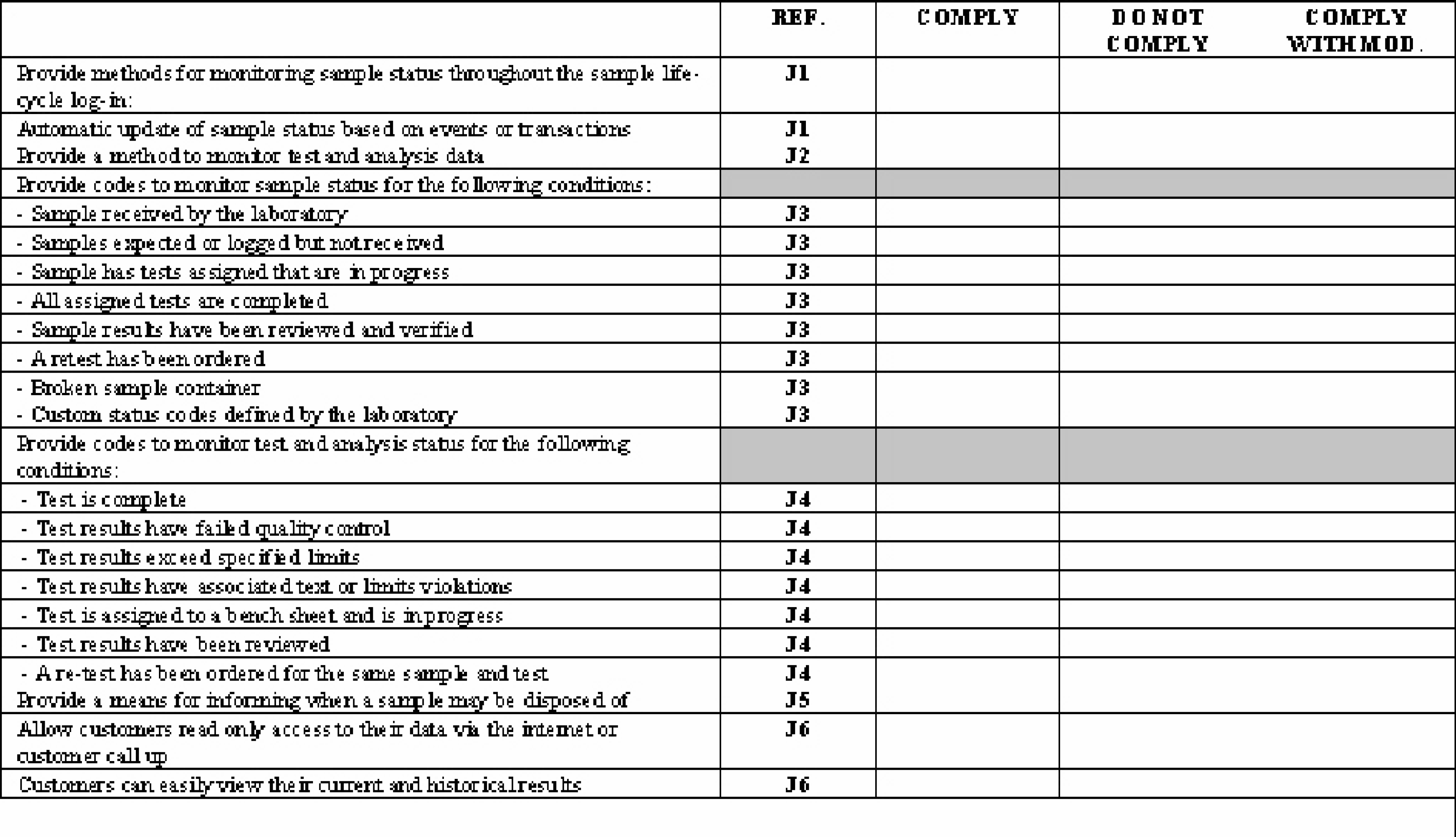
A sampling of some of the questions from the Request for Proposal created by the Washington Aqueduct Laboratory.
INSTALLATION
It was important for the chosen LIMS vendor to understand the sample flow of the Washington Aqueduct. The flow chart below depicts the typical sample flow through the Washington Aqueduct Laboratory prior to the installation of the LIMS.
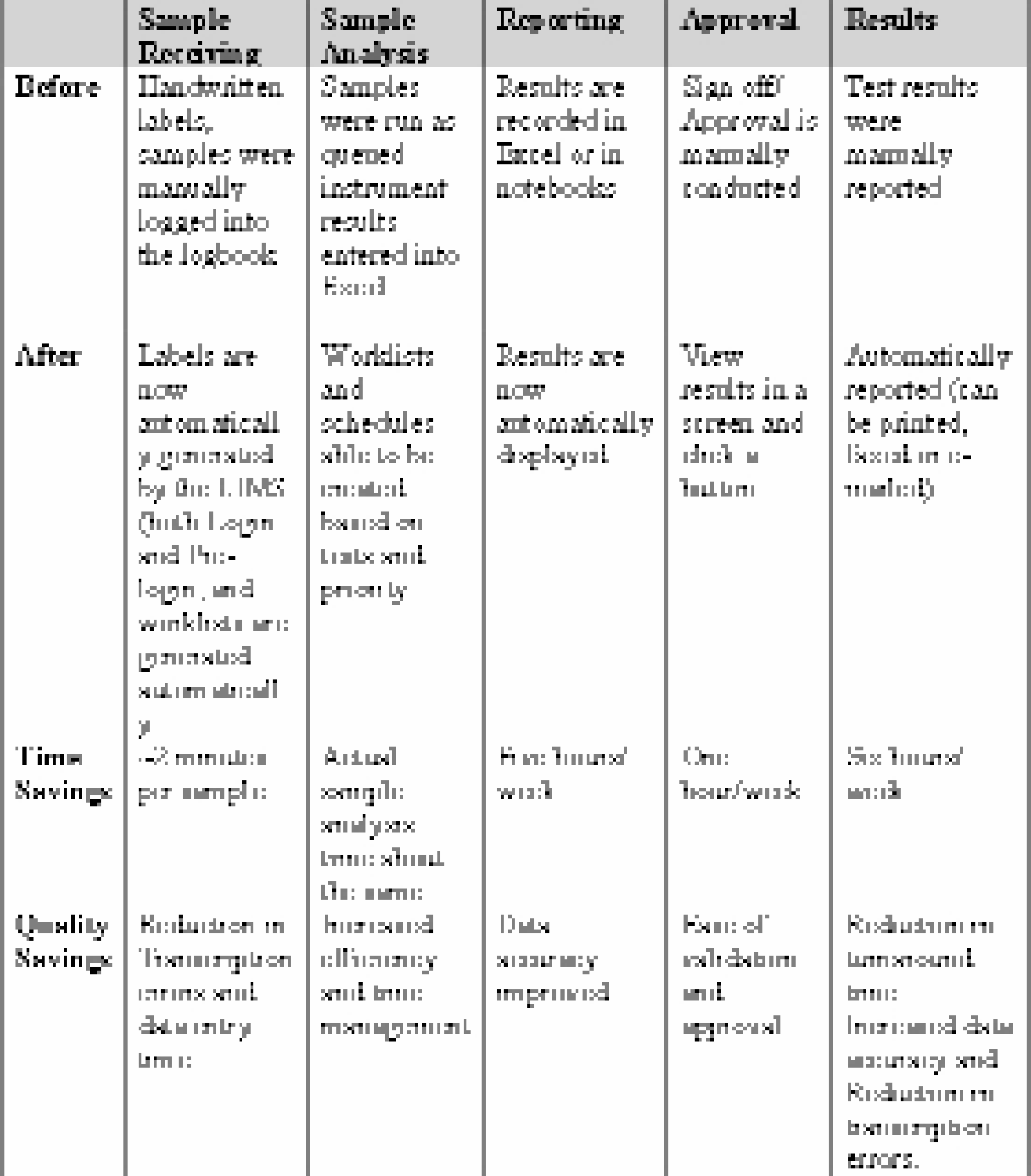
Table describing general sample flow through Washington Aqueduct Laboratory before and after LIMS implementation and the associated quality savings.
GOALS/OBJECTIVES
The staff at the Washington Aqueduct laboratory proposed several goals/objectives to improve the sample flow process and increase laboratory productivity. First, the staff sought a LIMS that could meet their growing database management demands. It was also imperative that the LIMS have the ability to communicate with other applications within the laboratory, such as Microsoft®Office. The chart below illustrates the various applications that were integrated with Sample Master® Pro LIMS. The Washington Aqueduct laboratory wanted to eliminate transcription errors, increase automation, maintain data accuracy and increase throughput.
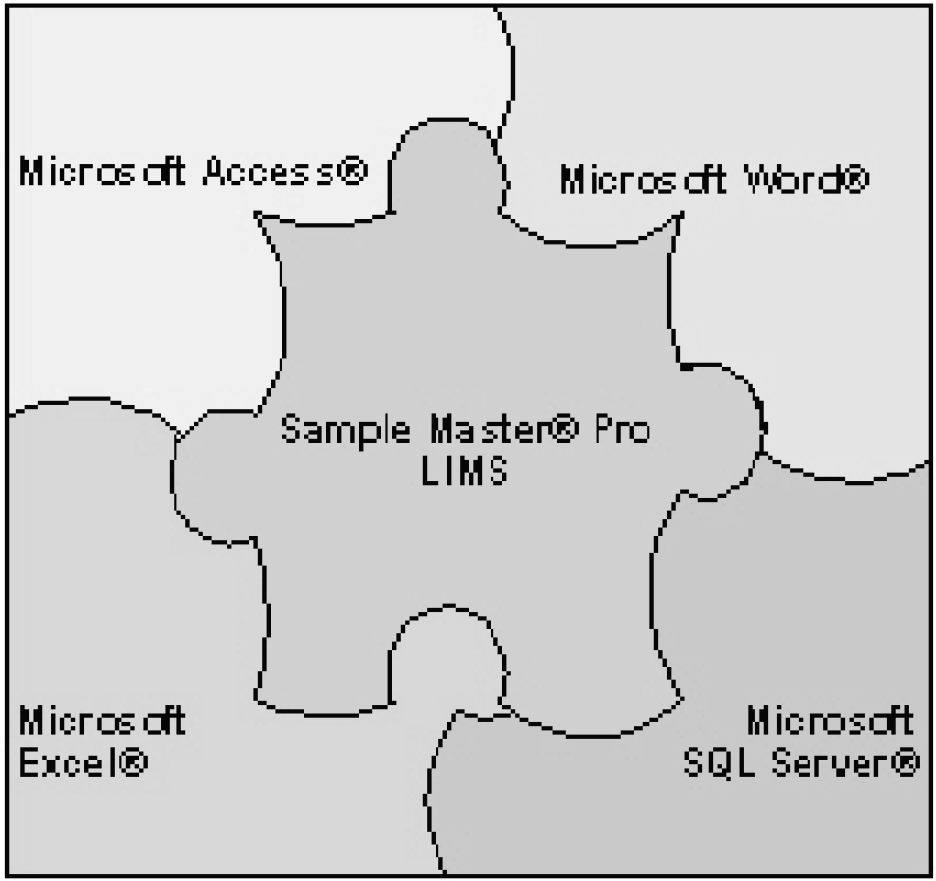
Sample Master® Pro LIMS Integration with Desktop at the Washington Aqueduct Laboratory.
Before the installation could begin, all hardware and software systems were ordered from the respective vendors. According to the RFP, the Washington Aqueduct specifically stated their hardware and software requirements. These can be found in the table below.
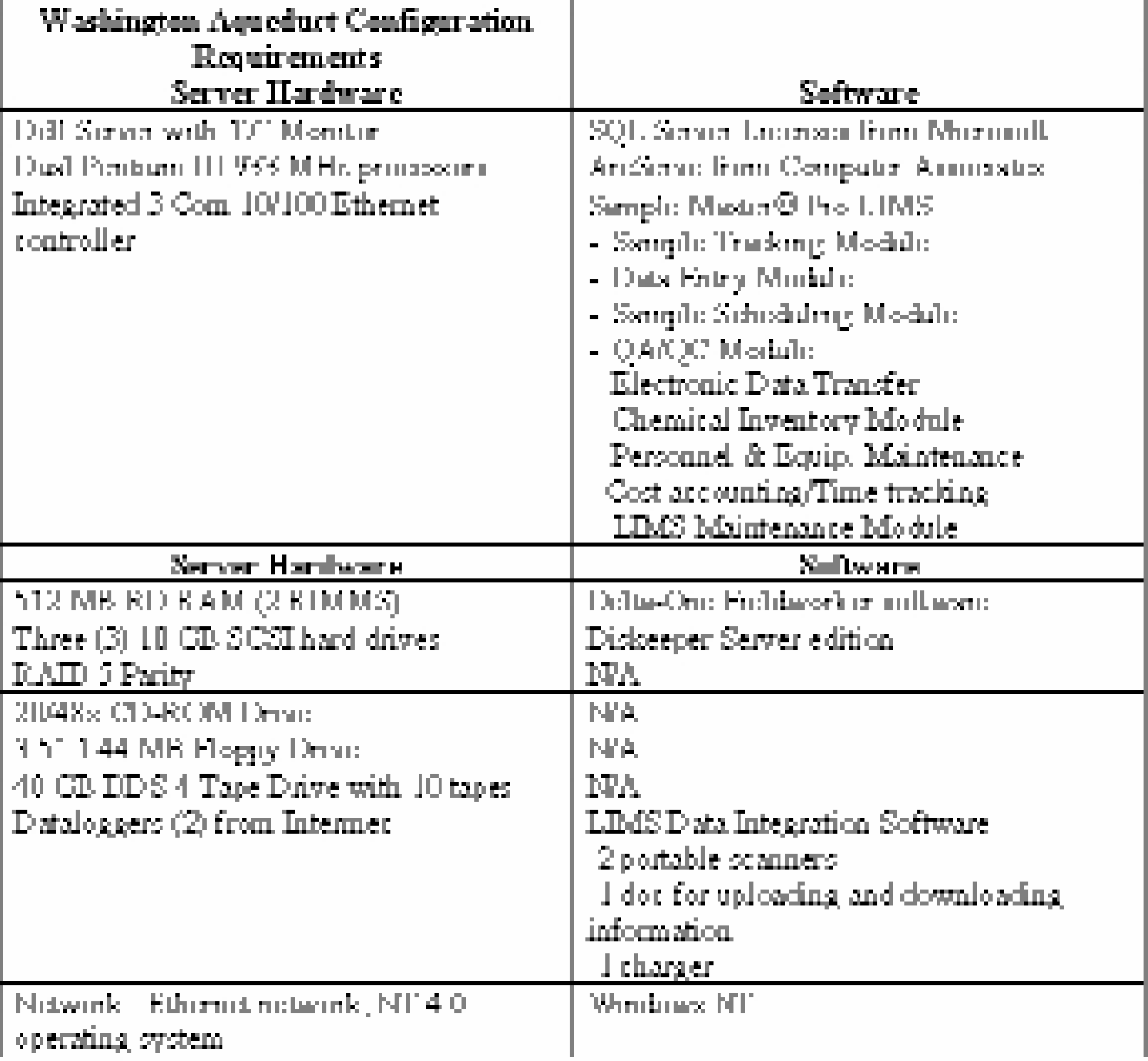
Washington Aqueduct Hardware and Software Requirements.
LIMS IMPLEMENTATION PROCESS
ATL, Inc.'s project team consisted of three software engineers and a project manager. ATL, Inc. engineers installed the server and the required software. The engineers worked closely with the laboratory to ensure that there would be minimal impact on the day-to-day laboratory operations during the installation. The project manager was responsible for ensuring that third party software and hardware products were delivered on time and free of defects. Following the configuration of the server and installation of the software, ATL, Inc. software engineers reviewed the custom reports that were required by the laboratory and also reviewed the requirements for integration with the Washington Aqueduct SCADA database.
The LIMS solution was implemented in phases. Phase One consisted of acquiring all the necessary hardware and software for the project, as noted above. Once the various components arrived, they were inspected and installed at the Washington Aqueduct laboratory. Again, the focus during this time was the configuration and installation of the server, Sample Master®Pro LIMS, and associated software. Output files were collected from instruments that were to be integrated with the LIMS. The required software for the data loggers, two handheld units (Intermec) that allow field workers the ability to collect field data and upload that data to the LIMS, was installed. Figure 5 shows the configuration of Sample Master® Pro LIMS.
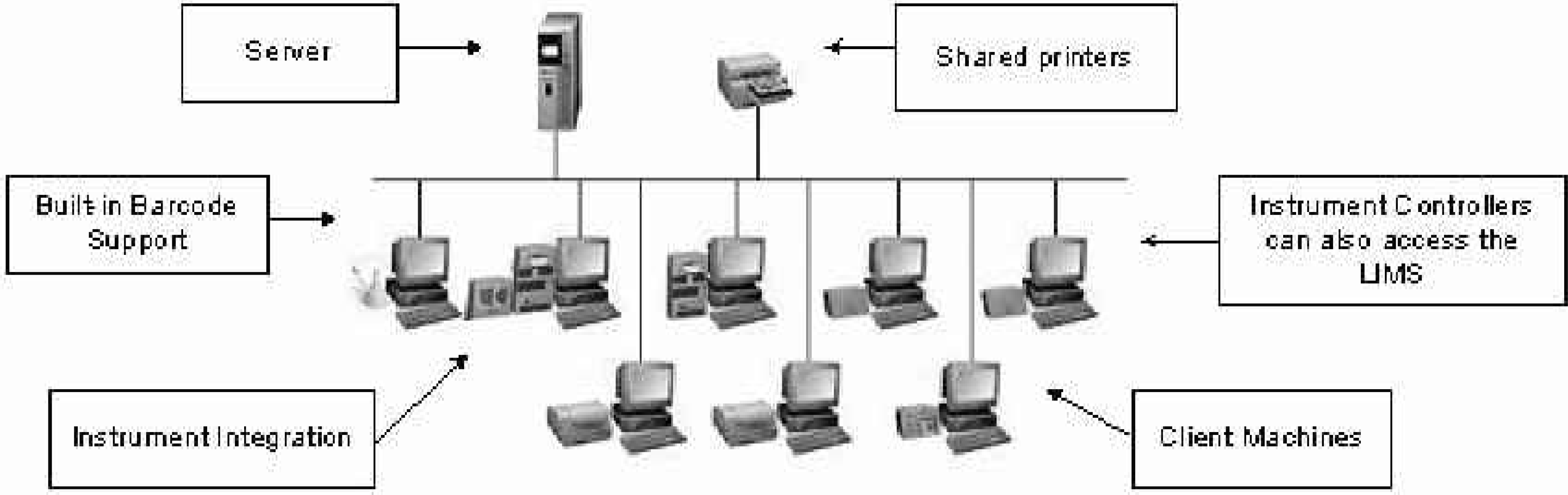
The schematic depicts a client/server configuration of Sample Master® Pro LIMS.
During the installation, ATL, Inc. engineers had daily meetings with the Washington Aqueduct staff to review tasks for each day and to ensure that the appropriate personnel would be available for certain tasks, i.e. the IT personnel were required to provide network access during installation. Custom report requirements were carefully reviewed with the appropriate personnel prior to creation.
INSTRUMENT INTEGRATION
The focus of the second phase was instrument integration. A total of five instruments were interfaced with Sample Master®Pro LIMS: They are described in the table below. The benefits of instrument integration included the following: a reduction in transcription errors, increase in automation, increase in data accuracy and increased throughput. These results met the Washington Aqueduct laboratory's original goals and objectives. The cost savings alone justified the integration of instruments to Sample Master®Pro LIMS.
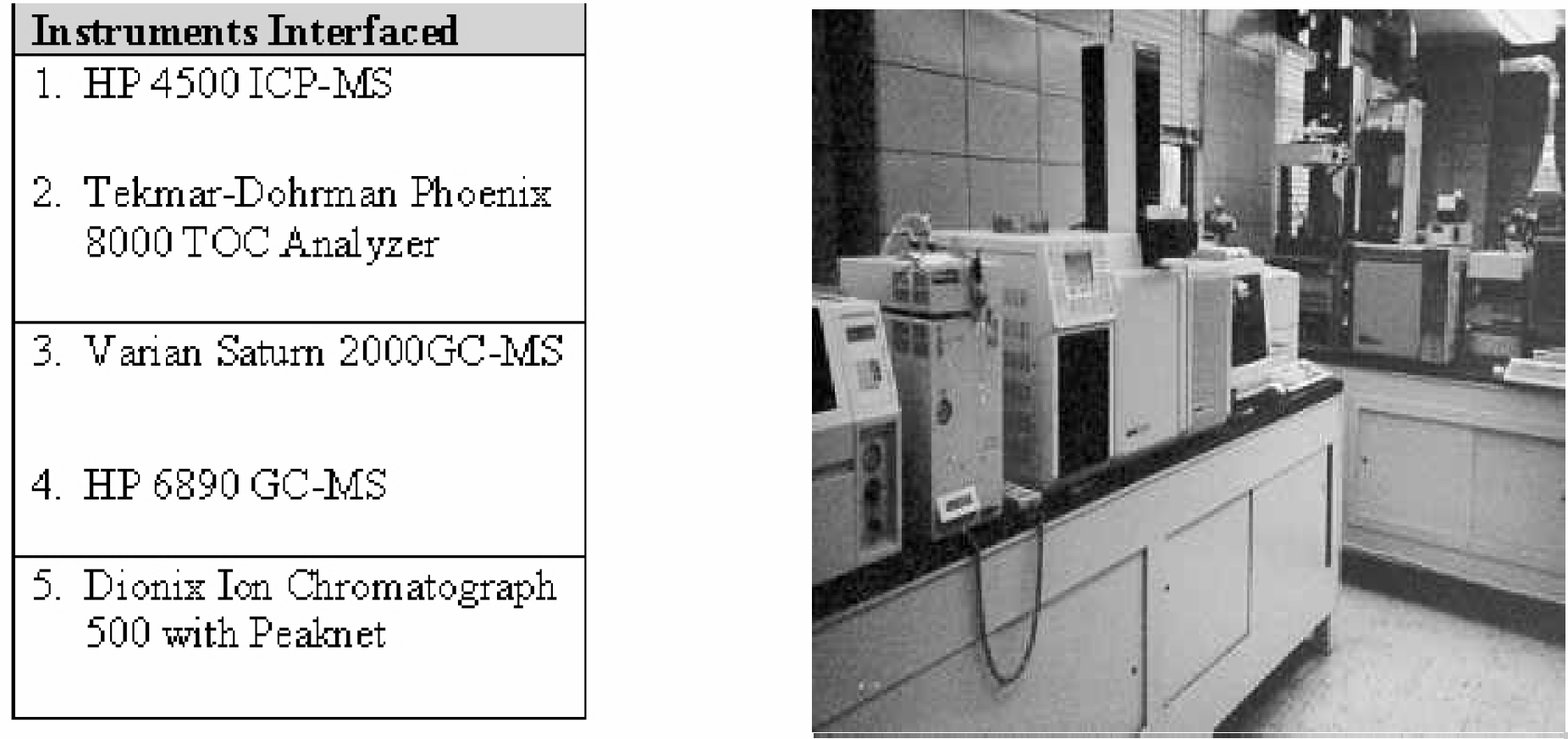
A sampling of the instrumentation in the Washington Aqueduct Laboratory that was integrated with LIMS.
VERIFICATION TESTING AND TRAINING
Finally, there was a verification testing and training phase. In verification, the LIMS trainers and laboratory personnel reviewed the features and functions of the system, utilizing a checklist to ensure that all the components of the installation were in place and operating accordingly. The purpose of this was to demonstrate performance and functionality of the system. Next, the database administrators and end-users were trained. User manuals and administrator guides were provided for comprehensive training on-site. This training included all equipment and materials that would be necessary in the operation use and maintenance of the LIMS. Course outlines were provided for system administrators as well as end users and included general programming elements so that the student was capable of creating and/or modifying reports. Users were also invited to participate in follow-up training courses offered by the LIMS vendor and to attend user group meetings to continually learn about new features and keep abreast of the latest technology developments.
ACCEPTANCE AND FINAL ACCEPTANCE TESTING
This was an ongoing phase of the project that followed installation and initial verification testing. The purpose of this time period was for the Washington Aqueduct Laboratory staff to utilize the system without the physical presence of Accelerated Technology Laboratories, Inc. engineers, but with toll-free telephone assistance to the users of the system. There was a four-month implementation period, during which the end users became familiar with the LIMS, since it was a change from the previous manual system. On June 15-16, 2001, Washington Aqueduct Laboratory completed the final acceptance-testing phase of the project and is experiencing significant automation benefits with the implementation of the LIMS.
CONCLUSIONS
The selection and installation of a LIMS has resulted in many data management and automation improvements in the Washington Aqueduct laboratory. There is now a full chain of custody, audit trail and many quality control enhancements that assist the laboratory in its day-to-day data management challenges. By limiting users to tests and methods on pull-down lists, instrument integration, and requesting that users log onto the system with user name and password, there is a higher degree of data integrity. Instrument integration has significantly reduced the amount of time analysts devote to data entry. Prior to the LIMS, entry of VOC data (60+ parameters per sample) would take hours. Since instrument integration, data entry has been reduced to review of the data and importing it into the LIMS, a process that has saved a total of five hours per week in analyst time. Transcription errors are eliminated. Analysts' time once spent entering data can now be devoted to other tasks such as new method development. Direct data entry in conjunction with the Dionex Ion Chromatograph 500 alone has saved five hours per week, which compounds the time and efficiency savings experienced by the analysts and the laboratory.
Prior to implementation of the LIMS, reports were generated on a weekly to semi-monthly basis. Sample Master®Pro LIMS has been setup for automatic report generation so that reports are automatically printed once the laboratory manager has approved sample results. The turnaround time of reports has been greatly decreased from 10 hours per week to approximately 4-5 hours per week. Implementation of the LIMS has increased the efficiency of the laboratory. Data are readily available to view and approve. Instrument integration has reduced data entry time and transcription errors. Data loggers have reduced the amount of time required to log in remote samples to the laboratory. Quality control records are readily available for laboratory and auditor review. And finally, the generation of control charts, once a laborious process, can now be completed in seconds.
In summary, the implementation of the Sample Master®Pro Laboratory Information Management System has provided the Washington Aqueduct Laboratory with a data management solution that promotes data accessibility, increased efficiency and time savings that will continue to lower laboratory costs and
SCADA- Supervision Control and Data Acquisition, a software system used in water and wastewater treatment plants.