



Abstract
IGEN's ORIGEN® technology, which is based on electrochemiluminescence, has been adopted by a number of research and bioanalytical laboratories who have recognized its exquisite sensitivity, high precision, wide dynamic range, and flexibility in formatting a wide variety of applications. IGEN's M-SERIES™ marks the introduction of the second generation of detection systems employing the ORIGEN technology specifically repackaged to address the needs of the high throughput laboratories involved in drug discovery. Assays are formatted without wash steps. Users realize the high performance of a heterogeneous technology with the convenience of a homogeneous format. The M-SERIES platform can address enzymatic assays (kinases, proteases, helicases, etc.), receptor-ligand or protein-protein assays, immunoassays, quantitation of nucleic acids, as well as other applications. Recent assay formats will be explored in detail.
INTRODUCTION
The M-SERIES analyzers are a new generation of instruments from IGEN. These analyzers utilize ORIGEN technology together with ORI-TAG™ labels to produce highly sensitive and flexible assays, with extremely wide dynamic ranges. The M-SERIES analyzer builds upon the successful ORIGEN 1.5 Analyzer, adding the ability to read from a microtiter plate format with greatly improved cycle time. The automated sample processing allows assays to be performed in fewer steps and with less operator intervention than is typical with other plate reading technologies.
IGEN develops, manufactures, and markets detection systems utilizing its patented ORIGEN technology, which is based on electrochemiluminescence. Electrochemiluminescence utilizes labels that, when attached to a biological substance and electrochemically stimulated, emit light at a particular wavelength to signal the presence of an analyte. The light emission can then be measured with a high degree of accuracy to detect and quantify the analyte. The light emission is relatively unaffected by color quench issues, difficult matrices, and natural product extracts. The technology inherently differentiates between label bound to the solid phase and label free in solution. This differentiation allows the generation of single step assays (where all the reagents may be added into a tube/well and allowed to react without washes between the steps). The single step nature of the assays greatly reduces the time necessary for an assay, and the absence of wash steps removes the variability induced by typical wash procedures. These factors, taken together with the wide dynamic range possible from the use of a light-emitting label (ORI-TAG), can produce fast, sensitive assays with little need to repeat tests due to range limitations.
Electrochemiluminescence is extremely versatile and can be used with a wide variety of assay formats, where bimolecular interactions need to be quantitated. Some major classes of assays developed using ORIGEN technology include: enzymatic assays directed against either nucleic acid or proteinaceous substrates, binding assays (receptor-ligand, DNA-protein, DNA-DNA, etc.), immunoassays (sandwich and competitive formats), and nucleic acid quantitation. As an example of the versatility of the technology, this manuscript will focus on development and evaluation of electrochemiluminescent assays for measurement of tyrosine, serine, and threonine kinase activities.
Protein phosphorylation is a major regulatory mechanism in all physiologically active cells. Protein kinase-mediated signaling pathways are important therapeutic targets in such diverse areas as oncology, inflammation, and intermediary metabolism 1 - 5 , and the in vitro assay of protein kinase activity is a vital tool when screening for pharmacologically active compounds. Until recently, assay of protein kinase activity required the use of radioisotope tracers and laborious filter-based protocols. As the number of assays performed increases, a need has arisen for nonradioactive alternative assays that do not sacrifice sensitivity or specificity and that reduce the number of labor intensive assay steps. ORIGEN electrochemiluminescence technology provides a solution to the assay of protein kinase activity that combines the sensitivity of radioactivity with the benefits of nonradioactive detection. Low background and high signal-to-noise ratios make the ORIGEN technology appropriate for primary screening while its sensitivity and precision permit the same assay format to be used for more detailed quantitative analyses. Data are presented here describing the application of ORIGEN electrochemiluminescence technology to the assay of soluble and receptor tyrosine kinases in a common assay format.
EXPERIMENTAL
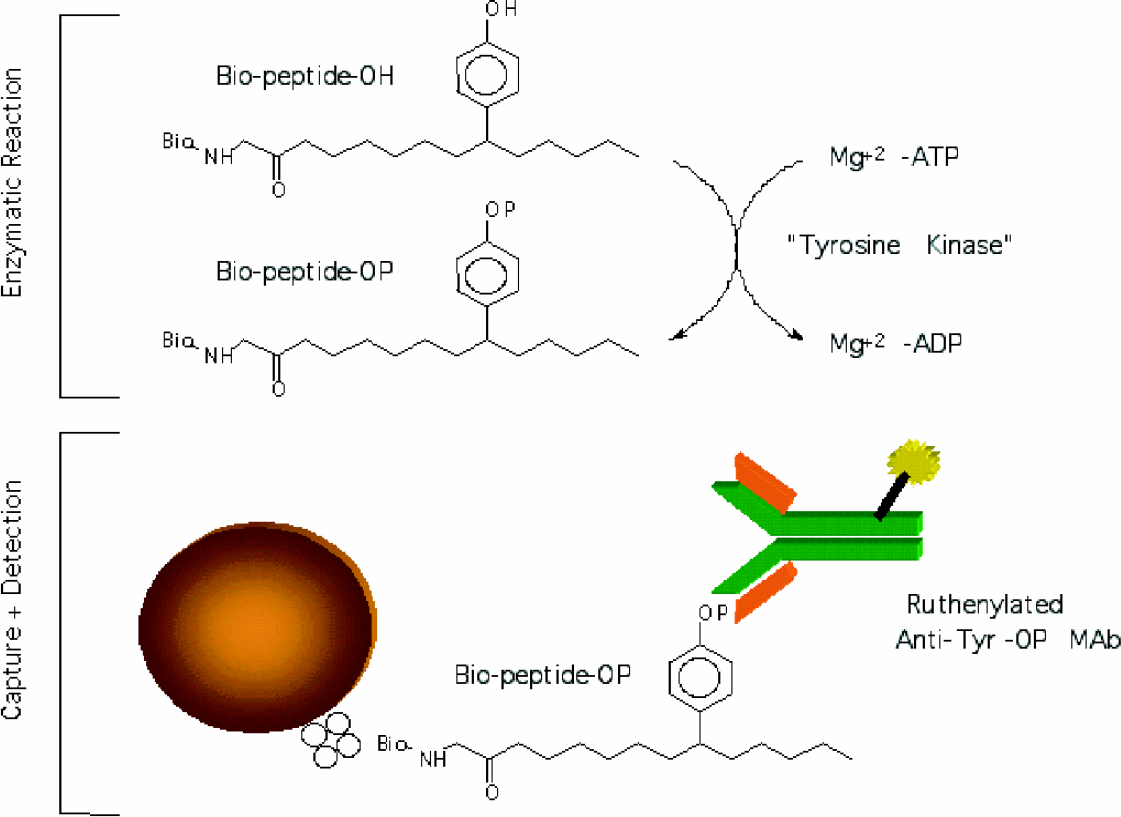
Prior to assembly of tyrosine kinase assays as outlined in
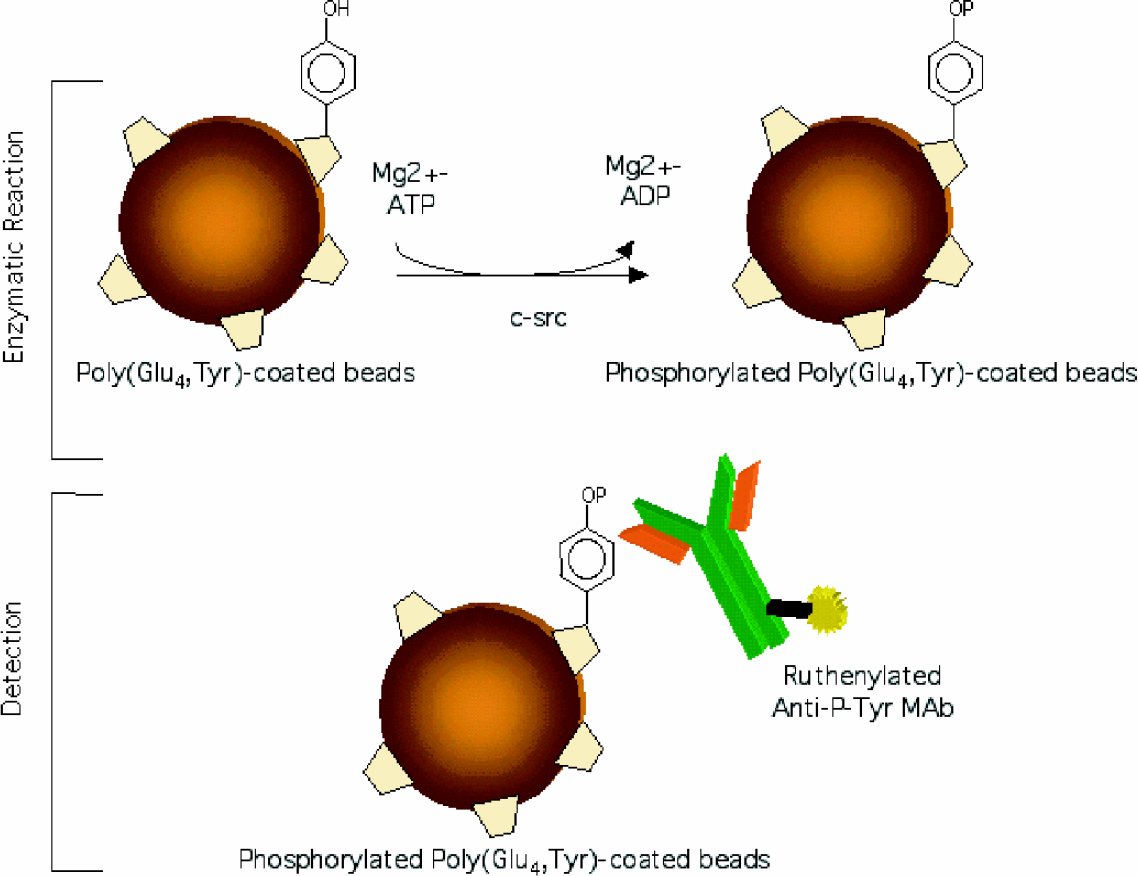
Kinase incubation buffer, poly(Glu, Tyr)-coated beads, ruthenylated anti-phosphotyrosine, and Mg2+ and ATP were combined in a master mix. Reactions were typically started by addition of enzyme. Alternatively, when it was desirable to preincubate inhibitors with enzyme in the absence of ATP, enzyme and inhibitor were included in the master mix and the reaction was started by addition of ATP. Final incubation volume was 50 μL. Reactions were incubated at room temperature with or without shaking for 15–60 minutes as indicated and were stopped by the addition of 250 μL stop solution. Substrate phosphorylation was then determined by electrochemiluminescence detection.
RESULTS
Initial experiments to titrate the amount of enzyme and substrate-coated beads were performed with 60 minutes of incubation at room temperature without shaking. Examples of two different tyrosine kinases, pp60c-src (partially purified from Upstate Biotechnology, Lake Placid, NY), and epidermal growth factor receptor (EGFR; Sigma Chemical Co., St. Louis, MO), using similar reaction conditions are depicted below in
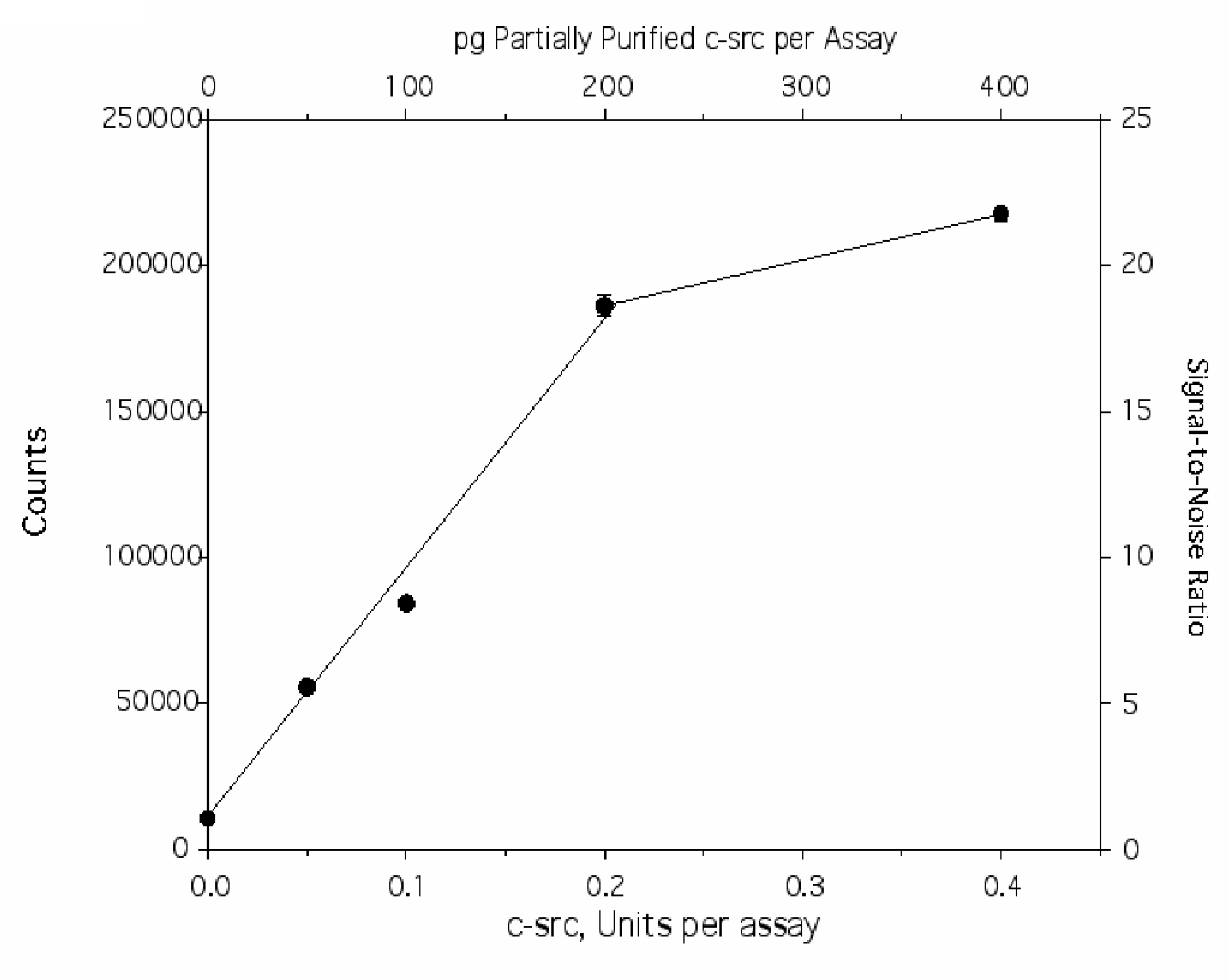
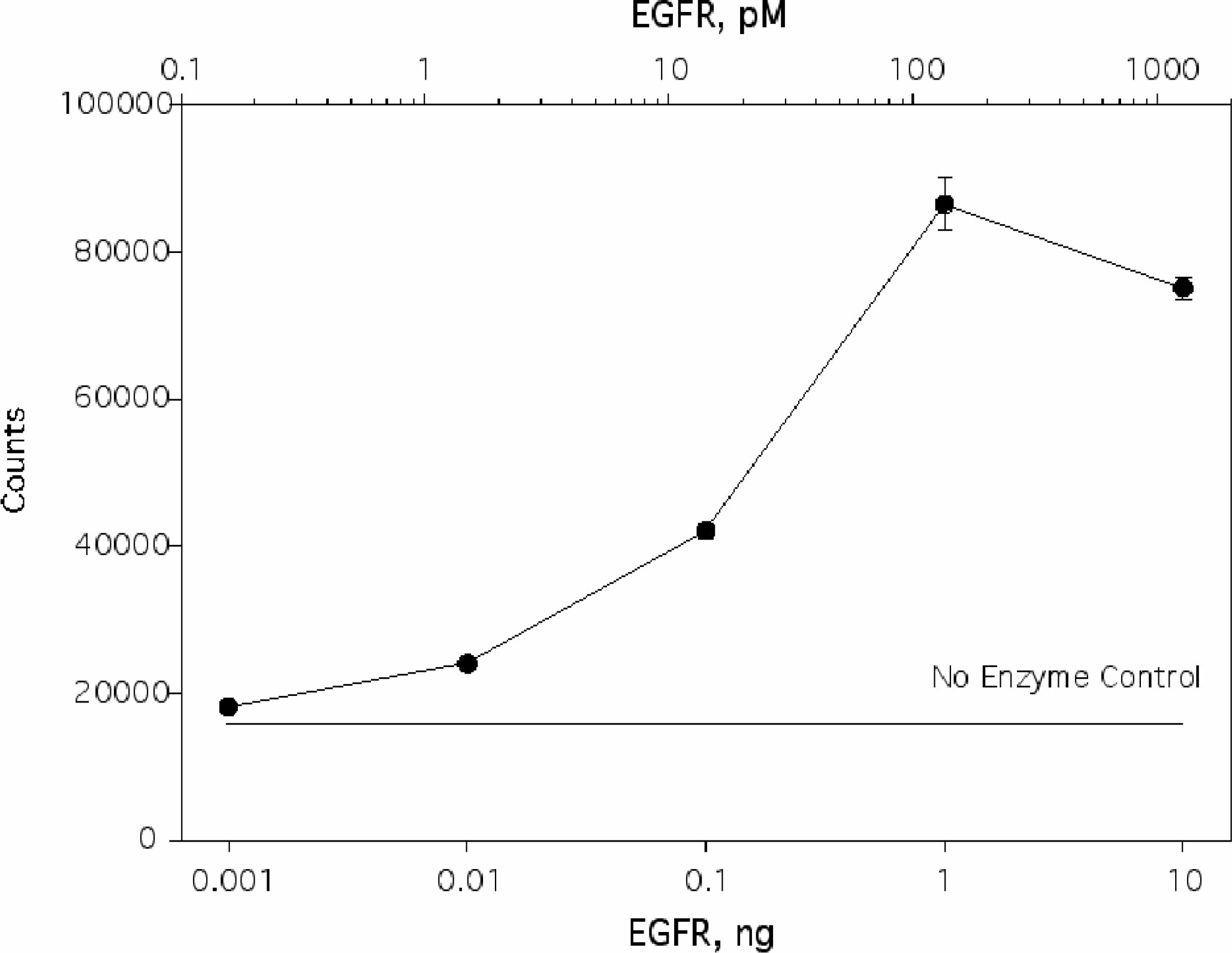
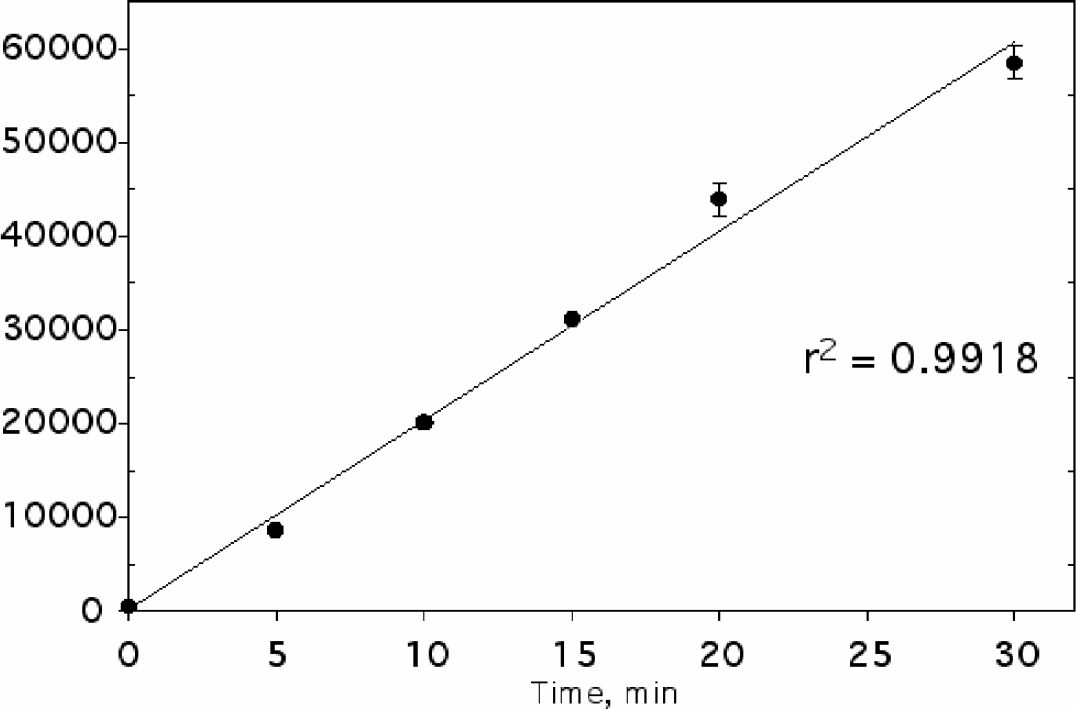
Additional experiments (
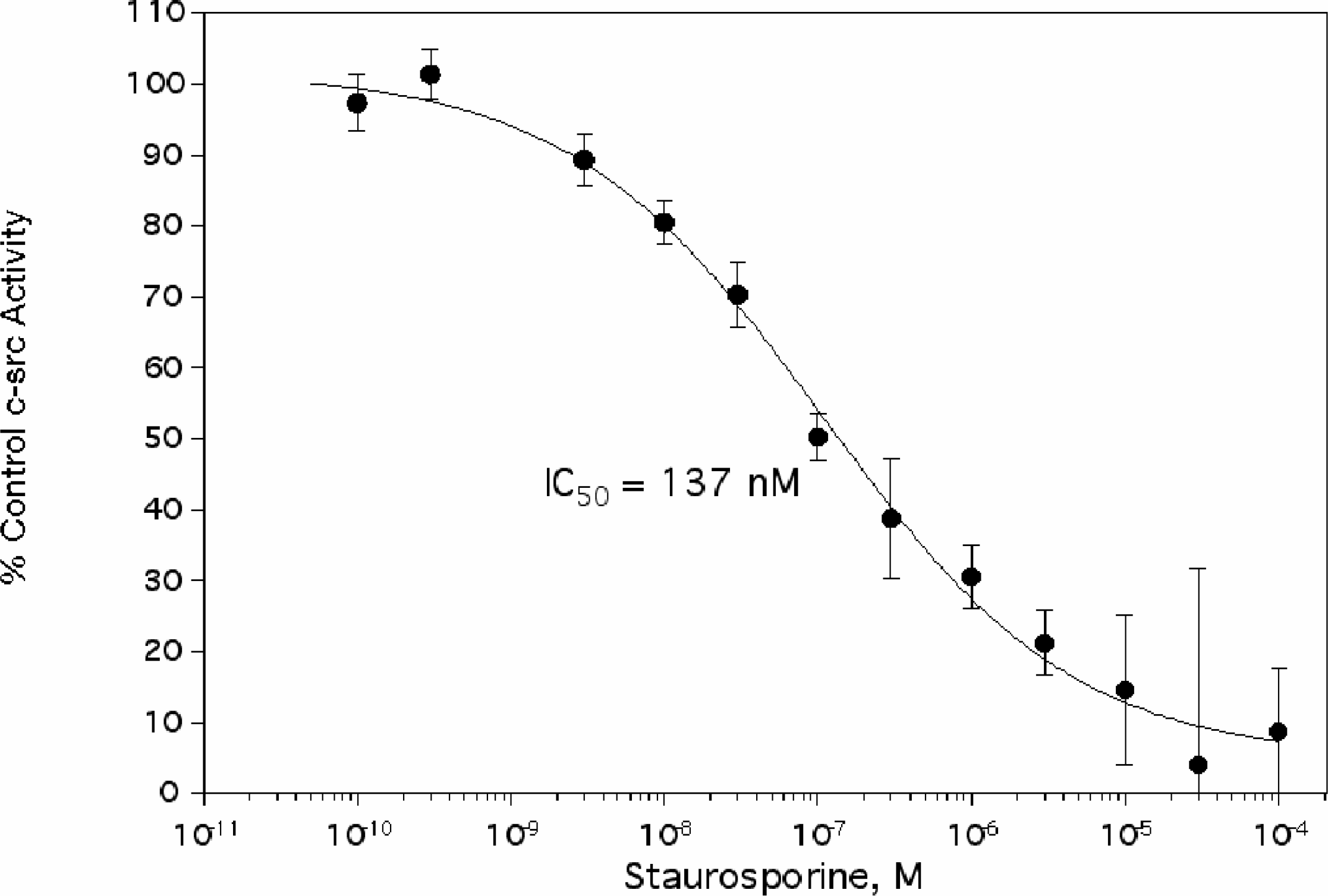
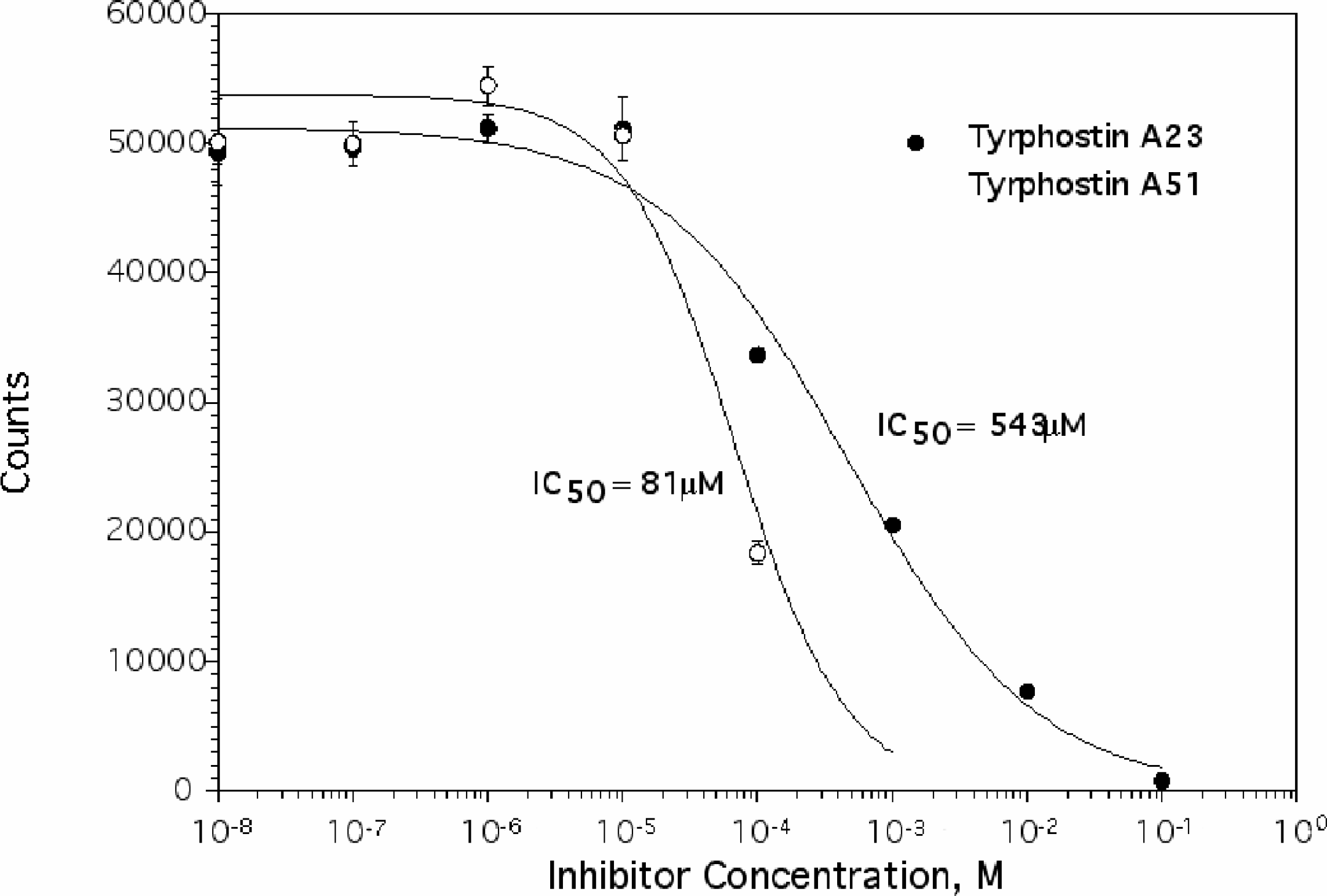
In
DISCUSSION
The ORIGEN assay format described above provides a sensitive, robust, non-radioactive means to assay protein kinase activity. Use of a generic substrate and conditions allows investigators to easily substitute new tyrosine kinases, both of the receptor and non-receptor classes, into the same format. This format is particularly useful for measuring activity of known purified enzymes, as well as total tyrosine kinase activity present in cell lysates. Specific biotinylated peptide substrates which can be captured via streptavidin-coated particles have also been successfully substituted into these formats as shown in Figure 7 below. Use of this format allows one to assay for specific tyrosine kinase activities present in crude samples, such as cell lysates.
We have also successfully formated assays designed for measurement of specific serine and threonine kinase activity using a variety of formats. One example is shown below in
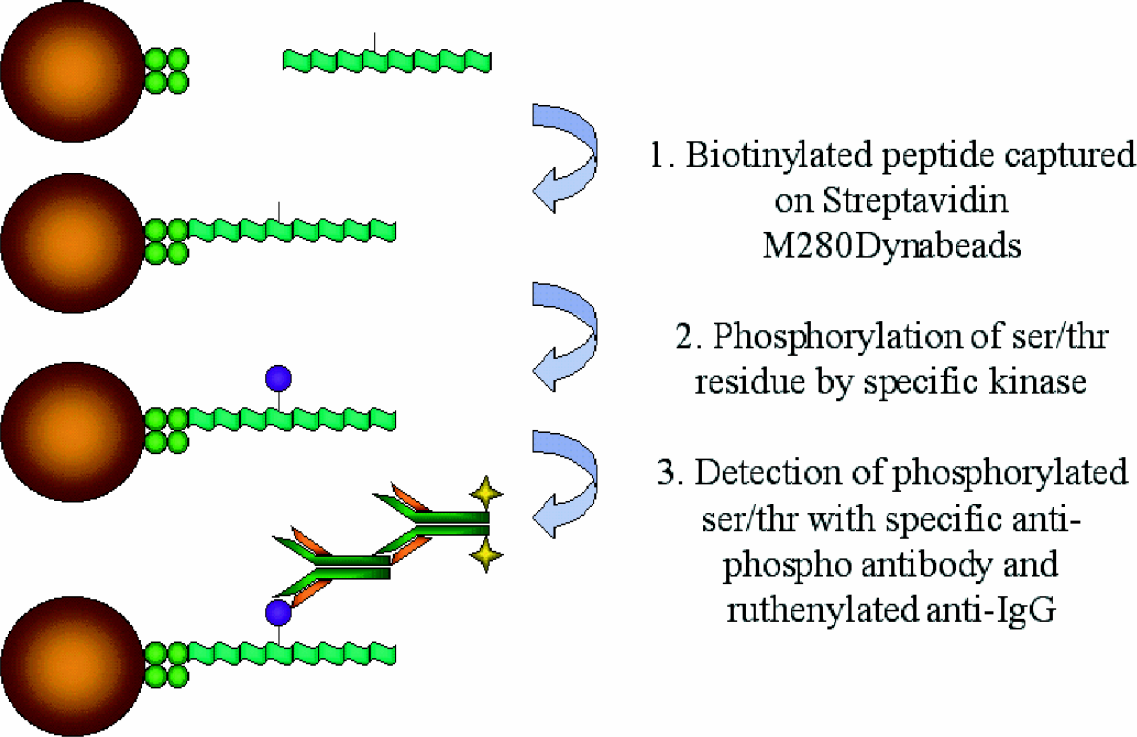
Use of this format allows the investigator to avoid the necessity of directly labeling the primary antibody directed against the phosphoserine and -threonine residues, which are often costly and unpurified.
SUMMARY
ORIGEN electrochemiluminescent technology provides a sensitive, robust, non-radioactive means to assay protein kinase activities, as well as many other bimolecular interactions. The sensitivity of the ORIGEN assay formats described here permit several-fold reductions in amount of enzyme and substrate per test compared to other formats, eliminates radioactive waste, requires less labor than other methods, thereby decreasing cost. The quantitative nature of the electrochemiluminescent signal permits the same assay format used for primary screening to be used for more detailed analyses, such as inhibition curves.
Footnotes
TRADEMARKS
Dynabeads is a registered trademark of Dynal A.S., Oslo, Norway. ORIGEN and IGEN are registered trademarks of IGEN International, Inc. M-SERIES is a trademark of IGEN International, Inc., All other trademarks are the property of their respective holders.
If you are interested in seeing more articles like this in JALA, please email