



Abstract
Despite neutering being one of the most common veterinary procedures, questions remain about what constitutes best practice, and when is the ideal time to neuter. These were the focus of attention at a meeting of The Cat Group, held in London last September, to which representatives from the UK veterinary schools, and a number of other veterinary experts, were invited. This article presents a summary of the discussions.
Flank versus midline approach to ovariohysterectomy
While a flank approach to cat spays is very frequently undertaken in the UK (the procedure of choice for 96% of respondents in one study), 1 in most other parts of the world cat spays are traditionally undertaken through a ventral midline approach.
Historically, a flank approach may have been preferred to ensure better (and more rapid) wound healing and thus a reduced risk of wound breakdown. The advent of modern materials for suturing the linea alba would now appear to negate that perceived risk.
From published data, a flank approach may give a slightly shorter total surgical time, but the difference is not great (∼1.5 minutes).
Through better exposure to the abdomen, the midline approach may allow for fewer complications (such as inadvertent ligation of a ureter).
Ovarian remnant syndrome is a relatively uncommon complication following cat spays, but there is no data on whether there may be a greater risk for this with flank spays (ie, whether flank spays have an increased risk of leaving some residual ovarian tissue).
It is easier to teach undergraduate students a midline approach as it facilitates proper teaching of anatomy at the same time.
Although studies are limited, current evidence clearly indicates that a midline spay may be associated with less postoperative pain than a flank spay and this may be an important consideration. This could be as a result of fewer nociceptors in the linea alba, and/or movement of the flank muscles at the incision site.
A midline spay is useful for cats that are in season and may have a more friable uterus, and for pregnant cats.
When dealing with rescue or feral cats, a flank spay may permit somewhat easier postoperative monitoring of the surgical site when checking for potential complications.
When neutering a cat of unknown background (ie, uncertain if it has been spayed before), given the current prevalence of flank spays in the UK, clipping the flank may more readily enable assessment of whether the cat has previously been spayed (through identification of a surgical scar).
While the technique itself (flank vs midline) may influence the degree of postoperative pain, the skill of the surgeon is likely to be an even more important factor.
Although no general consensus emerged as to which of these techniques is ‘better', it was agreed that there is a need to challenge the ‘perceived wisdom’ of doing flank spays that is prevalent in the UK, and to encourage the consideration of both techniques. Veterinary students need to be exposed to both techniques and should not necessarily be constrained by ‘convention’ when choosing a technique to use in practice. Additionally, further research is needed, particularly into the issue of postoperative pain — if further studies consistently show reduced pain associated with the midline procedure, this may affect recommendations in the future.
Ovariohysterectomy versus ovariectomy
While in the UK, neutering of female cats (and dogs) typically involves ovariohysterectomy (OVH), in some other regions it is common to perform just ovariectomy (OV).
There are no publications in cats comparing these two techniques, so current evidence has to be inferred from other species (mainly dogs) and caution is therefore needed with any assumptions made.
Studies in dogs suggest no long-term detrimental effects (such as increased prevalence of pyometra) when OV is performed rather than OVH. This appears to be a result of atrophy of uterine tissues after OV.
It is further suggested that OV in dogs is a simpler procedure than OVH, and thus may have advantages through being a shorter, less invasive procedure with potentially fewer complications.
While no data are available for cats, it was recognised that conducting a flank OVH (as is routine in the UK) rarely if ever results in a full OVH, as it is very difficult to remove all uterine tissue (down to the cervix) using this technique.
Performing a midline OVH permits better surgical access and easy removal of all uterine tissue.
However, while no good data are available, complications from leaving uterine tissue in situ are rarely recognised in cats, although the more widespread use of progestagens in this species may increase risks compared with dogs.
The relative simplicity of performing a full (or partial) OVH in cats suggests that there are unlikely to be significant benefits from performing only an OV in this species.
Ideal timing of neutering
Neutering of both male and female cats still predominantly occurs at around 5–6 months of age in the UK, and this is the conventional time that is recommended by many practitioners. However, many cats will reach sexual maturity and may be sexually active before this time. This may lead to unwanted/undesirable litters of kittens and/or neutering of female cats while they are pregnant, with consequent increased risks.
The recommendation of neutering at around 6 months of age is based on perceived risks of earlier neutering that have been shown to be false (eg, the supposed effect on development of the male urethra) or are no longer relevant (eg, the ‘risk’ of anaesthesia in younger animals).
Current scientific data suggest no detrimental effects from neutering at a younger age (eg, from 8 weeks onwards).
The term ‘early neutering’ is somewhat confusing as perceptions on what is ‘early’ range from neutering conducted at 6–8 weeks of age, to that done at around 4 months of age.
From a population control perspective, it is vital to neuter cats before they are sexually active; rescue organisations, in particular, may have limited opportunities to neuter cats.
For pet cats, it is preferable to recommend routine neutering at around 16 weeks (4 months) of age as this should largely avoid any unwanted litters of kittens. This can then be regarded as the ‘conventional’ age of neutering and promoted as such.
In the rescue/feral situation, in particular, neutering before 16 weeks may be extremely important (as young kittens may not be brought back for neutering if seen earlier than this). ‘Early neutering’ can thus be regarded as neutering cats at 8–12 weeks of age, and this was considered both safe and appropriate.
Some rescue organisations have suggested an arbitrary minimum weight of 400 g, below which they will not neuter cats, whereas others simply have an age limit (eg, 8 weeks). No data yet exist to make firm recommendations, other than accumulated data that suggest that neutering at 8 weeks is perfectly safe.
Control of pain associated with neutering
Neutering of both male and female cats, as with any other surgical intervention, causes undesirable pain. Normal principles of providing good analgesia apply in this situation, as in others.

The Cat Group is a collection of professional organisations based in the UK that are dedicated to feline welfare through the development and promotion of policies and recommendations on the care and keeping of cats. Its members are:
International Society of Feline Medicine (ISFM)
Feline Advisory Bureau (FAB)
Battersea Dogs & Cats Home
Blue Cross
Royal Society for the Prevention of Cruelty to Animals (RSPCA)
British Small Animal Veterinary Association (BSAVA)
Governing Council of the Cat Fancy (GCCF)
Cats Protection
People's Dispensary for Sick Animals (PDSA)
Woodgreen Animal Shelters.
‘A united view on feline issues — working together for the good of cats'
The degree of pain associated with neutering is likely to be highly dependent on the skill and experience of the surgeon. Additionally there is some evidence that a midline spay may be less painful than a flank spay.
Subjectively young cats appear to suffer less pain when neutered compared with older cats, and appear to return to normal behaviour more rapidly. Specific studies evaluating this are lacking at present, but this would be a valuable area of research as perhaps pain perception is different in young animals. Nevertheless, analgesia is still required, whatever the age of the cat at neutering.
Pre-emptive and multimodal analgesia is likely to be highly valuable in this situation, as in others.
Using an alpa-2 agonist (eg, medetomidine) and ketamine as part of an anaesthetic premedication regime is likely to be helpful from an analgesic perspective. The addition of an opioid (such as buprenorphine) and an NSAID (perhaps administered during anaesthesia but prior to surgery) is likely to provide excellent analgesia. For most routine neutering it was considered that single injections of these drugs would provide sufficient analgesia, but each case should be assessed individually. For cat castrations, butorphanol might be considered as an alternative to buprenorphine.
From a behavioural aspect, when neutering young kittens (early neutering — see above), there is value in allowing the kittens from a litter to share the same cage and to recover together in the same cage, and there may be additional value in the inclusion of a benzodiazepine, such as midazolam or diazepam, as part of the premedication regime (in reducing the impact of surgery/hospitalisation).
AAFP Position Statement: Early spay and castration
From time to time the AAFP will respond to emerging new knowledge or issues that are of concern to veterinary professionals caring for cats. Our position statements, which represent the views of the association, are available at: www.catvets.com/professionals/guidelines/position/
Pet overpopulation continues to be an overwhelming problem in the United States, with an estimated 3–4 million cats entering animal shelters every year. Of these, almost 75 per cent are euthanized. 1
Early neutering of cats prevents reproduction and, therefore, decreases the number of unwanted and unowned cats.
Studies show that neutering can be performed safely in kittens as young as 6-14 weeks of age. However, it is the responsibility of the veterinarian to decide when it is the best time to neuter each cat. The American Veterinary Medical Association (AVMA) advises: ‘Just as for other veterinary medical and surgical procedures, veterinarians should use their best medical judgment in recommending at what age sterilization should be performed for individual animals.' 2 Many veterinarians have a weight limit, often of 1 kg, below which they do not perform this surgery, as this weight is generally accepted as reflecting mature hepatic function.
It is imperative that the veterinarian educates clients regarding the importance of early neutering of cats. Educating pet owners on this issue is crucial, because many owners do not know the benefits of early neutering, or that cats can start spraying, or become pregnant, before 6 months of age. Also, clients often do not know that it is safe to neuter at a young age.
Concerns have been voiced regarding the safety of anesthesia and surgery in young animals, and potential detrimental effects on their development, including obesity, possible decreased ability of the immune system to respond to challenge with infectious disease agents, delayed closure of physes of the long bones, and predisposition to obstructive lower urinary tract disease.
Studies suggest that early neutering is not associated with serious health problems and does not seem to adversely affect skeletal, physical or behavioral development in the cat. 6
Educating the public on the health and behavioral benefits of early neutering in cats will help alleviate overpopulation, and lead to less euthanasia and healthier cats.
Public policy
Early neutering is endorsed by the AVMA, American Animal Hospital Association (AAHA), American Humane Association I (AHA), The Humane Society of the United States (HSUS), The American Society for the Prevention of Cruelty to Animals (ASPCA), Association of Shelter Veterinarians, Society for Theriogenology, American College of Theriogenologists, and The Cat Fanciers’ Association/Winn Feline Foundation, among others. 4
AAFP
Fall conference goes with a swing!
The 2010 Fall Conference of the American Association of Feline Practitioners — the theme for which was ‘Feline Neurology and Ophthalmology’ — was a resounding success! The conference offered outstanding continuing education (CE), plus the opportunity to socialize with colleagues and feline practitioners.
The CE programs offered by the AAFP are memorable and fun. In addition to quality feline-focused seminars and networking events, attendees have access to a unique network of respected feline practitioners and colleagues who share an interest in feline medicine. Each CE program is designed to cater to attendees’ every need — and the food is no exception. A diverse menu is on offer daily that includes full hot and cold meals, vegetarian selections, and other healthy alternatives at no additional cost to attendees.
But don't just take our word for it — judge for yourself from the snapshots and feedback below, and make a date to join us at our 2011 conference.
SAVE THE DATE!
The AAFP is joining forces with the ISFM to host the 2011 conference on cardiovascular disease, which is taking place in Boston, Massachusetts, from September 8–11.
Scenes from New Orleans
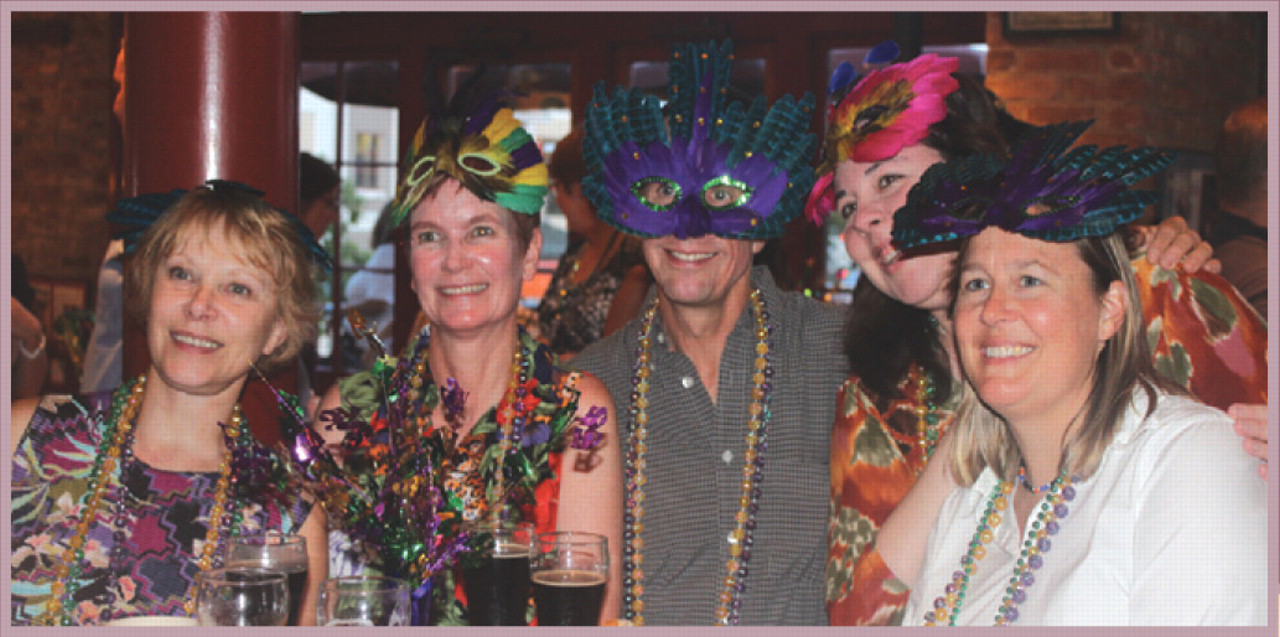
Conference attendees put on a colourful display at the Offsite Event
Attendees browse new wares in the Exhibit Hall

New Members’ luncheon

The Meet and Greet Reception provides the perfect opportunity to network

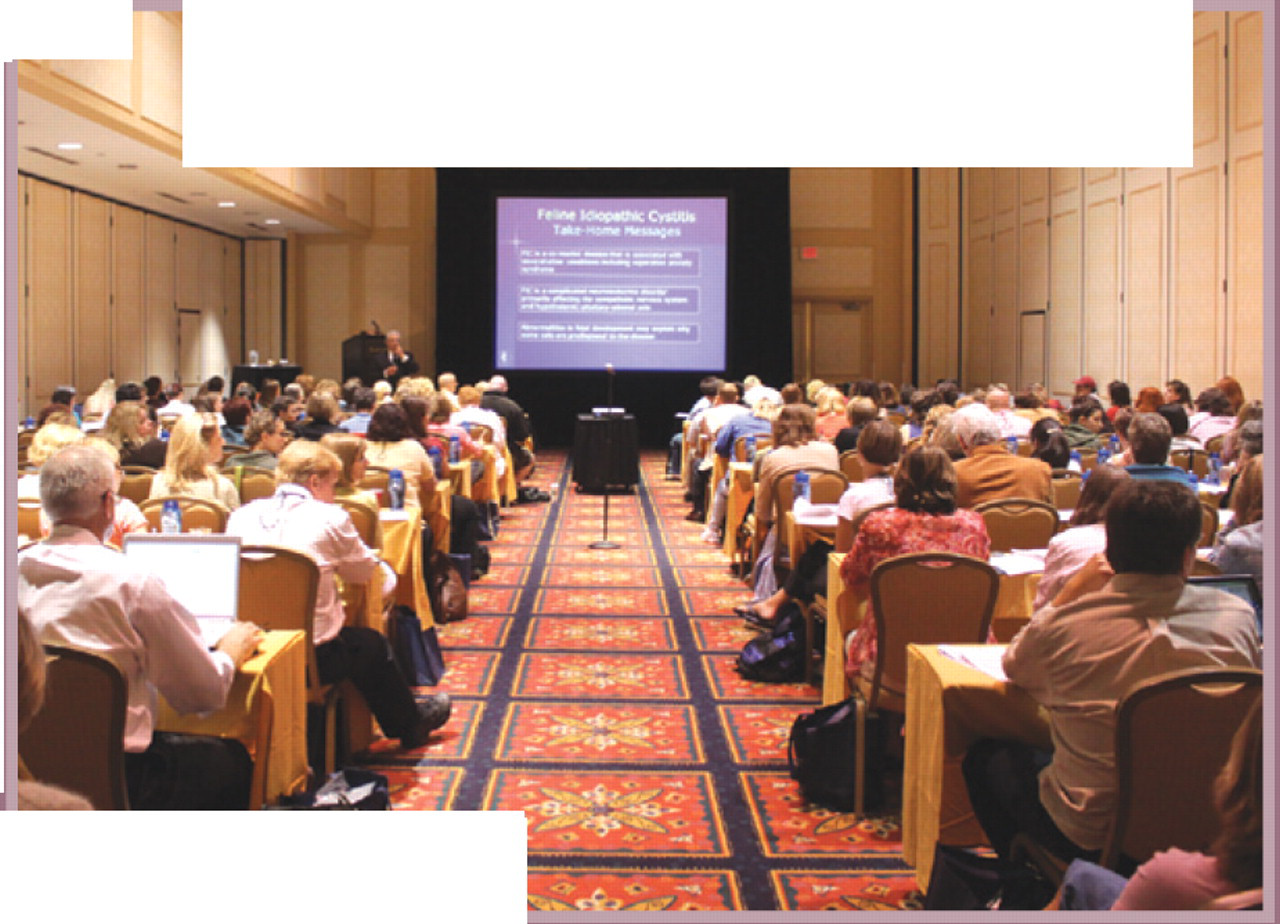
The audience actively engages in the case-based presentations at the ‘Seminar and Social'
‘The speakers were very knowledgeable … This was my first AAFP conference. I was impressed and will attend more in the future.’
‘Seminar and social excellent — truly enjoyed this. I love coming to these meetings. Not only do I meet new people, I have made new friendships. Never experienced this before at any vet meetings. Great job!’
‘I have now attended two AAFP conferences (Complex Disease Management, and Feline Ophthalmology and Neurology) and have been impressed with the efficiency of management, level of speakers, schedule, and pretty much everything else.’
‘Really enjoyed this conference and felt that I would return to my practice with a lot of new information and new ideas.'
Postgraduate examination
ACVSc Medicine of Cats qualification opens to vets in Europe
The MACVSc examination covers all facets of feline internal medicine, dermatology, ophthalmology, nutrition and behaviour. There is a well-documented subject guidelines study guide, with a reading list of recommended textbooks and journals. The examination consists of two 2-hour written papers (one concerning basic sciences and pathophysiology, the second concerning more clinical and practical aspects of feline medicine), and a practical/oral examination (minimum 45 minutes’ duration). The ACVSc has invested considerable time in ensuring the examination process is rigorous, educationally valid and fair. Examiners will be Members and Fellows of the ACVSc.

Since its inception over 40 years ago the ACVSc has offered species-specific examinations of proficiency (and not just the body systems division used by the ACVIM in the USA and ECVIM in Europe).
Its Feline Chapter has a proud record of conducting rigorous and searching examinations in feline medicine, at both Membership (MACVSc) and Fellowship (FACVSc) levels.
Application requirements and procedure
Application letters must be accompanied by:
– A current curriculum vitae that includes a list of national and international professional conference attendance since graduation or during the past 5 years (if more than 5 years have passed since graduation).
– A letter of support for the applicant from a veterinarian registered in Australia or New Zealand or a veterinarian who is a member of the International Society of Feline Medicine.
– a certified copy of the testamur of the applicant's veterinary degree (English translation) which allows him/her to register to practise in the country of origin.
In the case of applicants whose first language is not English, it is strongly recommended that the applicant's competency in reading, writing, speaking and listening to English be at a level at least equivalent to an IELTS (International English Language Testing System) score of 7.0 in all sections in the academic (not the general) module. Lack of competency in English cannot be used as a reason for appealing against a Membership examination result.
Approval to sit Membership examinations is granted at the discretion of the ACVSc Council.
Successful applicants are notified within 7 days of the decision by the ACVSc Council.
The MACVSc examination is available to veterinarians who have had at least three and a half years of full-time veterinary activity between graduation and taking the examination. Generally, 18–24 months of concerted self-directed study is required to confidently attempt Membership examinations.
Although it is certainly possible to study for the examinations alone, colleagues wishing to pursue the MACVSc qualification may consider undertaking structured ongoing veterinary continuing education courses to assist with preparation for the examination. Participation in a structured seminar/course is not, however, a prerequisite for sitting ACVSc examinations and must not be considered a guarantee of success at College examinations.
Further application criteria for individuals who have veterinary qualifications that do not entitle them to general registration in Australia or New Zealand, but which are recognised in any other part of the world, and who wish to sit the ACVSc Medicine of Cats examination and attain Membership of the College, are given on the left.
The written papers will be held in June 2012, with the practical/oral examination about six weeks later. The written examinations will be available at several locations throughout UK/Europe, while the practical/oral examination will be conducted in a single central location in Birmingham, UK.
The cost of sitting the examination will be $2500 AUD. (At current exchange rates this is approximately 1800.)
Attainment of this qualification demonstrates a high level of interest and competence in feline medicine; that is, a standard of knowledge and understanding, practical skills, attitude, methodology and communication which would make the person suitable to give professional advice to veterinary colleagues not similarly qualified on problems or procedures often encountered or used in general practice in the area of feline medicine.
Prospective applicants should note that College Membership in Medicine of Cats is not a specialist level qualification. Further training, publication and examinations towards Fellowship of the College make up the required pathway for potential specialist status.
Further information
For full details about the Medicine of Cats Membership examination being held in Europe from 2012, including eligibility criteria, e-mail the ACVSc College Office at
Guidelines for the examination, The ‘Red Book’ (which gives full details of the ACVSc exam procedure), and sample examination papers from previous years can be downloaded from the ACVSc website (http://acvsc.org.au/info/membership/)
The closing date for registrations for the 2012 examination (including payment of the fee) is October 31, 2011. Veterinarians wishing first to register a preliminary interest in sitting the examination are invited to do so.
Furthermore, passing the College Membership examination and being granted Membership of the College is not an entitlement to register to practise as a veterinarian in Australia or New Zealand.
ISFM
Cat groups from Estonia, Portugal and Slovenia join the National Partner network
The ISFM is delighted to welcome three further veterinary cat groups as new National Partners. The groups, from Estonia, Portugal and Slovenia, bring the number of National Partners to 10, and join groups from Belgium, France, Italy, Spain and Sweden.


The ISFM is also delighted to learn that a veterinary cat group is being formed in Slovakia and looks forward to welcoming it as a National Partner in the near future.
Existing National Partners
Catvets (Belgium)
Flemish Cat Group (Belgium)
Société Française de la Felintechnie (France)
Associazione Italiana Veterinari Patalogia Felina (Italy)
SIMEF — Società Italiana di Medicina Felina (Italy)
GEMFE — Grupo de Estudio de Medicina Felina de España (Spain)
JAMAREN — The Swedish Veterinary Feline Study Group (Sweden)
Other veterinary cat groups, or anyone wishing to form a group and become a National Partner, are warmly invited to contact the ISFM. Go to www.isfm.net/national_partners for full details.
The ISFM National Partners scheme exists to bring together worldwide expertise in cats by providing a working framework for the exchange and dissemination of information between like-minded veterinary cat groups. Full details, and links to the National Partner websites, can be found at www.isfm.net/national_partners.
ISFM
A truly international agenda
Representatives of the ISFM are gearing themselves for a hectic schedule of meetings in 2011, in the Society's endeavours to share knowledge and collaborate with organisations far and wide involved with the health and welfare of cats. March sees them in China and Hong Kong. In April, they're back on home turf for the annual BSAVA congress in Birmingham, UK (see page 62), before heading off to Bangkok and Sri Lanka in May. In June, the ISFM holds its annual feline congress, in Vienna, Austria, while, in September, the ISFM is joining up with the AAFP to host the fall conference in Boston (see page 59). To round off the year, the ISFM will once again be holding a series of CPD roadshows in Eastern Europe, in conjunction with Nestlé Purina (see page 62). For details, go to www.isfm.net.
Awards
ISFM/Hill's International Award 2010
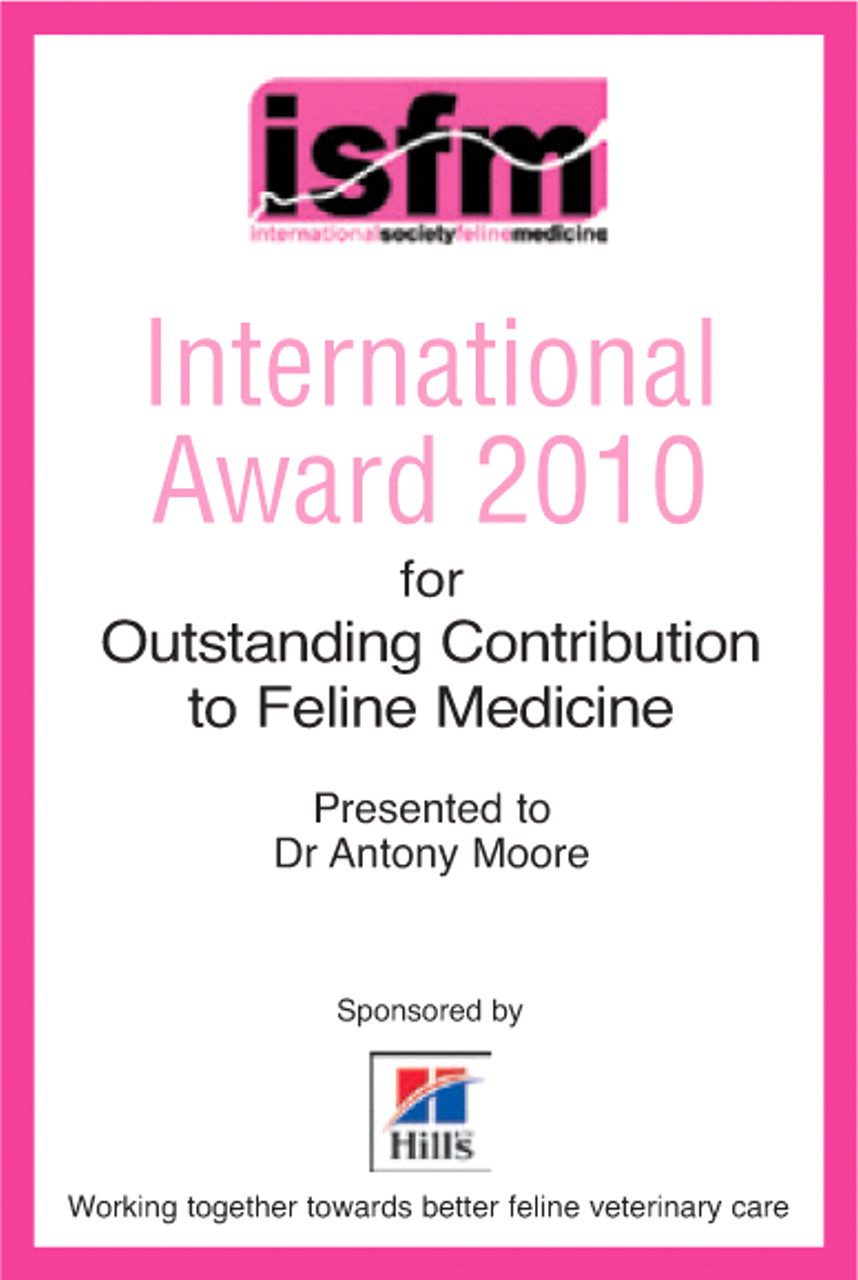
The recipient of the 2010 ISFM/Hill's International Award for an outstanding contribution to feline medicine is Dr Antony Moore, who, since graduating from the University of Sydney in 1981, has dedicated much of his career to improving the treatment of animals with cancer. To date he has authored over 200 articles, chapters and abstracts in the veterinary literature, and coauthored four textbooks on veterinary oncology. During 15 years at Tufts University, Massachusetts, he established and directed the Harrington Oncology Program, achieved the rank of full professor, and trained nine residents to careers in veterinary oncology, many of whom now direct oncology programmes at veterinary schools across the USA.
In 2003, Dr Moore returned to Australia and established Veterinary Oncology Consultants, in partnership with Dr Angela Frimberger. This web-based consulting company supports the highest possible quality of life for pets with cancer through providing advice and educational materials for veterinarians and pet owners.
Dr Tony Moore, pictured after receiving his award during the ISFM/Hill's feline day held last autumn at the European College of Veterinary Internal Medicine congress in Toulouse, France. This year's International Award will be presented during the ISFM Feline Congress in Vienna in June

This year's pre-BSAVA congress feline symposium has a distinctly surgical flavour, with the inclusion, for the first time, of ‘surgical tips’ to provide simplified and expert guidance on gut, pancreatic and renal biopsies, as well as on the treatment of pyothorax. These tips complement a programme of sessions addressing a variety of feline issues, including early neutering and use of external fixators for limb fractures. To book your place, complete the registration form inserted with this issue of JFMS, or go online to www.isfm.net/conferences/bsava/2011 to benefit from a £5 discount. Hurry, the last two years’ symposia were fully booked!

CPD
Feline medicine symposium tours Eastern Europe
Close to 1300 veterinarians attended the second annual Nestlé Purina and ISFM feline symposium tour, which recently took place in Poland, the Czech Republic, Russia and Croatia. The organisers were thrilled with the turn out, which was over twice that of the inaugural series of symposia in 2009. The symposium programme focused on the key topics of infectious diseases and gastrointestinal problems. (left) Pictured, from left to right, Claire Bessant of the ISFM, with speakers Andrew Sparkes, Andrea Harvey and Jill Cline. (above) An audience of 300 fills the lecture room in Zagreb, Croatia. The other city venues for the symposium were Warsaw, Brno, Prague and Moscow
