




Abstract

Agilent Technologies
According to Agilent, its Web-based DNA microarray design tool, eArray, now enables the microarray industry's first collaboration and sharing capabilities wherever there is an Internet connection. eArray 3.0 was the industry's first Web application for designing custom DNA microarrays used in drug discovery, disease studies, and basic research. eArray 3.5 provides an easy-to-use, secure means for sharing microarray design information among collaborators or with members of research consortia.
In addition to existing gene expression content, annotation information, and probe sequences, eArray 3.5 now provides access to Agilent's catalog array comparative genomic hybridization (aCGH) probes, useful for designing microarray experiments to detect chromosome loss or duplication in cancer studies. The online tool has also been expanded to allow researchers to upload their own aCGH probes.
This free tool enables users to design custom microarrays using Agilent catalog probes, probes from their own sources, or a combination of both.
To access eArray 3.5, visit http://earray.chem.agilent.com/earray.

Asynt
DrySyn MULTI 3-Position Clamps are the latest addition to the DrySyn range of products from Asynt. According to the company, these are the first low cost, three-position clamps with compact dimensions and aluminum and stainless steel construction. They are designed by chemists, for chemists. They are compatible with existing boss heads, fit any standard retort rod, and are fully adjustable. Their compact size allows excellent flexibility and means that they can be utilized not only with the DrySyn MULTI-units, but also reaction flasks in dry ice baths, with separating funnels, flash columns, SPE cartridges, and more.
For more information, visit http://www.asynt.com or http://www.drysyn.com.
Barnstead Genevac
A technical brochure that provides a comprehensive introduction to Barnstead Genevac's miVac range of centrifugal concentrators for molecular biology applications is now available. miVac from Barnstead Genevac is a range of centrifugal concentrators optimized to remove water and organic solvents from biological samples in a variety of formats including tubes, microplates, and vials. The new brochure introduces and describes the operational performance of the three concentrators, three vacuum pumps, and a novel refrigerated solvent trap that make up the miVac range. Guidance is given to enable users to choose the most appropriate system for their workflow and typical applications.
For more information, e-mail
Beckman Coulter
Integrated Cytometry Solution
The new Integrated Cytometry Solution from Beckman Coulter standardizes and streamlines sample processing in flow cytometry clinical labs. The Integrated Cytometry Solution manages electronic communications between the laboratory information system (LIS) and each sample processing step for increased efficiency, accuracy, and throughput. Walkaway process integration minimizes operator involvement for significant time and cost savings and increased safety. The Integrated Cytometry Solution features Beckman Coulter's new FP 1000 Sample Processing System and FC 500 Flow Cytometer along with LIS connectivity. The new solution simplifies workflow and tracks samples throughout the testing process—from receiving and preparing samples to acquiring and analyzing data to reporting results.
For more information, visit http://www.beckmancoulter.com, call 800.742.2345 (U.S.) or +1.714.871.4848 (outside U.S.), or fax 800.643.4366 (U.S.) or +1.714.773.6611 (outside U.S.).
Biomek Automated Tube Bar Code Reader
The new Biomek Automated Tube Bar Code Reader (ATBCR) from Beckman Coulter allows the processing of open-top, tube-based samples and controls. Integrated with Beckman Coulter's Biomek Software, the new ATBCR establishes positive I.D. and transfers all data sets associated with a tube or plate during pipetting. The ATBCR can read and track sample information with transfers from the original tube to a range of formats including secondary tubes, microplates, and deep well plates. It collects data sets during tube-to-plate reformatting and tube-to-tube aliquot sampling or accessioning. Ideal applications include ELISA plate processing and back-up sample storage in environments such as secondary screening, preclinical development, and Phase I and II clinical trials. The accurate sample information can be used for decision-making during the run, and the system provides multiple advanced options for error handling.
The new ATBCR operates on the Biomek FX and NX liquid handling platforms with Span-8 pipetting arm and requires minimal deck space. The device features a locking cover that protects the samples from airborne contaminants and ensures security and data integrity. The ATBCR accommodates 24 racks of four tubes each and reads and cross checks bar codes from the tubes and the rack.
For more information, visit http://www.beckmancoulter.com, call 800.742.2345 or +1. 714.871.4848, or fax 800.643. 4366 or +1.714.773.6611.
IOTest Anti-Cyclin A2 Monoclonal Antibody
The IOTest Anti-Cyclin A2 monoclonal antibody is for the study of cell cycle transitions in life science research. This FITC-conjugated antibody is the newest addition to Beckman Coulter's universal cytometry reagent line, which works on all instrument platforms, including the company's Cell Lab Quanta and FC 500 MPL flow cytometers.

Cyclin A2 is considered important in the transition to DNA synthesis and replication phases of the cell cycle and is abruptly destroyed as the cell moves into mitosis. Cyclin A2 is present in proliferating somatic cells, and its absence indicates that the cell is no longer replicating. The expression and diminishing expression of cyclin A2 are thought to play a prominent role in tumorigenesis. The new IOTest Anti-Cyclin A2 monoclonal antibody can be useful in a wide range of applications, including basic research on cell cycle control, apoptosis, and tumorigenesis; clinical cancer studies; and pharmaceutical discovery efforts to identify inhibitors, blockers, and antimitotic drugs.
The preformulated, standardized IOTest Anti-Cyclin A2 monoclonal antibody is provided in 100-test vials. It is ready to use, adapted for permeabilization procedures such as cold methanol or IntraPrep with a wash, and may be used in multicolor applications with cell markers and DNAcontent dyes such as 7-aminoactinomycin D or propidium iodide.
For more information, visit http://www.beckmancoulter.com, call 800.742.2345 or +1. 714.871.4848, or fax 800.643.4366 or +1.714.773.6611.
Biacore International
New from Biacore International, the Biacore A100 and Flexchip systems offer array-based protein interaction analysis. Flexchip was acquired by Biacore from HTS Biosystems, and is targeted at the explorative research market for simultaneous profiling of a large number of interactions. Screening of protein populations enables the mapping of biomolecular networks and the selection of interactions of interest for further analysis.
In contrast, Biacore A100 uses parallel analysis of protein panels against multiple samples to achieve new levels of productivity in large-scale functionality studies, compound selection, biotherapeutic development, and preclinical and clinical studies. This system offers the possibility to obtain and interpret large quantities of quantitative data as demanded for applications in proteomics institutes and pharmaceutical and biotechnology companies.
For more information, visit http://www.biacore.com.
Bio-Tek Instruments
Bio-Tek Instruments’ line of Bio-Stack automated solutions now includes the Twister II Microplate Handler from Caliper Life Sciences. The new product, called the “Bio-Stack Twister II,” can be interfaced to one or more Bio-Tek readers, washers, and liquid handling systems, adding incremental storage capabilities and automation for entire work cells. The Bio-Stack Twister II is a scalable robotic arm capable of handling up to 320 microplates.
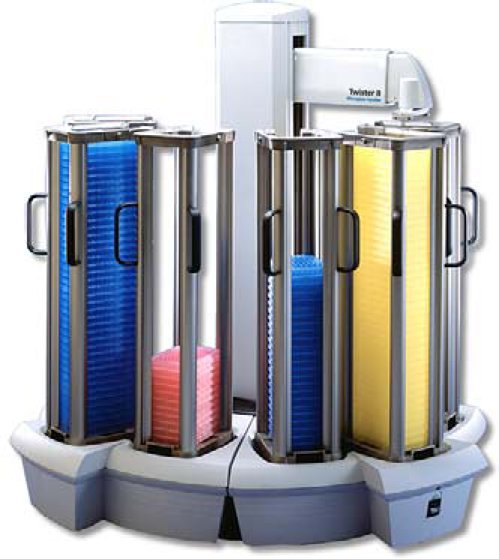
For more information, visit http://www.biotek.com, e-mail
BioTool Swiss
The new Petriswiss PS900P petri dish filler from BioTool allows continuous high-throughput petri dish-filling, labeling, and stacking to user-defined requirements. Its linear design maximizes flexibility of dish loading and unloading, allowing continuous preparation of up to 1300 dishes per hour. Automatic dish stacking on an extendable table removes the need for unit downtime due to long cooling periods.
The integral, high-contrast, alpha-numeric, and bar code printer adds a new ID dimension via label application to the dish side, facilitating unobstructed colony counting. The intuitive software features touch-screen operation for maximum convenience and ease of use, and is common to the PetriSwiss product range.
For more information, visit http://www.biotoolswiss.com.
Brinkmann Instruments
The new RDT GreenHouse Blowdown Evaporator system can be used as a stand-alone bench-top personal evaporator or as an upgrade to an RDT GreenHouse parallel synthesizer to perform parallel evaporation postsynthesis. The GreenHouse Blowdown Evaporator uses a precisely controlled flow of inert gas combined with digital heat control to carefully evaporate samples while avoiding the sample bumping found with some vacuum evaporators.

Interchangeable plates with 8 or 24 hollow pins enable the system to productively remove solvent from 8- or 24-well microplates as well as multiple reaction tubes or glass vials in parallel. The environmentally friendly enclosed design of the GreenHouse Blowdown Evaporator contains all of the evaporating solvent, allowing subsequent trapping and collection via a high-performance glass condenser.
For more information, visit http://www.brinkmann.com, or call 800.645.3050, ext. 2388.
Brookhaven Instruments
The new, compact BI-9010AT correlator card from Brookhaven Instruments can provide research and industrial laboratories with a tool for collecting dynamic light scattering data for particle sizing and static light scattering data for molecular weight determination. It is also considered to be an excellent choice for studying gels, glass transitions, concentrated polymer solutions, and colloidal suspensions. This universal, dual-mode correlator can collect two independent functions simultaneously and both autocorrelation and cross correlation measurements are possible, even though it uses only one-twentieth of the power of the original correlator. The BI-9010AT is easily interchangeable with existing cards and is fully compatible with all of Brookhaven's hardware and software.
For more information, visit http://www.bic.com, e-mail

Carl Zeiss MicroImaging
The new AxioCam HS high-speed digital camera from Carl Zeiss MicroImaging is designed for high-speed imaging of living cells. It records image sequences at more than 50 images per second in the basic resolution mode (660 × 494 pixels) and up to 140 images per second in the 5 × 5 binning mode. This allows highly precise, time sensitive examinations of fast processes in living objects in neurobiology, developmental biology, virology, and zoology.
AxioCam HS has been optimized for extremely fast reading of high-resolution image information—660 × 494 pixels with up to 60 images and up to 200 images in the 5 × 5 binning mode. With short exposure times, the high rate of image sequence is guaranteed because exposure and sensor reading processes can overlap. Special application software enables direct storage of the image data on the hard drive in complete 12-bit quality without any loss from compression, avoiding compression artifacts. This means that the maximum recording time would only be limited by the hard drive capacity. With appropriately equipped systems, the AxioCam HS can record image sequences as digital films (“movies”) in scientific image quality.
For more information, visit http://www.zeiss.com/micro, or e-mail
CombiSep
The pKa AnalyzerPRO is the first system in the new CombiSep PRO series of dedicated analyzers. The pKa AnalyzerPRO can determine the acid dissociation constants (pKa values) of water soluble and insoluble compounds. Values can be accurately determined in the presence of impurities. New software seamlessly integrates the collection of electrophoretic separation data, the calculation of compound pKa values, and the reporting/exporting of experimental results. Predefined separation methods reduce interlaboratory variability and enable users to focus on the pKa results. A throughput of up to 12 compounds/h can be achieved for aqueous pKa analysis over 24 pH values.
For more information, visit http://www.combisep.com.
Copley Controls
Copley Controls has tripled the force rating of its direct drive ServoTube moving rod linear actuators. The new models develop continuous force from 35 to 66 pounds and peak force from 167 to 418 pounds. Nine stroke lengths from 33 to 318 mm are available. The actuators provide 20 μm repeatability, velocity to 4.6 m/s, and acceleration to 435 ms2.

For more information, visit http://www.copleycontrols.com, or e-mail
CyBio
The new CyBi-SmartWell, a precise 96-channel liquid handling device from CyBio, is designed for newcomers to automation in small- to medium-sized laboratories. A library of ready-to-use test routines enables reagent, sample, and mother–daughter plate transfers, dilution of samples, exchange of culture media in cell culture plates, and wash routines. All pipetting parameters are set for optimal results, and the system is operated by a graphical user interface that does not require any previous knowledge in liquid handling or programming. The compact system has 3 plate positions and supports 96 position shallow-well microplates. It can be used in most commercially available sterile hoods. The disposable tips can be changed or washed according to user requirements.

For more information, visit http://www.cybio-ag.com, e-mail
ESA Biosciences
The Coulochem III system from ESA Biosciences now combines both coulometric and amperometric detection in a flexible high-performance electrochemical detector system. According to ESA Biosciences, the Coulochem III system is the only electrochemical detector to offer redox capability in a single cell and allows quantification from picogram to femtogram levels of oxidizable or reducible neurochemical, clinical, pharmaceutical, environmental, and biological compounds. In addition, the Organiser Module integrated into the Coulochem III saves valuable bench space and provides a protected, temperature-stabilized environment for columns and cells.

For more information, visit http://www.esainc.com, e-mail
FEI
Titan 80-300 S/TEM
The Titan 80-300 is a new scanning/transmission electron microscope (S/TEM) with an all-new platform dedicated to correction and monochromator technology. According to FEI, its Titan S/TEM system is the world's highest resolution commercially available microscope, yielding powerful sub-Angstrom (atomic scale) imaging and analysis. It enables microscopy to be taken to the next level where new discoveries on the structure–property relationships of functional materials become possible.
For more information, visit http://www.feicompany.com.
Tecnai G2 TEM
FEI released new software and hardware for its Tecnai G2 transmission electron microscope (TEM). The new software (Tecnai 3.0) delivers enhanced ease of operation of the Tecnai TEM and ensures full benefit of the system's performance. The new hardware features an innovative computer-based technology, Inspect3D Xpress, for unprecedented speed with 3D image reconstruction.
For more information, visit http://www.feicompany.com.

Greiner Bio-One
Greiner Bio-One introduces Shorty Plastic Serological Pipettes in 5 and 10 mL sizes. These pipettes are 4.5 in. shorter than standard length product, making them easier to work with at the bench and in biological hoods. Both pipettes have additional and reverse graduations and full-colored mouthpieces (blue on the 5 mL; orange on the 10 mL) for ease of size identification. The 10-mL version also features an antidrip tip. All Greiner Pipettes are nonpyrogenic, noncytotoxic, DNase free, RNase free, and human DNA free.
For more information, visit http://www.gbo.com/en/, e-mail
Guava Technologies
GuavaLink Automation Server software has been developed to automate the processing of multiple microplates on the Guava PCA-96 and the Guava Easycyte Personal Cell Analysis (PCA) systems. GuavaLink allows robot scheduling software to control and integrate Guava PCA systems with all physically compatible robotic arms and liquid handling systems, resulting in streamlined workflow and enhanced productivity.

Using a series of user-defined worklists, the robot scheduling software is able to send commands to the system while instructing the robotic arm to move microplates to and from a Guava PCA system. This flexible worklist system allows users to interchange and process different cell-based assays within a microplate series. GuavaLink enables the Guava PCA system to become a true walkaway cell-based screening system, intelligently automating hours of microplate processing with no user invention. For more information, visit http://www.guavatechnologies.com.
IDBS
ActivityBase Xtended Edition (ActivityBase XE) is now available from IDBS who says it offers superior template design flexibility and can facilitate the incorporation of bespoke business rules for data verification. The XE module for ActivityBase offers screening scientists a single environment for data capture, visualization, verification, quality control, and storage. Independence from third-party spreadsheet packages enables XE to rapidly return results calculations, whereas the use of open standard architecture (XML) means that calculations are free of proprietary formats.
For more information, visit http://www.idbs.com.
Matrix Technologies

Pipettor Service Program
According to Matrix Technologies, its new Pipettor Service Program features lightweight, convenient, space-saving packaging, and offers cost savings as well as improved protection. The compact inflatable pouch and brightly colored, water-resistant envelope come prelabeled and include simple documentation, shipping, and decontamination instructions.
Factory-trained, certified technicians perform calibration service or preventive maintenance and calibration services on Matrix and most Pipettor brands and models. Calibrations are completed in less than 48 h and preventive maintenance and calibration in less than 72 h. This new program includes an e-mail confirming receipt and service request and a postservice e-mail notification of the shipping carrier and tracking number.
For more information, visit http://www.matrixtechcorp.com, e-mail
VisionMate One Wireless
The new VisionMate One Wireless is a lightweight, compact, single tube, 2D, or linear bar code reader that employs Bluetooth wireless technology. According to Matrix Technologies, it is ideal for satellite locations or fieldwork. This versatile single tube reader can provide secure data transmission between the reader and a computer or PDA, and is compatible with virtually any database. The VisionMate One Wireless has an operating range of 100 m and reads tube bar codes in less than 1 s.

For more information, visit http://www.matrixtechcorp.com, or call 800.345.0206.
NUNC
NUNC offers new rectangular dishes in one-, four-, and eight-well formats. The one-well dishes are designed especially for use in HTS petri dish applications. The four- and eight-well dishes can be used in a wide range of applications in cell culture, including scale-up and cloning. The multiwell format is also convenient for preparing probes for multiple gene subsets or washing Western blot strips. Each four-well dish is also perfectly sized to hold four microarray slides for processing or storage. Rectangular dishes from NUNC are available both untreated for use in molecular biology applications and treated with a Nunclon surface to ensure consistent cell attachment and growth. All plates are sized to ANSI standard dimensions for compatibility with automated systems.

For more information, visit http://nuncbrand.com, e-mail
PANalytical
PreFIX Optics
PANalytical has added a new focusing mirror to its range of PreFIX optics, allowing transmission diffraction experiments to be carried out on macromolecules, such as proteins, using the company's standard X'Pert PRO MPD X-ray diffraction system. Used in combination with PANalytical's X'Celerator detector, the new mirror enables the generation of highresolution data suitable for crystallographic analysis. According to PANalytical, this means that for the first time, macromolecules can be analyzed using a standard, laboratory-based XRD system, rather than on a synchrotron beam line or a single crystal diffractometer. Experiments on hen egg white lysozyme using this system setup gave cell parameters in good agreement with data obtained from single crystal measurements.
For more information, visit http://www.panalytical.com, e-mail
Axios-Poly X-Ray Analysis System
The new Axios-Poly is a dedicated X-ray analysis system that meets the needs of X-ray fluorescence spectrometry (XRF) analysis in the plastics and polymers industry. According to PANalytical, it offers the highest levels of precision and versatility, and is ideal for all XRF applications. It is simple to operate, and the compact design can easily be integrated into laboratories.
For more information, visit http://www.panalytical.com, e-mail
Porvair Sciences
Deep Well Plates
The latest additions to Porvair Science's range of deep well plates include sterile plates for sensitive microbiological and cellular samples, bacterial plates for growing cultures, and RNase/DNase free plates that provide high-integrity biological sample storage media. They are available in a choice of volumes, including 350 μL, 1, 2, and 10 mL.

For more information, visit http://www.porvair-sciences.com, e-mail

Glass Bottom Microplates
According to Porvair Sciences, its new range of glass bottom microplates provide high-sensitivity detection for confocal imaging and detection applications where extremely low backgrounds with no cross talk are required. Glass bottom microplates from Porvair combine the optical properties of glass, low background, and low birefringence with the versatility of a microplate, and they are extremely flat with curvatures below 100 μm. For these reasons, Porvair says its glass bottom microplates demonstrate higher performance than standard polystyrene plates for fluorescence assays, luminescence detection, scintillation counting, and high-resolution microscopy using confocal imaging.
Offered in both 96- and 384-well microplate formats, the new plates are available without surface modification or tissue culture treated to optimize cell growth on the glass surfaces. The high-clarity glass bottom of this plate facilitates easy positioning for microscope objectives.
For more information, visit http://www.porvair-sciences.com, e-mail
Protedyne
A Vision Verification System is now available on the BioCube System (automation platform) by Protedyne. The Vision Verification System can be used for a variety of applications such as detecting clogs in filter plates or documenting pipetting procedures. It has two important components: a labware camera and a tip camera.
Also available for Protedyne's BioCube System automation platform is a centrifuge-vacuum hybrid protocol for nucleic acid extraction. The preparation of high-quality DNA samples from blood is paramount for molecular diagnostic applications. The Protedyne Centrifuge-Vacuum Hybrid Protocol combines centrifugation to clear blood lysates in membrane-based extraction protocols with downstream vacuum manifolds to manage the multiple wash steps required to achieve high-purity DNA.
For more information, visit http://www.protedyne.com, or call +1.860.683.1860.
QIAGEN
The new TurboCapture mRNA Kits from QIAGEN can provide a fast and simple procedure for purifying mRNA from large numbers of cultured cell samples. Kits are available in 8-, 96-, and 384-well formats for high-throughput applications such as compound screening and target validation (e.g., by siRNA screening).
Rapid mRNA purification is achieved using unique oligonucleotide immobilization technology. Cell lysates are added to a TurboCapture strip (8 wells) or TurboCapture plate (96 or 384 wells), and mRNA is allowed to hybridize to the immobilized oligo-dT in each well. After washing, mRNA is eluted or used directly in cDNA synthesis.
For more information, visit http://www.qiagen.com.
Radleys Discovery Technologies

Tornado IS6
Radley's new Tornado IS6 is a new accessory for the Carousel 6 reaction system that facilitates powerful, controlled stirring of up to six reactions (50–250 mL) in parallel. Built to seamlessly integrate with a wide range of overhead stirrers, the Tornado evenly distributes high torque to all positions of the Carousel 6. The result is productive overhead stirring even when faced with highly viscous liquids. At its most powerful, the Tornado can stir reaction mixtures of up to 10,000 cps at 500 rpm. The system also is considered ideal for dispersing solids in lower viscosity liquids at speeds of up to 1000 rpm.
For more information, visit http://www.radleys.com, e-mail
StarFish Workstation
A new eight-page catalog details how Radleys Discovery Technologies’ StarFish multiexperiment workstation may be easily configured to provide productive solutions to laboratories doing a range of heating and stirring experiments. It illustrates how the StarFish can be configured to provide, at its simplest level, simultaneous stirring and heating of a wide variety of vessel types and sizes —from small 2 mL vials to 250 mL round-bottomed flasks. Yet the same system can also be configured to perform more complex procedures in parallel including synthesis, extraction, concentration, distillation, and digestion.
For more information, visit http://www.radleys.com, e-mail
Roche Diagnostics
Roche Diagnostics's first microarray-based test, the AmpliChip CYP450 Test, is now available for laboratories in the United States. This test, which is powered by Affymetrix microarray technology, determines a patient's Cytochrome P450 2D6 and 2C19 genotypes from genomic DNA extracted from a whole blood sample. Information about CYP2D6 and CYP2C19 genotype may be used as an aid to clinicians in determining therapeutic strategy and treatment dose for therapeutics that are metabolized by the CYP2D6 or CYP2C19 gene product.
For more information, visit http://www.roche-diagnostics.us, http://www.roche.us, or http://www.roche-diagnostics.com.
Selerity Technologies

Free Application Note: Subambient Temperatures
A new application note (number 813) is available free of charge from Selerity Technologies to describe the improvements in separation time and performance by using subambient temperatures. Typically, a solvent gradient is used to resolve all forms of vitamin A in a single HPLC analysis as the polarity range is large. The Polaratherm Total Temperature Controller from Selerity Technologies demonstrates optimized results in the separation of vitamin A in biological samples by using a subambient temperature program.
For more information, visit http://www.selerity.com, or e-mail
Free Application Note: Thermal Gradients vs. Solvent Gradients
The identification of both beneficial and potentially harmful ingredients in natural products is under increased scrutiny, especially in the food and nutraceutical industries. The application of temperature-programmed liquid chromatography has resulted in improved efficiencies in separating active components from natural products. In particular, research from Selerity Technologies using the Series 8000 Oven has centered on the separation of catechin and caffeine-related compounds in cocoa, green tea, and a commercially available ginseng tablet. A new application note (number 806) is available for free from Selerity Technologies, describing the improvements in separation time and peak shape by using thermal gradients in place of a solvent gradient program.

For more information, visit http://www.selerity.com, or e-mail
Syngene
Syngene's new DYMENSION 3 is software for rapid, yet reproducible analysis of proteins run on 2D multistain gels such as cyanine dyes. DYMENSION 3 software enables scientists to automatically overlay images of gels showing up to three contrasting fluorescently labeled protein samples. Then, with its spot-finding algorithm, DYMENSION 3 can instantly locate and analyze protein spots, assigning statistical confidence to each and every difference, thus accurately highlighting specific relevant proteins.
For more information, visit http://www.syngene.com.
The Automation Partnership
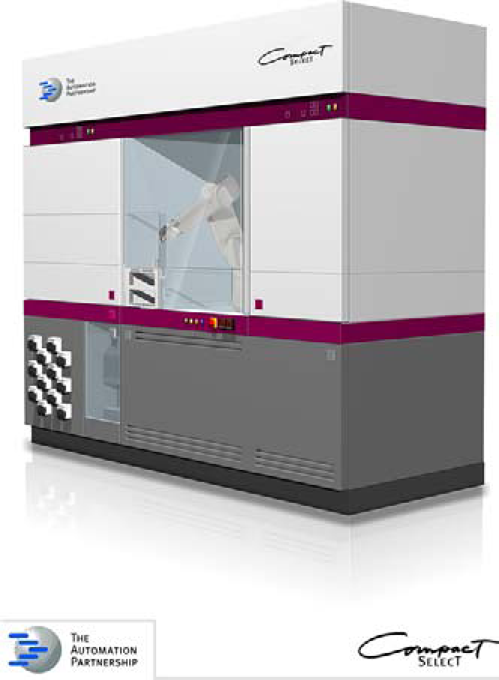
The new CompacT SelecT automated laboratory cell culture system from The Automation Partnership (TAP) is designed for reproducible generation of assay ready plates every day, and when used continuously could increase productivity by more than 20%. CompacT SelecT has a footprint slightly larger than a standard Class II safety cabinet and is based on TAP's SelecT automated cell culture system. Over 30 SelecT systems are installed in major pharma companies, where they have been used to successfully culture more than 550 different cell lines. CompacT SelecT automates manual cell culture processes via a small six-axis anthropomorphic robotic arm that automatically manipulates standard T-175 flasks under negative pressure laminar airflow, thereby preventing any contamination. The system also operates with full bar code tracking to ensure a complete audit trail.
For more information, visit http://www.automationpartnership.com.
Thermo Electron
DELTA V Gas Isotope Ratio Mass Spectrometers
Two new gas isotope ratio mass spectrometers are now available from Thermo Electron: the DELTA V Advantage and the DELTA V Plus. According to Thermo, its new DELTA V series offers excellent linearity and stability and a new, compact design that takes less laboratory space and guarantees low noise emission. The new DELTA V series is targeted at academic customers as well as scientists whose main topics of research are geology, forensic, agriculture, food and beverage, quality control, doping, pharmaceuticals, or medical and diagnostics industries.

Incorporating the DELTA V Advantage and DELTA V Plus, the new DELTA V series supercedes the DELTA Plus Advantage and the DELTA Plus XP, offering superior performance with respect to sensitivity, versatility, and reliability. It is complemented by a large selection of sample preparation systems, enabling complete, specific solutions for a wide range of research and control applications, including climate research, hydrology, paleontology, authenticity control of food and drugs, biology, and medicine. Both liquid chromatographs and gas chromatographs can be connected online to the DELTA V series instruments.
For more information, visit http://www.thermo.com/ms, e-mail
DFS High-Resolution Double Focusing Magnetic Sector GC/MS

The DFS, a new highresolution double focusing magnetic sector GC/MS, is now available from Thermo Electron. According to Thermo, this instrument is the first totally new design of its kind to be developed in over 15 years. It offers environmental contract laboratories and governmental authorities monitoring food, feedstuff, and environmental samples high-quality analyses at a reasonable cost. The DFS succeeds the Finnigan MAT 95 XP GC/MS system, and according to Thermo, is the most sensitive, reliable, and comprehensive instrument for target compound analysis available in the market. The DFS has been primarily developed to perform trace compound analyses of environmental samples and sports doping. It features significantly lower detection limits and higher sample throughput than its predecessor, thereby resulting in lower cost of ownership, considerable ease of use, and excellent performance. In addition, the new DFS features improved transmission, an intuitive user interface, and a compact footprint.
For more information, visit http://www.thermo.com/gc, e-mail
Free Application Notes: Pesticide Residues Analysis with TRACE GC Ultra
New GC applications for the accurate analysis of pesticide residues using the TRACE GC Ultra are now available from Thermo Electron. These methods assist compliance with the strict legislation proposed by the U.S. Environmental Protection Agency Code of Federal Regulations and the European Commission Directives that aim to minimize pesticide residue levels in food products. The proposed legislation decrees maximum residue levels (MRL) of 0.01 mg/kg or less, representing significant analytical challenges for environmental and toxicology laboratories, as well as government agencies that need an accurate method of detecting these minimal levels of pesticide residues.

In the first application, Thermo TRACE GC Ultra utilizes a patented large-volume splitless technique, which allows the operator to analyze residual pesticides in food with a 30× sensitivity increase over traditional methods. With this technique, detectability in trace analysis is considerably enhanced and determination of strictest MRL of 0.01 mg/kg possible.
Another critical application is the control of organophosphorous pesticides. Thermo's TRACE GC Ultra facilitates a gas chromatographic technique using programmable temperature vaporizing injection and a flame photometric detector. Combined with a backflush option, sensitive monitoring can now be increased by four orders of magnitude simply through the injection of a more concentrated sample. This combination also enables much faster analysis because there is no requirement for complete elution. Sample preparation time is also shortened and the column's lifetime significantly extended.
For more information, visit http://www.thermo.com/gc, e-mail
Free Datasheet: SampleManager LIMS
To provide an overview of the capabilities of its flagship LIMS, SampleManager, Thermo Electron offers a new datasheet aimed at the chemical and petrochemical industries. Entitled “SampleManager Laboratory Information Management System (LIMS) – the Enterprise LIMS for chemical and petrochemical companies,” it is aimed at scientists, Information Technology leaders, and decision-makers in global organizations in the process industries.
As well as providing an overview of the data processing capabilities of Thermo's Sample Manager LIMS, the new datasheet discusses the challenges facing process industry organizations in deploying enterprise solutions, and makes a case for standardizing on a single solution. Thermo's LIMS is a key component, being scalable for a multisite, multilingual user base.
This brochure cites an independent study, commissioned by Thermo, confirming the overall savings to be made in global Total Cost of Ownership of LIMS, and introduces the concept of ensuring product quality while minimizing delays and downtime.
To download a copy of the datasheet in pdf format, visit http://www.thermo.com/samplemanager.
Finnigan LTQ FT Mass Spectrometer and Heavy Petroleum Crude Oil
Thermo reports it has successfully used its Finnigan LTQ FT hybrid ion trap mass spectrometer for analyzing petroleum samples.

Historically, the characterization of petroleum relied on extensive chromatography prior to analysis by mass spectrometry. Moreover, traditional vaporization and ionization methods proved ineffective when processing heavy crude oil. The complexity of crude oil requires ultrahigh resolving power and sensitivity for the analysis of polar components, which are found at low concentrations in petroleum samples. For the first time, routine, direct electrospray ionization (ESI) analysis of such compounds in heavy petroleum is possible using the Finnigan LTQ FT.
Heavy crude oil is a complex mixture of hydrocarbons containing heteroaromatic rings in its polar fraction. The LTQ FT uniquely offers ultrahigh resolving power to separate isobaric species and measures masses accurately and reproducibly with external mass calibration. Identification of more than 3000 nitrogen-containing compounds in a single experiment is possible. For this reason, Fourier Transform Ion Cyclotron Resonance mass spectrometry has emerged as one of the most rigorous techniques available for the direct analysis of heavy crude oil.
For more information, visit http://www.thermo.com/ms, e-mail
Finnigan LTQ Support Packages
Two new support packages are now available from Thermo Electron: an expanded LTQ FT Essential Support Plan for its Finnigan LTQ FT hybrid linear ion trap mass spectrometer, and a new Academic LTQ Essential Support Plan for the Finnigan LTQ linear ion trap mass spectrometer. The former is targeted at current Finnigan LTQ FT customers in metabolic studies, proteomics analysis, pharmaceutical research, and drug discovery, whereas the latter is designed specifically for Finnigan LTQ academic customers. These packages provide a level of postpurchase support appropriate to these customers’ needs while being considerably more cost-effective when compared with traditional support plans.
For more information, visit http://www.thermo.com/service, e-mail
HiPerTOC and ECS High-Performance Analyzers
Thermo Electron has combined its HiPerTOC and ECS high-performance analyzers to enable high-quality TOC and TOX analyses on the same software platform. Thermo's innovation offers scientists working in the chemical industry and contract and governmental laboratories an efficient yet high-quality method for measuring environmental screening parameters.

The HiPerTOC is a unique TOC bench-top analyzer featuring four different oxidation techniques for improved versatility and productivity. The ECS coulometric analyzers have been developed for fast and accurate measurement of organic halogens parameters like TOX/AOX, EOX, and POX in a wide range of water and solids samples.
For more information, visit http://www.thermo.com/elemental, e-mail
THK America

According to THK, its new Type CRES High-Thrust Rod Actuator is compact, low cost, and versatile. The Type CRES's high thrust produces maximum operating efficiency, whereas a low-voltage DC motor (DC12V ± 15%) contributes to reduced energy consumption. Its sleek design, combined with a maximum stroke of 130 mm, makes it suitable for a variety of nontraditional applications. Possibilities include packaging machines, automatic seat positioners, panel operating mechanisms, positioning systems, height adjusters, and opening/closing mechanisms. Nominal speed ranges are from 15 to 55 mm/s, with a nominal feeding force of 196–490 N.
The Type CRES is dustproof, weatherproof, and waterproof. It is JIS IP55 rated. Type CRES Actuators are available in two standard models: the CRES200 and the CRES500.
For more information, visit http://www.thk.com, e-mail
Viscotek
The new Y501 Automated Relative Viscometer (ARV) from Viscotek is a system for automated measurement of the viscosities of dilute polymer solutions. The ARV system is considered to be ideally suited for measuring dilute polymer viscosities. Based upon Viscotek's Y501 viscometer design, the ARV system measures solvent and sample viscosity simultaneously, avoiding errors due to temperature fluctuations and solvent variations. According to Viscotek, its system provides faster analysis, greater precision, and less solvent exposure when compared to the traditional Ubbelohde or Cannon–Fenske glass tube viscometers that it replaces.

To automate acquisition and processing of data, Viscotek consulted with industry users to produce the new ARV software, which can automate control of devices involved in making solution viscosity measurements including syringe pumps, valve actuators, and autosamplers, and can even be set up to support Zymark robotic sample delivery systems. ARV supports run queues and performs automatic calculations such that it can run the viscometer unattended, leaving operators free to perform other tasks. Users can select from a wide range of report formats including relative viscosity, inherent viscosity, reduced viscosity, intrinsic viscosity, or absolute viscosity.
According to Viscotek, the Y501-ARV is the only solution viscometer that can automatically provide relative, intrinsic, inherent, specific, and absolute viscosity as well as molecular weight information from a single experiment.
For more information, visit http://www.viscotek.com, e-mail
Wyatt Technologies

A recent application by IBMC-CNRS of Strasbourg, France, demonstrates that Wyatt Technology's DynaPro Titan range of Dynamic Light Scattering (DLS) instruments can be used to determine whether freezing alters a macromolecule's homogeneity or not. The findings of this analysis are of particular interest for protein characterization applications and are detailed in a new, free of charge application note from Wyatt.
With certain proteins, the biological activity disappears after being stored in a frozen state, possibly due to aggregation. IBMC-CBRS used the DynaPro, and it enabled verification of the protein quality before reproducible investigations were undertaken on the sample.
For this particular application, two samples–one never subjected to freezing and one kept frozen for 2 weeks–are available for comparison. The samples are transferred into two 12 μL cuvettes and spun for 3 min at 4000 rpm in a small, tabletop centrifuge to remove dust particles as well as the largest aggregates.
The analysis of the unfrozen protein exhibits a stable baseline (mean ~0.999), a low sum of squares (<5), a diffusion coefficient of 1054 × 10–9 cm2 s–1, a hydrodynamic radius of ~ 2.0 nm, and is virtually monodisperse (index ~0.03). Assuming that the protein has a spherical shape, the Mw was 16–17 kDa, close to the one expected from amino acid composition. By contrast, the protein population of the frozen sample is characterized by a far less stable baseline (mean 1.005) and high SOS values (~8). The smaller diffusion coefficient (965 × 10–9 cm2 s–1), the greater radius (2.2 nm), larger polydispersity index (0.07), and the higher apparent Mw (>20 kDa) indicate clearly the presence of aggregates.
Collectively, the results demonstrate that this protein tends to aggregate upon freezing. The DynaProTM DLS system has proven to offer the most direct and least invasive method to answer the question of whether freezing actually alters the macromolecule's homogeneity or not within just a few minutes.
For more information, visit http://www.wyatt.com or e-mail
Zinsser Analytic
MOSS 2002 Modular Sample Preparation System
The new MOSS 2002 modular sample preparation system from Zinsser Analytic is extremely fast due to eight independently spacing tips with high-speed movement in the x, y, and z axes. It ergonomically combines modern weighing technology and sophisticated software to automate library sample, weighing and dissolution with assay, and storage plate preparation.
A little water in DMSO greatly decreases compound solubility. Therefore, to minimize the risk of compound precipitation, the entire dissolution step is performed under argon. With its enhanced technology, it is not necessary to flood the entire system with argon, thus keeping the cost and weight of the instrument to a minimum. Tilting dissolution vials offers complete retrieval of sample material. The system is capable of dissolving and distributing 384 samples to up to six destination racks in about 90 min by using parallel processing.
For more information, visit http://www.zinsser-analytic.com; e-mail
SuSy Automation Platform for Preformulation and Solubility Studies
Zinsser Analytic now offers an automatic workbench that enables users to execute a workflow to test a large number of compounds in parallel. The reactor is based on a microplate format for 24, 48, or 96 different compounds or different testing parameters. Tools for pH measurement and adjustment, precision dosage, and weighing and mixing (even of highly viscous media) are provided. Optical control, evaporation, filtration, and HPLC/LCMS integration can be provided to enable users to conduct well-proven formulation methods and solubility tests on a single platform.

For more information, visit http://www.zinsser-analytic.com; e-mail
More News
Power protection units from The board of directors of Neil Kipling, founder, CEO and Chairman of The In other Labcyte news, the company closed its Series C financing with all previous major investors and three new firms participating. The round was led by According to This study found both XRPD and NIRS to be precise and accurate methods, each characterized by low-detection limits, nondestructive analysis, and rapid production of results. XRPD proved more precise than NIRS for samples with a low-crystalline content. In addition, its high sensitivity for these samples makes it the preferred technique for monitoring crystallization processes, offering detection of crystallization at extremely low limits and direct determination of the crystallization products. According to
Special Note

Masahide Sasaki, M.D., Ph.D. August 27, 1933–September 23, 2005
In the 1980s, long before clinical laboratories in the United States were faced with the challenges of consolidation, Masahide Sasaki, M.D., Ph.D., and his associates were inventing what was to become the greatest revolution in clinical laboratory technology since the autoanalyzer. Masahide Sasaki is credited with being the father of modern clinical laboratory automation, a technology that has been installed in laboratories throughout the world.
Sadly, Masahide Sasaki passed away following a valiant fight against cancer on September 23, 2005. He is survived by his devoted wife of 66 years, Toyoko, and his children, Mika, Kyoko, and Masanori.
Masahide was born in 1933 in Yamaguchi Prefecture, Japan. In 1961, he graduated from Yamaguchi Medical School. Following World War II, in 1965, he was an internist for the Hiroshima Atomic Bomb Casualty Committee. Several years later, in 1967, he was appointed Chief of the Clinical Chemistry Department at Kawasaki Hospital. He did a fellowship at Michael Reese Hospital in Chicago, Illinois, in 1970, which gave him exposure to the U.S. medical system. Two years later, he rose quickly in the academic ranks as an Assistant Professor of Internal Medicine at Kawasaki Medical School, Professor of Laboratory Diagnosis in 1976, and ultimately Vice President of Kawasaki Paramedical College.
Masahide's inspiration to automate the clinical laboratory began in 1981 when he was appointed Professor and Director of the Department of the Clinical Laboratory at Kochi Medical School in Kochi, Japan. Leading a team of medical technologists that he trained to assemble conveyor belts, assemble electronic boards, and program robots, he created the world's first automated laboratory. Teaming up with major industrial partners allowed Masahide's ideas to reach clinical laboratories throughout Japan as commercial products. Many papers were published by Masahide and his collaborators describing their technological achievements during the period from 1981 to 1999. The most notable publication was a monograph and primer on laboratory automation sponsored by A&T Corporation, Yokohama, Japan.
Masahide first lectured on clinical laboratory automation outside Japan to a standing room audience of 900 people at the American Association for Clinical Chemistry in Atlanta, Georgia, in July of 1989. His 45-min film demonstrated to the spellbound audience new possibilities for error reduction, cost containment, and unprecedented turnaround times. This event initiated the revolution of laboratory automation in the Western Hemisphere. Masahide served on the scientific committee for the Association for Laboratory Automation (ALA) from 1998 until 2003. In 2001, the ALA presented Masahide with his first international award recognizing his contributions to clinical laboratory automation. Masahide presented numerous lectures in Europe and the United States until his retirement in 2003.
Masahide founded the Cherry Blossom Symposium, a conference that brought together the leading international figures and companies in the laboratory automation field to explore technological developments as well as sample some of the best Asian food and culture. Masahide presided over the first Cherry Blossom Symposium in Kochi, Japan in 1998, with his colleagues Drs. Imamura and Takeda, as well as Mr. Nishida and Mr. Ogura.
Masahide was known as a prolific and inventive creator, who was always willing to teach, inspire, and elevate those around him to new levels of achievement. He will be long remembered for his boundless enthusiasm, sense of humor, and legendary hospitality as a host to visitors to Kochi, Japan, and later Yamaguchi, Japan, where he retired. His infectious personality and vision created lasting friendships, and his followers will miss him and his contributions to clinical laboratories (Obituary by Robin A. Felder, Ph.D.).
Call for Papers

Lab automation professionals are invited to showcase their achievements by submitting method-focused scientific papers for publication consideration. Manuscript guidelines and submission information are available at http://labautomation.org/jalainstructions.php.