



Abstract

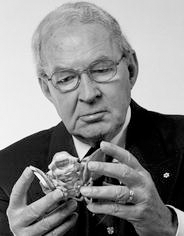
Robert Salter started his medical career as a medical missionary for the Grenfell Mission in Newfoundland following his education at the University of Toronto. He soon recognized that his passion for humanitarian endeavors could be best directed through medical science and he enrolled in the Gallie Course in Surgery at the University of Toronto. After completing his residency, Bob moved to Britain for his fellowship training, where he performed research at the London Hospital, working with world orthopaedic leaders such as Sir Reginald Watson-Jones. There, he was taught that immobilization for fractures should be complete, rigid, enforced, and prolonged. Bob's intuition told him that this dogma was false, and he challenged this concept, applying basic science principles to identify deleterious effects of joint immobilization. This work laid the foundation for his development of continuous passive motion (CPM). Because of his work, the immobilization of injured bones and joints is avoided whenever possible and CPM is applied to many clinical situations for millions of patients worldwide. He continued his philosophy that fundamental science provides the basis for the development of new therapies in understanding the pathophysiology of hip dysplasia, resulting in his development of the Salter innominate osteotomy, a procedure that is now used all over the world. His observation of pediatric fracture patterns and their risk of growth arrest played a role in the development of the Salter–Harris classification of growth plate injuries.
His research work made him the best-known orthopaedic surgeon in the world, and he was one of the most sought after speakers and visiting professors of his generation, traveling the world whenever his expertise was sought after by other orthopaedic professionals. He visited scores of European academic centers and was appointed as the Sir Arthur Sims Commonwealth Travelling Professor, known commonly as the Sims Travelling Professorship. Despite his busy practice and demanding research program, he found time for leadership positions, having served as Surgeon-in-Chief at Sick Kids, Chairman of Orthopaedics at the University of Toronto, president of the Canadian Orthopaedic Association, and president of the Royal College of Physicians and Surgeons of Canada. In recognition of the impact of his work, he was appointed as a Companion of the Order of Canada, to the Order of Ontario, named University Professor at the University of Toronto, received the prestigious Gairdner Award for medical science, entered into the Canadian Medical Hall of Fame, elected a Fellow of the Academy of Science of the Royal Society of Canada, and received numerous honorary doctorates and fellowships from universities and surgical colleges worldwide.
One of Dr. Salter's most notable contributions to pediatric orthopaedics was the establishment at The Hospital for Sick Children of the first clinical fellowship program in North America in the early 1960s. He had the foresight to understand that there was a need to enhance basic orthopaedic training to meet the demands of the growing complexity of our subspecialty and promote research to improve the care of children and establish scientific credibility within our university medical centers. The Salter Society, an organization of former fellows and attending staff at Sick Kids, has grown to more than 300 members who meet regularly. He was a founding member of the Paediatric Orthopaedic Society and was an enthusiastic supporter of the merger creating the Paediatric Orthopaedic Society of North America (POSNA). In recognition of his contributions, he was selected by the POSNA for the Arthur H. Huene Memorial Award for Excellence and Promise in Pediatric Orthopaedics “for important contributions to paediatric orthopaedics” (1992), the Outstanding Achievement Award (“Pioneer Award”) “for lifetime achievement” (1996). Bob had an international vision and presence. He served as the president of the International Federation of Surgical Colleges, and received a merit award from that organization for his exemplary international leadership. He was awarded an honorary degree from the University of Uppsala in Sweden, and was an honorary fellow of the Royal Colleges in Surgery of South Africa, England, Ireland, Edinburgh, and Glasgow. He was also an honorary member of more than 50 medical organizations worldwide, such as the Societe Francaise de Chirurgie Orthopedique et Traumatologique, the Scandinavian Orthopaedic Association, the German Society of Orthopaedics and Traumatology, and the All Union Scientific Society of Traumatologists and Orthopaedic Surgeons of Russia. Few have had such an international impact on children's orthopaedics.
Robert Salter was as complex as a man as were the problems he tackled. He was intensely focused on his work and was in relentless pursuit of his goals; he always had time to address even the smallest concerns of others, both in and outside of work. He would spend hours writing letters, making phone calls, and meeting with individuals to address their problems or advance their careers. His generosity became legendary among patients, trainees, and colleagues. He knew the service and maintenance workers in the hospital by name and frequently stopped to enquire about their welfare or that of their families, and upon discovering a need (to their amazement), would set out to help them in any way he could. He loved to quote others, and one of his favorite quotes was from Louis Pasteur, who said, “When I approach a child, he inspires me in two sentiments; tenderness for what he is, and respect for what he may become.” This was a guiding principle by which he treated his patients, and one which he strived to teach all who worked with him.
Bob's last day in the hospital was March 30th, 2010, when he was still able to contribute to a teaching seminar in a meaningful manner. His brief retirement was only 6 weeks long. We believe he had no regret to not live longer after completing his life's mission. His promise to the children he treated was “friends for life!” and he meant it. The loss of this great man to his family, to the pediatric orthopaedic community, and to the patients who benefited from his work is beyond words. Let us keep him in our memories, drawing a consolation in the fullness of his life's services and significant contributions to his fellowmen.